
After three episodes covering Jordan's natural side, the desert, Petra and the Dead Sea, the final stop was the capital itself: Amman. It's a shorter, more compact day than the others, just a handful of solid spots, but each one added real context to everything seen earlier in the trip.
Jordan Episode 4: the Jordan Museum, the Citadel, the Roman Theatre and Rainbow Street.
The museum India's Prime Minister visited
First stop was the Jordan Museum, and the specific reason I went was that India's Prime Minister Modi had visited this exact museum the month before this trip, with Jordan's king personally driving him there, a story that had made the news. The museum itself covers Jordan's history in real depth: evidence of human presence here going back roughly 7,500 years, including what's described as one of the oldest human sculptures ever found (not the single oldest, but among the earliest known), and information suggesting this entire region was significantly more fertile around 150,000 years ago, before gradually becoming the desert landscape it is today.
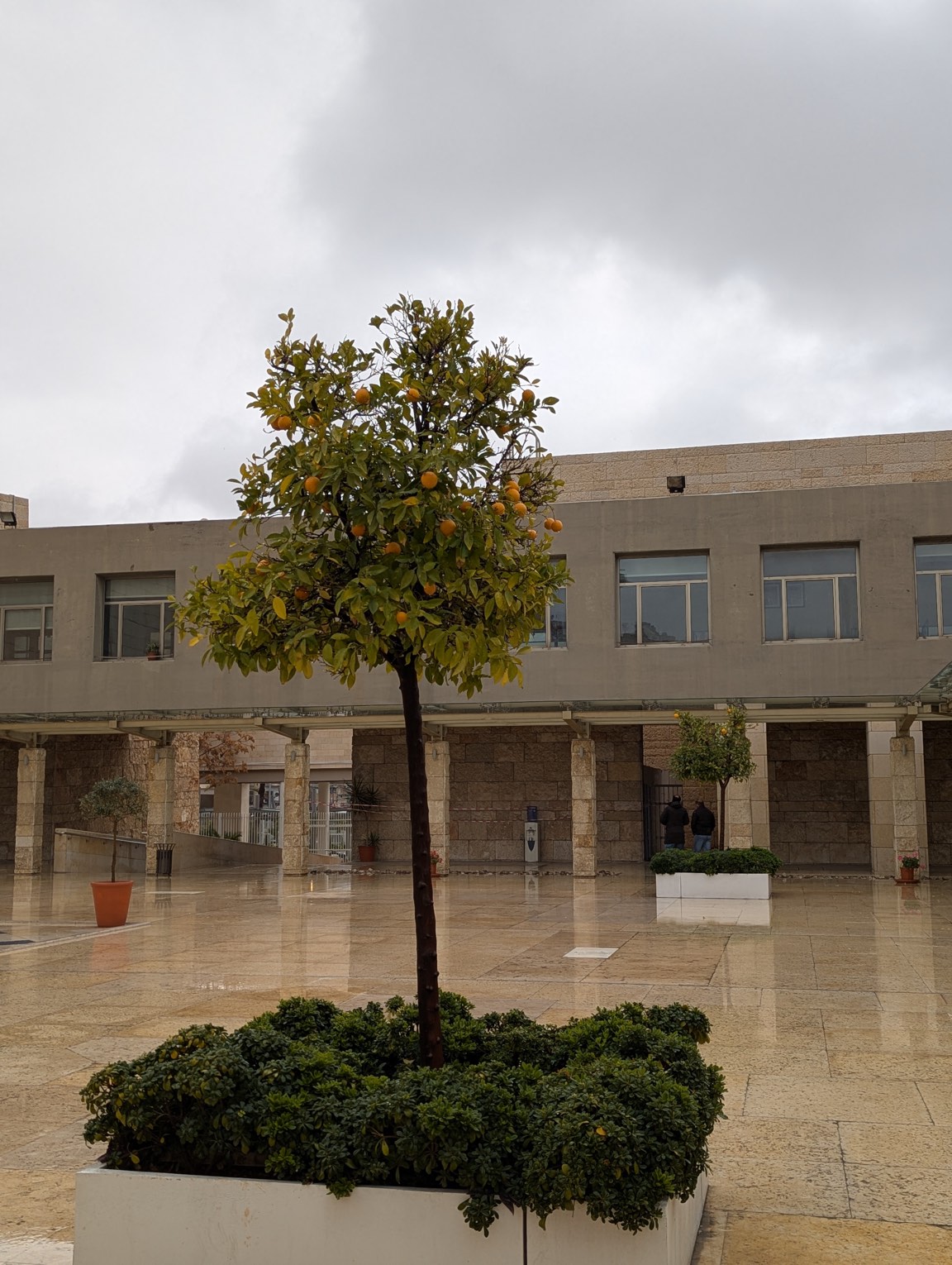
Displays trace farming here back roughly 10,000 years, along with the water-harvesting systems, the same kind of reservoir engineering already visible at Petra, that made agriculture possible once the region dried out. Pottery development gets its own section too, including a Hellenistic-period display (roughly 300 BC to 60 BC, the era when the Nabataeans first appear) that had me briefly convinced I'd misread it as "Harry Potter" before realising it said "Hellenistic."
The Nabataean history covered here runs from around 300 BC through to roughly 500 AD, alongside a broader Roman and Byzantine history section, and a science and technology gallery covering achievements from the Islamic Golden Age. Some of these claims felt like a genuine stretch, one panel credits this era with the first surgeon, without any mention of Sushruta, generally regarded as a much earlier pioneer of surgery in ancient India, and another credits the invention of zero without mentioning Aryabhata. I'm not trying to discredit anyone's history, every country tends to celebrate its own contributions, but a few claims read more like local pride than settled fact, particularly a section suggesting some scholars here still held to a flat-earth model well into a period when that had long been disproven elsewhere. Most of the tool and technology displays, though, were genuinely well presented. And notably: PM Modi's signature is in a special guestbook kept separately inside, not open to general visitors, so I settled for signing the regular guestbook instead, just in case this channel ever gets famous enough for that to matter someday.
The Citadel: Amman's capital for over a thousand years
From the museum, the next stop was the Amman Citadel, the city's main historic landmark, sitting on a hilltop that's served as the seat of power here continuously since the medieval period, and going back further still, through Roman, Byzantine and Nabataean rule, all of whom used this same hill as their capital. Structures here were built directly on top of earlier ones repeatedly, a pattern also visible at Sofia's layered history, which I've covered in an earlier video.
A Byzantine-period church stands on the site, still reasonably well preserved, with the surrounding area once a residential district; what's visible now marks the layout of an old street lined with homes from that period. Nearby, remains of an Umayyad-period mosque, dating to roughly 650 to 700 AD, survive in worse condition but are still identifiable.
The Citadel's main landmark is a structure built in the 2nd century AD under Roman rule, generally called the Temple of Hercules, though archaeologically there's no solid evidence connecting it specifically to Hercules at all, that's just the name that stuck. One genuinely interesting detail: when this was built, Amman's name at the time was Philadelphia, a Roman-era name entirely unrelated to the American city of the same name. The temple itself was also never fully completed, even under Roman rule, and nobody knows exactly why, theories range from funding shortfalls to the frequent earthquakes this region experiences. Compared to the grand temples I'd seen in Greece, this structure felt noticeably underwhelming in scale, worth visiting for the history and the view rather than for its size.
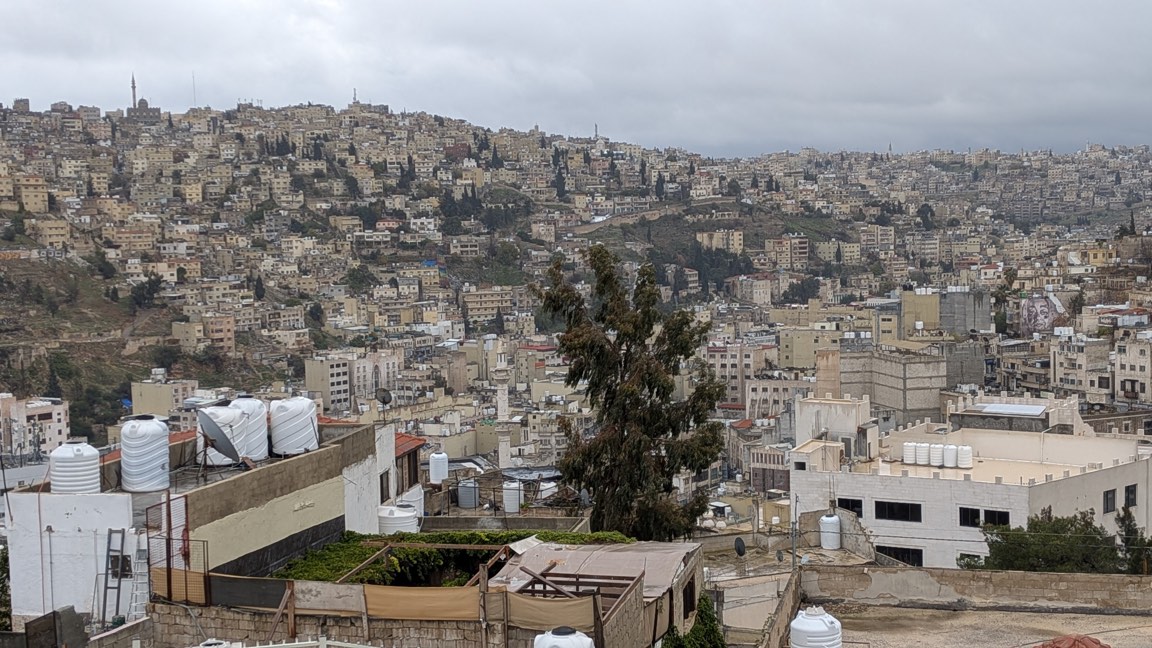
The real reward here is the view: modern Amman spreads out in every direction below the hill, sprawling across a landscape of low hills, which makes the contrast between the ancient hilltop capital and the modern city genuinely striking from above.
The Roman Theatre, still in use since the 2nd century
Down from the Citadel sits Amman's Roman Theatre, an amphitheatre built in the 2nd century AD, and its defining feature isn't its age but its continuity: this theatre has been in active use, on and off, from the 2nd century through to today, making it one of the longest continuously used performance venues anywhere, a similar story to one I'd covered previously in Greece.
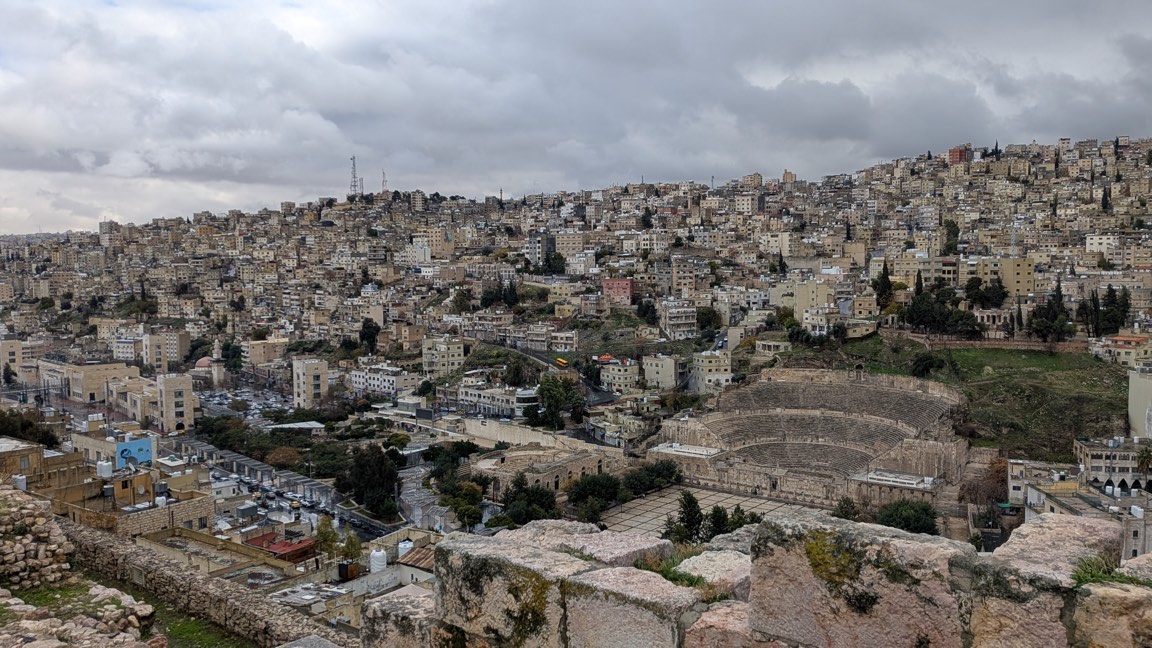
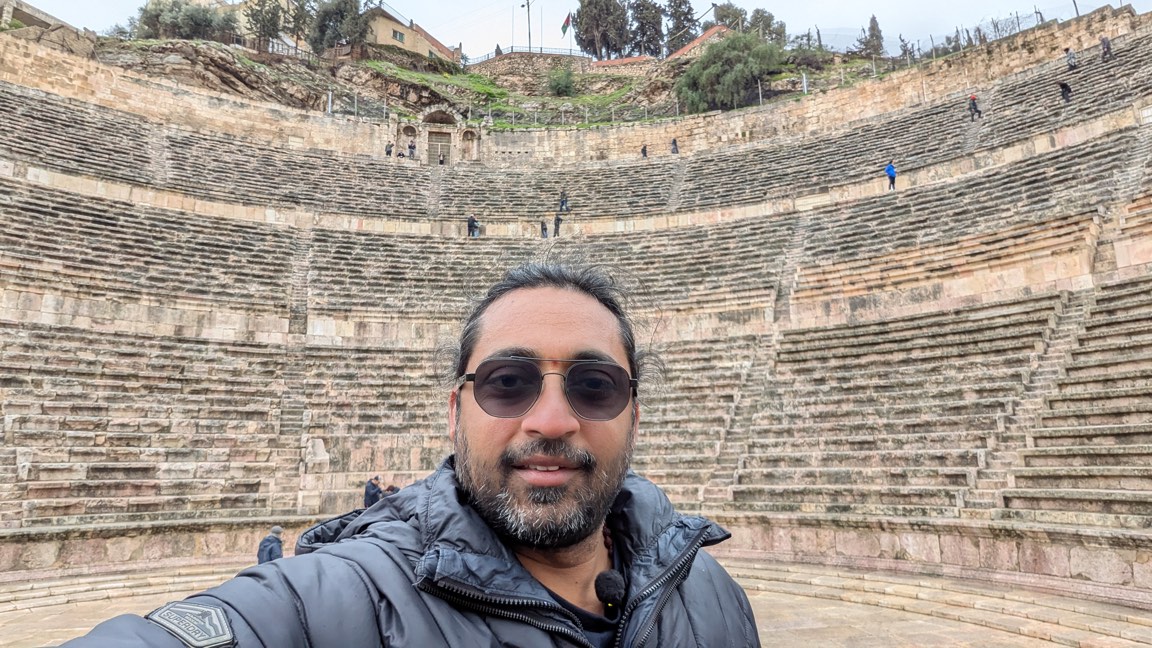
Climbing it in the rain turned out to be its own small adventure, wet stone steps and worn-out shoe grip made for a genuinely nervous descent, though the climb up was manageable enough. From partway up, the seating opens into a second, steeper tier with noticeably narrower steps, tight enough that a full footstep barely fits. What makes ancient theatres like this remarkable, this one included, is the acoustics: sound from the stage carries clearly all the way to the topmost rows, purely through the physics of the stone bowl shape, with no amplification of any kind needed.
Rainbow Street, in the evening
After resting through the afternoon, I came back out in the evening to Rainbow Street, Amman's well-known strip of restaurants and shops, decorated with strings of lights that give it a noticeably better atmosphere after dark than during the day. I'd gone in expecting something closer to a proper Middle Eastern souq, the kind of dense, atmospheric market street I'd hoped for, but honestly, it didn't quite deliver that feeling; the shops themselves were fairly ordinary, closer in spirit to a modest local market back home than a standout destination in its own right. Rainbow Street's lighting alone makes it a pleasant enough evening walk, but as a shopping destination specifically, it's not the highlight of the city.
Closing out Jordan
With Amman done, this wrapped up the full Jordan leg of the trip: a desert night that felt like another planet, one of the Seven Wonders of the World carved into rock, floating at the lowest point on Earth, and finally, a capital city that's quite literally been built in layers for over two thousand years. Four very different days, and Jordan delivered on all of them.
Practical tips for Amman
- Jordan Museum: worth an hour or two, especially if you want context for what you've already seen at Petra and the Dead Sea.
- The Citadel: go for the Temple of Hercules ruins, but stay for the panoramic view over modern Amman.
- Roman Theatre: wear proper grip shoes if there's any chance of rain, the stone steps get genuinely slippery.
- Rainbow Street: best visited in the evening for the lighting; keep expectations modest if you're hoping for a traditional souq experience.
- Timing: Amman is compact enough to cover in a single day if you're closing out a Jordan itinerary the way this trip did.