
Less than 24 hours in Athens, landing at 1:40pm one day and flying out at 2pm the next, was never going to be enough, but it turned into a genuinely packed stretch anyway: two videos, two halves of one very full day and a half, covering the Acropolis, both of the city's ancient marketplaces, and a proper morning tour before the flight home.
Part 1: less than 24 hours, straight to the ruins
The Roman Agora, the Ancient Agora, and the climb up to the Acropolis.
Landing with barely a day in the city meant no time to waste: a three-day metro ticket from Monastiraki station, a sandwich brought from London to skip a proper lunch stop, and straight into the ruins. First stop was the Roman Agora, built around 19 BC under early Roman rule, a marketplace and public meeting point in one, not unlike a village's traditional gathering spot back home. Its restored Tower of the Winds once served as an ancient weather station, complete with a sundial, and today includes braille signage and wheelchair-accessible paths, a level of upkeep that made a strong impression next to how casually similar heritage sites are sometimes treated elsewhere.
A short walk away sits the Ancient Agora, Athens' original Greek-era marketplace, home to the reconstructed Stoa of Attalos, now a small museum holding headless statues and other artefacts recovered from the site, along with a second, older stoa nearby. From there, a climb up to the Temple of Hephaestus, dedicated to the Greek god of blacksmiths and considered the best-preserved ancient temple in all of Athens, rewarded the walk with sweeping views back over both agoras, Lycabettus Hill in the distance, and the Acropolis rising above everything.
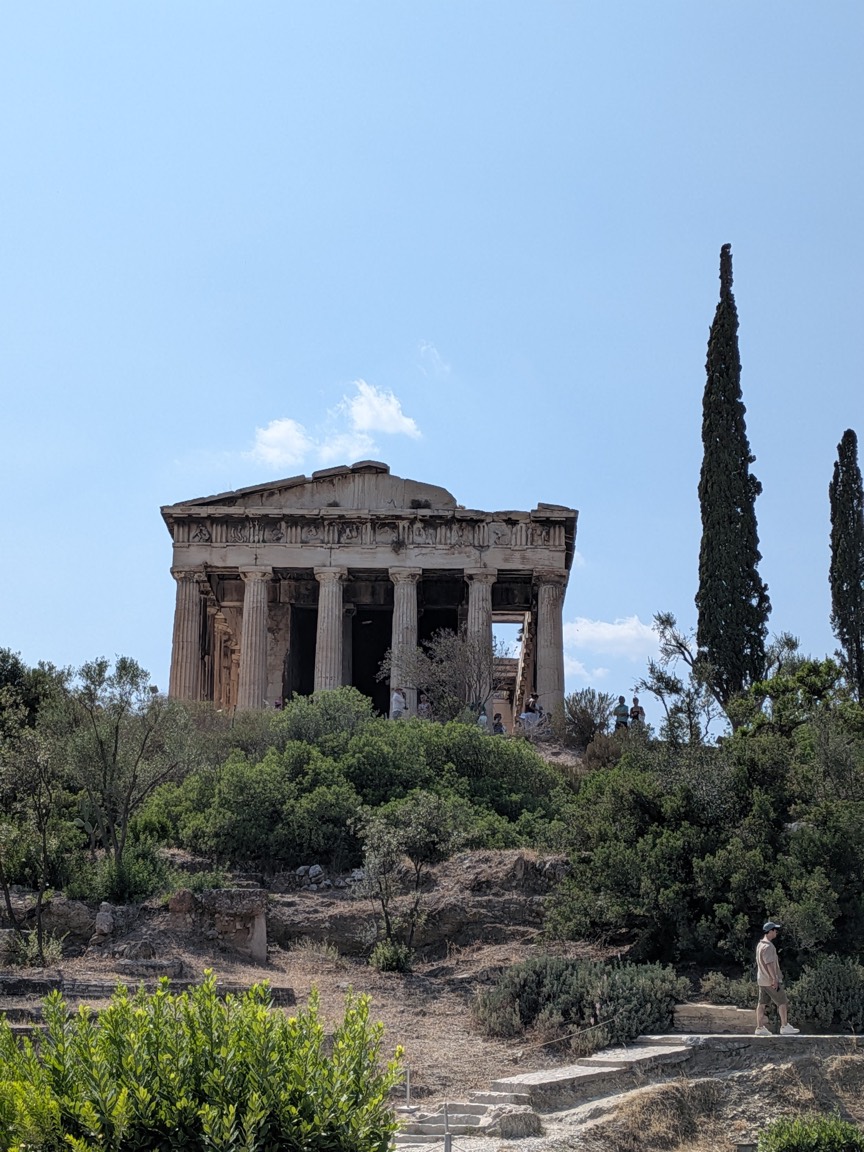
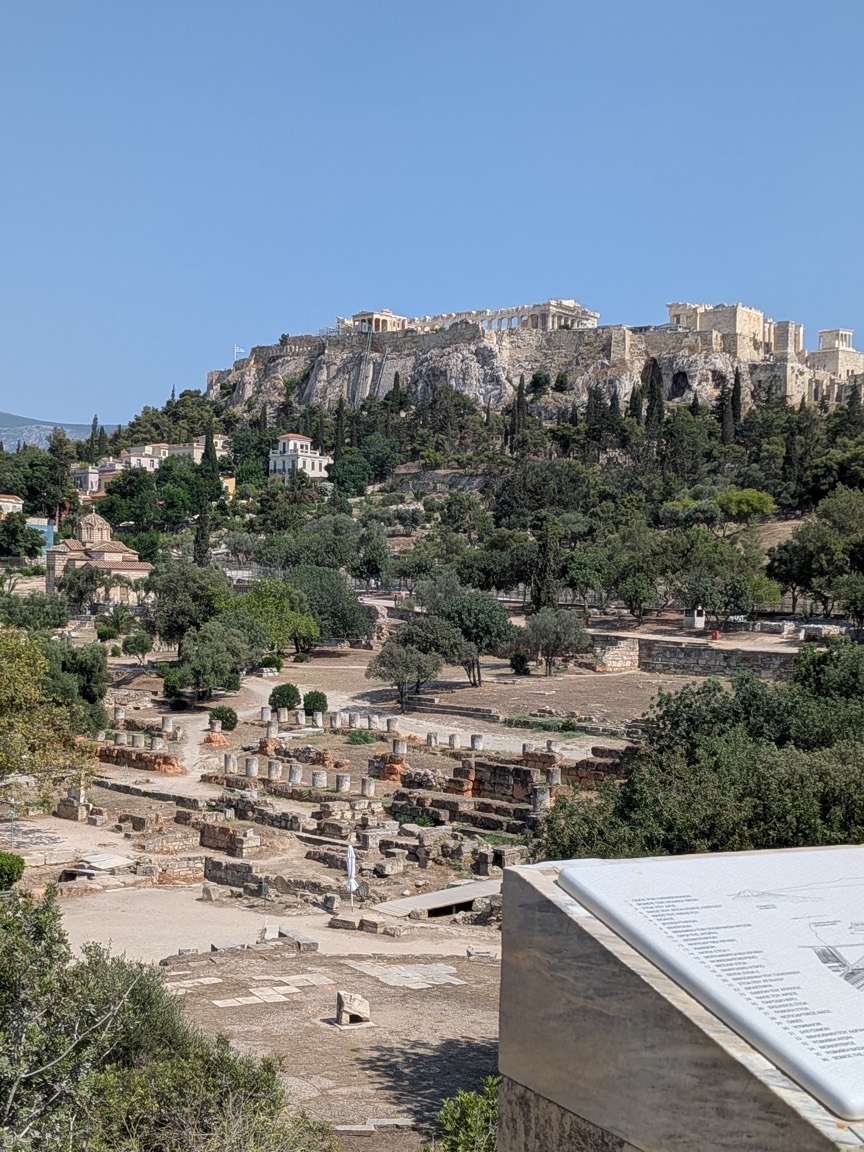
A quick, genuinely useful note for anyone visiting in summer: temperatures were pushing past 33 degrees, mild by Indian standards but a different kind of dangerous here, where prolonged unprotected sun exposure carries a real risk of burns and long-term skin damage. A proper water bottle and consistent sunscreen use aren't optional extras in this kind of heat, even if they feel like overkill at first.
Climbing the Acropolis, with a running history lesson
A pre-booked ticket meant skipping the long queue entirely, and the climb up became an impromptu history lesson along the way. Athens' recorded history stretches back to around 1400 BC, to the Mycenaean civilisation, one of the earliest to settle and build here, eventually raising temples on this very hill, dedicated to Athena among other deities. In 480 BC, Persian forces invaded and burned much of what stood here; within thirty years, the Greeks had defeated them and, starting around 450 BC, rebuilt the whole site far more ambitiously, including the Parthenon, the Erechtheion, the Temple of Athena Nike, and the Propylaea, the grand entrance gate.
Partway up sits the Odeon of Herodes Atticus, a large amphitheatre built in 161 AD under Roman rule by a wealthy benefactor, renovated in 1966 and still hosting live performances today, complete with modern sound equipment discreetly built in. Macedonian forces, including Alexander the Great, who, worth repeating, was Macedonian rather than Greek by origin despite the common label, conquered the region in 338 BC, followed by Roman conquest in 146 BC, a barbarian invasion and fire around the 3rd century AD, then Byzantine and Ottoman rule in turn, before modern Greek independence in 1821 finally began the site's long road back.
The Parthenon itself, Athens' single most recognisable structure, was dedicated to Athena, goddess of wisdom, warfare and craftsmanship, the same goddess the city itself is named after. It once housed a roughly 40-foot gold statue of her, later moved to Constantinople and lost to history entirely, its fate unknown. Nearby, the Erechtheion is best known for its Caryatids, six sculpted female figures doubling as structural columns, a striking blend of art and engineering. Over the centuries the Parthenon itself was converted into a Christian church under Byzantine rule, later a mosque under the Ottomans, and fell into disrepair before modern restoration efforts began.
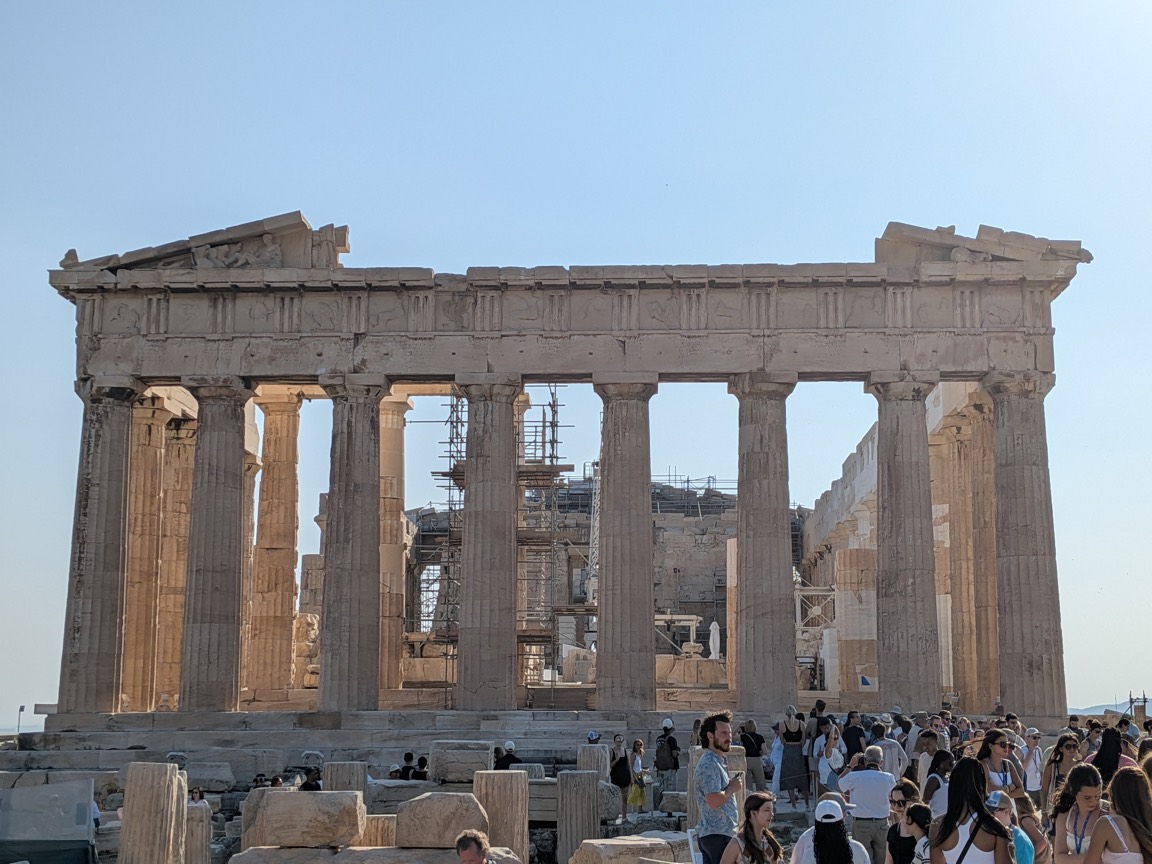
From the summit, the view ties the whole day together: both agoras visible below, Lycabettus Hill with its own hilltop church reachable by cable car, the marble quarries the Acropolis's stone was originally cut from, and, further out, the Greek Parliament building and Olympic Stadium, both destinations for the following morning.
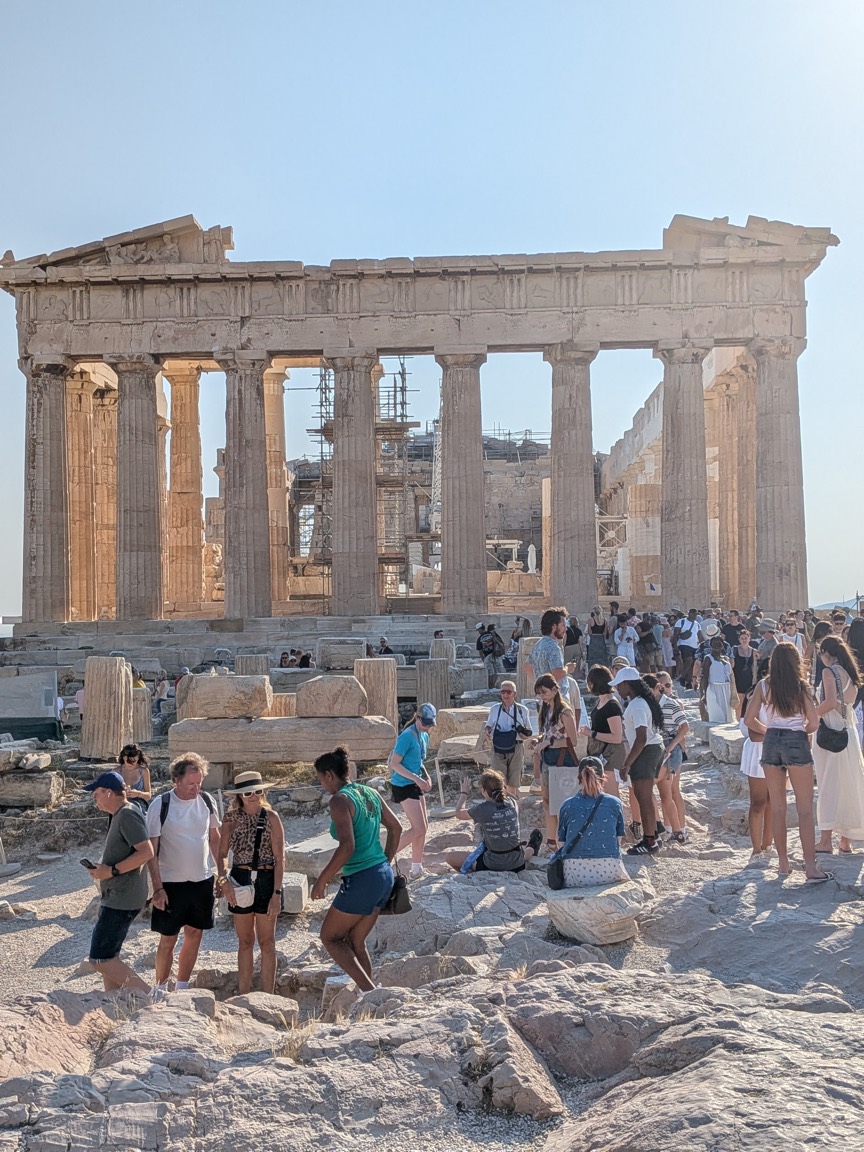
By early evening, after roughly two hours and twenty minutes of near-continuous walking just to this point, dinner meant returning to an Indian restaurant, Dosa King, visited on an earlier trip to the city: spiced buttermilk, a paneer Mysore masala dosa, and sambar vada to round it off, a genuinely satisfying end to a very full first stretch.
Part 2: one last morning before the flight
The Temple of Olympian Zeus, Syntagma Square, the Changing of the Guard, and Plaka.
An early 7:30am start meant an empty Monastiraki Square, a sharp contrast to the crowds the night before, and a single vantage point that summed up the whole city's layered history at once: the old Acropolis on the hill behind, an Ottoman-era mosque nearby, a Byzantine-era church that had briefly served as a mosque itself before reverting back, the modern metro station, an active flea market, and the rest of contemporary Athens spreading out beyond it all. One small local detail stood out too: residents out early washing down their doorsteps, not entirely unlike a rangoli-ready morning routine back home, minus the actual patterns.
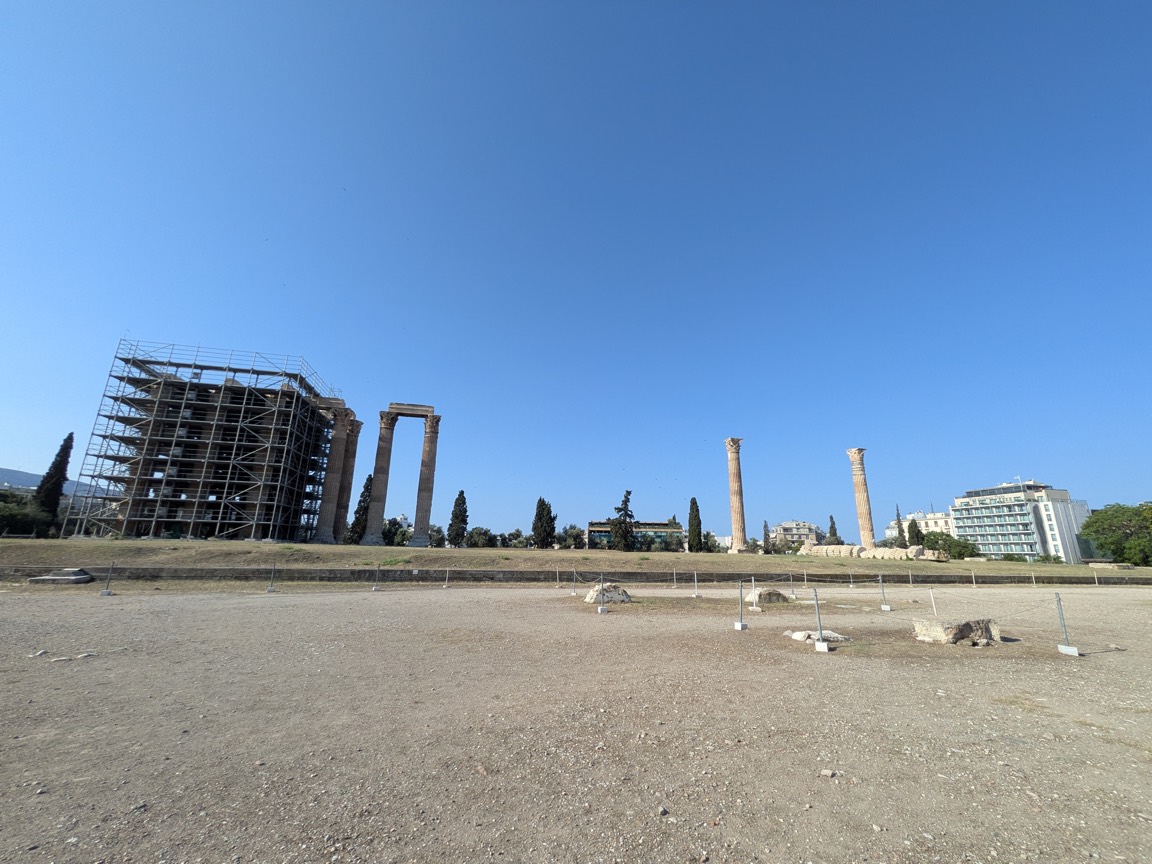
Hadrian's Arch, built under Roman emperor Hadrian, marks the entrance to the Temple of Olympian Zeus, dedicated to the chief god of the Greek pantheon. Only 15 of an original 104 to 140 columns still stand; construction reportedly took some 600 years and finished under Roman rule, only for the temple to be dismantled afterward, its material stripped for other building projects once Roman authority collapsed. A large gold statue of Zeus once stood here too, its fate, like Athena's, lost entirely to history.
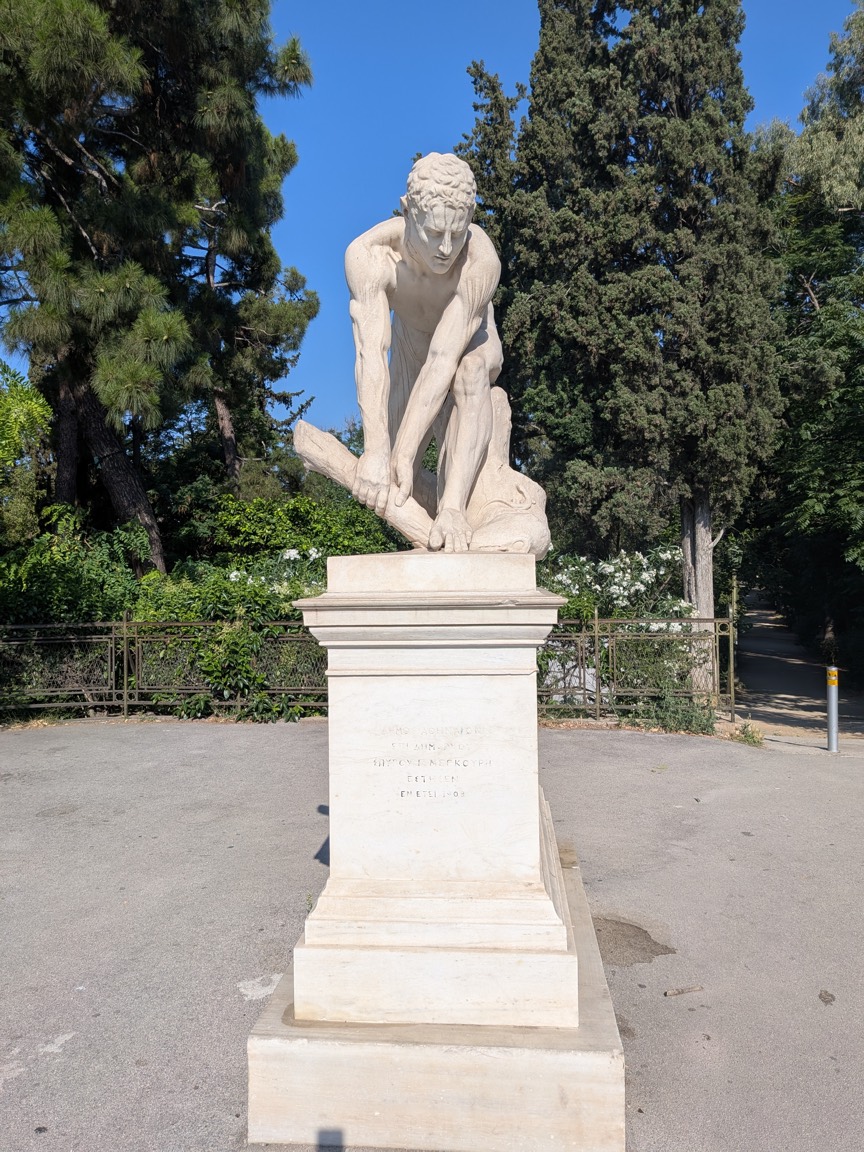
A short walk away, the original Panathenaic Stadium, rebuilt entirely in marble, hosted the first modern Olympic Games in 1896 and again in 2004, though the ancient Olympics themselves actually began far earlier, around 700 BC, not in Athens but in Olympia elsewhere in Greece. Regardless of which city hosts the modern Games, the Olympic flame is still traditionally lit in Greece and carried from here around the world each time. A small, unexpected stop followed at a Hellenic classic motorcycle club showcase nearby, rows of beautifully kept vintage bikes on display.
The Changing of the Guard, and one last walk
Outside the Greek Parliament building, a small crowd gathers every hour for the Changing of the Guard, a deliberately slow, formal ceremony technically protecting the Tomb of the Unknown Soldier rather than the parliament building directly. A far larger ceremony runs every Sunday at 11am, missed on this trip only because it clashed directly with the flight schedule out.
Across from parliament, Syntagma Square hosts street performers and vendors around a central fountain, leading into Ermou Street, Athens' main pedestrian shopping strip, not unlike the walking streets covered in an earlier stop on this trip through Sofia. Along the way, the Holy Metropolitan Cathedral of Athens, built in 1842, offered a quick, relatively modern stop with comparatively little history behind it next to everything else covered so far. The Plaka neighbourhood nearby, right beside the Acropolis, is known for its staircase streets lined with restaurants, some built directly into the steps themselves, others rooftop, both genuinely pleasant spots for an evening meal.
By 11am, the loop closed back at Monastiraki station, and from there it was straight to the airport. One last, deliberately careful note from the departure gate: recent social media chatter around a tragic Air India crash had plenty of self-declared experts throwing out causes with total confidence, and that's exactly the wrong approach. Speculating before an official investigation concludes helps no one; the right move is to wait for the actual findings. What's genuinely useful instead is understanding how aircraft systems work in general, so a short, simple explanation of how wing flaps function during takeoff followed, filmed on the departing flight itself, purely as general aviation knowledge, not commentary on any specific incident. One small logistical note to close on: not a single cash payment was needed anywhere in Athens, card covered everything from start to finish.
Practical tips for Athens
- Acropolis tickets: book online in advance, the queue for on-site tickets can be long, especially in summer.
- Heat safety: carry water, use sunscreen properly, and don't underestimate Mediterranean summer sun even if you're used to hotter climates.
- Metro ticket: a multi-day pass covers airport transfers both ways plus unlimited city travel, worth it even for a short stay.
- Changing of the Guard: the standard hourly ceremony is worth a quick stop; the full Sunday 11am version is worth planning your schedule around if you can.
- Payments: cards are accepted everywhere, carrying cash isn't necessary for most visitors.