
When people think of Europe, they think Paris, Rome, Switzerland. They rarely think of Moldova — the poorest country in Europe, a former Soviet republic, and by some distance the least-visited nation on the continent. Around 500,000 people visit Moldova in an entire year; Paris or London get that many in a day or two. As my 41st country, and my first ever ex-USSR nation, Chisinau felt like a place caught mid-sentence: one foot reaching toward a European future, the other still standing on Soviet concrete.
Cathedral Square: the calm, Orthodox heart of the city
I started at Cathedral Square, right in the centre of the city. The Nativity Cathedral (the Metropolitan Cathedral) sits here with a freestanding bell tower facing it, a small park with benches, kids playing, and a few outdoor cafés doing quiet business. About 97% of Moldovans are Christian, and the large majority of those are Orthodox — so this cathedral is Eastern Orthodox architecture through and through: a single dome up top, tall columns out front, and none of the crowd you'd fight through for an equivalent square in Paris or Rome.
Walk to one end of the square and you'll hit the Triumphal Arch — yes, a much smaller cousin of the one in Paris. There's no real historical link between the two beyond the borrowed name and concept: it was built in 1840 to mark a Russian victory over the Ottomans, in that old European tradition of building an arch to welcome home whoever just won a war.
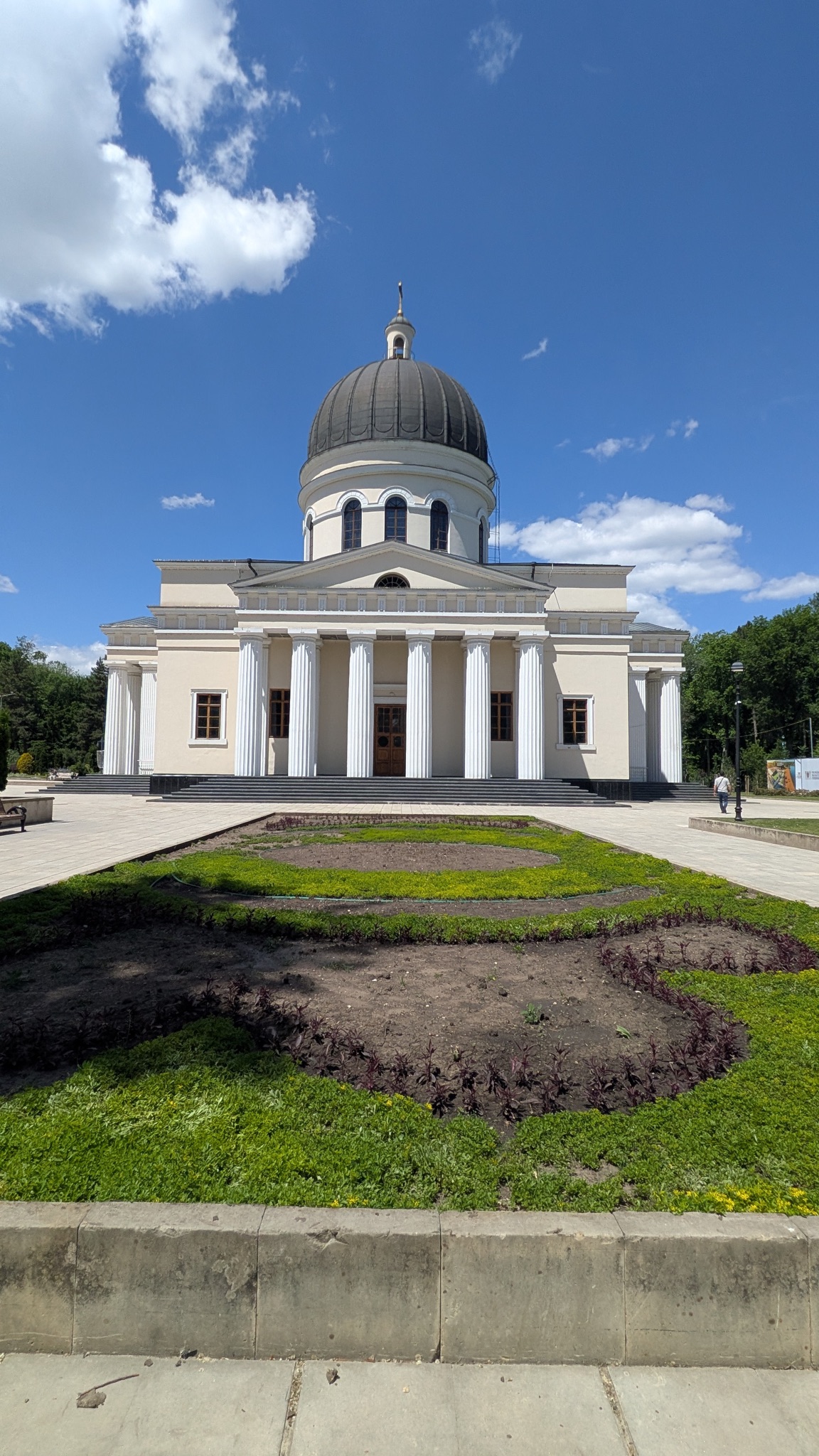
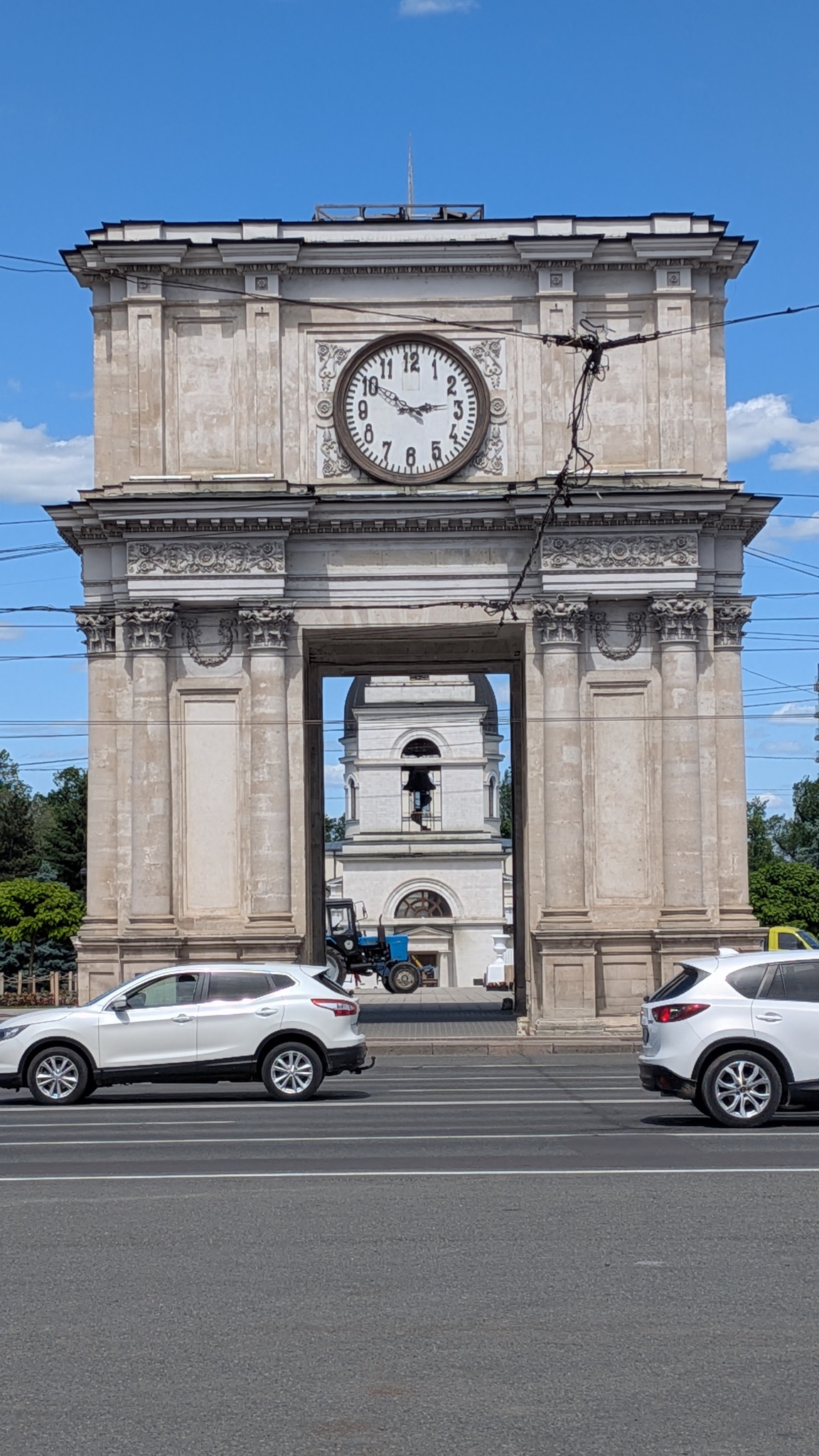
The Chisinau walk: Cathedral Square, Valea Morilor lake, the Eternity Memorial and Soviet-era trolleybuses.
The deeper story: how Moldova ended up with this strange, split identity.
Stefan cel Mare Boulevard: two flags, one identity crisis
Behind the arch runs Bulevardul Stefan cel Mare, the city's main road, cutting through Chisinau end to end. One side of it is lined with government buildings, and directly behind the arch sits the Government House flying both the Moldovan flag and the EU flag — even though Moldova isn't an EU member yet. I'd seen the exact same gesture in Albania: a country not in the club, still flying the club's flag, because it very much wants to be. Further along, the grand, blocky National Opera and Ballet Theatre and the Presidential Palace sit side by side, both unmistakably Soviet in style — big, imposing, and almost deliberately short on decoration. There's an "I ♥ Chisinau" sign near here too, apparently a nice spot for an evening photo.
One thing that struck me walking this stretch: money exchange shops on nearly every corner. A huge part of Moldova's economy runs on remittances — an estimated third of the population has left the country for work over the last 10-15 years, and the money they send home is one of the country's biggest sources of income. You feel that quietly, everywhere, in how many currency counters a small stretch of street can support.
Stephen the Great Park and a coffee at Bonjour Café
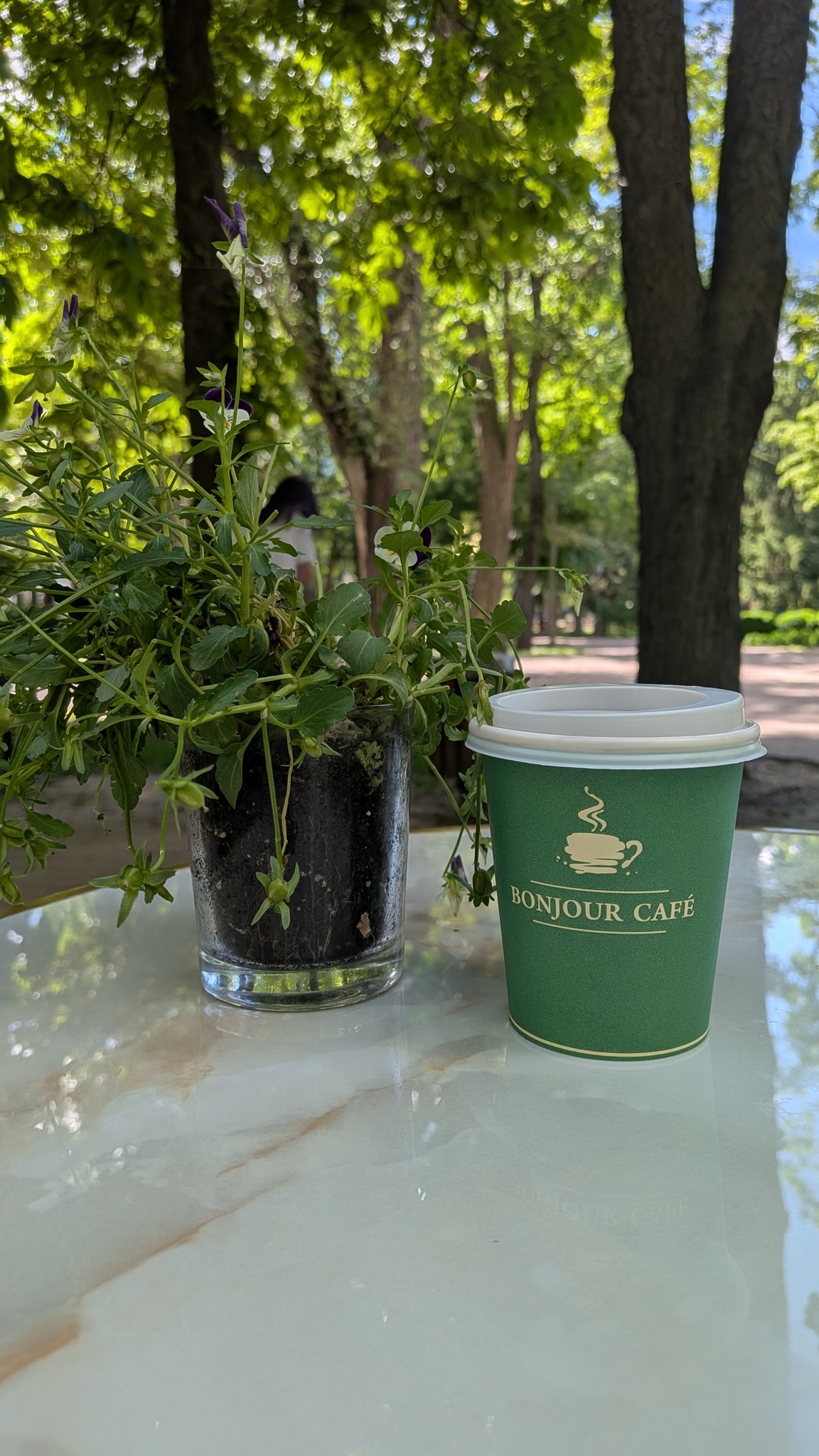
Right next to the cathedral is Stephen the Great Central Park, named for Moldova's original saint-king, whose statue stands at the entrance — he ruled in the 1400s and is still the country's most important historical figure. Inside, it's all green space, walking paths, statues of other notable Moldovans, and a café at what feels like every corner. I stopped at the one dead in the centre of the park, Bonjour Café, and it turned out to be the nicest fifteen minutes of the day: fairy lights, good greenery, fresh air, and almost nobody around.
A Moorish-style surprise: the Museum of Ethnography and Natural History
Walking toward the lake, one building broke the pattern of blocky Soviet architecture I'd been seeing all day — it turned out to be the National Museum of Ethnography and Natural History, built in a distinctly Moorish style. It's one of Moldova's oldest museums, open since 1889, covering how the country's ancestors lived: village life, traditions, and the natural landscape they lived in. I won't pretend it's the most polished museum I've been to, but if you want to understand Moldovan culture below the surface rather than just its skyline, it's a decent stop.
Down the Granite Stairs to Valea Morilor Lake
Valea Morilor ("Valley of the Mills") is a big park that opens onto a lake of the same name, and you reach the water by walking down a set of wide Granite Stairs. Looking back up from partway down, it reminded me instantly of the Brindavan Gardens in Mysore — the kind of view that fixes itself in your memory as a child and then quietly resurfaces years later, half a world away.
The loop around the lake is roughly 2 kilometres, and it's genuinely pleasant: people walking dogs, a few out fishing, others just doing laps. Near the railings I'd been told to look for something specific — Moldova's smallest statue, nicknamed the Little Prince, standing on a small rock. It's barely three inches tall, and finding it turned into a proper little treasure hunt. I got lucky — didn't have to walk far before spotting him.
The Eternity Memorial: a pyramid with an eternal flame
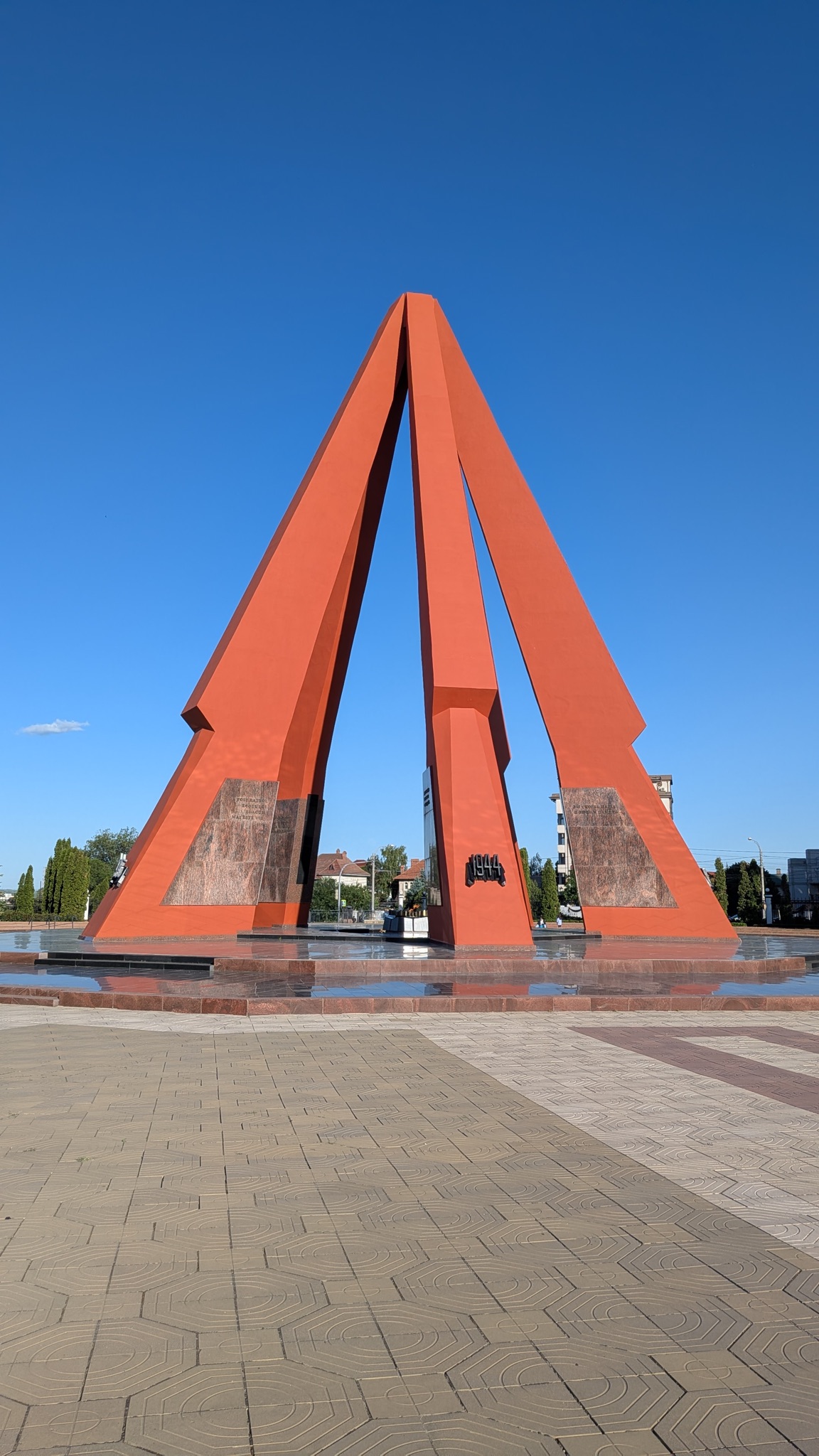
A few kilometres from the lake is the Eternity Memorial Complex: a striking pyramid shape made of five tall, red-orange pillars, with an eternal flame burning at the base in the middle. It was built to honour those who died in the Second World War, and inside, the names of soldiers are engraved alongside photographs and plaques. There's a park around it too, with more monuments and flowerbeds, and it's clearly still a place locals come to sit and reflect, not just a photo stop for tourists.
Ciuflea Monastery's golden domes
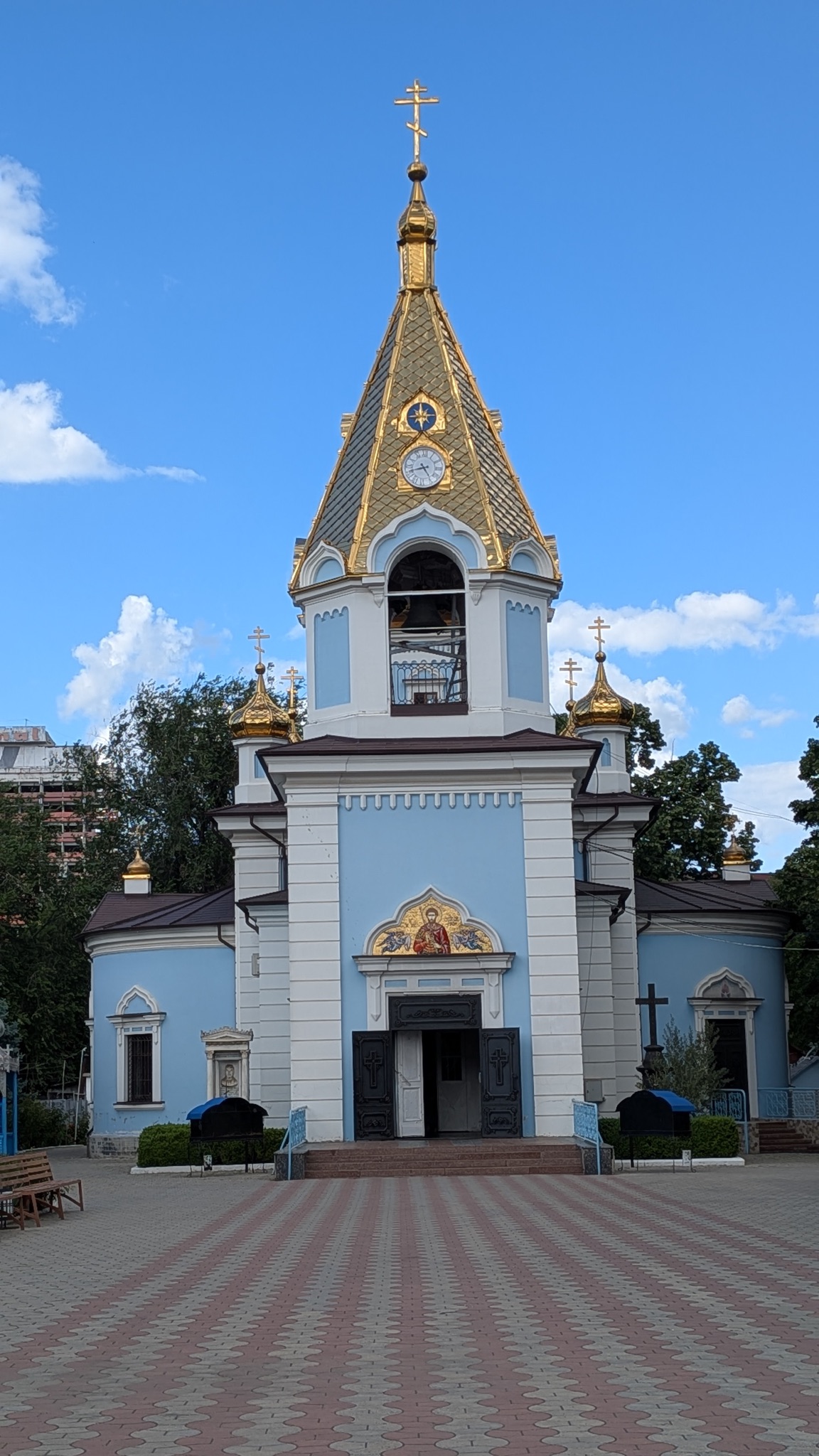
Close by is Ciuflea Monastery, and its golden domes are unmistakably Russian Orthodox in style — the same feeling I'd gotten from a blue church I'd seen earlier in Brasov, Romania, just in a different colour combination here: deep blue and gold instead. The paintings inside are worth the few extra minutes too. Moldova's identity — pulled between Romanian, Russian and Soviet influences all at once — is honestly a whole story in itself, which is exactly why I made a separate, dedicated video on the country's history, politics and identity (embedded above). If any part of what you're reading here raises a "wait, how did that happen?" question, that video is where I actually answer it.
Soviet-era trolleybuses: Chisinau's rolling time machine
Getting around the city, I rode Chisinau's trolleybuses, which have been running since Soviet times and still work the old-fashioned way: a human conductor walks the aisle, takes your money by hand, and hands you a paper ticket in return. It felt exactly like riding a city bus back home — no app, no card, just cash and trust. Some of the trolleybuses on the road are genuinely old; others have clearly been replaced with newer models, so you get a bit of both eras rolling on the same routes.
The abandoned National Hotel and the Liberation Monument
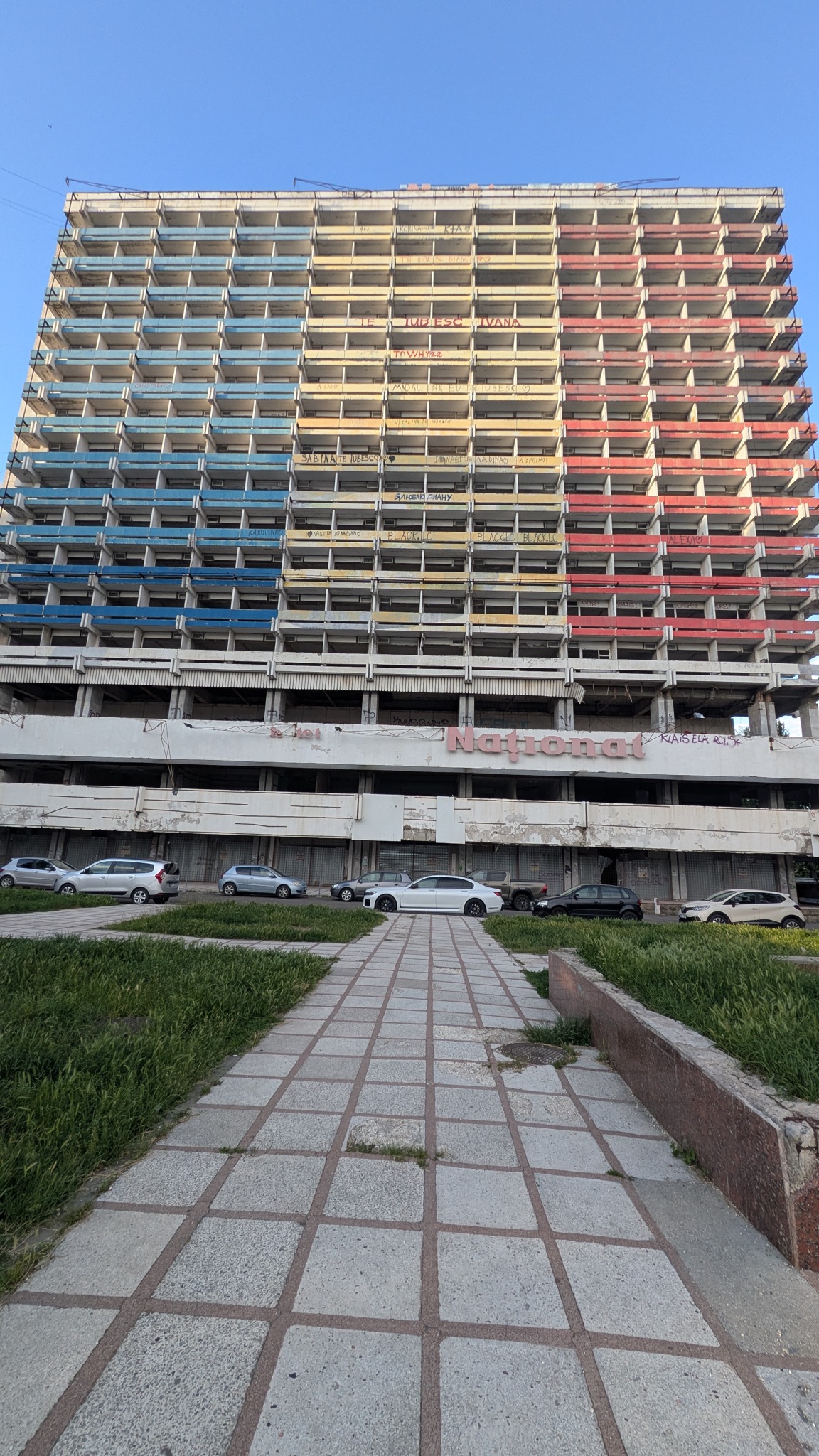
Across a small underground subway crossing from the memorial area stands the National Hotel — once a luxury property, built in 1980 under the Soviet government's hotel monopoly. After the USSR collapsed, bookings dried up and corruption set in; by the 2000s it had been fully abandoned. For years its balconies were covered in graffiti; now they're painted in the blue, yellow and red of the Moldovan flag, though older graffiti still peeks through in places, and the government has recently touched it up along with the subway crossing underneath.
Directly across from the hotel is the Liberation Monument, commemorating the Soviet army's arrival in 1944. It's a loaded word choice — plenty of countries in this region call that same moment an "occupation," but here it's still officially framed as a "liberation," and the monument has been kept standing rather than removed. A little further along, a second, still-functioning luxury hotel — Hotel Chisinau, complete with its own supermarket — sits just metres from its abandoned predecessor, which somehow makes the contrast even sharper.
What's next: a country that "doesn't exist"
I ended the Chisinau trip with a promise to my viewers: the next stop was somewhere genuinely strange — a self-declared country that most of the world doesn't officially recognise, sitting just a short drive from here. If Moldova already felt like an unusual detour off the typical European route, what came after it was stranger still.
How I'd spend a day in Chisinau
- Morning: Cathedral Square, the Triumphal Arch, and a walk down Stefan cel Mare Boulevard past the Opera House and Presidential Palace.
- Midday: Stephen the Great Park, coffee at Bonjour Café, then the Ethnography Museum.
- Afternoon: The Granite Stairs down to Valea Morilor Lake, hunting for the Little Prince statue.
- Evening: Eternity Memorial, Ciuflea Monastery, then a trolleybus ride past the abandoned National Hotel.
Practical tips for Chisinau
- Currency: Moldova uses the Moldovan Leu (MDL), not the Euro. It's one of the most affordable capitals in Europe, so budget travellers will feel it immediately.
- Getting around: Trolleybuses are cheap and run everywhere, but carry small cash — conductors sell tickets by hand, no cards.
- Crowds: Practically none. Even central landmarks like Cathedral Square feel calm rather than touristy.
- Best photo time: Morning for Cathedral Square and the Arch; evening for the "I ♥ Chisinau" sign and the Presidential Palace area.
- Walking: The lake loop and the park stretch add up — comfortable shoes are worth it if you're covering Stephen the Great Park through Valea Morilor in one go.
Chisinau isn't a city that performs for tourists — there's no polished old-town façade built for photos. What you get instead is a capital still visibly working out its own identity: EU flags on Soviet buildings, a monastery next to a monument nobody quite agrees on the meaning of, and a hotel abandoned right beside one that's thriving. For a country almost nobody visits, it left me with more to think about than plenty of places that everybody does.