
Coffee in hand, watching the Dead Sea from a resort balcony first thing in the morning, is a genuinely nice way to start a day. I stayed at the Hilton Dead Sea Resort, and beyond the obvious floating experience, this stop came with more useful, practical information about Jordan than any other single day of the trip.
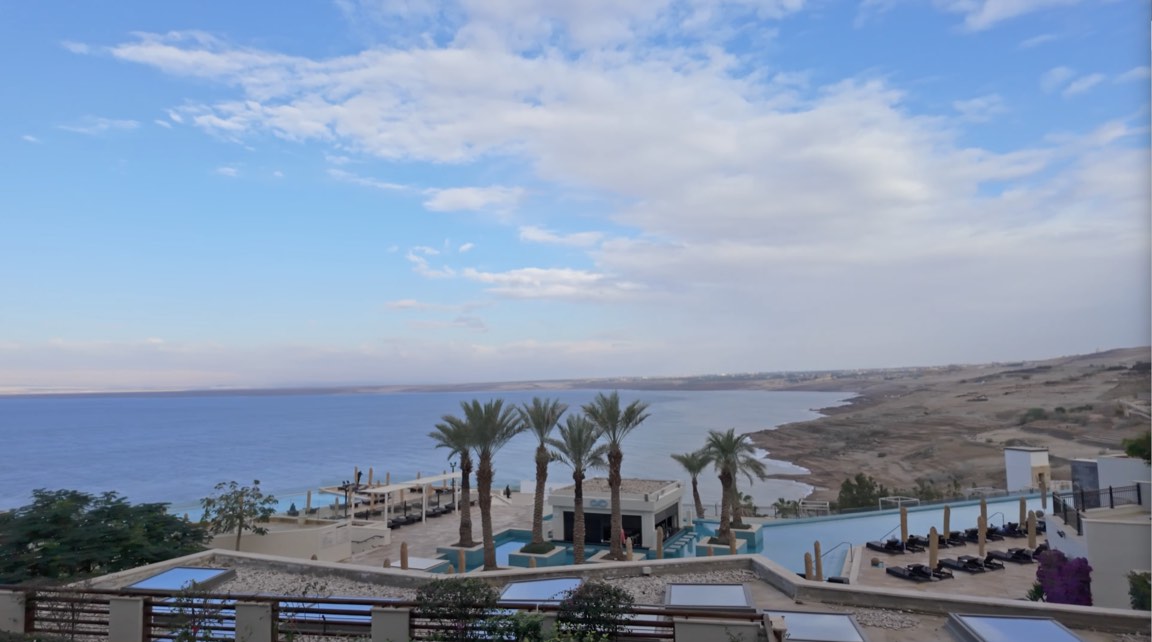
Jordan Episode 3: floating in the Dead Sea, Mount Nebo, and a full Jordan travel briefing.
A private beach, and lifts down to the water
From the resort, a lift runs straight down to a private beach on the Dead Sea itself. Looking out from there, the Jordan River is visible in the distance, with Israel on the far bank, and further along the same river sits the site where Jesus's baptism is believed to have taken place. The obvious question, before anything else, was simple: does the floating actually work the way everyone says?
It does, immediately and unmistakably. Stepping in, my body tipped straight into a float without any real effort, an odd, slightly disorienting sensation the first time it happens.
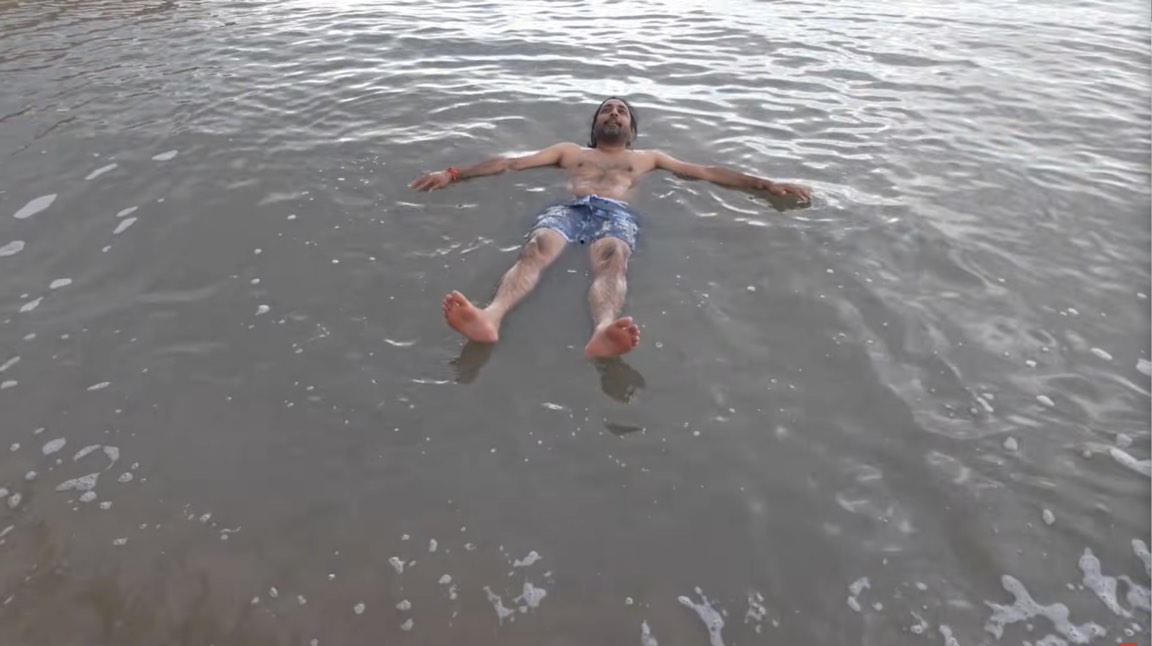
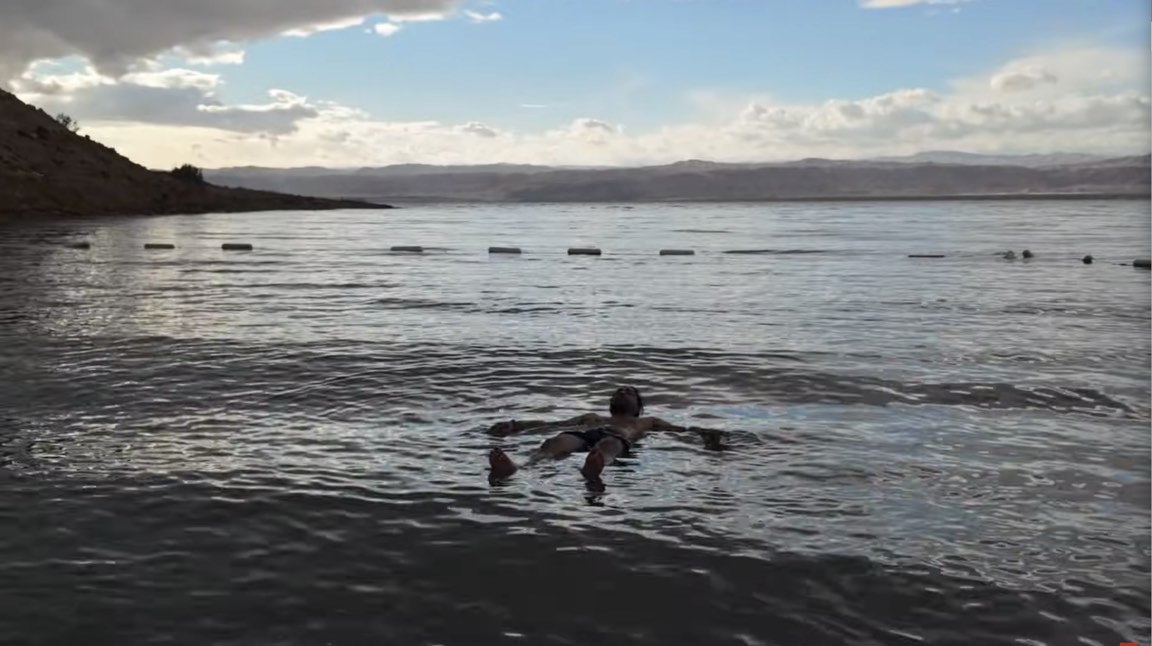
The mud, and why the routine matters
The standard routine here is to float for about ten minutes first, then coat yourself in the black mineral mud found along the shore, let it sit until it starts to dry, and then spend another ten minutes back in the water washing it off. Staying in much longer than that isn't recommended, the water is so saline that extended exposure risks dehydration. At the Hilton, staff handle the mud application directly, a full-body massage with it included as part of staying at the resort; public beaches nearby, generally called a "corniche" (a term used across the Middle East for beachfront areas), offer the same mud for anyone not staying at a private resort.
One genuine caution: don't get the water anywhere near your eyes, and if you have any small cuts or scrapes, keep them out of the water entirely, the salt concentration stings badly on broken skin.
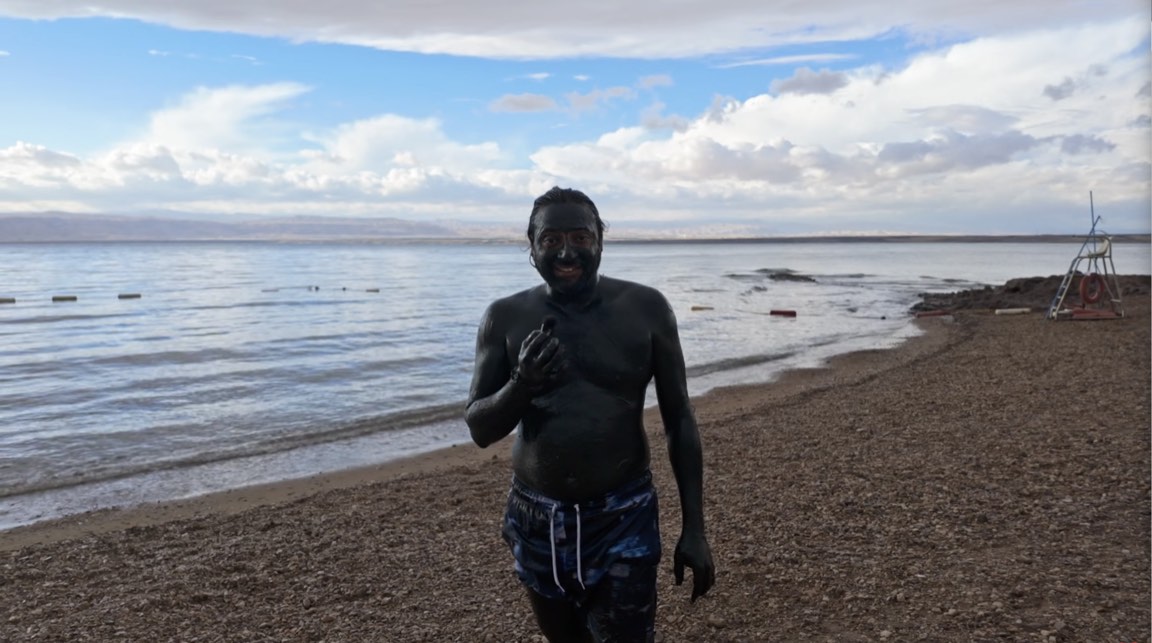
Why the Dead Sea sits where it does
The Dead Sea occupies the lowest point on the Earth's surface, roughly 430 metres below sea level, formed along the Great Rift, where two tectonic plates are gradually pulling apart from each other. As the plates shift, a break formed in between, and this lake sits inside that gap, the lowest point of the entire rift system. I've made peace with never reaching the highest point on Earth, Everest was never going to happen for me, so reaching the lowest one felt like a reasonable consolation.
Technically, it isn't a sea at all, it's a lake, but the exceptionally high salt content, something in the range of 7,800 spoons of salt per litre by one estimate I heard, is presumably why it earned the name "sea" anyway.
Why floating works, and why swimming doesn't
The floating comes down to buoyancy: normal seawater runs at roughly 3.5% salt, while the Dead Sea sits at around 34%, ten times higher. That density difference is what pushes a body up rather than letting it sink. What it doesn't allow is normal swimming, pushing through water this dense and heavy takes far more effort than usual, so actual strokes are close to impossible here; floating is really the only mode available.
The mud itself contains minerals like magnesium and bromine, credited with real healing properties, particularly for skin conditions like eczema. I can't personally vouch for bigger claims occasionally made about it, cancer or other serious conditions, those aren't things I've seen backed by real evidence, but the disinfectant properties of concentrated salt are well established on their own. One more effect worth mentioning: where high-altitude places like Badrinath left me short of breath from thin air, the Dead Sea does the opposite, oxygen levels here run unusually high, meaning physical activity actually feels easier than normal, worth testing for yourself if you're up for a jog along the shore.
A shrinking sea
The Dead Sea is dropping by roughly a metre a year, tied to the same tectonic movement mentioned earlier along with reduced rainfall feeding into it. Water levels and the lake's overall surface area are both shrinking steadily, and it's expected to keep dropping further. Originally, before the salt concentration built up, this was freshwater; the salinity developed over time as minerals from deep within the rift were drawn up and concentrated as inflow slowed.
Mount Nebo, and the view toward Jerusalem
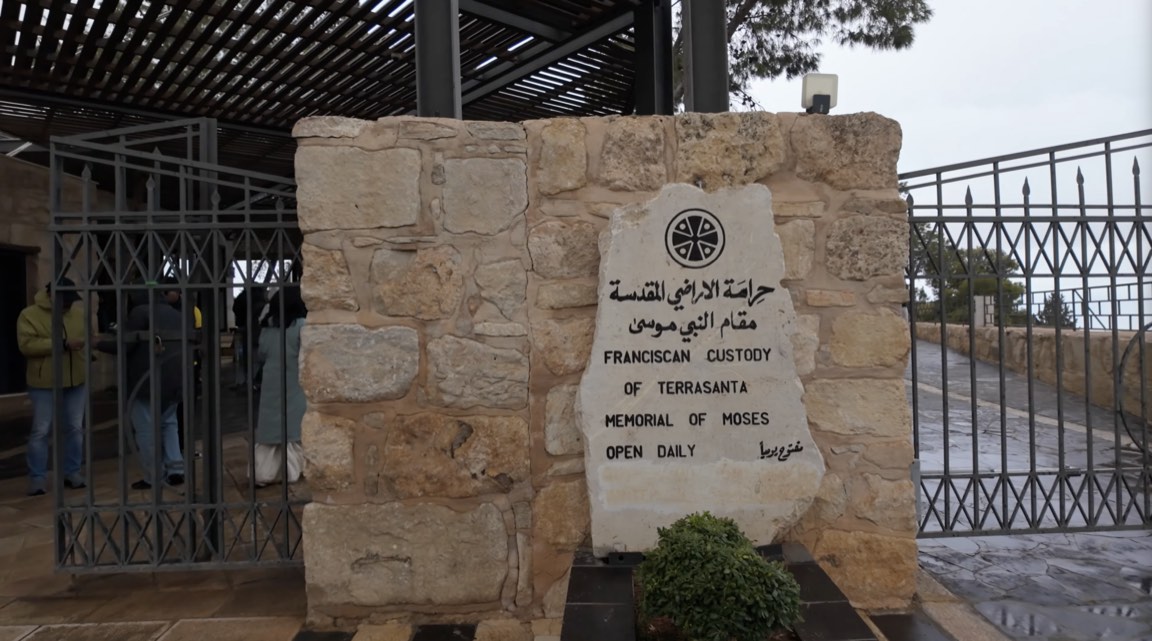
A short drive away is Mount Nebo, home to a memorial associated with Moses, said to be the site from which he first saw the Holy Land in the distance, which is why the memorial stands here. Inside, restored fifth-century mosaics cover parts of the interior. Outside, olive trees line the grounds, chosen deliberately for their long association with Christianity, including one planted by Pope John Paul II in March 2000, still growing on site.
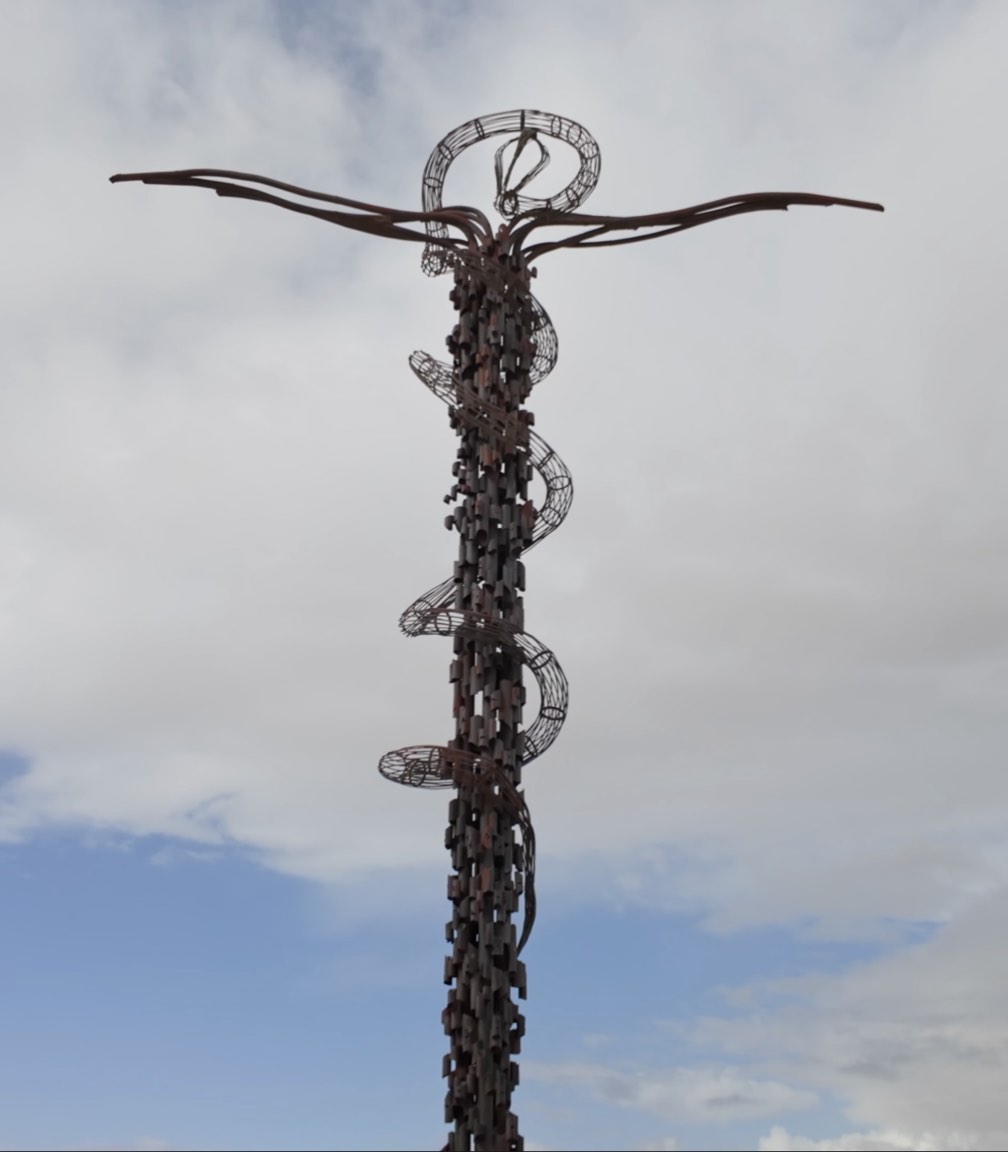
A bronze serpent sculpture stands nearby too, tied to a specific story: according to the account told here, venomous snakes were once sent as punishment, and Moses was instructed to craft a bronze serpent and mount it on a pole, so that anyone who looked upon it after being bitten would survive, a story fundamentally about faith rather than the object itself. I'll note this is simply the version told on site, not something I can independently verify, so take it as local tradition rather than settled fact.
On a clear day, the view from Mount Nebo reportedly stretches to Jerusalem itself, including the Mount of Olives, and toward Bethlehem in the other direction, with the Dead Sea and the Jordan River visible in between. Heavy cloud cover meant I only got a partial version of that view, but even partly obscured, the scale of the landscape came through. Excavations around Mount Nebo have also turned up artifacts dating back to the Iron Age, evidence people lived in and around this specific high point long before Moses ever entered the story.
A small museum, and a lot of rain
A Dead Sea museum sits near Mount Nebo, promising a panoramic view from its location, though by the time I reached it the rain had turned heavy enough that visibility dropped to almost nothing. Inside, exhibits cover the same geological history already described, the tectonic rift, the mineral concentration, and the sea's ongoing shrinkage.
Everything I learned about visiting Jordan
This stop came with a genuinely useful pile of practical Jordan information, worth collecting in one place.
Currency: the Jordanian dinar is one of the more valuable currencies in the world by exchange rate, roughly 127 rupees to one dinar at the time of this trip, which makes everything feel more expensive than it actually is until you adjust your mental math.
Cash and cards: cards work in most places, but keep some cash on hand for smaller vendors, and withdraw a reasonably large amount at once since ATM withdrawal fees add up quickly per transaction.
Getting around: public transport is genuinely difficult to rely on here. Renting a car and self-driving is both the cheapest and most practical option; taxis and organised tours are the alternatives if driving isn't an option.
Fuel costs: petrol runs close to 108 rupees a litre, noticeably more expensive than somewhere like Saudi Arabia, but self-driving still works out cheaper overall than taxis for covering this much ground.
Visa: visa-on-arrival is available for Indian citizens and most nationalities, for a standalone fee.
The Jordan Pass: this is close to mandatory for most visitors. It bundles the visa fee together with entry to most major sites, most importantly Petra, and comes in three tiers (roughly 70, 75 and 80 dinars) tied to how many days of Petra access you want, one, two or three. Given Petra alone realistically needs two days, and Petra entry plus the visa fee separately would already run close to 90 dinars on their own, the Jordan Pass is close to a default choice for anyone visiting.
Safety: Jordan felt consistently safe throughout, tourism is central to the economy here and it shows in how visitors are treated. Minor overcharging happens occasionally, inflated guide fees, that sort of thing, but nothing resembling serious scams.
The end of the Jordan leg
With the Dead Sea done, this closed out the natural and geological side of the Jordan trip, before the final stop in the capital, Amman. Between Wadi Rum's desert, Petra's carved city, and the Dead Sea's strange physics, this turned out to be one of the more information-dense stretches of the whole journey.
Practical tips for the Dead Sea
- Routine: float for about 10 minutes, apply mud and let it dry, then rinse for another 10 minutes, don't exceed this to avoid dehydration.
- Eyes and cuts: keep the water away from your eyes entirely, and avoid it if you have any open cuts or scrapes.
- Where to stay: a Dead Sea resort makes the whole experience easier, since a proper shower right afterward is essential.
- Mount Nebo: pair it with the Dead Sea as a half-day combination, ideally on a clear day for the Jerusalem view.
- Jordan Pass: arrange this before arrival, it covers the visa fee and most major site entries including Petra.