
The previous North Cyprus video mentioned a stop at an abandoned resort district without explaining its history in full. This is that fuller story: Varosha, a district of Famagusta that's sat frozen since 1974, and the closest thing to a memorial site I visited on this entire Cyprus leg.
Cyprus Episode 4: the history and the walk through Varosha, Famagusta's sealed resort district.
How one country stayed unified until it wasn't
From 1964 to 1974, Cyprus functioned, uneasily but genuinely, as a single country. Turkish Cypriots and Greek Cypriots lived on both the northern and southern halves of the island during this period, without the hard division that exists today. Greek Cypriots largely identified with Greek culture strongly enough that a real political movement pushed for enosis, union with Greece itself, which is part of why the Cyprus flag still flies alongside the Greek flag in the Republic of Cyprus today, a marker of cultural kinship rather than political control.
In 1974, a coup, backed by factions pushing for that union with Greece, overthrew the existing government. Turkey responded by invading, landing forces at Famagusta and at Kyrenia to the north, and moved to occupy the northern part of the island in response.
Varosha, emptied in a single exodus
The district now sitting empty carries the name Varosha, though it's commonly folded into "Famagusta" more broadly; Famagusta is technically the neighbouring town, with Varosha as the resort district beside it. Before 1974, this was overwhelmingly a Greek Cypriot area, and as Turkish forces advanced, its residents fled in what amounted to a mass exodus, leaving behind homes, businesses and, for many, everything they owned, in fear for their lives. Estimates put the death toll across the wider conflict at roughly 3,000 to 4,000 people; precise figures aren't something I can verify with confidence, so take that as an approximate range rather than a settled number.
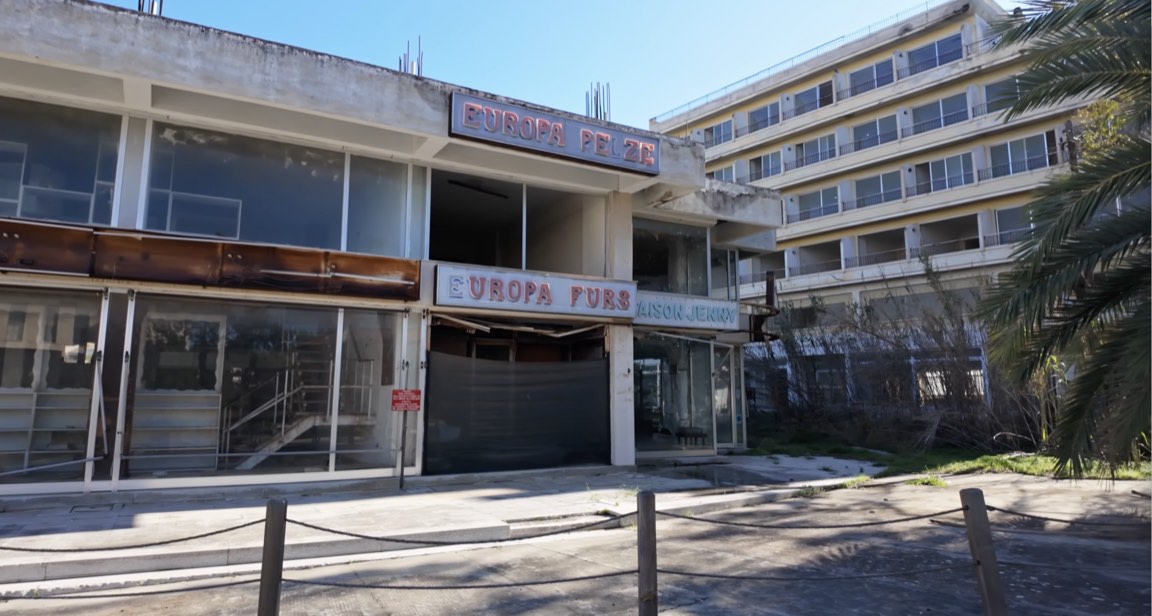
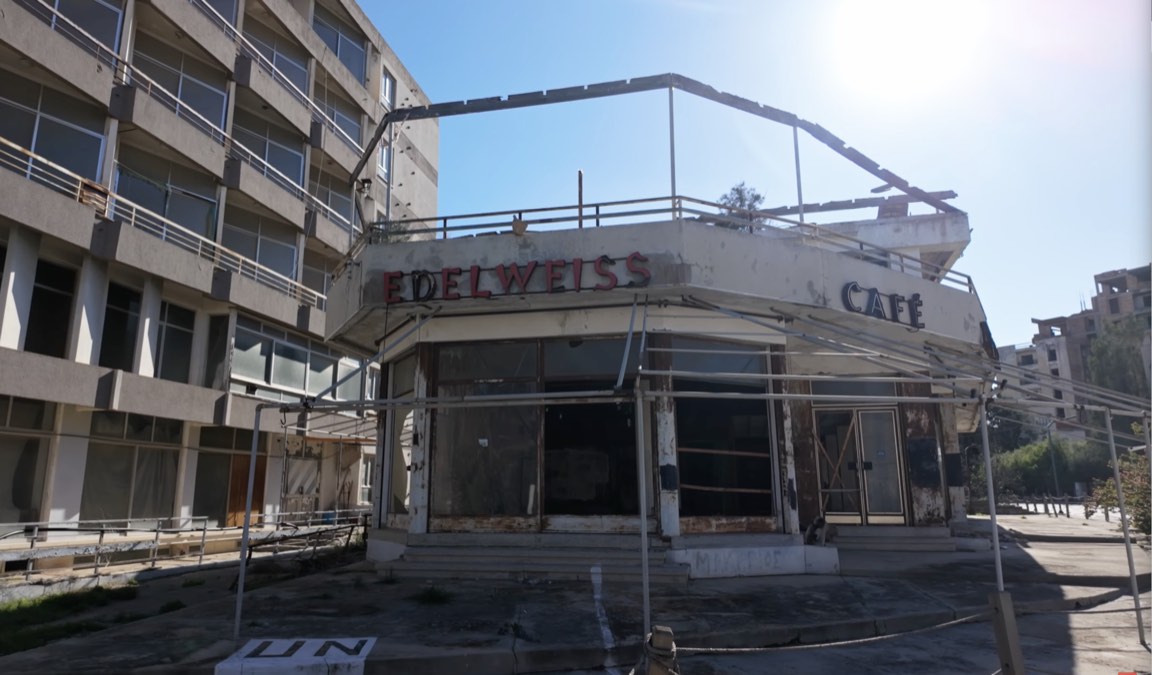
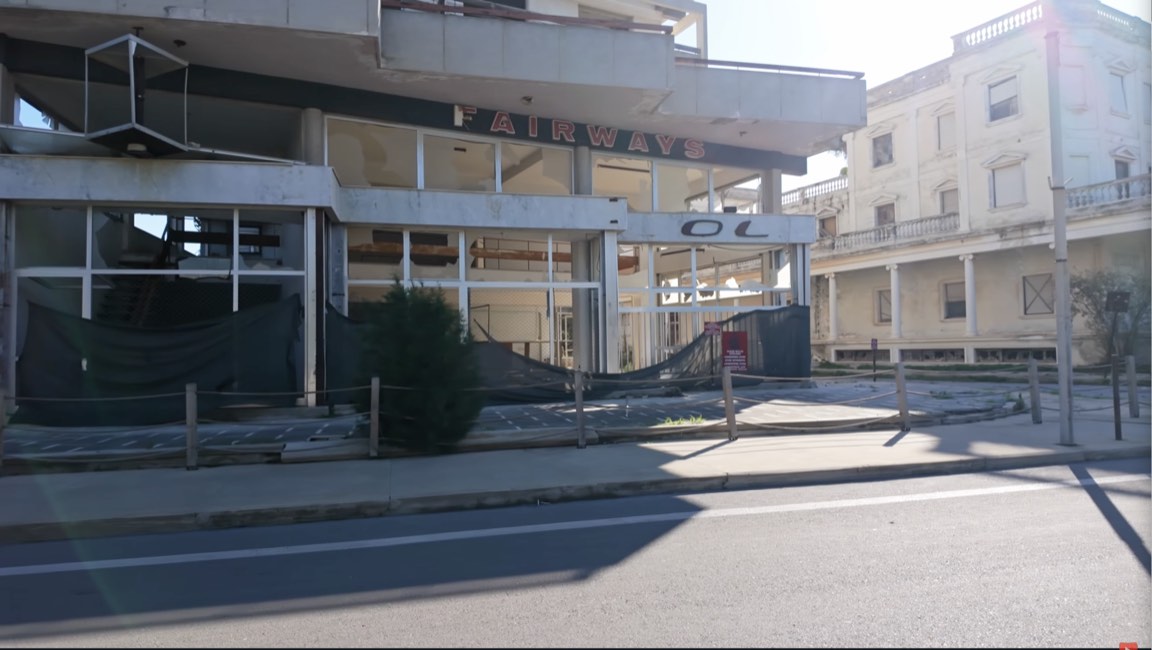
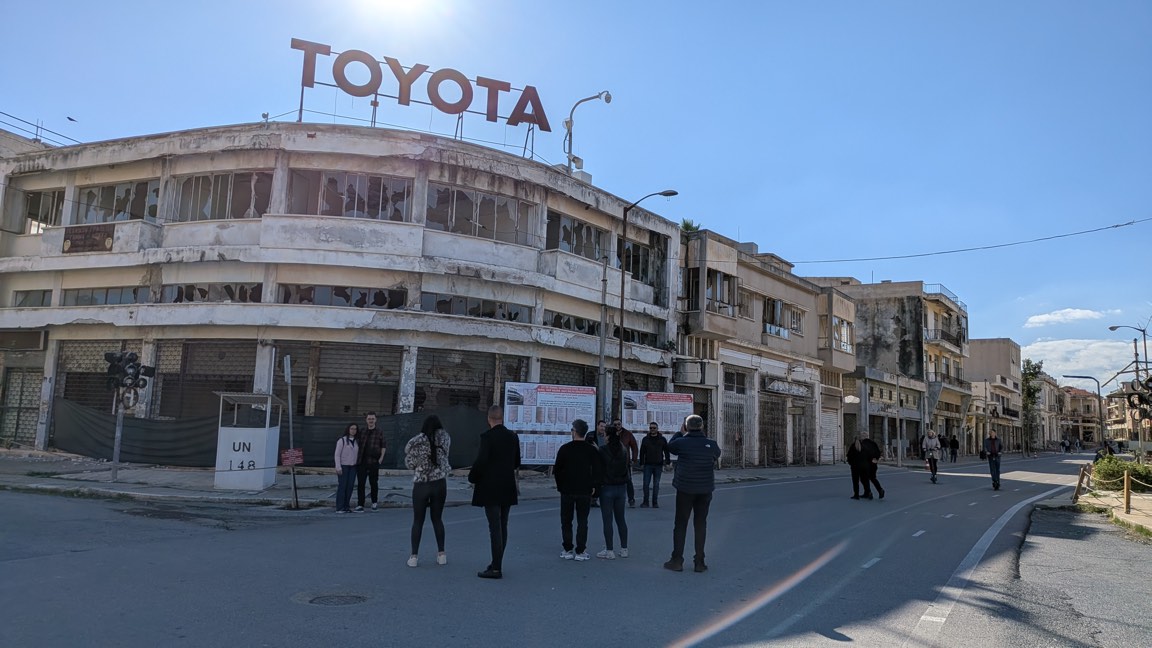
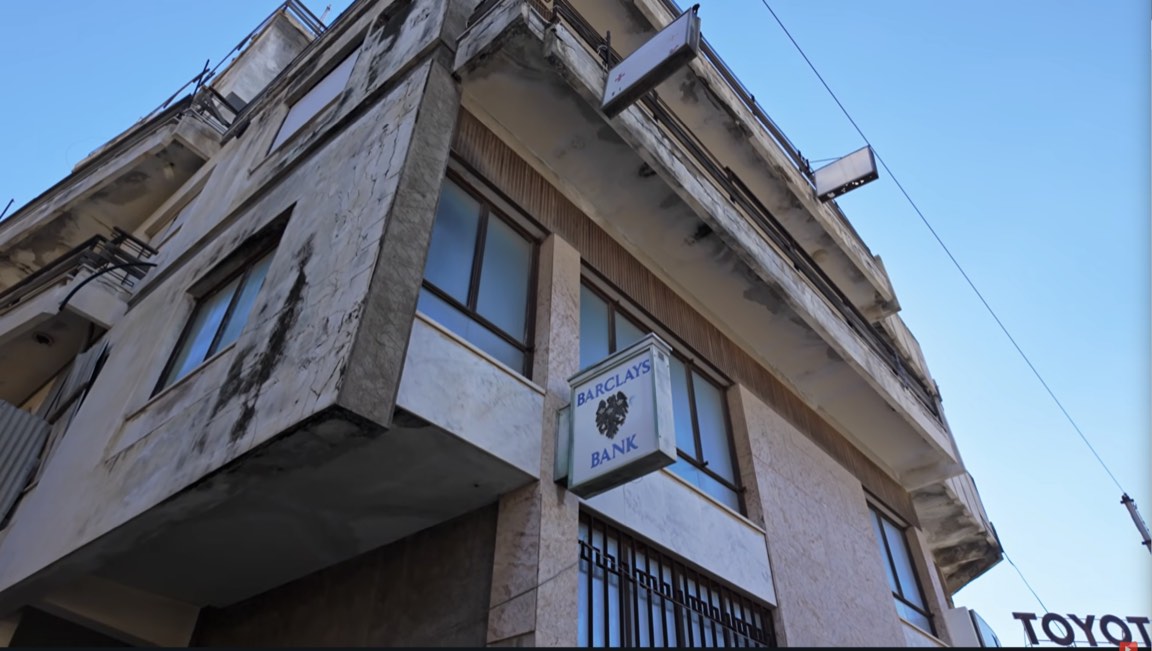
What's left standing tells the story on its own: former shopfronts with shattered display glass, a building that was once a prominent hotel, all now sitting in a state of arrested decay. The wider outcome was a hard demographic split, the north becoming overwhelmingly Turkish Cypriot, the south overwhelmingly Greek Cypriot, a separation that has held in the decades since.
A resort more popular than Paphos, once
Before 1974, Varosha wasn't a minor beach town, it was, by most accounts, the single most popular tourist destination in Cyprus, more prominent at the time than Paphos, which I'd visited days earlier, is today. Old photographs from before the exodus show a resort in full swing, packed shoreline, thriving hotels, genuine glamour. Walking the same stretch now, past a beach still fenced off, past a hotel called the Asterias standing hollow behind its own signage, past what was once the town's central bazaar entrance, it's not hard to picture how different this would look had history gone another way.
Sealed for 47 years, then quietly reopened
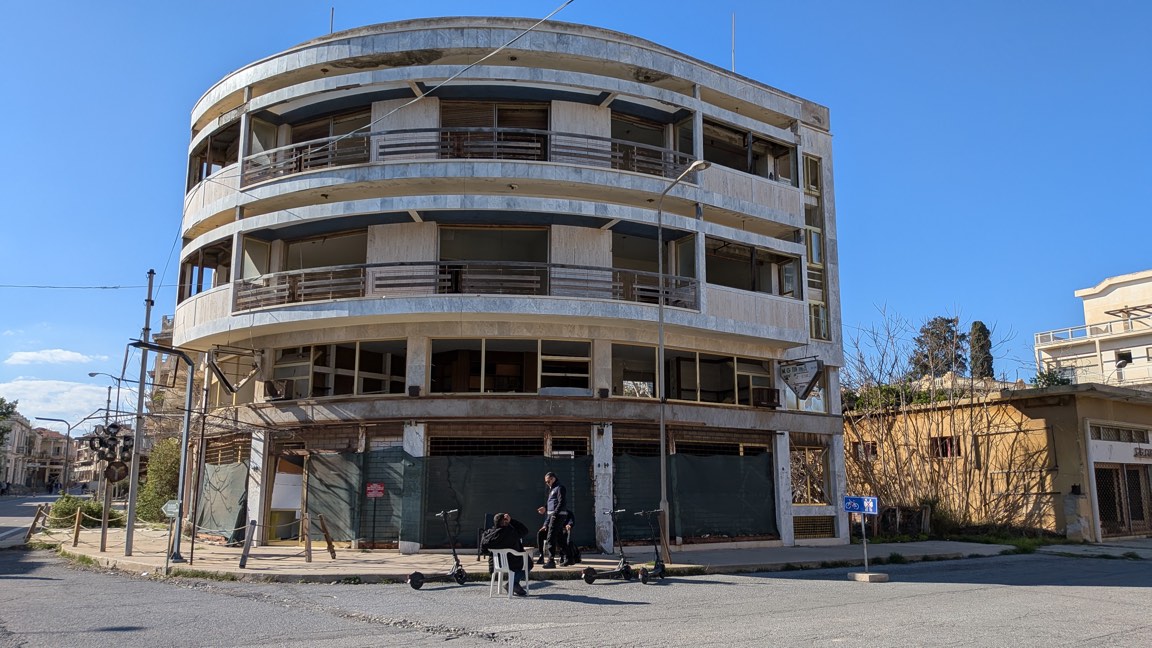
After the exodus, Turkish authorities sealed Varosha completely, no entry permitted at all, for reasons that were never made fully clear to me. That lockdown held from the mid-1970s until 2021, when a section of the district was opened to visitors for the first time. Why exactly, and to what end, I genuinely can't say with certainty, whether it was intended as transparency, as a form of historical documentation, or something else entirely. UN resolutions have called for the area to be returned to its original residents and reopened for resettlement, but that hasn't happened; what's opened instead is a narrow corridor for visitors, with clear signage marking exactly how far forward you're permitted to go before the path is closed off, buildings beyond that point are considered too structurally unstable to approach safely.
A place that deserves a different kind of visit
This isn't a site meant for casual sightseeing or photo opportunities, and it genuinely bothered me seeing visitors treating it that way, smiling selfies in a place that represents real, significant loss for the people who once called it home. I didn't take a single personal photo of myself here; what footage exists is purely to document and inform, the same approach I'd taken previously at a former concentration camp in Krakow. Documentary photography, taken with real context and respect, is one thing. Selfies at a place people were forced to flee under threat to their lives are something else entirely, and I'd ask that anyone visiting keep that distinction in mind.
There's a comparison worth drawing, carefully, to Kashmir, and specifically to the displacement of Kashmiri Pandits, different scale, different specifics, but a broadly similar pattern of people driven from homes by conflict, with return still unresolved decades later. I raise it only as a point of reference, not to draw a direct equivalence between two very different histories.
What might have been
Had I visited in the 1970s, before all this, Varosha rather than Paphos would likely have been the obvious choice for this trip, that's how far ahead it was in its prime. What actually happened here is a familiar pattern globally: political conflict cutting short a place's trajectory entirely, sometimes for generations. It's not a uniquely Cypriot story, but walking through the physical evidence of it made the pattern land differently than reading about it ever could.
Practical tips for visiting Varosha
- Access: entry is free but restricted to a marked corridor; further sections remain closed for structural safety.
- Getting around: bicycles are available to rent inside for a small fee in Turkish lira, useful given how much ground the district covers.
- Drones: not permitted, security checks for this specifically at entry.
- Conduct: treat this as a site of real historical loss rather than a photo backdrop; documentary-style photos are appropriate, casual selfies are not.
- Time needed: a couple of hours is enough to walk the open section at a respectful pace.