
Faro is the Algarve's capital and its main airport, which means most visitors treat it as a place to land, not a place to stop. That felt like a mistake to skip, Faro's old town has roughly 2,000 years of layered history packed into a few walkable blocks, and I gave it a full day before heading further down the coast.
The full day: the old town, both chapels of bones, a Ria Formosa sunset cruise, and a very unexpected dinner.
Arrival, the waterfront, and the Ria Formosa
Faro's airport sits close enough to the centre that the whole commute to the harbour and marina took barely any time at all, a genuinely convenient way to start a trip. The waterfront looks out over the Ria Formosa, a massive coastal lagoon and nature reserve, separated from the open Atlantic by a chain of barrier islands. It's one of Portugal's most important wetland systems, and it quietly shapes almost everything about how Faro looks and moves, including, as it turns out, what's allowed to fly over it.
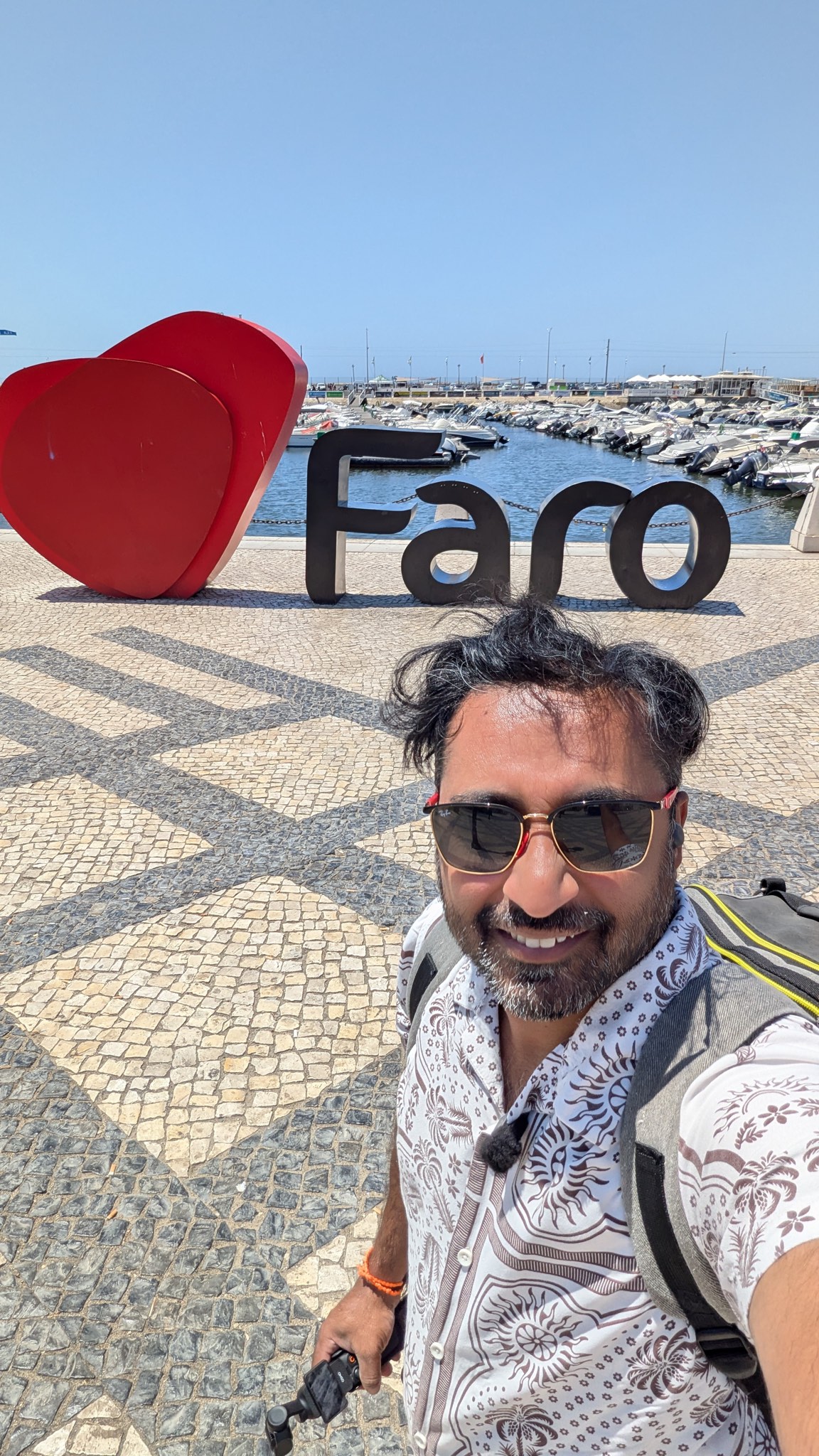
Into the old town through a Moorish gate
The old town, Cidade Velha, is entered through the Arco da Vila, an 11th-century Moorish gate that still marks the transition from modern Faro into its medieval core. Past the arch it's cobblestone streets and an orange-tree-lined square leading straight to Faro Cathedral, a building with a genuinely layered history of its own, originally built as a mosque before being converted into a church in the 1200s, then partially rebuilt after later earthquake damage. I climbed the cathedral's bell tower for sweeping views over the old town's rooftops and out across the Ria Formosa, a particularly useful vantage point here, since drone flying is restricted around Faro because of both the nearby airport and the protected nature reserve.
Walking the old town's streets afterward, the mix of whitewashed houses, tiled façades and that specific coastal light kept pulling my mind back to Goa, not a coincidence, given Portugal's own colonial history connects the two places directly. A few street murals scattered through the old town added a more modern layer on top of all the medieval stonework.
Two chapels built from human bone
Faro has not one but two Capela dos Ossos, Chapels of Bones, built from skulls and skeletal remains excavated from old monastery cemeteries. The smaller one sits inside the Cathedral itself; the larger, more striking version is at the Church of Nossa Senhora do Carmo. Walking into a small room where the walls themselves are constructed from human bone is exactly as unsettling as it sounds on paper, and exactly as fascinating in person, a very literal, very Portuguese memento mori, built to remind visitors of their own mortality rather than to shock for its own sake.
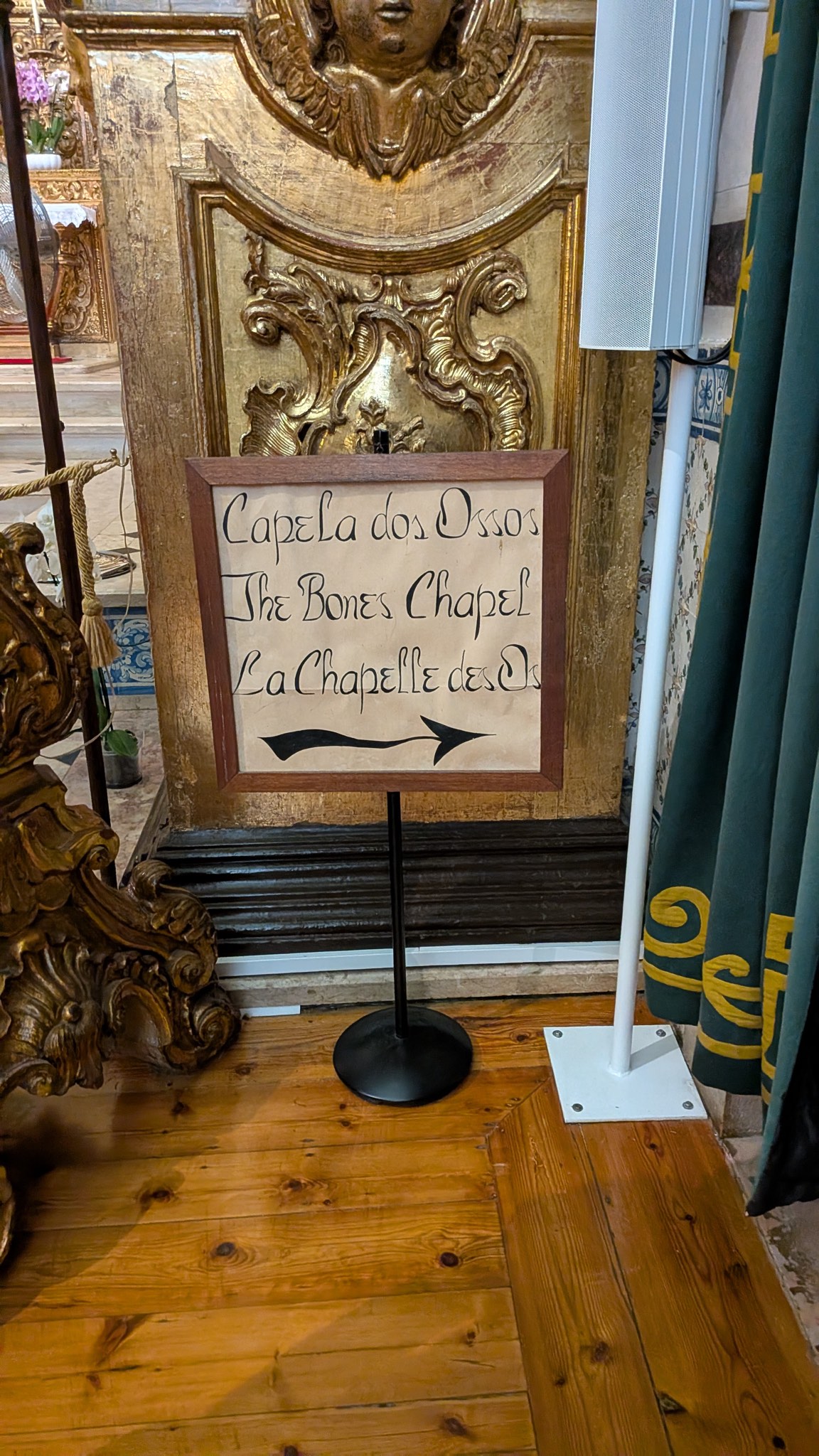
A sunset boat tour through the Ria Formosa
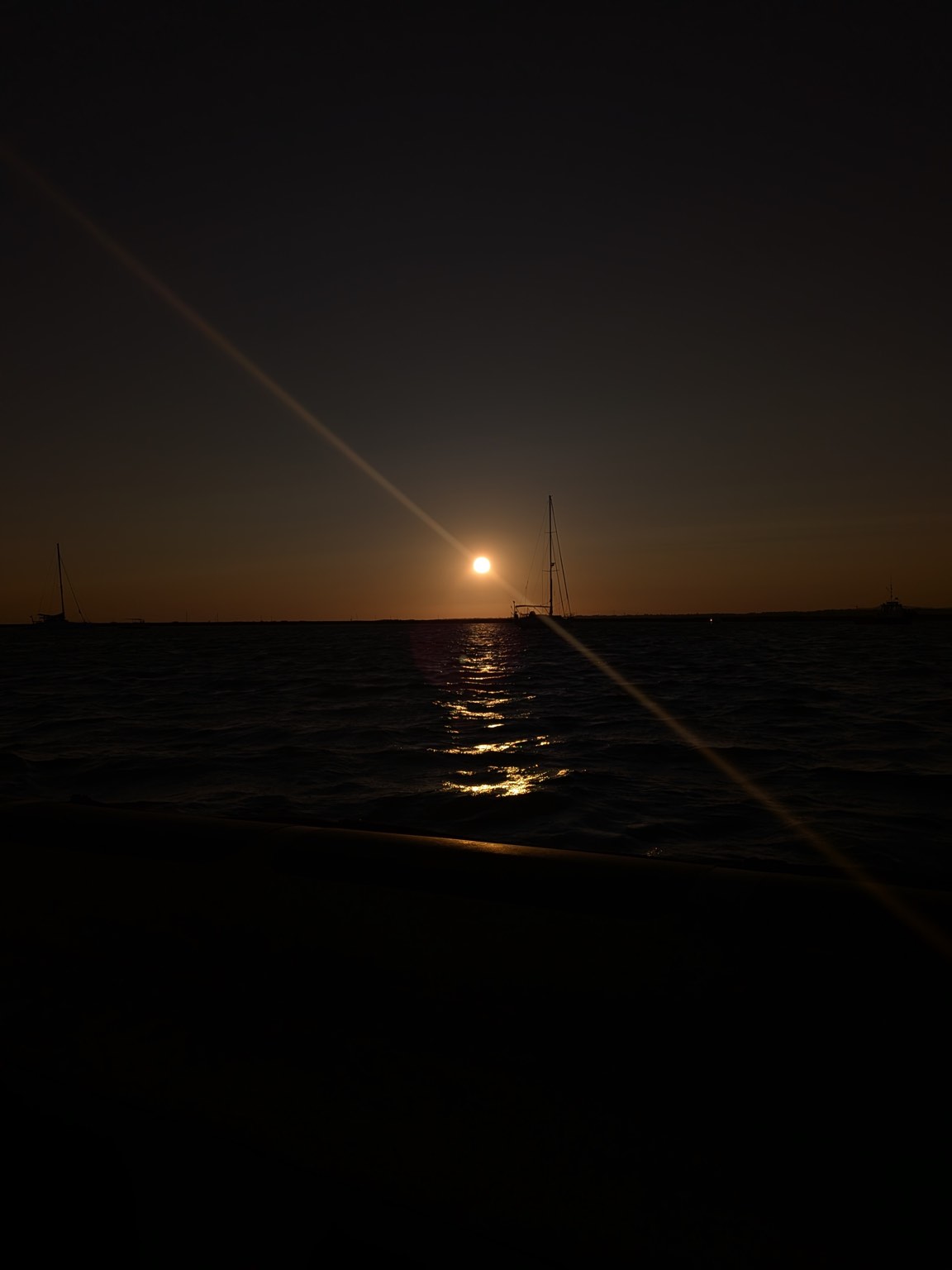
In the evening I took a boat out into the Ria Formosa Nature Reserve itself, and it's a completely different side of Faro from the old town's stonework, channels through the wetlands, migratory birds working the shallows, crabs scattering across the mudflats, and a genuinely rich stretch of biodiversity protected inside barrier islands most visitors never set foot on. The tour mixed slow, quiet stretches for spotting wildlife with a few high-speed runs across open water, timed just right to watch the sun go down over the lagoon.
An unexpected Telugu dinner, in the middle of Portugal
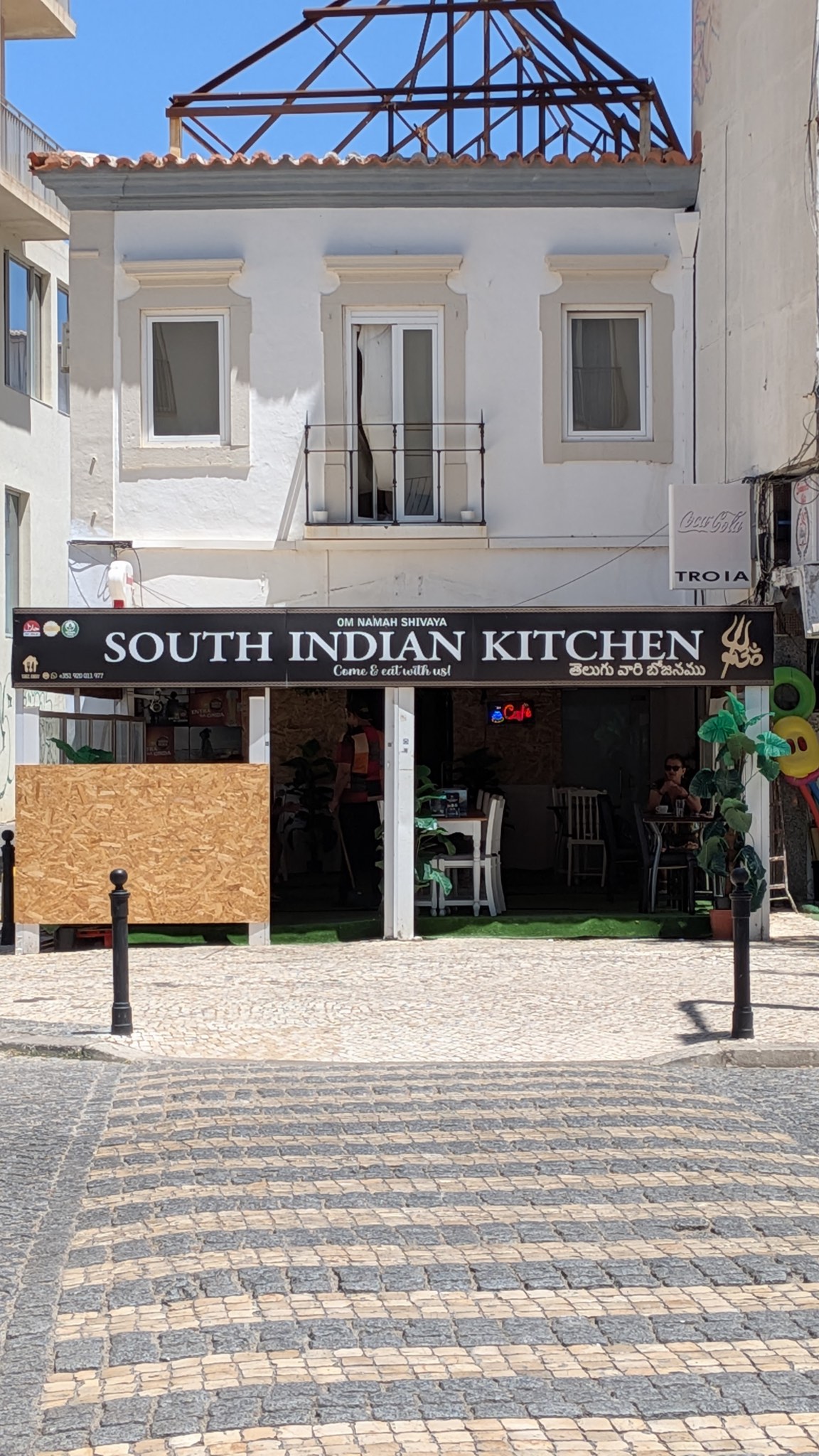
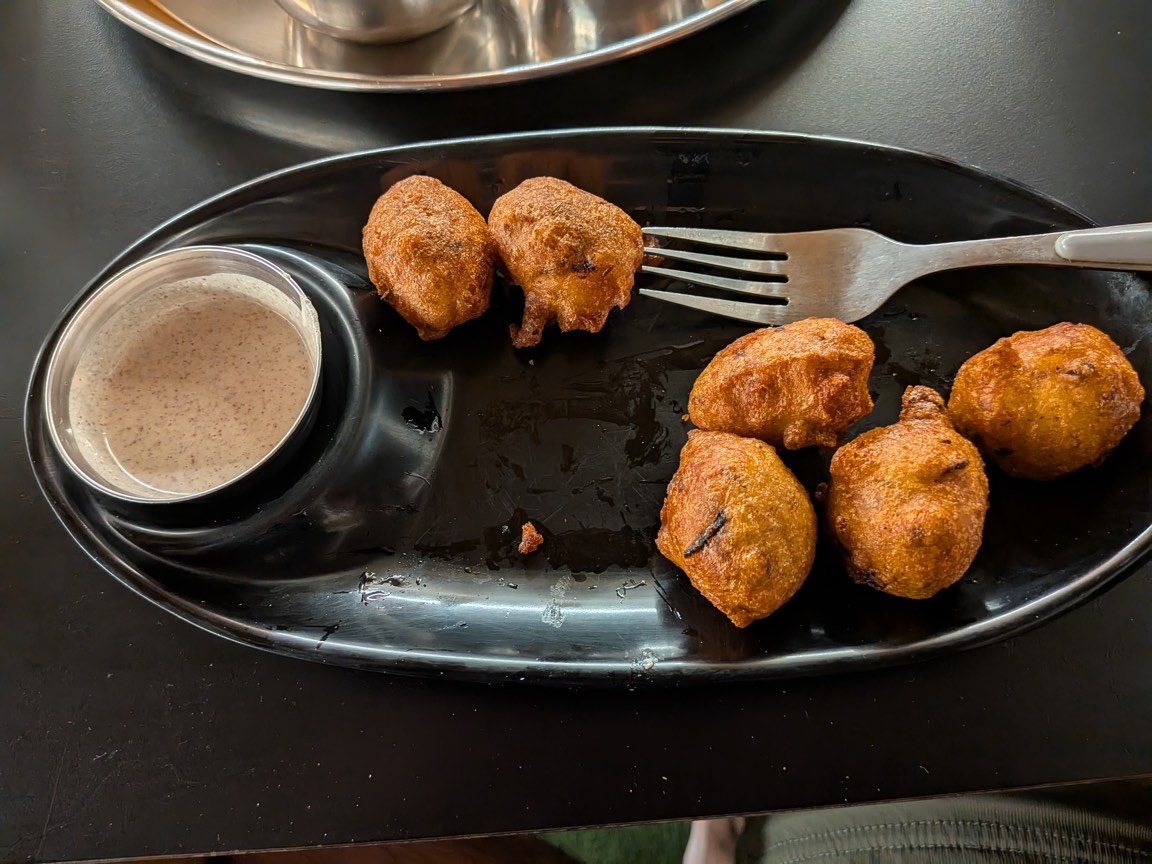
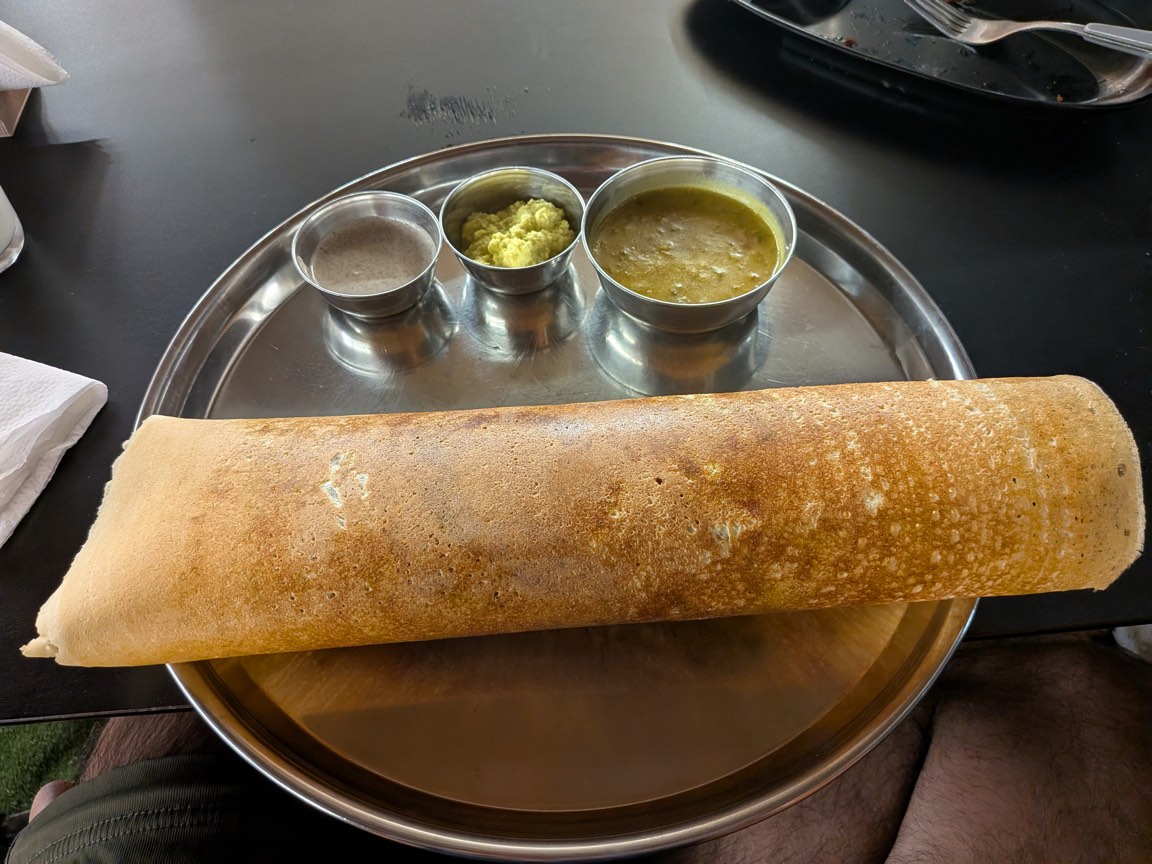
Looking for dinner afterward, I turned a corner in Faro's old town and stopped dead: a restaurant sign reading "South Indian Kitchen", with Telugu script underneath it that reads "Telugu people's food". Finding Telugu food in a small Portuguese city, at the far southwestern edge of Europe, felt like too strange a coincidence to walk past. Inside, I ordered properly: crisp punugulu with chutney, a bowl of sambar, and a Shiva Shambo Dosa, full South Indian comfort food, thousands of kilometres from home, in a town most people only ever see through an airport window.
Wrapping up in Faro
Faro isn't a city that demands more than a day, and it doesn't try to be, that's exactly what made it work. Quiet, compact, walkable, with enough genuine history layered into a few blocks to justify stopping rather than rushing through, before the next leg of this Algarve trip headed out to the cliffs and sea caves everyone else comes here for first.
Practical tips for Faro
- Getting there: Faro Airport is close enough to the old town and marina for a very short transfer, no need to rent a car just to explore the city itself.
- Cathedral bell tower: Worth the climb for panoramic views, especially since drones are restricted here due to the airport and the Ria Formosa reserve.
- Chapels of Bones: Both the Cathedral's smaller chapel and the larger one at Nossa Senhora do Carmo are worth seeing, they're different enough in scale to justify visiting both.
- Ria Formosa boat tours: Evening tours combine wildlife spotting with a sunset finish; check for tours specifically timed around sunset rather than a fixed afternoon slot.
- Food: Yes, there's a Telugu restaurant in Faro's old town, worth seeking out if you're missing South Indian food on a long Europe trip.
Most people treat Faro as a runway with a marina attached. Give it a day instead, and it turns out to have a Moorish gate, two chapels built from its own dead, a wetland reserve worth a sunset on its own, and, against every possible expectation, properly good punugulu.