
This video covers a lot of ground, one of the largest market squares in Europe, a legend about two brothers and a dragon, and then a shift in tone entirely: a visit to Auschwitz-Birkenau, followed by an underground salt mine carved into something close to a cathedral. It's a heavier watch than usual in places, and that's intentional.
Krakow's Main Square, Wawel Castle, Auschwitz-Birkenau, and the Wieliczka Salt Mine.
Main Square, on marathon day
Krakow's Main Square (Rynek Główny) is regularly counted among the largest medieval squares in Europe, and on the day I arrived it was doubly busy: a city marathon was finishing right through the square. Runners crossing the line were immediately wrapped in foil thermal blankets against the cold, the same kind used for space missions, worth it once the adrenaline of running wears off and the cold sets back in. The Sukiennice, Krakow's historic market hall right in the square, was as good a place as any to pick up a fridge magnet, a habit by now on every stop of this trip.
St. Mary's Basilica, two towers and two dark legends
St. Mary's Basilica is one of Poland's most recognisable churches, originally built in the 13th century, destroyed by Mongol invaders, and rebuilt in the 14th. It carries a direct connection to Karol Wojtyła, better known to most of the world as Pope John Paul II: he served as a priest here before rising to Bishop, then Archbishop of Krakow, and eventually became the first non-Italian Pope in the modern era, a significant break from a papacy that had, until then, been exclusively Italian.
The church's two towers are famously uneven, one taller than the other, and local legend explains why: two brothers each built one tower in open rivalry, and when one realised his brother's tower was outpacing his own in height, he killed him, then, overcome with guilt, took his own life by jumping from the tower himself. Whether that's history or folklore, nobody can say for certain. A second legend ties into the hourly trumpet call (hejnał) played from the taller tower, which always cuts off mid-note rather than finishing, said to commemorate a trumpeter shot mid-warning by Mongol invaders during the same siege that destroyed the original church.
A city the Nazis kept intact, for their own reasons
Most of Krakow's old buildings survived the Second World War largely untouched, a rarity across a region where so many historic European cities were flattened. The reason is a grim one: occupying Nazi German forces used Krakow as a regional base of operations, and a city serving as your own headquarters isn't one you destroy.
Wawel Castle, over a thousand years of Polish kings
Wawel Castle served as the seat of Polish kings for centuries, the site of royal coronations and the monarchy's principal residence, with parts of it predating the year 1000. Wawel Cathedral sits right beside it, following the familiar European pattern of pairing a royal residence with its own cathedral.
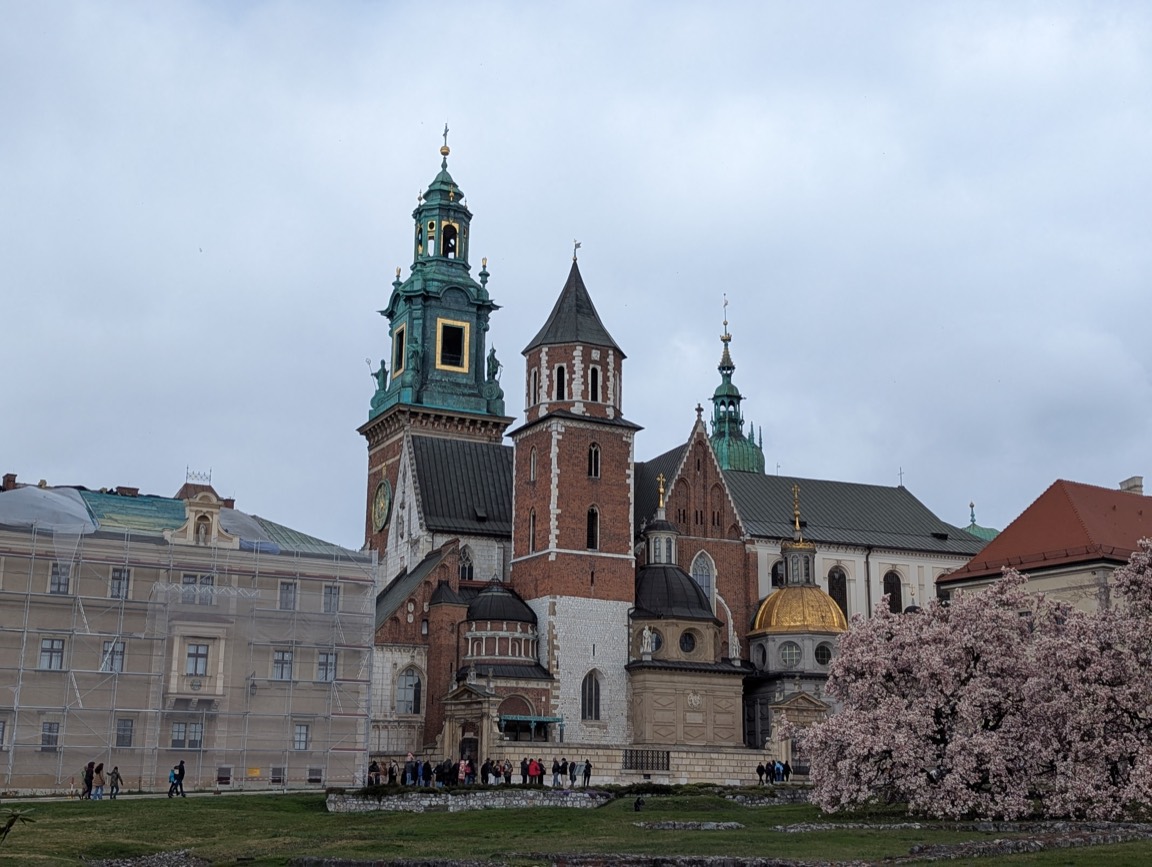
A dragon statue near the castle marks the site of Krakow's own dragon legend: a dragon that had been terrorising the city from a cave beneath the castle hill, until the king offered his daughter's hand to whoever could kill it. A shoemaker succeeded where knights had failed, stuffing a sheep's hide with sulphur; the dragon swallowed it whole, and when it went to a nearby river to cool the burning in its stomach, the water reacted with the sulphur and made the burning worse rather than better, killing it in the process, reportedly amid smoke and flame dramatic enough to belong in an old-school mythological film.
Schindler's Factory, and a story most people know from film
Krakow is also where Steven Spielberg's Schindler's List was filmed, based on a true story that unfolded in this city. Oskar Schindler, a German industrialist, opened a factory here, and together with a Jewish accountant working alongside him, used it to classify Jewish workers as "essential," keeping them alive as factory labour rather than letting them be sent to their deaths, saving a substantial number of lives in the process. The factory building still stands, now a museum with a long queue outside; I wasn't able to get tickets on the day, but the history is closely tied to what came next on this trip.
A note before the next section
What follows covers Auschwitz-Birkenau, a Nazi concentration and extermination camp, in real detail. I went there specifically to document and inform, not for entertainment, and I've kept that same intent here. If this isn't something you want to read right now, skip ahead to the Wieliczka Salt Mine section further down.
Auschwitz-Birkenau: what actually happened here
Auschwitz-Birkenau isn't a tourist site in any normal sense, and I want to be clear that I went there to document and explain, not to sightsee. What operated here, run by Nazi German forces (a distinction worth being precise about, not "German" broadly), began as a single camp and expanded into three main sites plus roughly fifty smaller sub-camps, spread across an area of some 40 square kilometres. Most of the smaller sites are gone now; two of the main sites, Auschwitz I and the larger Birkenau (Auschwitz II), remain and are open for visits.
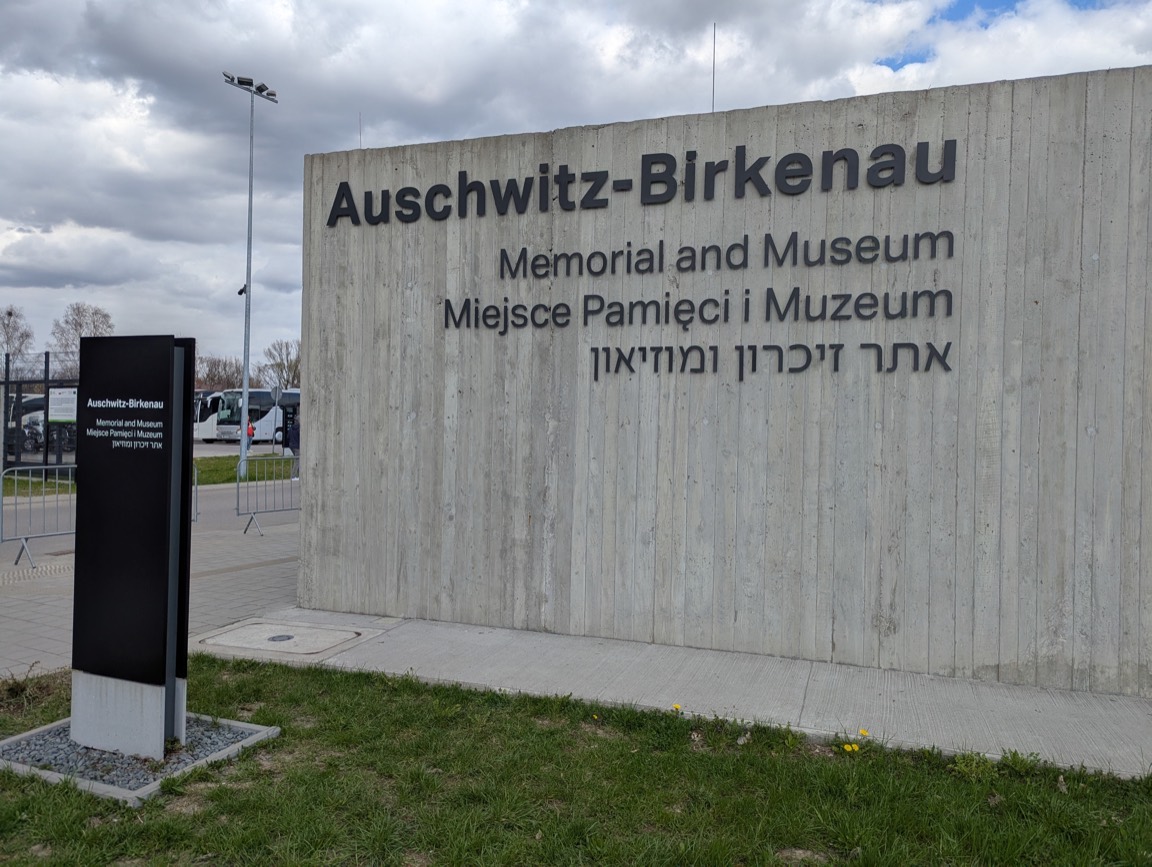
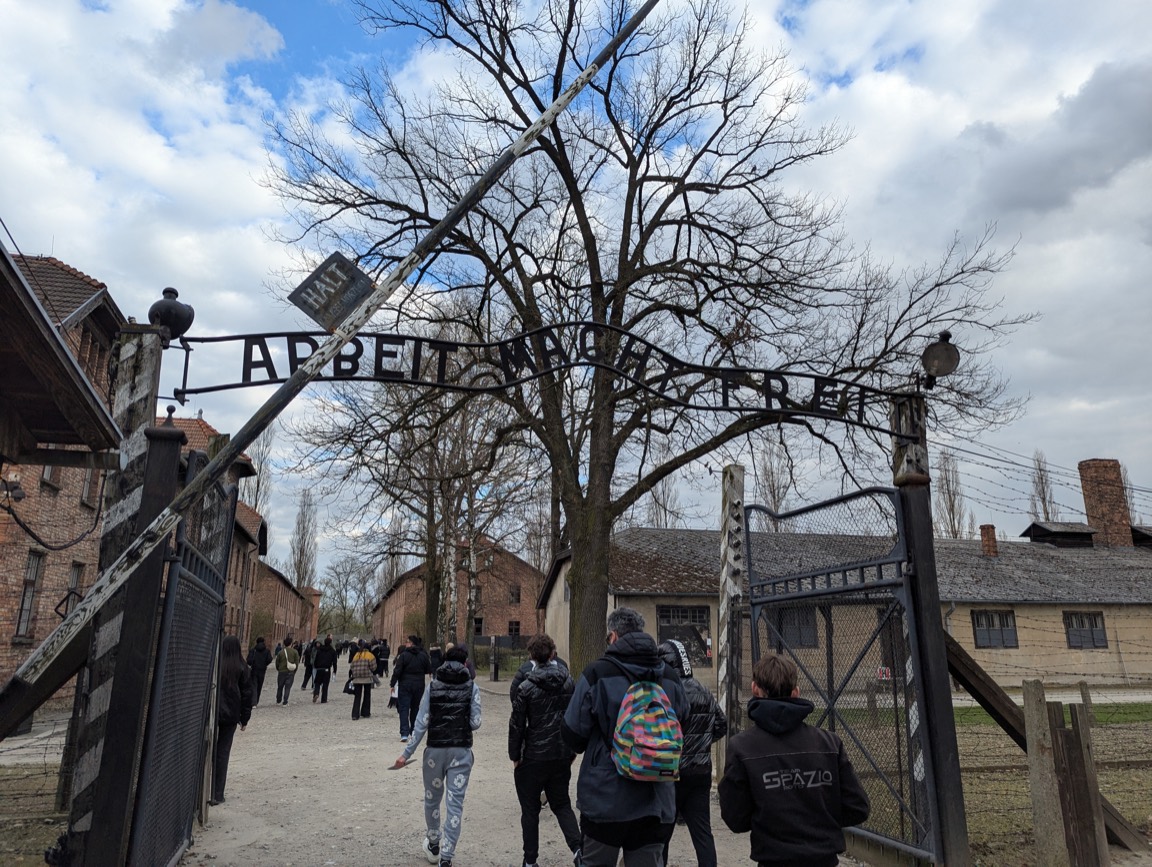
Trains brought prisoners, overwhelmingly Jewish deportees from across occupied Europe, directly to the camp, where an immediate selection process decided who lived and who didn't. Those deemed fit for forced labour were sent into the camp system; the elderly, women, children and anyone judged unfit were sent directly to their deaths. A smaller number were subjected to medical experiments during the initial screening. Gas chambers, four of them, paired with three crematoria, were used to kill people in mass numbers, their belongings, clothing, shoes, jewellery, stripped beforehand and reused by camp administrators.
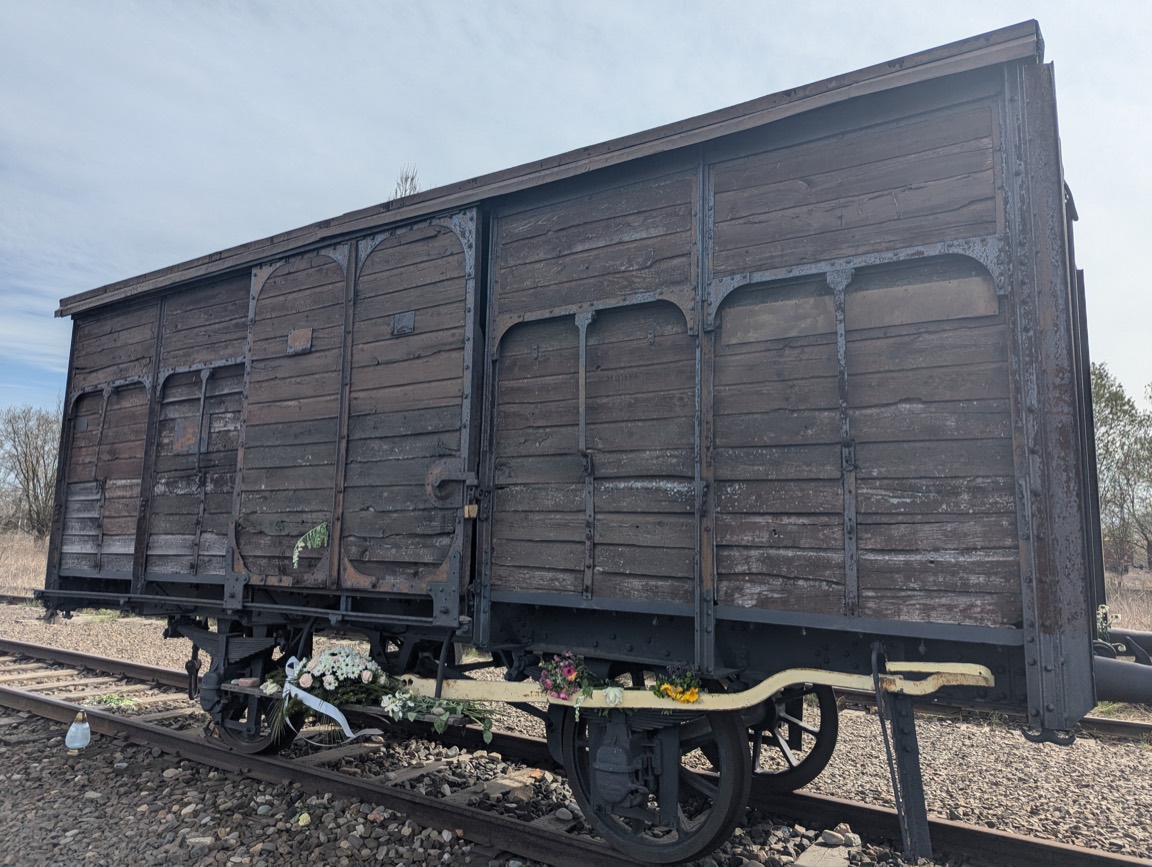
The scale is difficult to hold in mind at once: an estimated 1.3 million people passed through this camp between 1940 and 1945, and roughly 1.1 million of them were killed here. What began as a forced-labour camp evolved, as the war continued, into a deliberate policy of mass extermination, a policy the regime itself termed the "Final Solution." For any Indian visitor trying to grasp the scale and deliberate cruelty of what happened here, the closest historical reference point I can offer is Jallianwala Bagh, not as an equivalence, the scale here is vastly larger and sustained over years rather than minutes, but as a starting point for understanding that this was systematic, state-directed violence against unarmed people, not the chaos of battle.
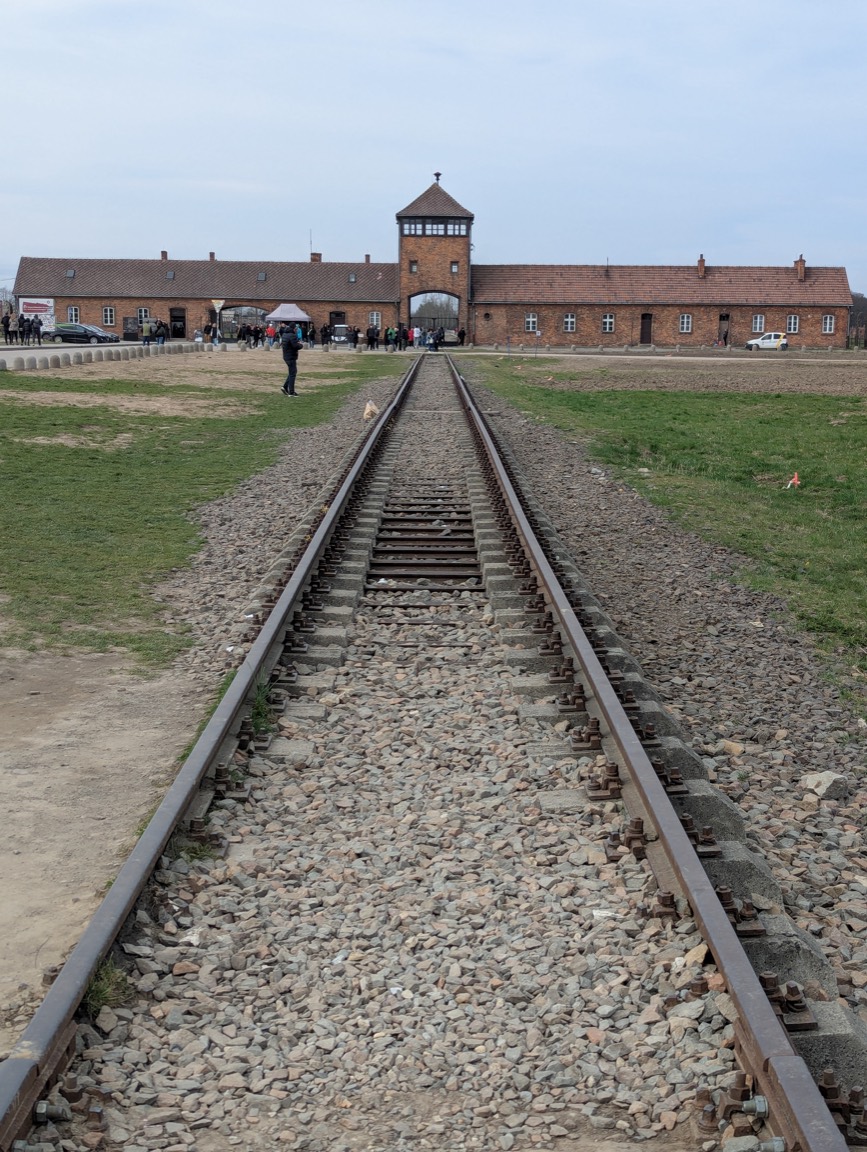
Some of what's on display inside, personal belongings, children's shoes, and other preserved evidence of exactly who was taken here, is difficult to describe further, and I won't try. What I can say plainly: nothing I'd read beforehand about the scale of Nazi brutality was exaggerated. If anything, walking through confirmed it beyond what description alone can carry. It's also worth remembering, soberly, that this regime found willing support from various quarters at the time, a reminder that this kind of atrocity depends on more than just the people who plan it.
Wieliczka Salt Mine, a lighter stop, deliberately
After Auschwitz, the next stop was chosen deliberately to be something else entirely: the Wieliczka Salt Mine, a UNESCO World Heritage Site and one of the more unusual attractions in the Krakow area, purely for the change of pace it offered.
Getting in means descending 380 steps just to reach the first level, some 64 metres underground, the start of a mine network that totals roughly 200 kilometres, of which the standard visitor route covers only about 2 kilometres, a little over 1% of the whole system. Every tunnel and chamber here is entirely man-made, carved out while extracting rock salt, with wooden supports still holding sections of the tunnels in place. Geologically, this whole region once sat under an ancient sea; as it evaporated over hundreds of thousands of years, salt became trapped within the rock, the same basic process behind pink Himalayan salt sold today.
Salt was originally hauled up by human labour, later by horses turning mill-like mechanisms, then eventually by rail and electric-powered systems, genuinely sophisticated engineering for its era. Commercial mining continued here until roughly the 1990s, when it became cheaper to produce salt through other means, though a smaller amount is still extracted today, largely to maintain the mine as a visitor attraction.
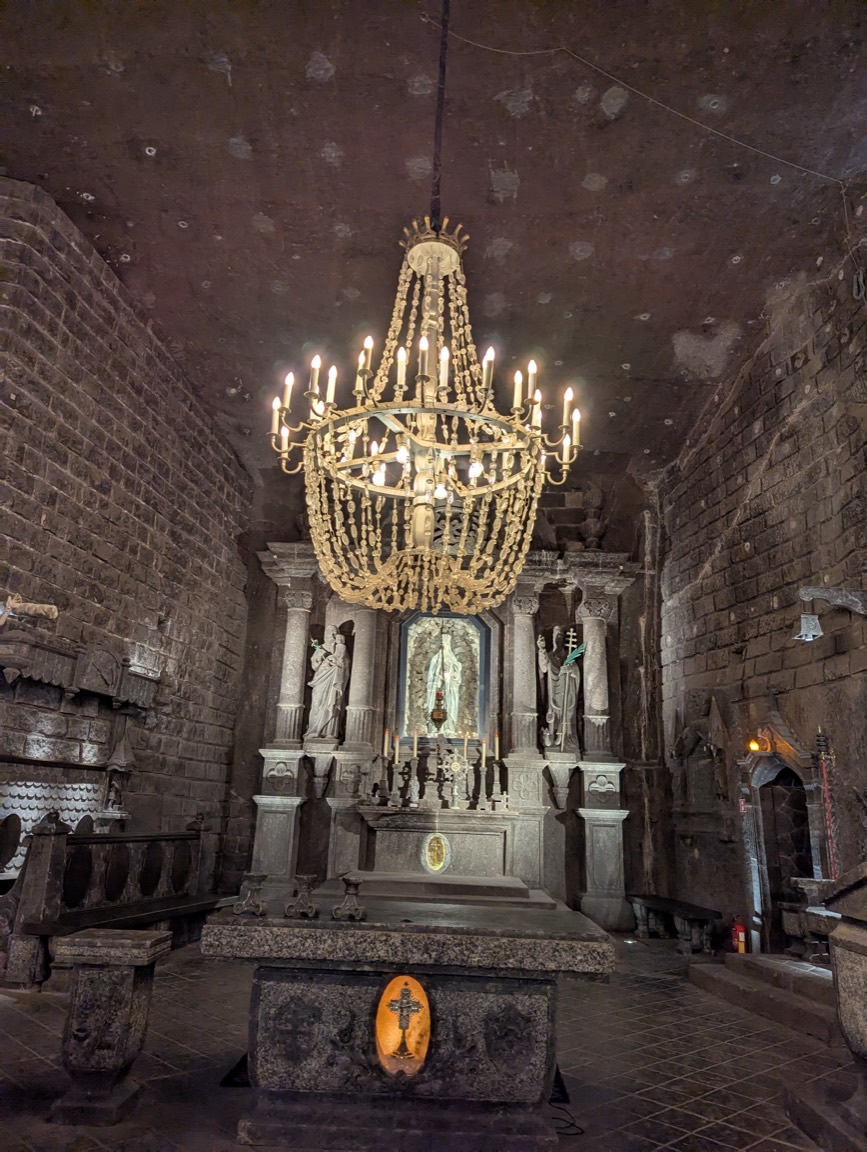
The highlight, roughly 90 metres down, is an underground chapel carved by the miners themselves, its altar, chandeliers and even a statue of Pope John Paul II all sculpted from salt crystal, genuinely striking when lit from within. Further down, at the deepest point on the standard route, around 130 metres underground, sits a fully saturated salt lake, green-tinted and dense enough that floating in it would be effortless, similar in principle to the Dead Sea I'd experienced in Jordan earlier on this trip, though this one isn't open for swimming. A small shop near the end sells salt-based souvenirs: bath salts, crystal chunks, even salt-infused chocolate.
A deliberately different kind of stop
Krakow, on this trip, wasn't really about doing what every other visitor does. Between a genuinely difficult but necessary stop at Auschwitz and an entirely unexpected one at Wieliczka, this ended up being one of the more memorable, if heavier, days of the whole journey.
Practical tips for Krakow
- Auschwitz-Birkenau: book tickets well in advance, treat it as a memorial visit rather than a typical day out, and set aside real time to walk through it properly.
- Schindler's Factory: book ahead if you want to see inside, queues without a reservation can be long.
- Wieliczka Salt Mine: requires a reasonable level of fitness for the steps down; there's a lift back up, but not on the way in.
- Main Square: check for local events like marathons or festivals before visiting, they can affect access to parts of the square.
- Wawel Castle: free to view from outside; book ahead for interior access to the castle and cathedral.