
With Paphos covered, the road ahead led toward Nicosia, Cyprus's capital, and true to how this channel usually works, the drive itself turned into most of the content, another rental car, another day of stopping at whatever turned out to be worth stopping for.
Cyprus Episode 2: Aphrodite's Rock, British Akrotiri, and Limassol's betting app headquarters.
Aphrodite's Rock, where a goddess supposedly came ashore
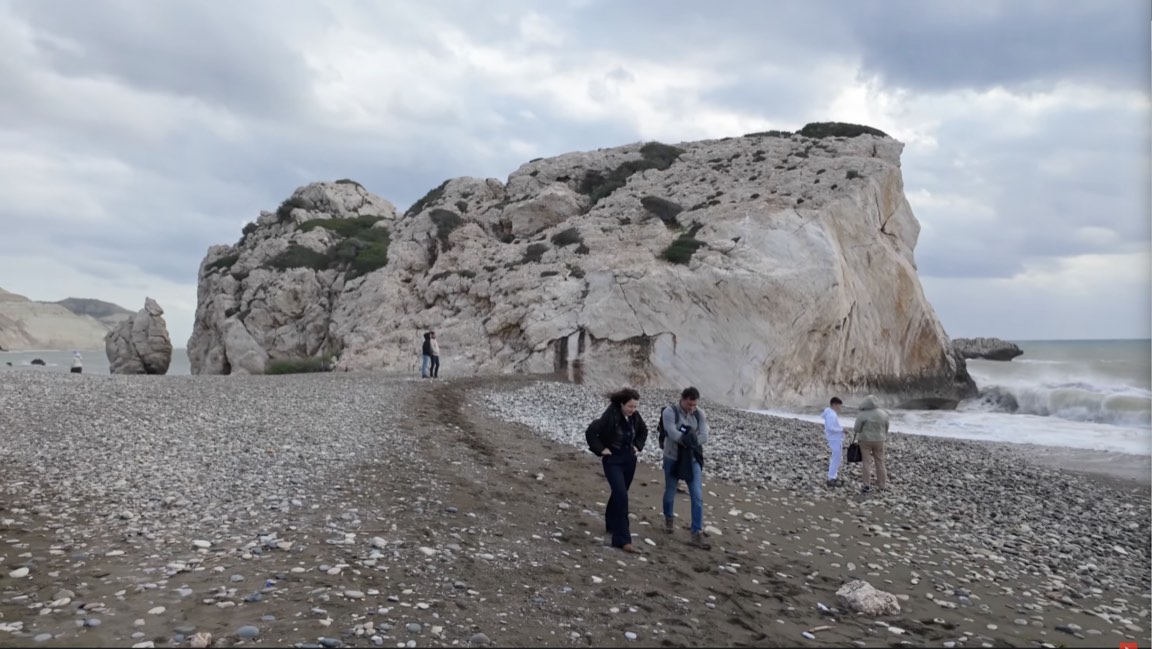
The first stop was Petra tou Romiou, known in English as Aphrodite's Rock, tied to the Greek myth of Aphrodite, goddess of love, said to have been born from sea foam and to have come ashore at this exact spot. Cyprus holds a particular claim to her, she's sometimes called the Cypriot goddess specifically because of this legend, and given how strong Greek cultural influence runs through the southern part of the island, the connection tracks.
In summer, this beach reportedly draws proper swimming crowds; in winter, nobody was brave enough to get in. Climbing the rock itself is explicitly discouraged by signage, so despite seeing a few people attempt it, that wasn't happening here. The spot has a dedicated information app and free WiFi on site, and it's become something of a photoshoot destination, one couple had color-coordinated their outfits specifically to match the rock's tones, which was a nice detail to notice. Honestly, the setting reminded me a lot of Yarada Beach back home in Vizag, the same kind of coastal drama on a smaller scale.
A country that's really three countries in one
Cyprus is a genuinely strange case: three distinct political entities exist on this single island. What I'd covered in Paphos falls under the Republic of Cyprus, Greek-influenced in culture but fully sovereign, Greek flags appear everywhere, but Greece itself has no actual control here. Limassol, where I was headed next, sits partly on official British soil. And separately, North Cyprus exists as its own story, one I'd get to in a later stop.
British sovereign territory, right here in Cyprus
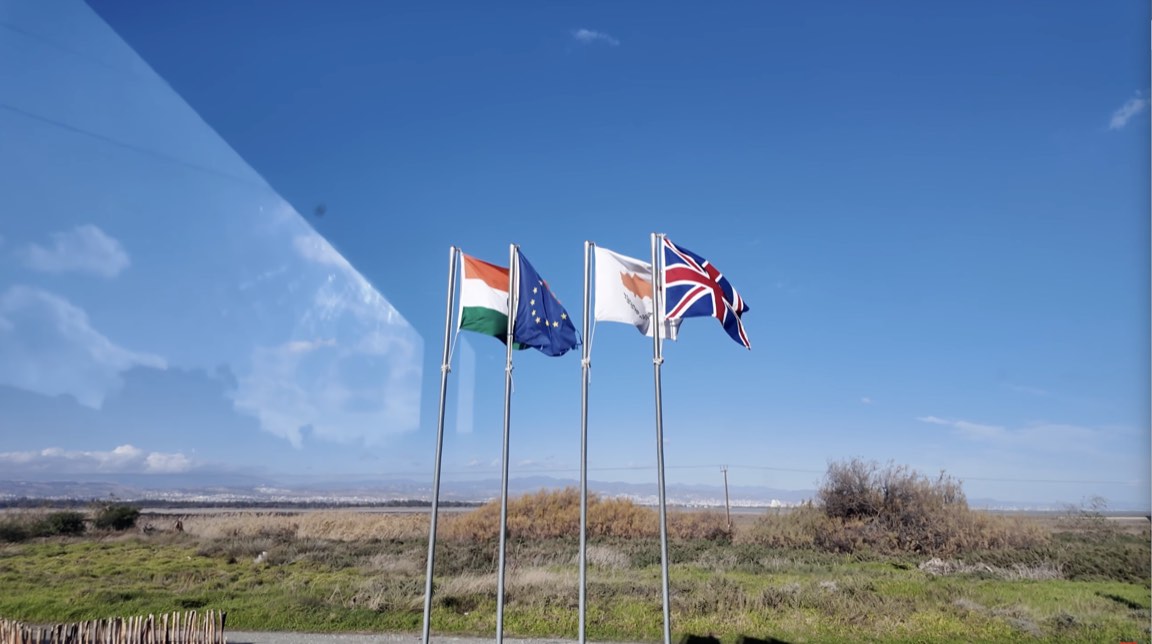
When Cyprus gained independence from Britain in 1960, Britain kept two small areas for itself, not unlike a landlord keeping one room back when renting out a house, except in this case, it wasn't a rental at all, just a retained holding. One of those areas includes a small military base along with the beach town of Akrotiri, right next to Limassol.
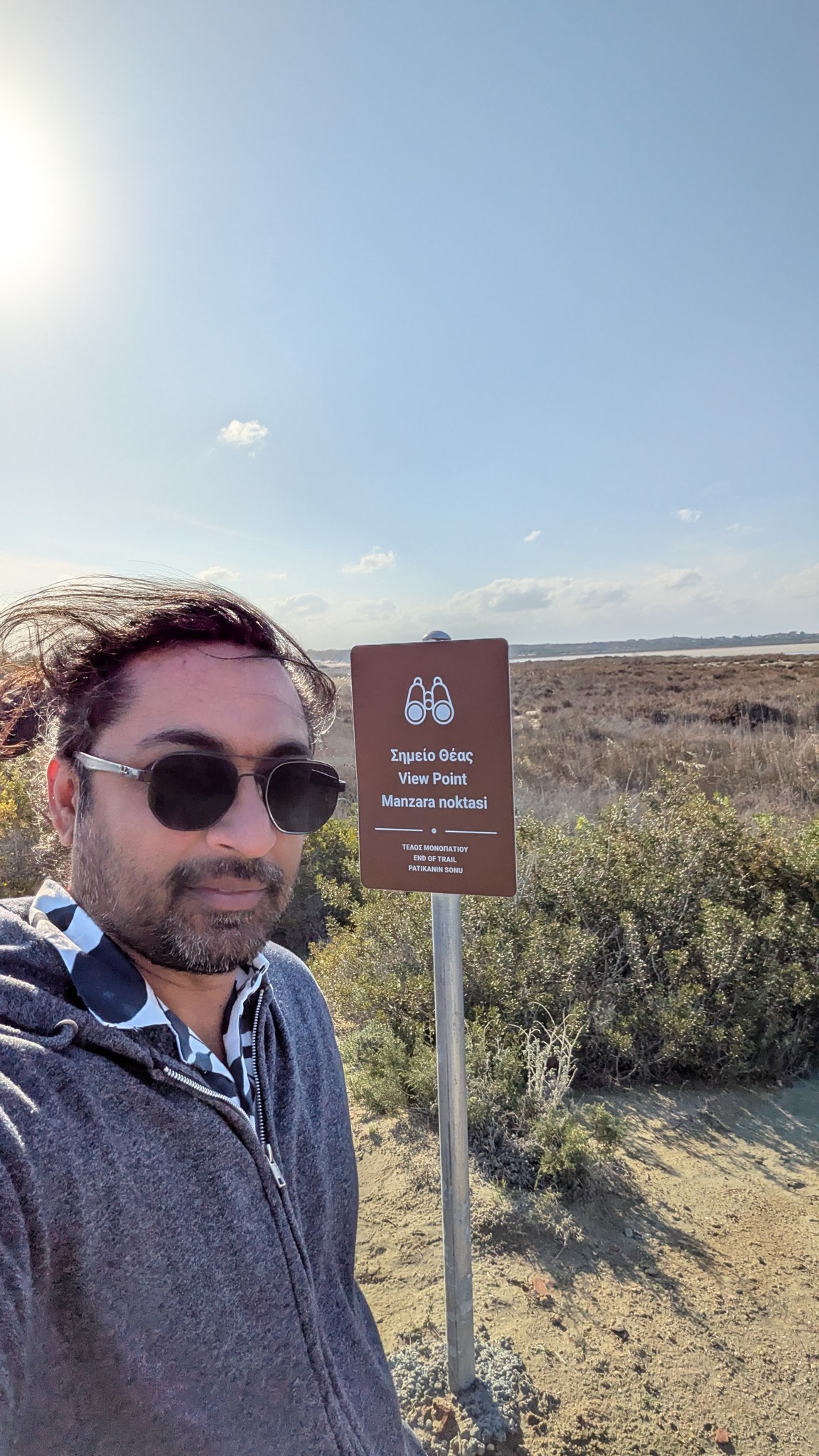
Near Akrotiri sits a salt lake, nothing like the Dead Sea I'd floated in a few weeks earlier in Jordan, this one is off-limits to visitors entirely. In summer it dries out completely into a crust of pure salt; in winter, water returns and fills it. A viewpoint trail leads out to it on foot from a car park, and in summer, flamingos apparently gather here in large numbers, drawn by the same seasonal water. The area hasn't been developed into a full tourist destination yet, but it's clearly on its way.
This entire stretch, Akrotiri included, is administered directly by the British, home to a Royal Air Force base I obviously wasn't allowed to photograph, but which was visible enough to register. The base reportedly supports UN operations from Cyprus when needed. And in one small, very literal reminder of that British administration: cars here drive on the correct side of the road, left-hand traffic, same as Malta, same as back home in India, a small but genuinely comforting detail after weeks of driving on the right elsewhere in Europe.
An Indian restaurant on British soil
After an Indian meal already covered in Malta, it felt right to look for one here too, and sure enough, right in this British-administered pocket sat a restaurant called Indian Spice. Slightly skeptical going in (rotis and curries don't always travel well), I ordered a vegetable biryani along with my usual go-to, salted lassi. The lassi delivered exactly what was promised, properly salty, no surprises there. The biryani itself came a little under-salted for my taste, offset with extra chilli on request, but the flavour and aroma held up well enough by the end that I'd call it a solid meal overall.
Cyprus, unofficial headquarters of the betting app world
Cyprus runs on remarkably low taxes, corporation tax sits at just 12%, which is exactly the kind of environment that draws offshore companies looking to minimise their tax exposure, including, as it turns out, a huge share of the online betting and gaming apps that flood Telugu YouTube with advertisements. Most of these operations are backed by Russian and Ukrainian capital, with some Indian stake involved too, and Cyprus gives them a base with far looser jurisdiction than operating directly out of India, where regulation is inconsistent and enforcement patchy at best, plenty of these apps run illegally in states where online betting isn't actually permitted.
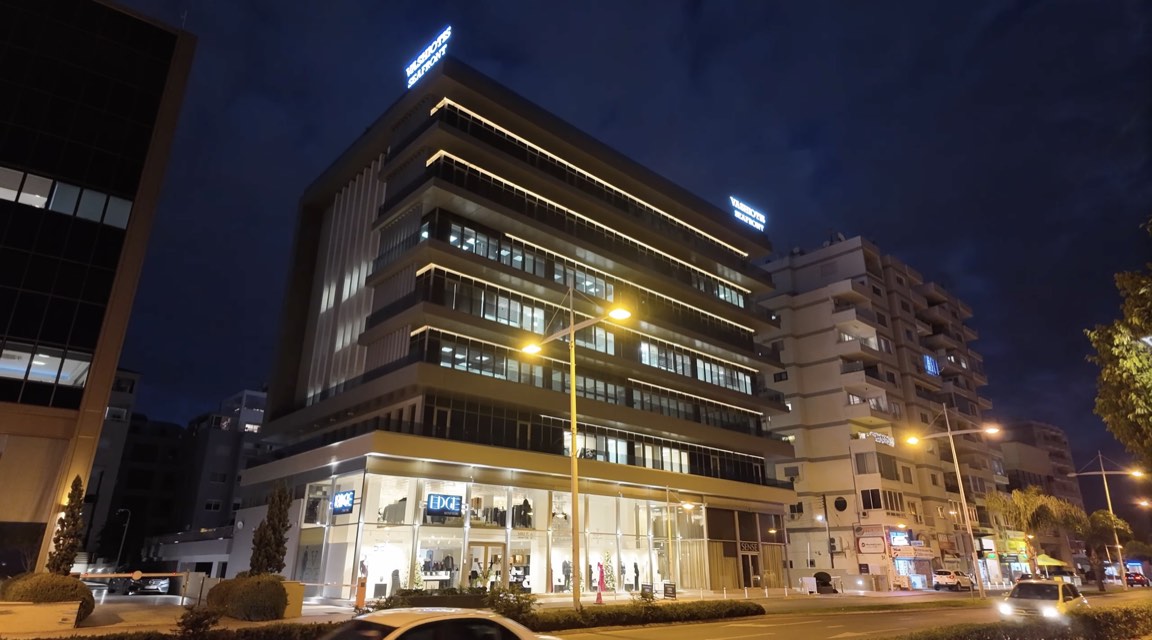
Limassol specifically turned out to be ground zero for this: driving toward Nicosia, betting shopfronts and advertisements multiplied the closer I got. I made a point of stopping outside the Cyprus headquarters of Parimatch, a name most YouTube viewers will recognise from the ads alone, housed in a building called Vashiotis Seafront, with its main office on the fourth floor. A short distance from there sits another company's headquarters, 1xBet, and by my own count, I'm fairly confident I'm the first Telugu YouTuber to actually stand outside one of these company headquarters on camera, rather than just talk about the ads back home. I'll happily be corrected on that if someone knows otherwise.
Worth being clear here: regulated operators like these do run legitimately in places like the UK and wider Europe, where proper checks and balances exist, spending limits, fraud protections, the works. The problem isn't Cyprus hosting them, it's the absence of equivalent regulation back home that lets some of these same companies operate illegally in Indian states where online betting is explicitly not allowed.
A dam, and mountains I didn't have time for
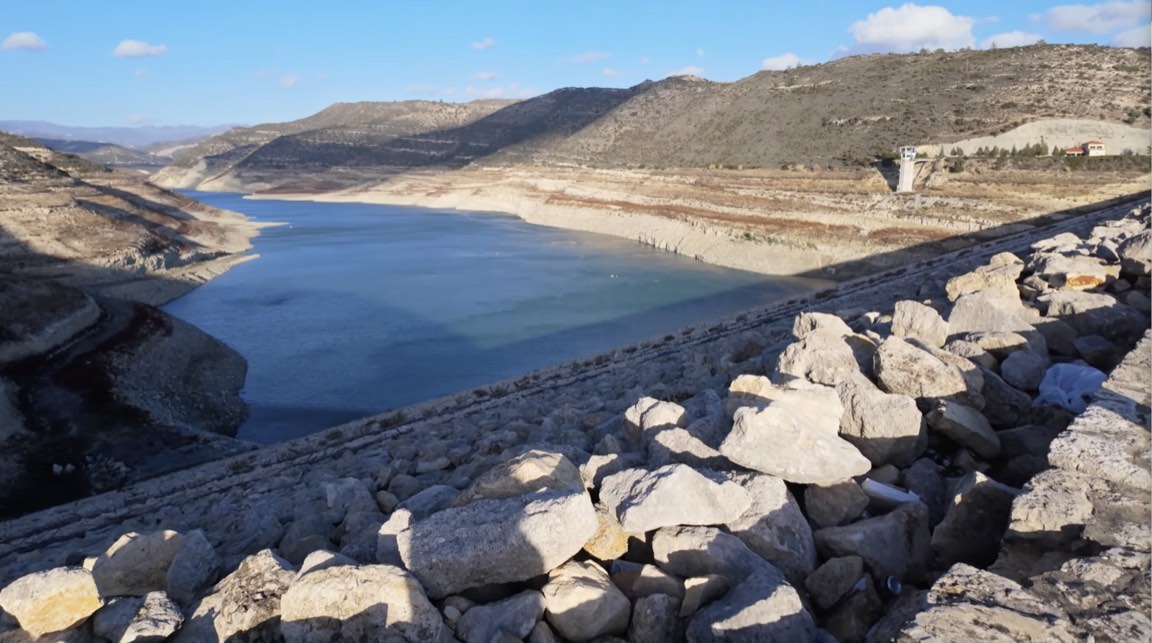
A short stop at Kouris Dam gave a good view over the surrounding landscape, with the Troodos Mountains rising behind it, technically just the foothills here, with proper peaks and even ski destinations further up for anyone with two or three extra days to spare. With North Cyprus still ahead on this itinerary, climbing further wasn't an option this time, but the view from the dam alone was worth the stop.
A very windy end to the day, on the way to Nicosia
Rather than heading straight to Nicosia, I doubled back briefly to Limassol's beachfront in the evening, less for the beach itself and more to properly show the Parimatch headquarters again from outside, since that felt like the real story of this stop. Wind along the promenade was intense enough to make walking difficult, and by the time I reached the hotel, a road sign pointed toward "Lefkosia" rather than "Nicosia," a reminder that the Greek name for the capital and its English equivalent aren't the same word at all. The closer I got to Nicosia, the more betting shopfronts and billboards lined the road, more than enough to make the case that calling Cyprus a hub for this industry isn't an exaggeration.
Practical tips for Limassol and the drive to Nicosia
- Aphrodite's Rock: a quick photo stop rather than a full activity, especially outside summer when swimming isn't realistic.
- Akrotiri: worth a short detour for the salt lake viewpoint, but respect the restricted military areas.
- Driving: British Sovereign Base Areas keep left-hand traffic, a genuinely useful detail to know before you're on the road.
- Troodos Mountains: if you have extra days, this is where to spend them, well beyond what a single dam stop can show.
- Timing: days get dark early here in winter, plan driving stops accordingly if you're covering this much ground in one day.