
Lublin is Poland's third city, and I went in almost completely blind. However much I researched beforehand, almost nothing useful turned up online, so the plan became simple: land, and figure the city out as I go. That approach ended up teaching me more about the place than any guidebook could have.
The full day: Litewski Square, the city portal, the walled Old Town, Lublin Castle, and Majdanek.
Getting into the city on a budget
From Lublin's small airport, there were three ways into town: train (not running again until 1 PM, ruling it out), bus (departing at 11), or taxi (a quick but pricier option). Being a budget traveller, more or less, I took the bus, a 24-hour ticket covering the round trip and any local travel for the rest of the day for a fraction of what the taxi would have cost.
Litewski Square: a monument to a 400-year-old union
Right in the city centre is Litewski Square, literally "Lithuanian Square," and its name traces back to the 1500s, when the Kingdom of Poland and the Grand Duchy of Lithuania formed a political union, with Lithuanian nobles camping on this exact ground during the negotiations. For the city's 700th anniversary in 2017, the square was fully redeveloped with a fountain and a monument commemorating that union: two female figures representing Poland and Lithuania, coats of arms and flags set beneath them. The fountains run a proper light-and-water show through summer, and lights alone the rest of the year.
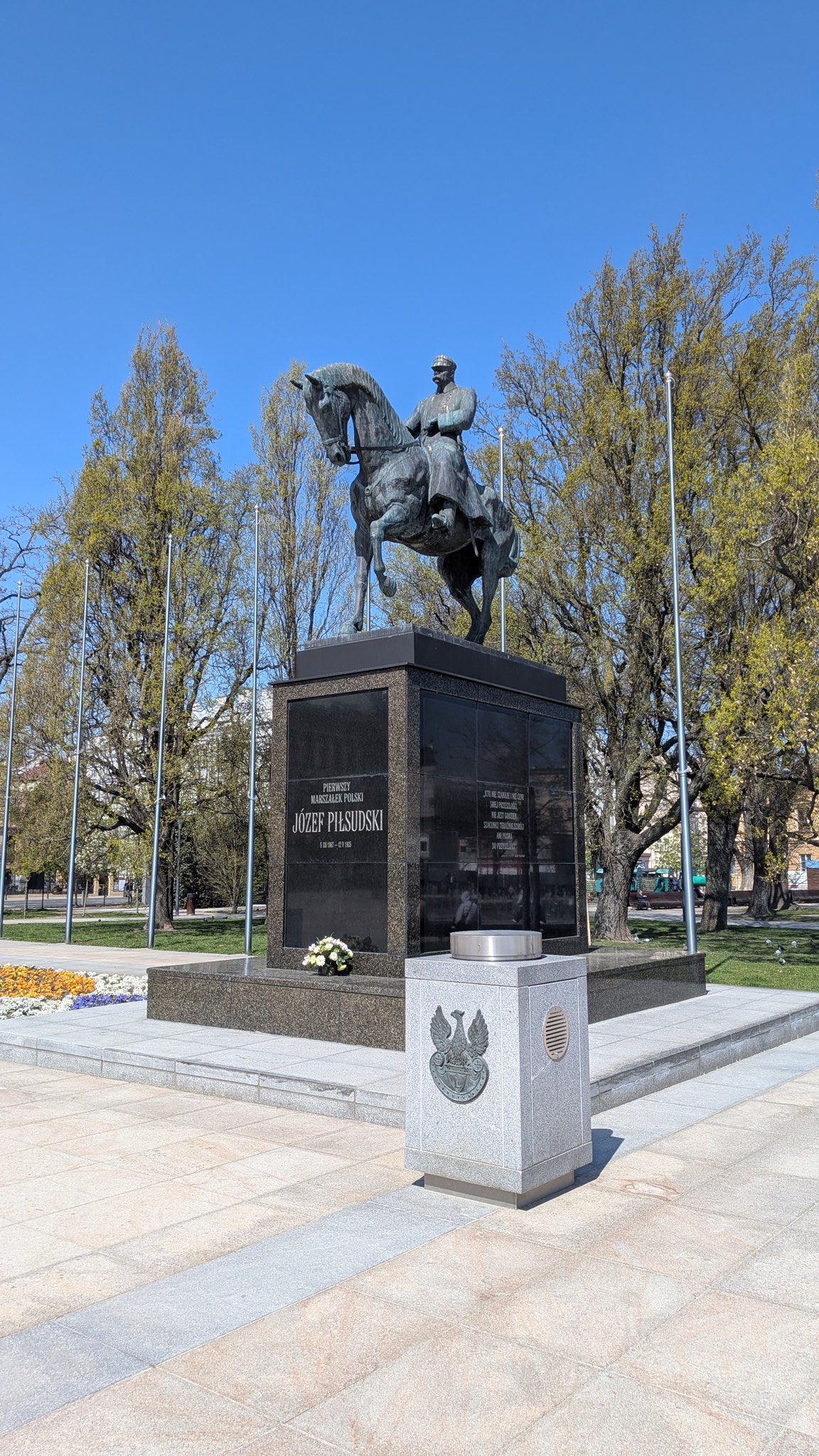
A short walk away stands a separate equestrian statue of Józef Piłsudski, Poland's first Marshal and one of the key figures behind the country regaining independence after the First World War, a reminder that this square carries more than one layer of national history. Nearby, a World War memorial with an Unknown Soldier statue and information panels on wartime atrocities sits as a quiet preview of where the day was ultimately headed.
I ❤ Lublin, and a portal to four other cities
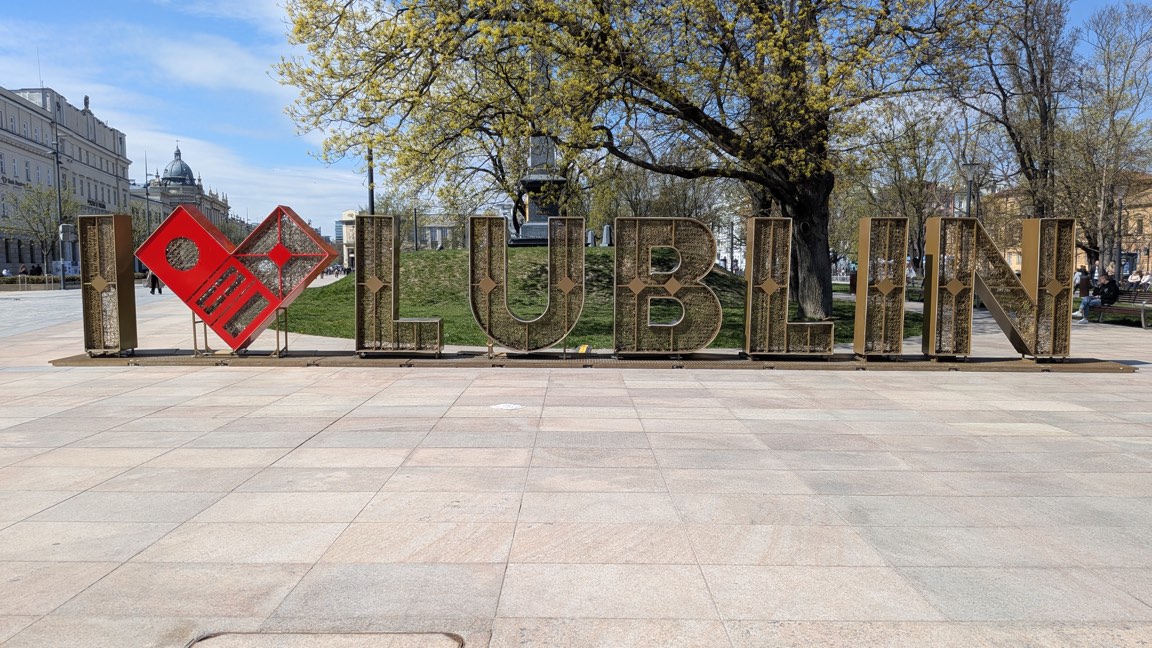
Yes, Lublin has its own oversized "I ❤" sign too, a trend that seems to have reached practically every city on earth by now (my own hometown of Vizag included). More unusual is a circular art installation nearby that looks like something out of a Doctor Strange film, a literal video portal, live-linking Lublin in real time to four sister cities: Vilnius in Lithuania, Dublin in Ireland (a genuinely funny near-rhyme with "Lublin"), Philadelphia in the US, and a fourth city in the Philippines. Wave at the screen, and whoever happens to be standing on the other end waves back. A kid on the Vilnius side was visibly thrilled about it; later that night I ended up playing rock-paper-scissors through the same screen with strangers in Dublin, right until a technical glitch cut the whole thing off mid-game.
Into the walled Old Town through the Krakow Gate
Lublin's Old Town is still fully walled, with two gates in and out. I entered through the Krakow Gate, named for travellers historically arriving from Krakow through this exact entrance, its original iron-reinforced top left completely unrestored. Right outside it stands the (new) Town Hall, the city's actual seat of government, and musicians were playing at the gate as I walked through.
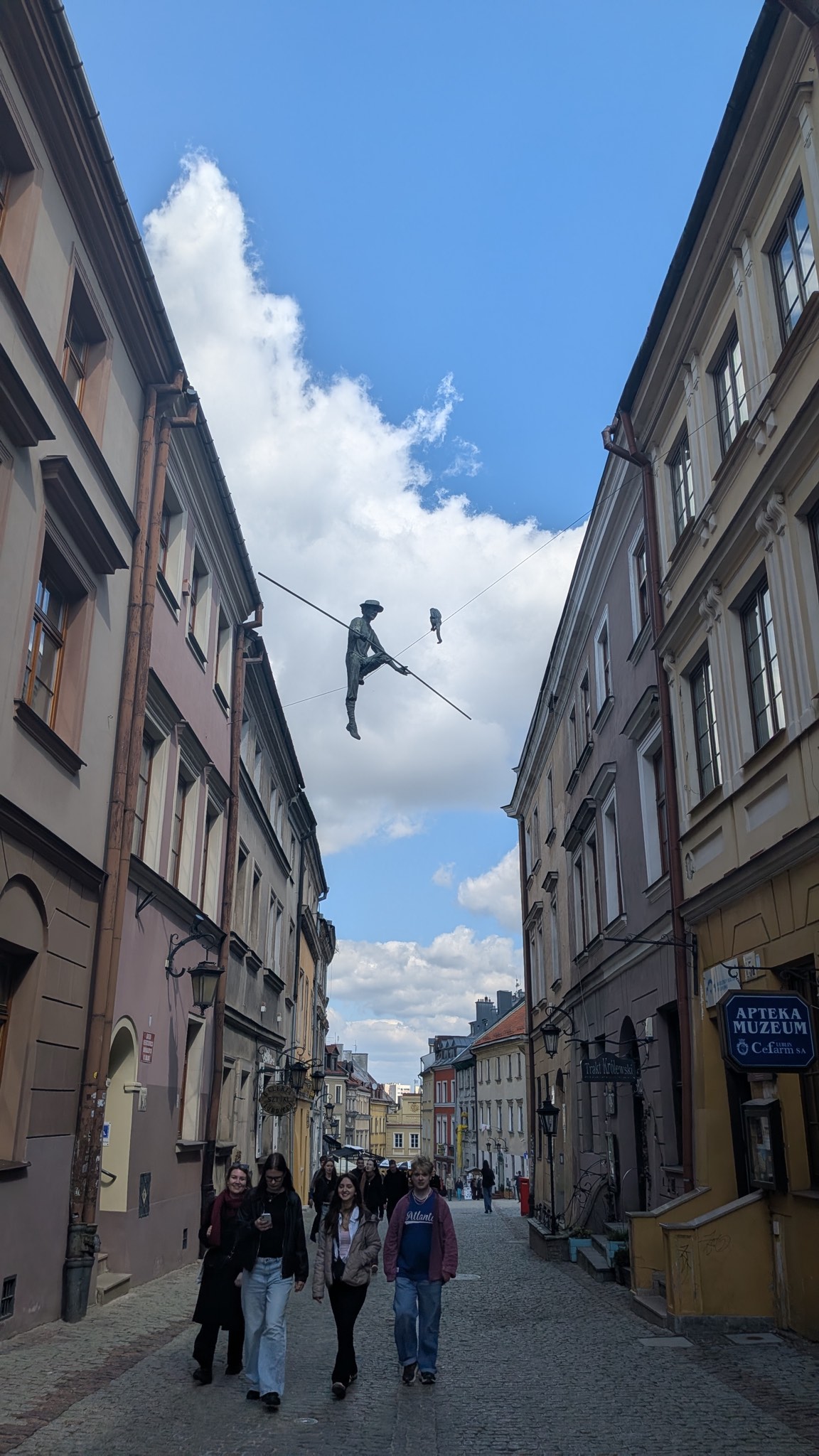
Stepping inside changes the atmosphere immediately, colourful facades, narrow lanes, and a completely different pace from the modern city outside. The Crown Tribunal building, once a royal court, now doubles as offices while still carrying the name Old Town Hall, ringed by restaurants on what's also known as Market Square, for the markets historically held here. Above one street, a striking statue of a tightrope walker balances on a wire strung between two buildings, pole in hand, a nod to old travelling circus performers.
What I liked most about Lublin's Old Town is exactly what it isn't: it's not empty or boring, but it's nowhere near as overrun as Krakow's, which is undeniably grander but comes with the crowds to match. This had, in my experience, the right amount of tourists, present but not overwhelming. A Royal Casino building sits tucked into the old streets too, one more layer in a town that keeps surprising with how much it fits into a small footprint.
Out through the Grodzka Gate to the castle
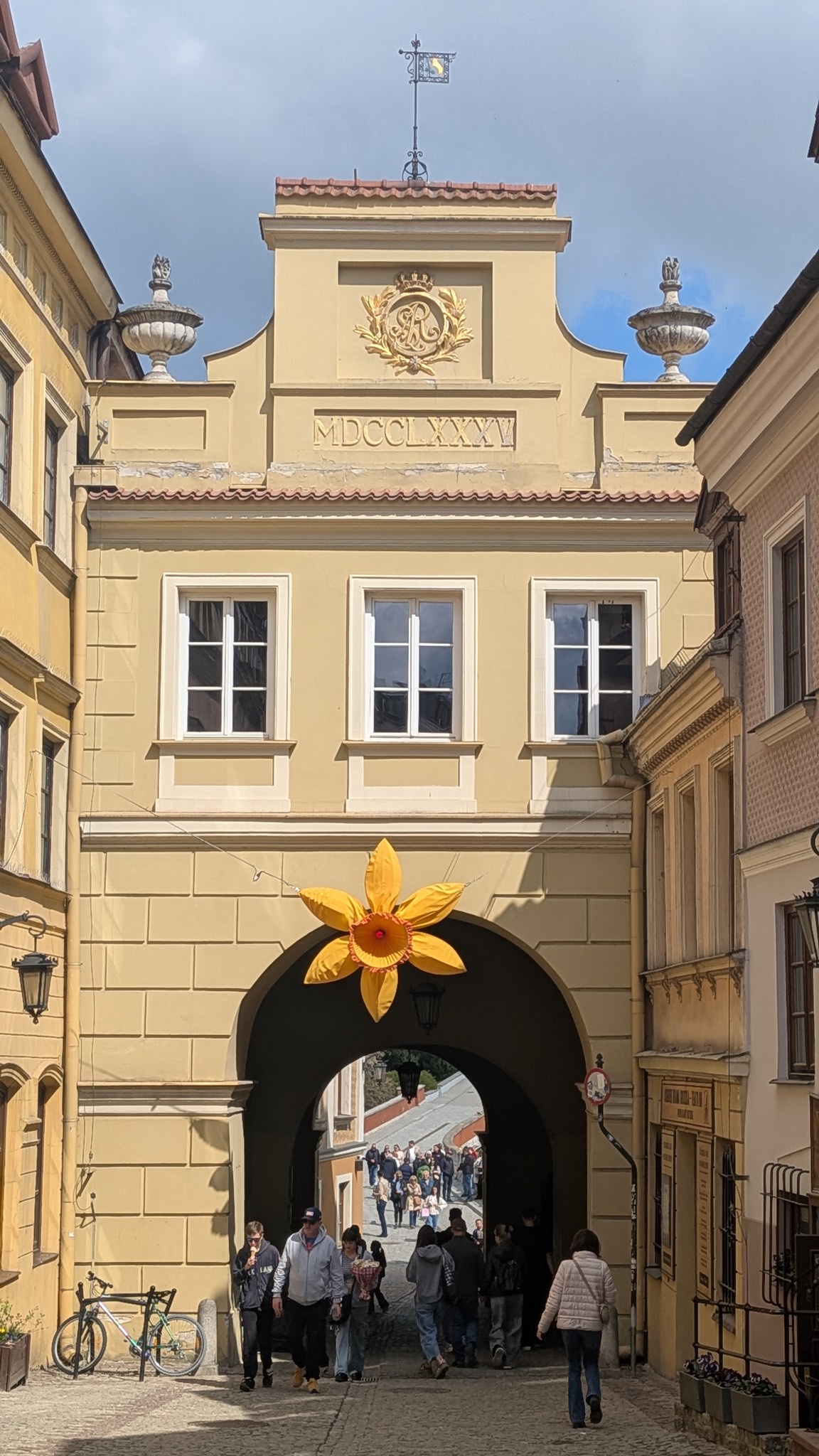
Leaving the Old Town through its second exit, the Grodzka Gate, decorated the day I visited with an oversized golden sunflower-style ornament and, again, musicians playing right at the archway. Past the gate, the modern city gives way to a clear view of Lublin Castle, sitting on its own rise just beyond the old walls.
Lublin Castle: where the union was actually negotiated
Lublin Castle dates to the 14th century and once housed local Polish kings, but its real historical weight ties directly back to Litewski Square: the actual negotiations for the Polish-Lithuanian union took place inside these walls. Most of the castle has been carefully reconstructed in its original style, though the tower itself is genuinely original, visible in the mismatched brickwork from centuries of patchwork repairs rather than a full rebuild. Entry to the museum runs around 50 zloty, or just 10 zloty for the observation tower alone, a narrow, low-ceilinged climb worth every awkward step for the payoff at the top: a full panoramic sweep of the Old Town, the modern city beyond it, and a huge Polish flag snapping in the wind. Information panels along the climb cover the castle's darker later chapters too, occupied first by Nazi Germany and later used under Communist rule.
A note before the next section
What follows covers Majdanek, a Nazi concentration and extermination camp, in some detail. If that's not something you want to read right now, skip ahead to the practical tips at the end.
Majdanek: larger, and heavier, than I expected
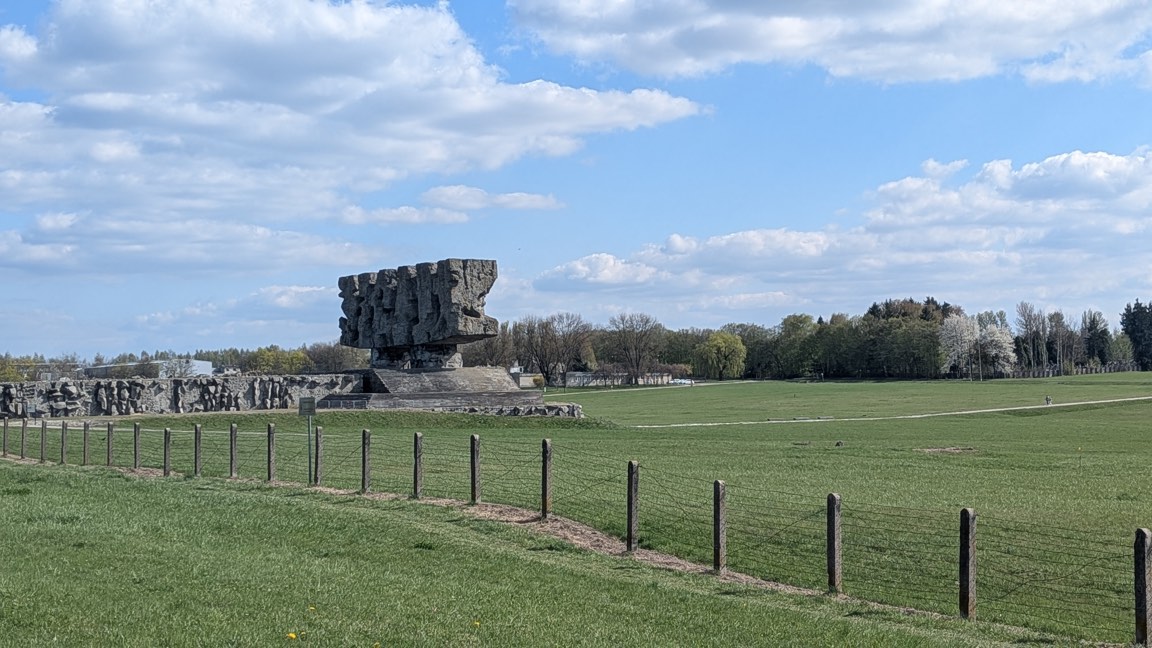
Majdanek operated from 1941 to 1944 and was converted into a museum in 1945, almost immediately after the war ended. Prisoners, mostly Jewish deportees and some prisoners of war, arrived by freight train and went straight into a selection process: everyone, regardless of age or gender, was made to shower, then stripped of clothes and shoes (reused for others, since the condemned had no further need of them), and had their heads shaved. Paraded naked past a Nazi officer, each person was sorted on the spot, roughly 70% selected for immediate death, overwhelmingly children, women and the elderly, while the remaining 30% were kept for brutal forced labour under conditions that packed 60 to 70 people into single small rooms. Those selected for death were sent into rooms disguised as showers and gassed. An estimated 80,000 people died here, a smaller total than Auschwitz, which I'd covered in an earlier Krakow video, but no less devastating for the families it affected.
Entry to Majdanek is free and open, unlike Auschwitz, which requires advance booking and an entry fee, and that openness cuts both ways: I saw visitors taking smiling selfies at the site, which genuinely upset me enough that, for one of the only times on this whole channel, I said so directly on camera. Photos, absolutely, take them. But this is not a backdrop for a smiling holiday photo. Preserved belongings, including children's shoes recovered after the war, are displayed with real care, and a large domed mausoleum holds the ashes of victims as a memorial. What I'd expected to be a brief stop took three to four hours to properly walk through, far longer than planned, but necessary. People who still, somehow, express support for Hitler today need to see exactly what that support is defending.
An evening back at the fountains, and a late-night Old Town
By evening, Litewski Square's fountains were running their light show, worth watching once at dusk and again once it was fully dark, both versions genuinely beautiful in their own way. A simple dinner at a local milk bar (the same style of cheap, cafeteria-style Polish eatery I'd already eaten at in Warsaw) rounded out the day. Past 10 PM, well past when I'd normally already be filming from a hostel bed, Lublin's Old Town was still properly lively, pubs and bars going strong, the Krakow Gate and Town Hall lit up beautifully along the walk back.
Leaving with more than I expected
I came into Lublin with essentially zero information and left pleasantly surprised at nearly every turn, right up until a concentration camp visit that ran three times longer than planned because there was simply more history here than any pre-trip research had suggested. That's the trade-off with a city nobody warns you about: you get the good surprises and the heavy ones in the same day, with no advance notice for either.
Practical tips for Lublin
- Getting in: check bus and train timings from the airport in advance, frequency is limited and a taxi may be worth it if your flight lands at an awkward hour.
- Old Town: enter through the Krakow Gate and exit through the Grodzka Gate (or vice versa) for a natural loop past the main sights.
- Lublin Castle: the 10 zloty tower-only ticket is enough if you're short on time; the panoramic view is the main draw.
- Majdanek: free entry, no advance booking needed, but budget three to four hours, and be respectful, it's a memorial site, not a photo backdrop.
- Currency and cost: Poland remains one of Europe's more affordable countries; Lublin especially so compared to Warsaw or Krakow.
A city I couldn't find any real information about beforehand turned out to have a 700-year history, a real-time portal to Ireland, a castle where an actual empire got negotiated into existence, and a memorial that every traveller passing through this region should make time for. Sometimes the least-documented stop on the map is the one worth the detour.