
After covering Malta's capital, Valletta, in the previous stop on this trip, this video heads out to see the rest of what makes up Malta: seven islands in total, four of them uninhabited, and three, Malta, Gozo and Comino, that people actually call home.
Gozo's Cittadel, Comino's Blue Lagoon, and Mdina's Game of Thrones streets.
St. Julian's Bay, and a half marathon already underway
The day started from a penthouse stay overlooking St. Julian's Bay, one of Malta's liveliest areas and, notably, a spot famous for its nightlife rather than its history. A half marathon, organised locally and measuring around 18.6 kilometres rather than a standard distance, was already in full swing outside, closing roads and rerouting buses, which meant a half-hour walk just to reach the ferry terminal at Sliema.
From Sliema, ferries and small tour boats head out to both Gozo and Comino, including a hop-on-hop-off ferry option that bundles unlimited rides for the day. Public ferries run the same route independently for anyone travelling without a tour.
Gozo, and a noticeably different vibe
Gozo felt different from Malta's main island almost immediately: sandstone-coloured buildings, a distinct Middle Eastern feel to the colour palette and even some place names, and a much quieter, slower pace overall. Victoria, Gozo's capital, sits at the island's centre, its old town built around the Cittadel, a hilltop fortress free to walk into, with a small museum charging separately inside.
From the Cittadel's highest point, the whole of Gozo's main town spreads out below, its sandstone tones reinforcing that same Middle Eastern impression from up close. That impression turns out to have a real historical basis: Arab rule over these islands between roughly 800 and 1000 AD left a lasting linguistic mark. Maltese itself is a genuine blend, structurally close to Arabic but written in Latin letters and layered heavily with Italian vocabulary, a genuinely unusual combination for a European language.
Walking the fortress walls, past old ruins built into the structure itself, led to a small discovery: an opera house sits at the town's centre, complete with two statues perched oddly on its roofline, presumably connected to opera in some way nobody could quite explain on the spot. The narrow surrounding streets, colourful and tightly packed, looked genuinely ready-made for a film shoot.
Pastizzi, and a Gozitan version of a familiar snack
Lunch options on Gozo skewed heavily Italian, pizza and pasta at nearly every turn, a reasonable outcome given how closely tied Maltese cuisine is to Italy. Persistence paid off with pastizzi, a local pastry filled with either mashed peas or cheese, ordered here with the pea filling. The result tasted remarkably close to an Indian vegetable puff, minus the spice, a genuinely pleasant, unexpected overlap between two food cultures.
Comino, and the science behind the Blue Lagoon
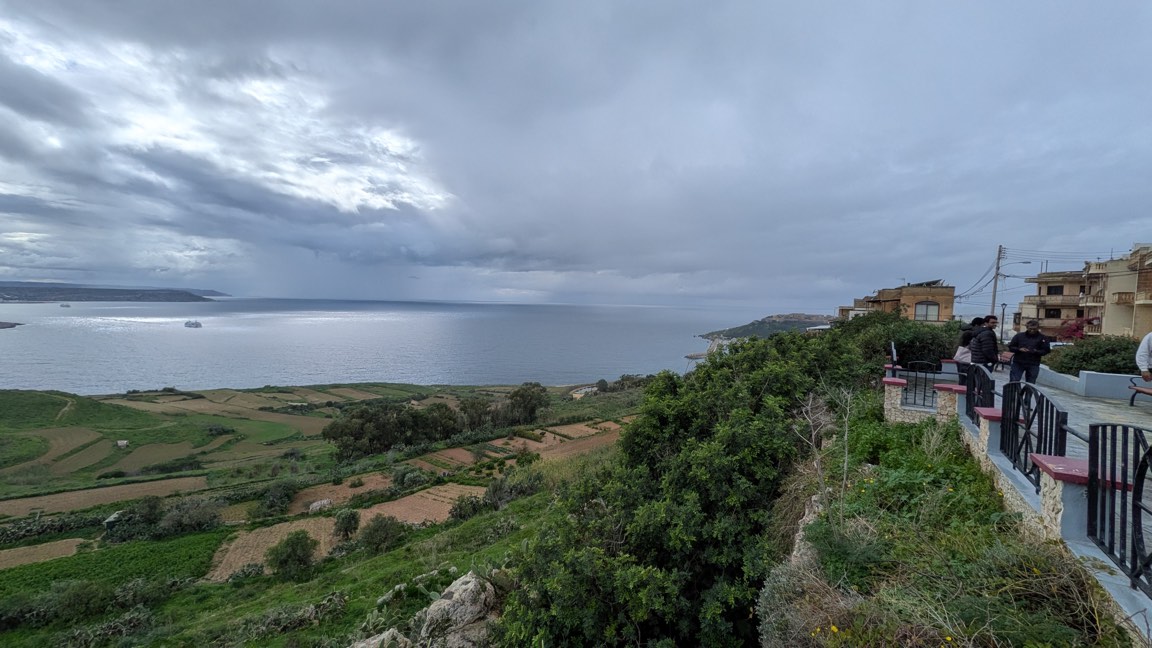
Rain picked up heavily on the crossing over to Comino, home to the island's most famous attraction, the Blue Lagoon, and, remarkably, just one permanently resident family, with everything else on the island built specifically for tourism. Comino's total population sits under six hundred, and in any given year, visitors vastly outnumber residents.
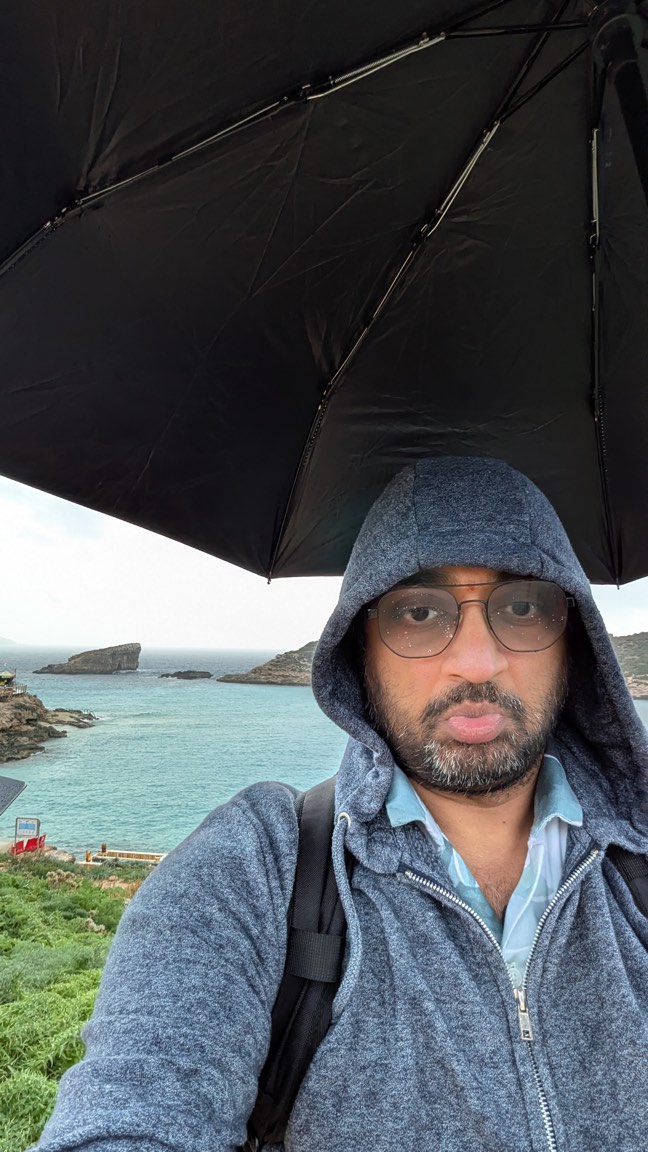
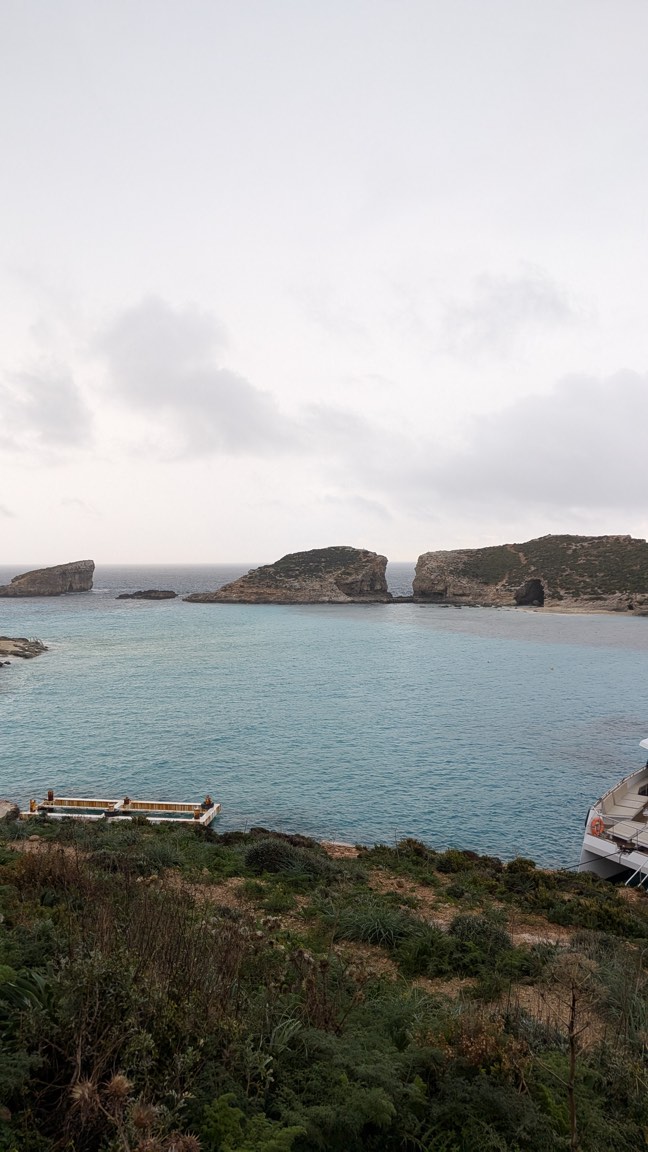
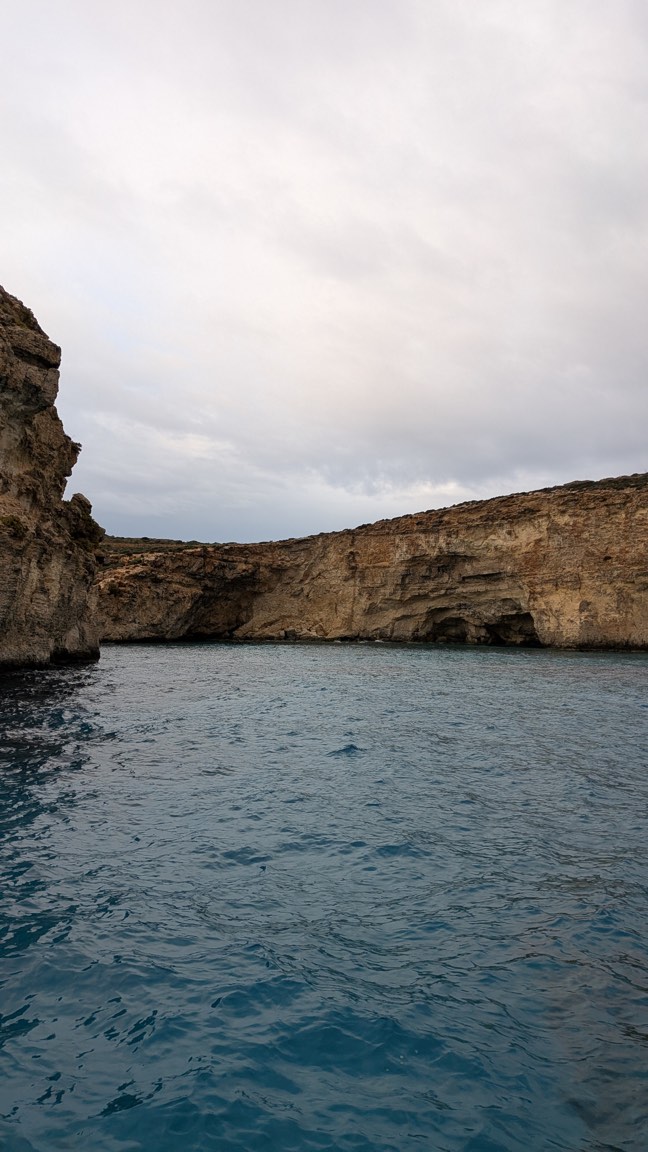
Even under heavy rain, the Blue Lagoon's colour held up: fine, pale silica on the seabed reflects sunlight strongly, and since blue light travels in shorter wavelengths, it dominates what bounces back, producing that striking, almost artificial-looking blue even without direct sun. In summer, this entire lagoon fills with swimmers and snorkellers; in the rain, it was quiet enough to properly appreciate the color science behind it instead.
Malta's currency is the euro and its transport runs on the same public ferry and bus network covered on the main island, though English works everywhere here too, since it's an official language alongside Maltese, a detail that makes independent travel considerably easier than in most of Europe.
Mdina, the silent city behind Game of Thrones
The final stop was Mdina, Malta's old walled capital, referred to locally as Rabat's "Medina," Arabic for city, the same root behind similarly named old-town districts across North Africa. Mdina earns its nickname, the Silent City, honestly: narrow, near-empty streets, St. Paul's Square and St. Paul's Church at its centre, and an atmosphere that made it an obvious filming location.
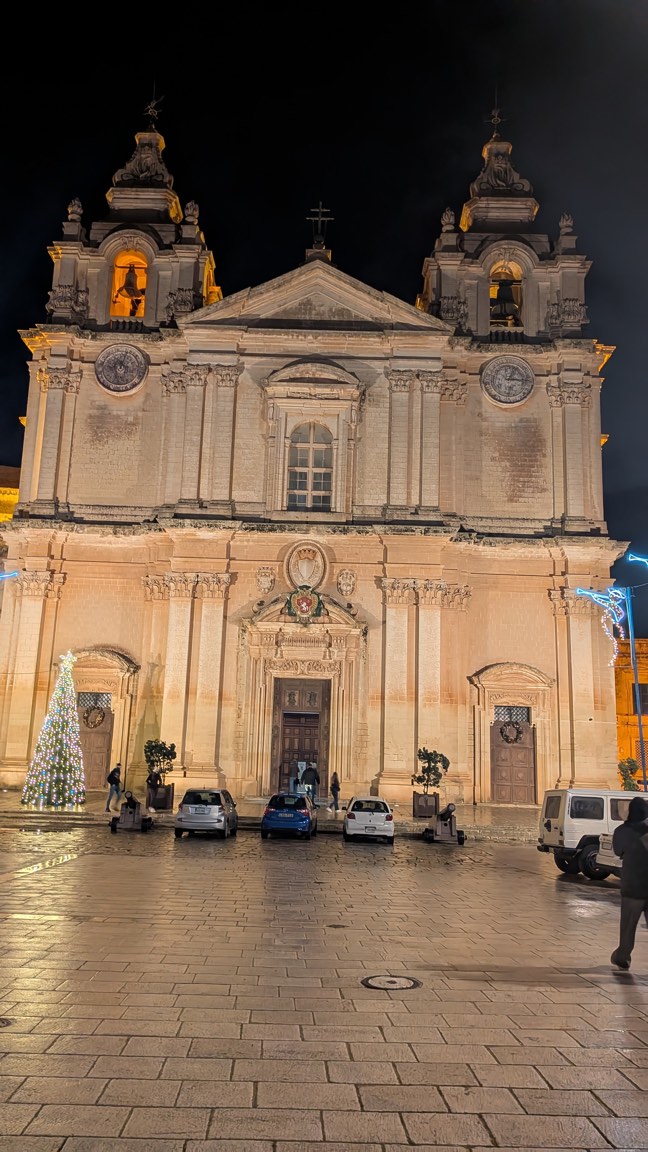
Much of Game of Thrones' first season was shot in exactly these streets, including scenes tied to the character Petyr "Littlefinger" Baelish. A previous stop on this trip, at Valletta, already covered a smaller filming location connected to the show and its use in a Tamil film song; the bulk of that same production's Malta footage, it turns out, was shot right here in Mdina instead.
A completely unexpected moment followed: hearing Telugu spoken nearby led to a conversation with a man named Bhaskar, working at a local ice cream shop, one of a genuinely large number of Telugu and Malayali workers across Malta. He explained that Malta is one of the very few European countries offering direct work permits to Indian applicants, without requiring proficiency in a local language beyond English, since English is an official language here too, unlike Italy, Germany or France, where local language fluency is typically a hard requirement. Hospitality and security roles dominate, bus and cab drivers included, an estimated 80% of Malta's workforce in those sectors, by his own estimate, are Indian, with a smaller share from Nepal. Visa costs run roughly one to one-and-a-half lakh rupees including required tests, a meaningful expense, but one he described as genuinely worth it given the quality of life, mild weather year-round, summers around 40 degrees and winters rarely dropping below 10, and pay that compares favourably to opportunities in the Middle East.
A mango gelato, recommended as the standout Indian favourite alongside pistachio for everyone else, capped off the stop, genuinely reminiscent of a proper Indian mango.
What the rain cut short
One planned stop didn't make it into this trip: the Azure Window, once one of Gozo's most photographed natural arches and another Game of Thrones filming location, collapsed into the sea in 2017. Some locals speculate the frequent film crews accelerated its erosion, though that's never been confirmed, and either way, it's gone for good now. A couple of smaller blue-lagoon-style spots near the main Blue Lagoon also went unvisited, casualties of the day's persistent rain eating into the schedule. With an extra day and better weather, Popeye Village, Malta's old film set turned standing attraction, would have made the cut too.
Practical tips for the Malta Islands
- Ferries: book a hop-on-hop-off pass if visiting both Gozo and Comino in one day, it's more flexible than single tickets.
- Gozo Cittadel: free to enter, only the small museum inside charges separately.
- Blue Lagoon: worth visiting even off-season, though summer is best for actually swimming in it.
- Mdina: go slowly through the narrow streets, most of the atmosphere is in the details, not any single landmark.
- Language: English is an official language throughout Malta, so navigating independently is genuinely easy.