
The Skopje video ended with the city's fortress tour cut short by closing time. This one picks up right there, before heading out of the city entirely: a cable car to a cross visible from almost anywhere in Skopje, a Byzantine monastery, a small stone village, and a boat ride into a canyon carved by a river that's since been turned into a lake.
Skopje Fortress, the Millennium Cross, a Byzantine monastery, and Matka Canyon.
Finishing what the fortress tour started
Skopje Fortress happened to sit right beside the pickup point for this day's onward bus, a convenient bit of timing that meant returning for one more look before leaving the city properly. The fortress remains genuinely low on upkeep, its interior mostly overgrown, though the outer wall and watchtowers, still flying the Macedonian flag, stayed sturdy enough to walk along. From the highest accessible point, most of the previous day's stops were visible at once: the Old Bazaar, the Stone Bridge, Macedonia Square with its statue of Alexander the Great, and, higher up on a hill in the distance, a large white cross marking the next stop of the day.
Up to the Millennium Cross by cable car
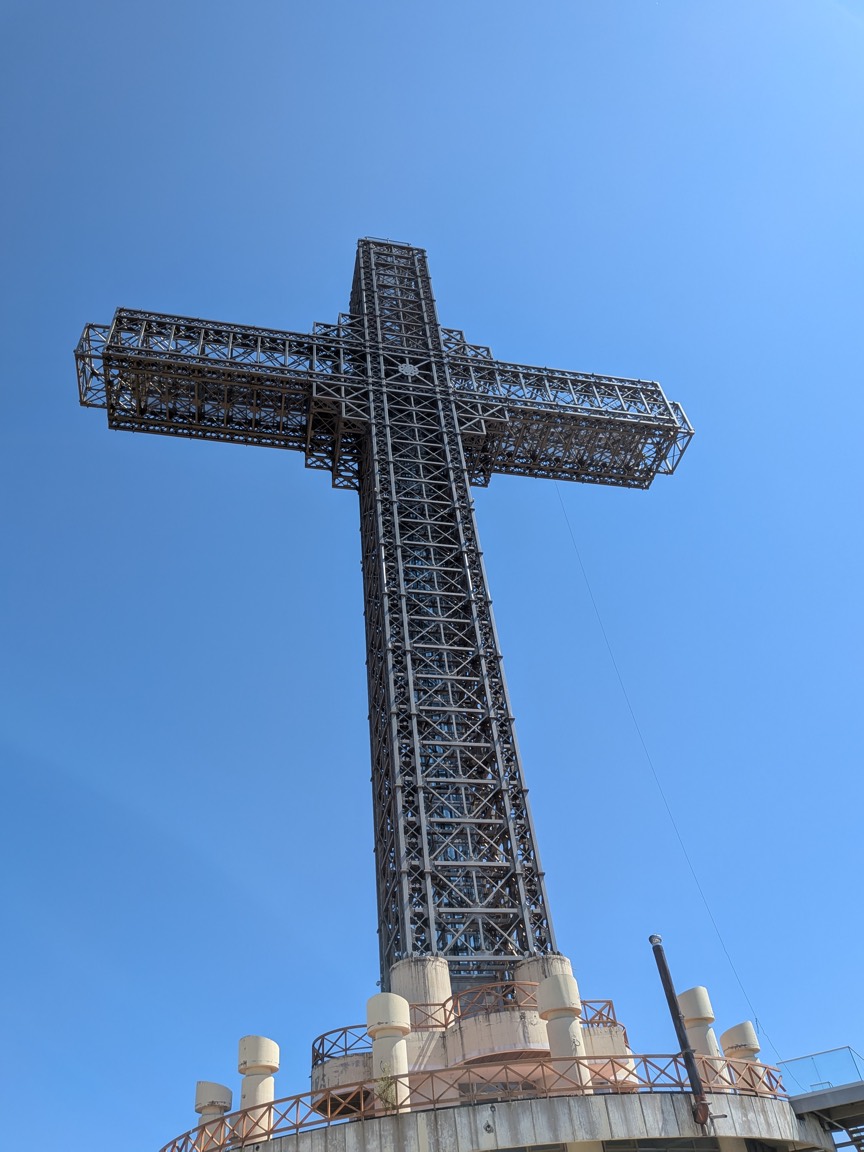
That cross is the Millennium Cross, reachable by a cable car not unlike the one covered earlier on this trip up Dajti Mountain above Tirana. Up close, the cross turned out to be considerably larger than expected, tall enough to bring to mind Rio de Janeiro's Christ the Redeemer, despite never having been there in person. From the base of the cross, the view stretches across the hills surrounding Skopje, hills that give the wider Macedonia region its very name. Much of the forest cover visible from up here was deliberately planted rather than naturally occurring, part of a reforestation effort, and a telecommunications tower nearby, still a couple of years from completion, is expected to eventually open to visitors as well. A small café perched right at the edge of the viewpoint made for a genuinely scenic stop before heading back down.
A Byzantine monastery with gold-grade paint
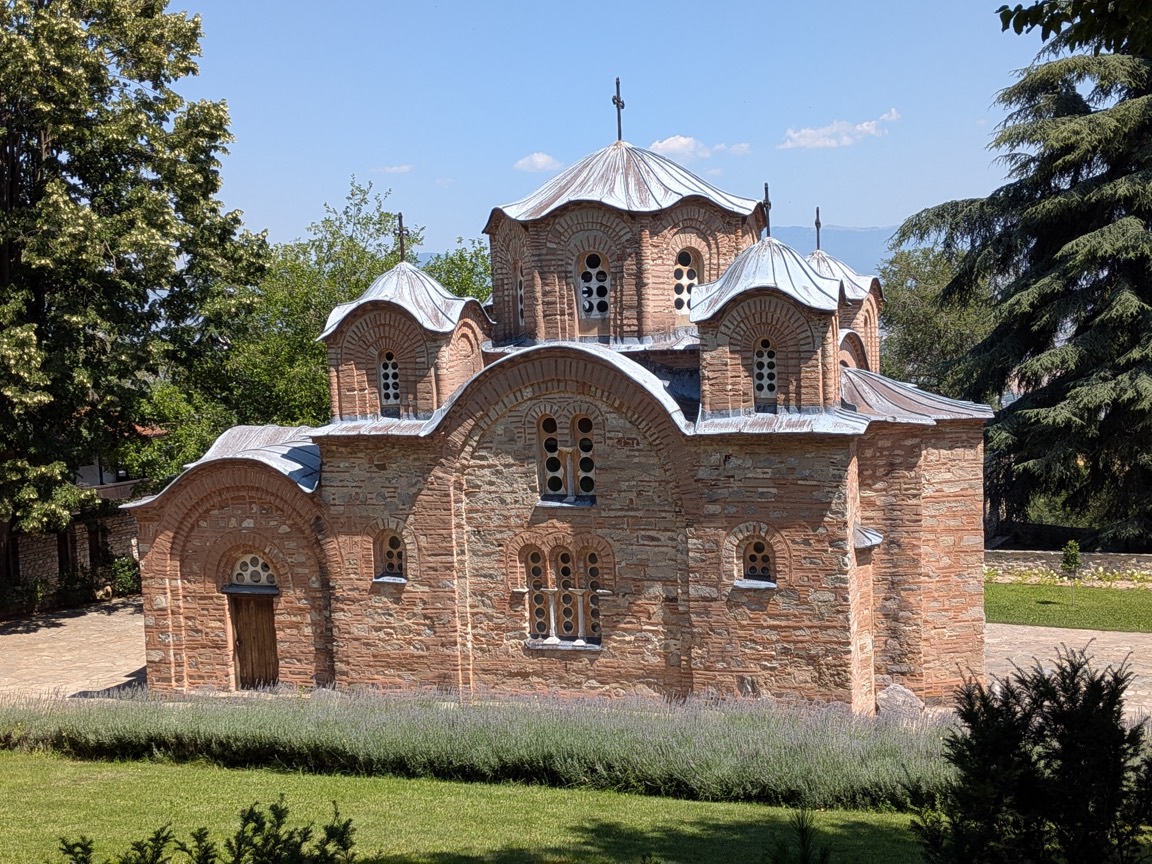
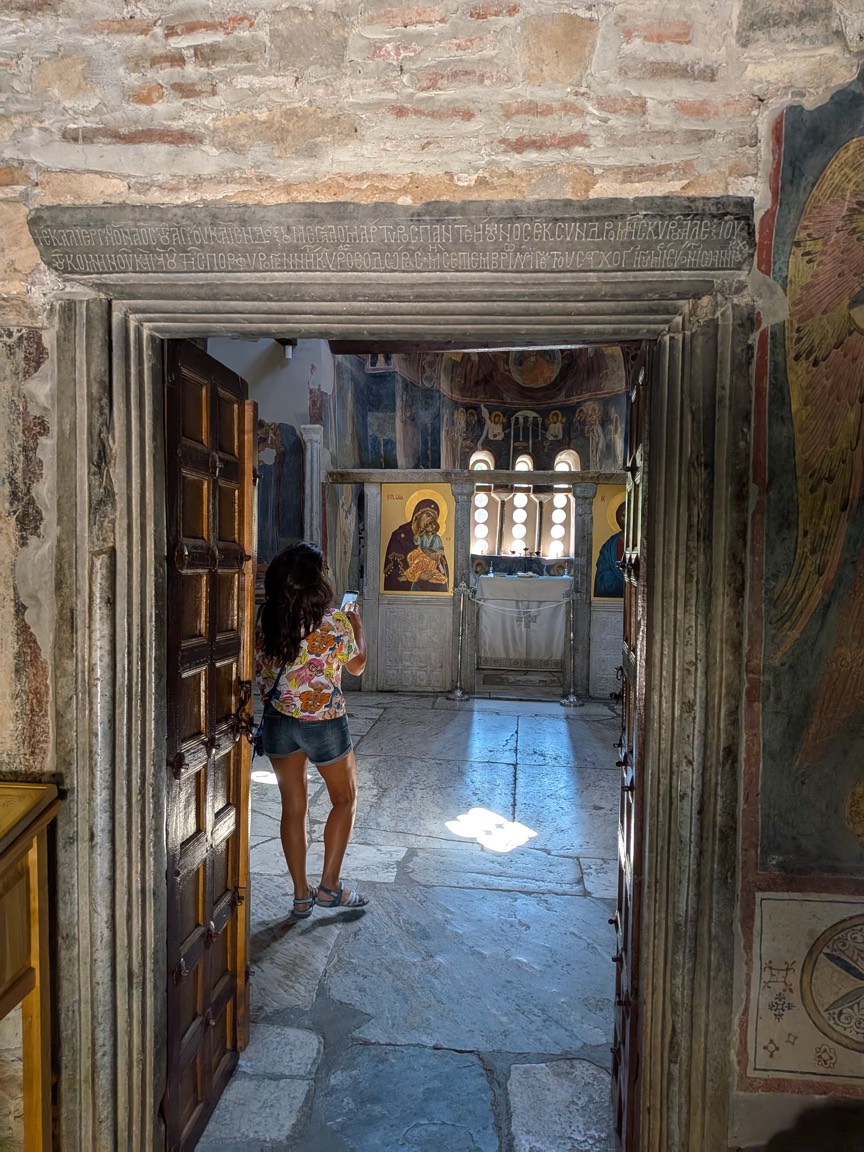
The Monastery of St. Panteleimon sits a short distance from the base of the cable car, a genuinely beautiful Byzantine-period structure. Inside, the guide pointed out that the pigments used in its original paintings were sourced all the way from Afghanistan, a material reportedly so costly that roughly one kilogram of it was valued against two kilograms of gold. The monastery fell into disrepair for a period during the communist era before later being restored, so the building today is a mix, some elements original to the Byzantine period, others reconstructed more recently, blended carefully enough that it's genuinely hard to tell which is which without a guide pointing it out.
A small stone village on the way in
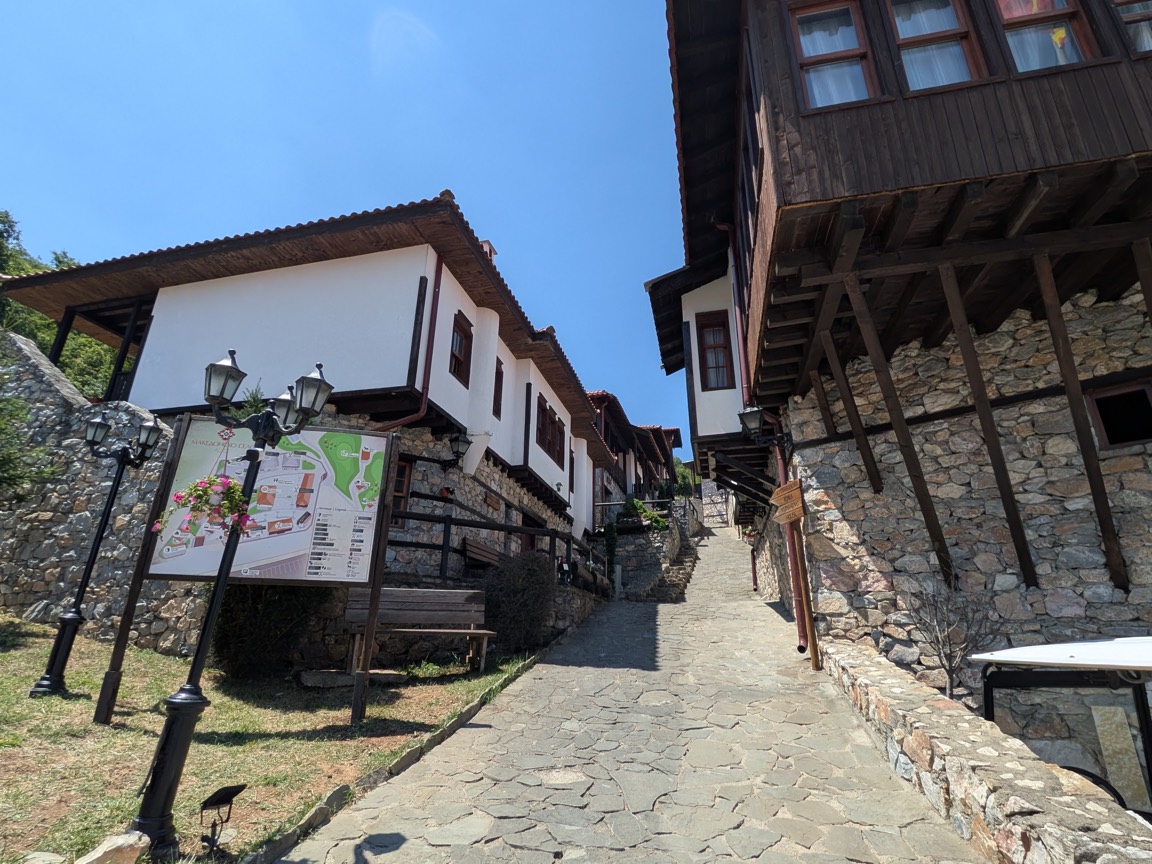
Just before reaching the canyon itself, the road passes through a small traditional village, entered through an actual gate set into old fortified walls. Its streets are laid entirely in stone, lined with a genuinely unusual mix of jewellery shops and antique stores, and its houses are built from a mix of stone and mud in the traditional local style, kept remarkably neat and well organised. A Macedonian flag flew over the village square, much like nearly everywhere else on this trip through the country.
The dam, and a canyon turned into a lake
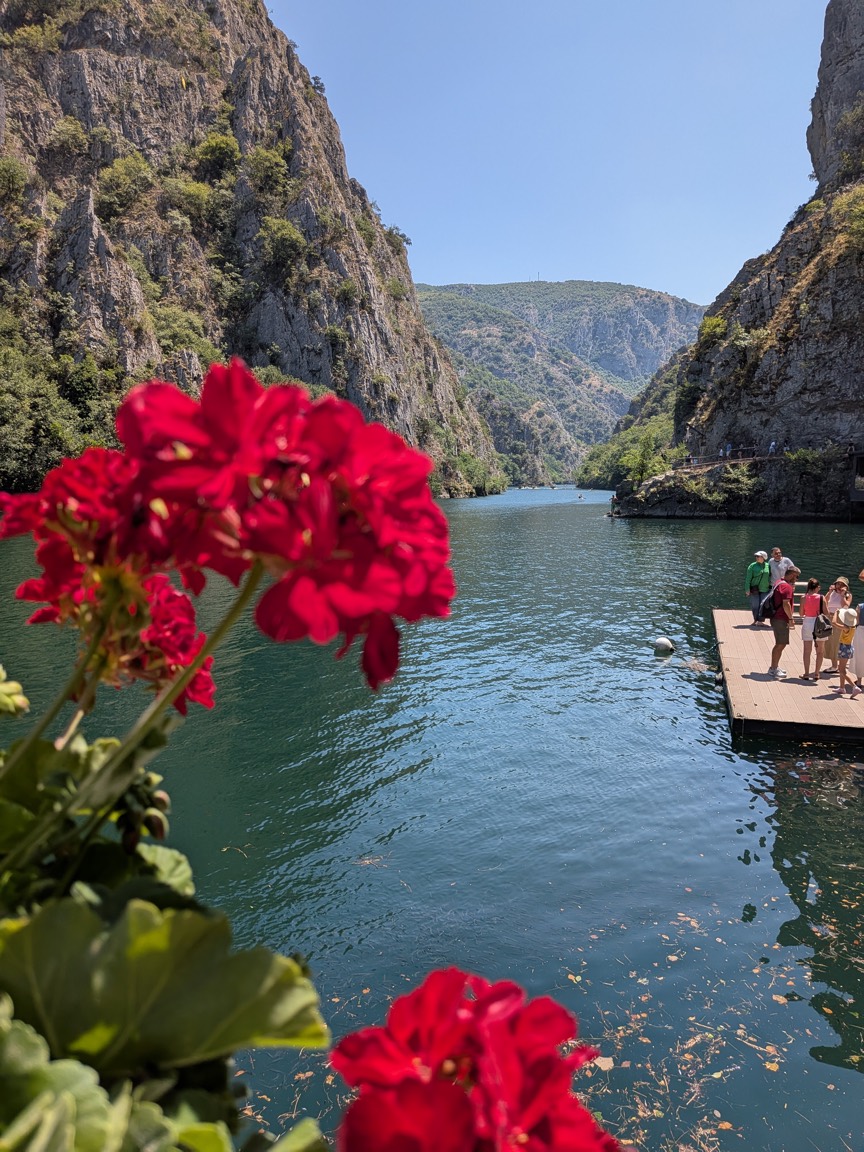
Past the village, a dam built for hydroelectric power marks the entrance to Matka Canyon itself, its water striking in how clear it runs. A "Welcome to Matka, feel the nature" sign at the entrance undersells it slightly, the setting has a genuinely serene, almost pilgrimage-like quality to it, not unlike climbing the hill at Tirupati, crickets included. Roasted corn on the cob is sold along the path in, a small local snack worth trying before heading further in.
What's called a lake here is, technically, a canyon, cut over time by a river running between two hills in a pattern similar to the Grand Canyon, or closer to home, Gandikota in Andhra Pradesh. Damming the river at one end turned that canyon into what now looks, and functions, like a proper lake. Its actual name, Matka Canyon, comes from a local word broadly meaning "mother's lap," a nod to the way the surrounding hills cradle the water running through them.
A boat, a cave, and one of Europe's deepest underground lakes
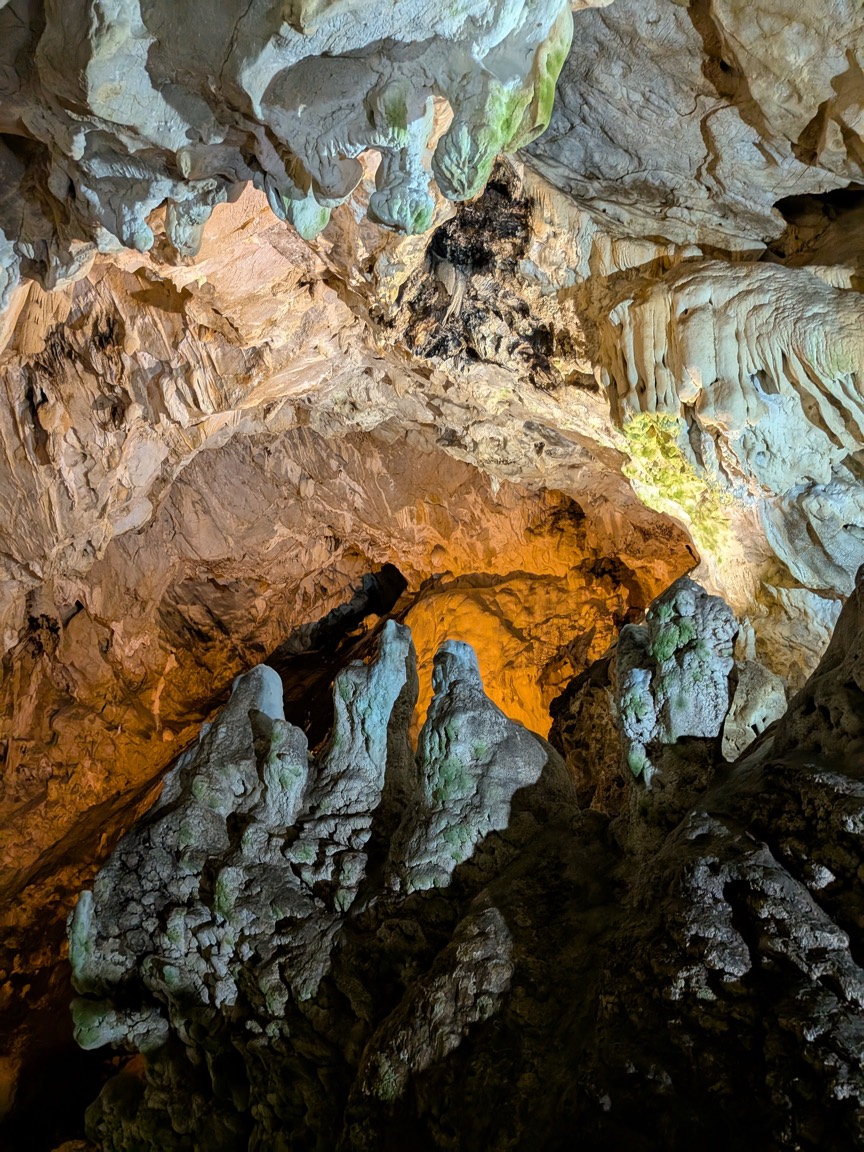
From the dam, small boats ferry visitors across the water to a cave entrance on the far side; kayaking is also an option for around 400 denars an hour, though it doesn't include cave access, which made the boat the easier choice given limited time. Inside, the cave holds a genuinely striking natural lake, reportedly one of the deepest of its kind in Europe, though the visitor route only goes as far as the entrance chamber rather than the cave's full extent. A constant, naturally air-conditioned 15 to 16 degrees inside made it a genuinely comfortable break from the heat outside, similar in feel to the Borra Caves back home in Vizag, if smaller in the section actually open to visitors. Bats roost in the upper reaches of the cave, and their guano has historically been collected locally for use in cosmetics.
A cold end to a hot day
By the time the boat ride back wrapped up, the evening had turned noticeably cool, a sharp contrast to a scorching Macedonian morning. From here it was a straight run to the airport and a flight home, with the next destination still undecided, since a return trip to India was next on the calendar before the channel picked back up again. A quiet, understated close to two days that turned out to be some of the most varied on this leg of the trip.
Practical tips for Matka Canyon
- Getting there: Matka Canyon sits close enough to Skopje for a half-day trip, easily combined with the Millennium Cross on the way.
- Cable car to the Millennium Cross: check operating hours in advance, services can start later than expected.
- Boat vs kayak: the boat is the only way to reach the cave, kayaking is a separate activity that skips it.
- The cave: bring a light layer, it stays a constant 15 to 16 degrees regardless of the weather outside.
- Timing: plan for a full day if you want the monastery, the village, and the canyon without rushing.