Day one of this trip was all Sarajevo. Day two meant three hours in a rental car crossing into Herzegovina, the second half of Bosnia and Herzegovina's two-part name, chasing waterfalls, a cliffside village, a monastery built into rock, and finally the bridge that gives Mostar its own name.
The full day: Kravica Waterfalls, the village of Pocitelj, the Blagaj Tekke, and Mostar's Old Bridge.
Kravica Waterfalls
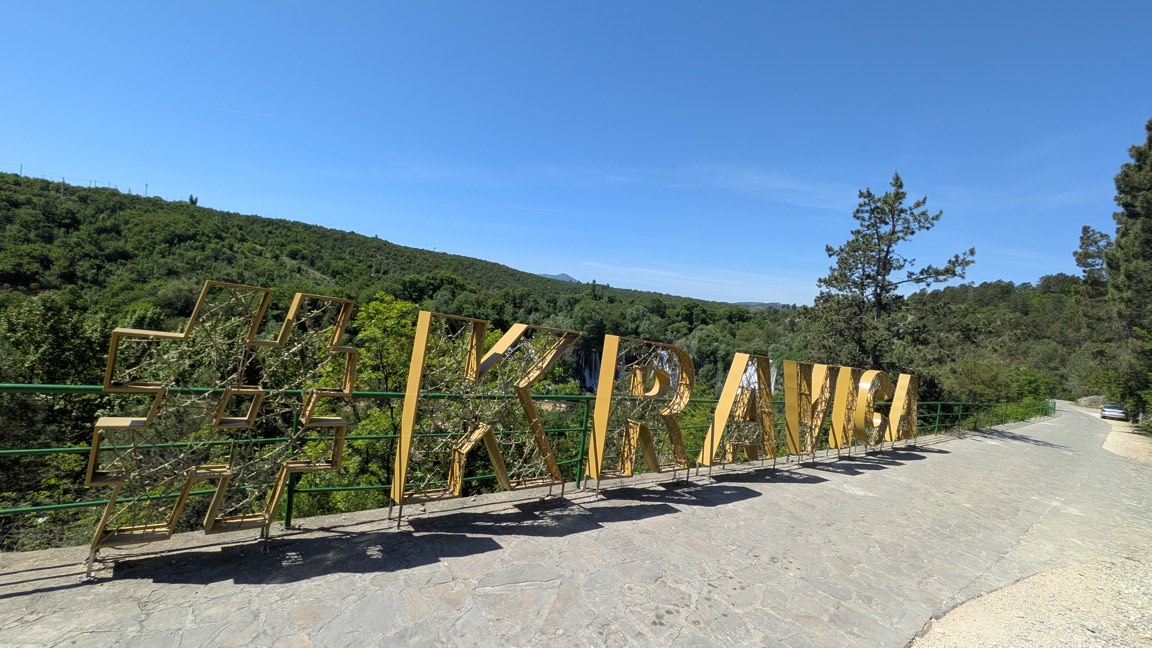
First stop was Kravica Waterfalls, technically in Herzegovina rather than Bosnia proper, a wide curtain of falls dropping around 25 metres into a turquoise pool ringed by trees. Entry runs about 20 Convertible Marks, and once inside there's a genuine choice to make: head straight for the water, or take one of several hiking trails that could easily fill a whole day on their own. A small train-style buggy carries visitors who can't manage the walk down and back up, though the walk itself, steep in both directions, is entirely doable.
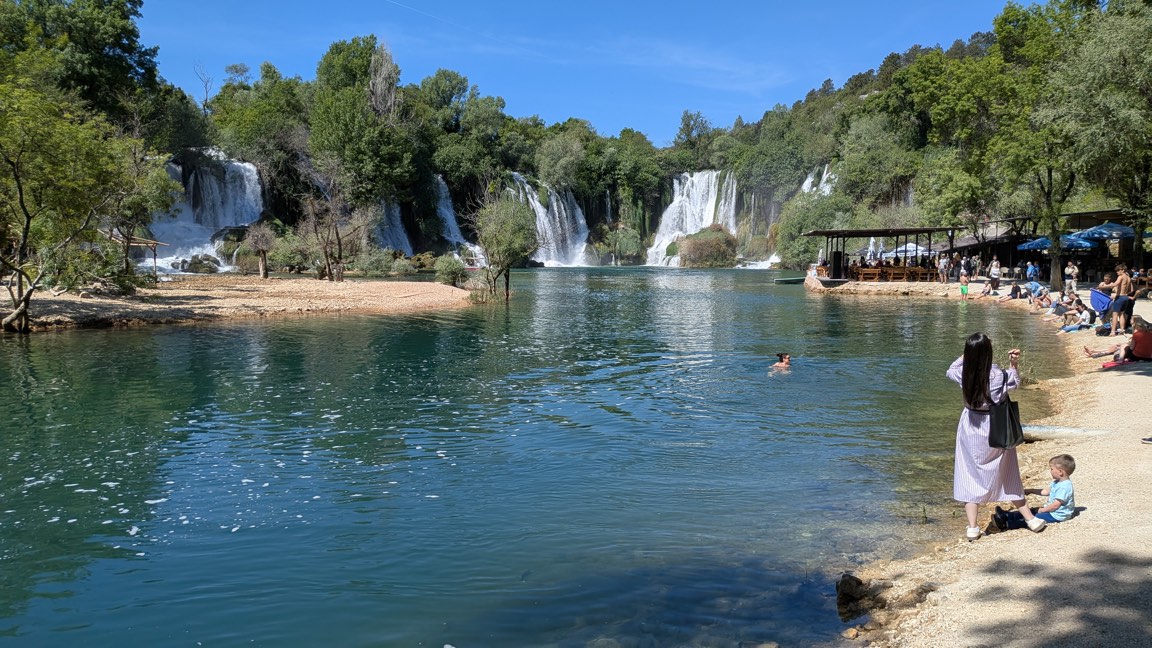
The water is genuinely cold, cold enough that only a couple of people were actually swimming on the day I visited, though the clarity and colour make it obvious why this is packed solid in peak summer. I settled for wading in up to the ankles rather than a full swim, and even that was enough to feel the pull of the current where the falls hit the pool.
Pocitelj: a real village, not a film set
On the drive onward, a small fortified structure appeared roadside with a sign pointing tourists toward a village, and I pulled off on a whim to see whether it was an actual lived-in place or something built purely for visitors. It turned out to be genuinely real: Pocitelj, a small Ottoman-era hillside village with an active mosque, houses that still carry their own numbers, laundry hanging out to dry, and a scattering of gift shops and restaurants clustered near the entrance for the tourists who do pass through. A path climbs from the village up toward an old fortress tower on the hilltop, past homes the whole way, before opening onto a genuinely spectacular vantage point.
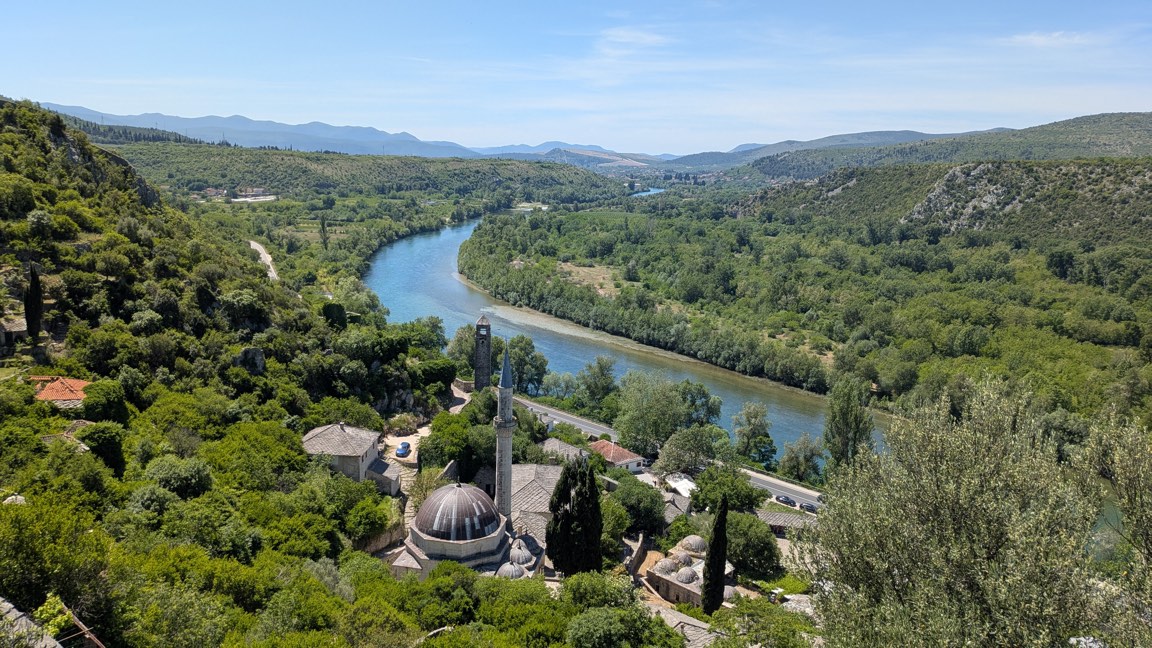
From up there, the whole layout comes together at once: the mosque's minaret below, the river bending through the valley, the road, and hills stretching out in every direction. It's the kind of viewpoint that rewards a spontaneous detour more than most planned stops manage to.
Blagaj: a Sufi tekke built into a cliff
Next was Blagaj, home to a striking whitewashed tekke, a Sufi monastery, built directly against a massive limestone cliff at the exact point where the Buna river emerges from a cave at its base, clear and startlingly turquoise. Photography and filming aren't allowed inside, and by most accounts the interior doesn't match the drama of the setting anyway, so I stayed outside and simply took in the view, the cliff towering overhead, a small restaurant nearby serving halal food beside the water.
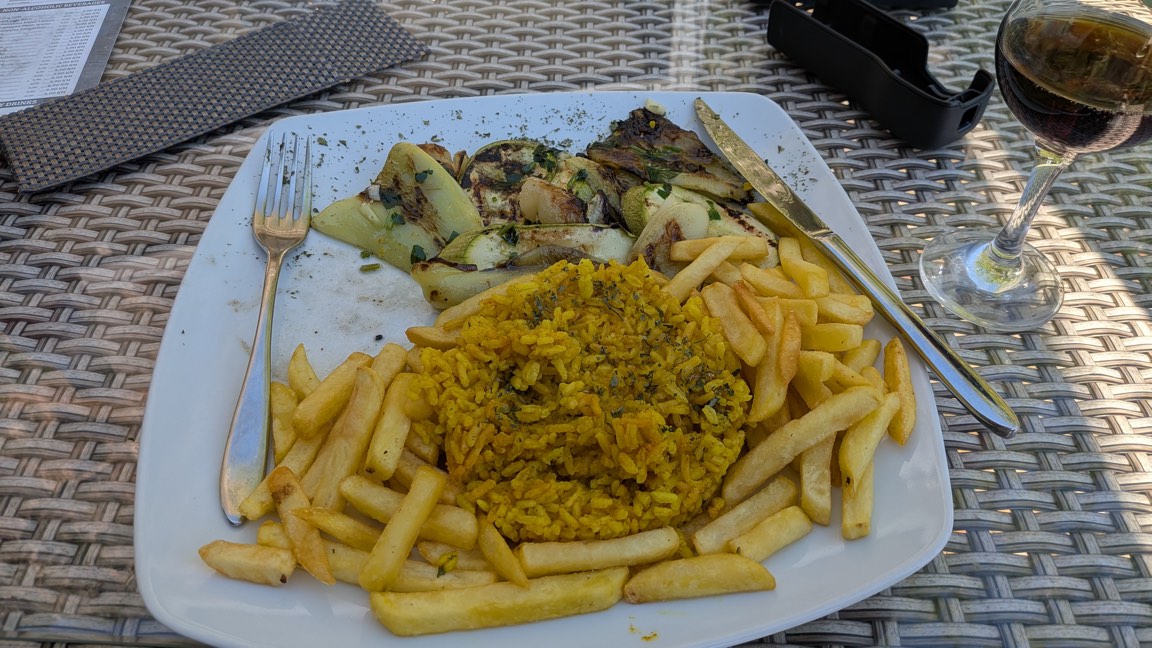
Lunch here turned into the day's one proper sit-down meal: vegetarian options were limited to a single vegetable plate, saffron-yellow rice with a texture closer to a paella than a biryani, grilled zucchini and eggplant on the side, and a portion of fries. Not everything on the plate was a personal favourite, but the smoky char on the grilled vegetables made up for it.
Arriving in Mostar
By the time I reached Mostar itself, it was clear this was no small town, a proper city, close in scale to Sarajevo and the largest in all of Herzegovina. The old town's walking street mirrors Sarajevo's in almost every way: a mosque anchoring one end, market stalls selling the same large hand-turned grinders used to prepare Bosnian coffee, and shelves of Turkish delight, baklava and imitation designer bags aimed squarely at day-trippers. Follow that same street to its end, though, and the reason everyone actually comes to Mostar appears all at once.
Stari Most: the Old Bridge
Stari Most, literally "Old Bridge" in the local language (the same word for bridge, "most," that turns up across several Balkan place names I'd already come across on this trip), is Mostar's defining landmark. Its stone deck is deliberately grooved rather than smooth, a practical measure against slipping that's been part of the design since it was first built in the 16th century under Ottoman rule and repeatedly remodelled afterward.
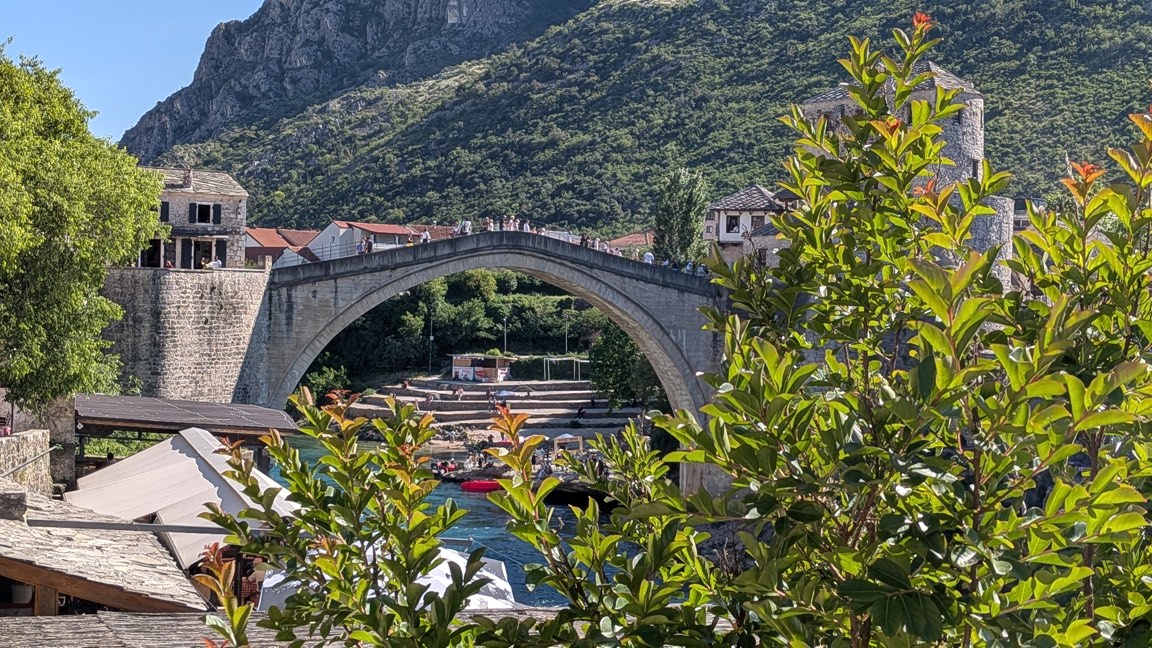
What makes it remarkable isn't just its age, it's what happened to it. The bridge was completely destroyed during the Bosnian War, and rebuilt afterward not as a modern replica but as faithfully as possible to the original: same design, and stone quarried from the exact same source used centuries earlier. That specific detail, matching the original quarry rather than just the original look, is why UNESCO singled the bridge out for recognition. On busier days, local divers climb up and wait for tips to accumulate before leaping from the bridge into the river below, a genuine local tradition rather than a staged show; on the quieter afternoon I visited, no one was diving, though a few people were still cooling off in the water beneath the arch.
Bosnian coffee by the river
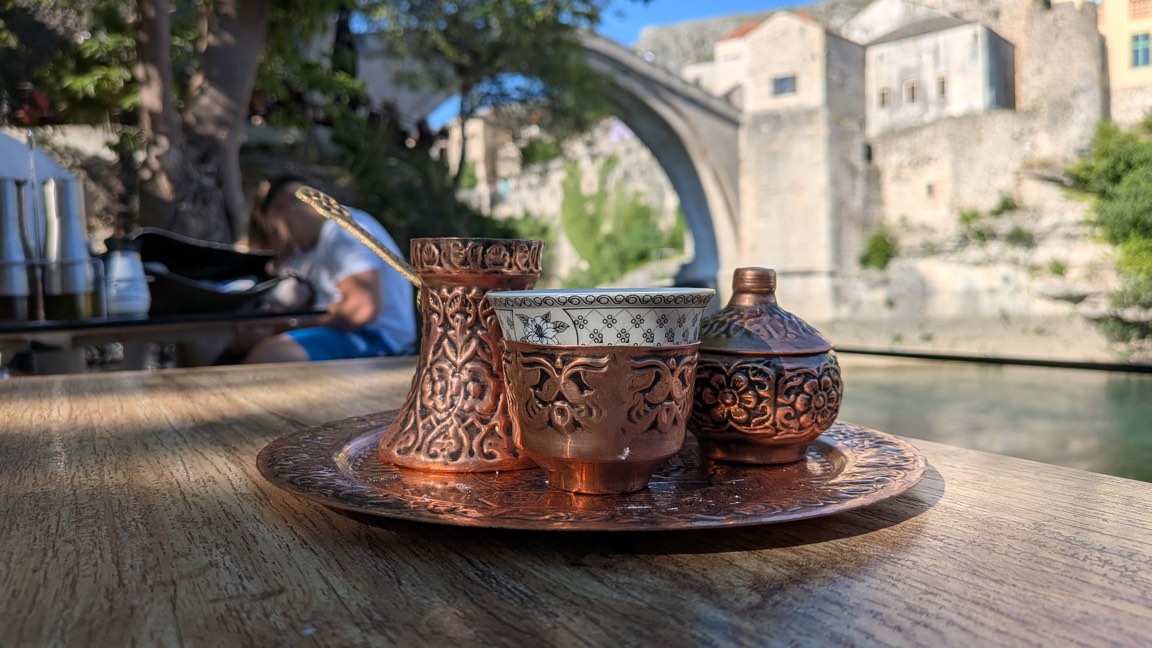
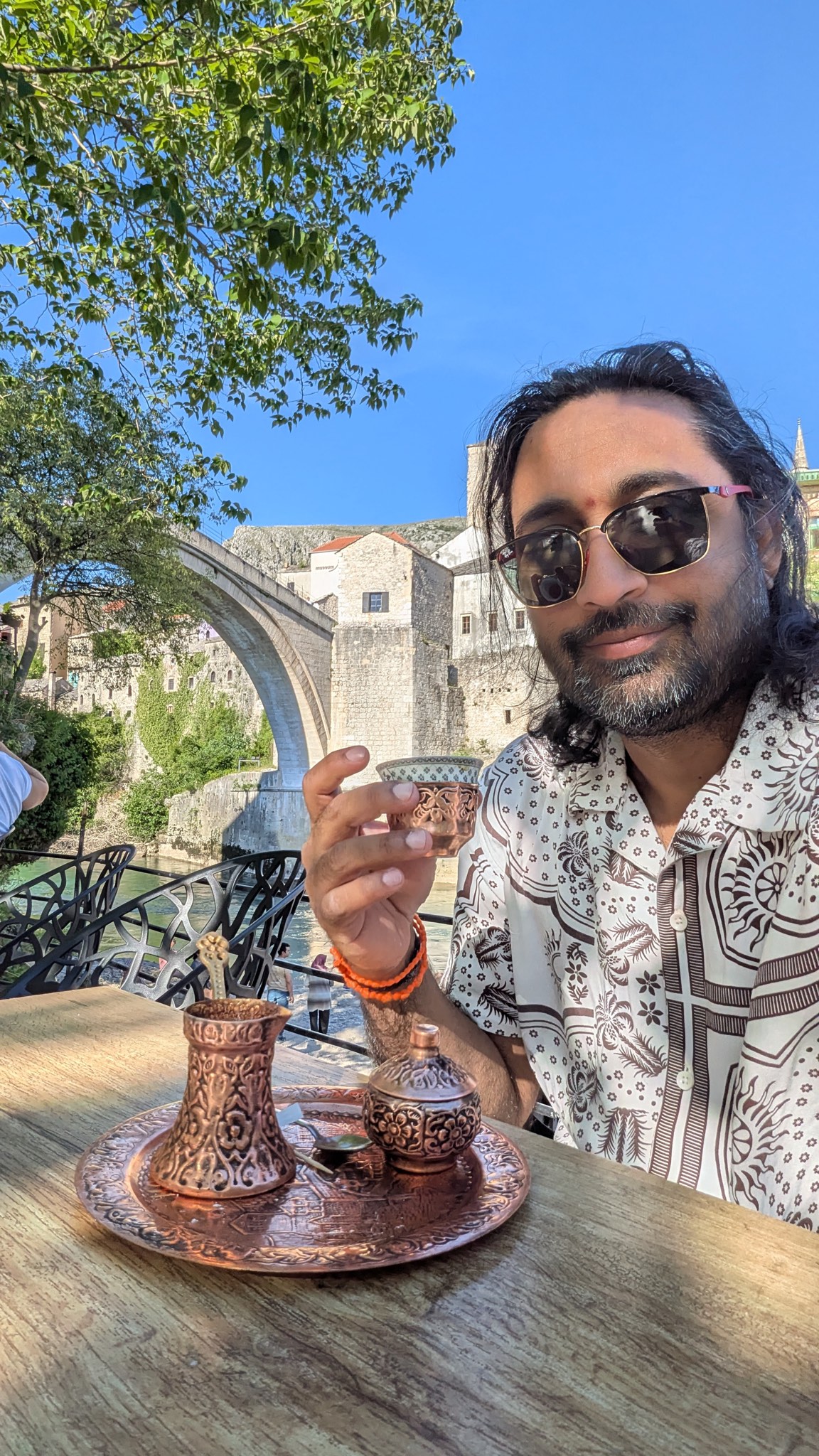
I ended the Mostar stop the way it deserved, sitting by the river with the bridge in view and a proper Bosnian coffee set in front of me: a small copper cezve, a decorated cup, and a sweet on the side, all on an ornate copper tray. The coffee is brewed by bringing finely ground coffee and water to a boil directly over an open flame, removing it, letting it settle, and repeating that cycle seven or eight times before a final splash of cold water sinks the grounds to the bottom of the pot. The result is notably less acidic than Turkish coffee, closer to something you could genuinely sit with for a while, one small sugar cube at a time.
An unexpected drone flight over the mountains
On the long drive back, I pulled over at a roadside viewpoint just to fly the drone over the surrounding mountains and river valleys, and it turned out to be some of the best aerial footage of the entire trip, this was the first country I'd brought a new drone to, and Herzegovina's landscape made an excellent case for it. Two days into Bosnia and Herzegovina by this point, and Indian travellers remained almost entirely absent, a single family who I'm fairly sure were speaking Punjabi rather than Telugu, likely visitors from elsewhere in the region rather than India itself.
Sarajevo's only Indian restaurant
Back in Sarajevo that evening, I made a point of visiting Taj Mahal, reportedly the only Indian restaurant in the entire country. It was originally opened by an Indian man who'd married a local Bosnian woman and settled in Sarajevo, though he passed away young in 2003; his wife and the local staff have run it ever since. The vegetarian menu was thin, just a couple of paneer dishes and a vegetable biryani, and the biryani itself read more like a seasoned mixed rice than the real thing. Worth a visit purely to know it exists, not for the food itself.
Practical tips for the Herzegovina day trip
- Timing: budget a full day for Kravica, Pocitelj, Blagaj and Mostar together, or better, split it across two days and stay a night in Mostar itself.
- Kravica: go early or outside peak summer if you actually want to swim rather than just watch.
- Pocitelj: worth the spontaneous detour, wear shoes suited to a steep climb up to the fortress viewpoint.
- Parking in Mostar: can eat up real time in the old town's narrow streets, allow extra buffer if you're self-driving.
- Currency: Convertible Mark (KM/BAM), same as Sarajevo, cash still preferred over card in plenty of places.
A day that started at a waterfall and ended with coffee beside a bridge that a war once tore down and peace quietly put back together, stone by original stone. Herzegovina's natural beauty was the headline going in, but it was Stari Most that stayed with me longest.