
Nicosia is, by most definitions, two capital cities sharing one place name. Cyprus is split into two halves, the Republic of Cyprus in the south and North Cyprus, under Turkish administration, in the north, and today's plan was to walk directly across the line separating them, through a strip of land that doesn't officially belong to either country.
Cyprus Episode 3: crossing the Green Line, North Cyprus, and Kyrenia's harbour.
Ledra Street, and a border crossed entirely on foot
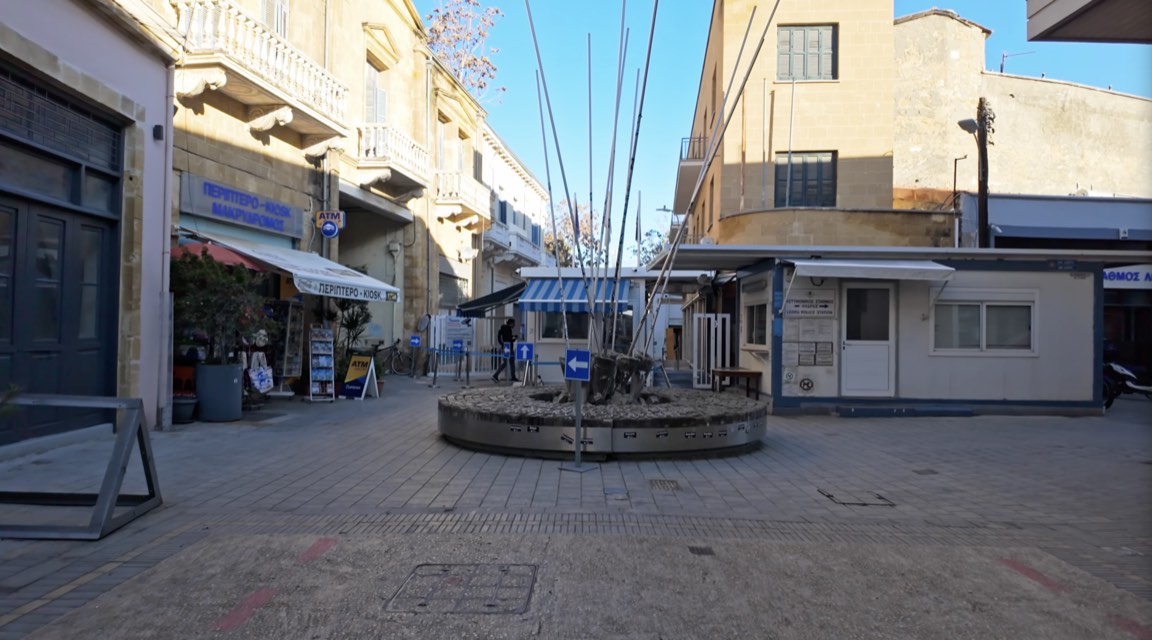
The crossing point for this walk is Ledra Street, a pedestrian border crossing right in central Nicosia. Between the Republic of Cyprus and North Cyprus lies a UN-controlled strip known as the Green Line, or sometimes simply no man's land, and Ledra Street runs directly through it. The process itself was almost anticlimactic: a passport check, a scan, and through, first on the southern side, then a short walk across UN-administered ground, then the same simple check again entering the northern side, arriving under a sign reading "Welcome to the Turkish Republic of Northern Cyprus."
How Cyprus actually split in two
The story behind this line goes back to Ottoman rule, which left roughly 18% of Cyprus's population ethnically Turkish, with the remaining majority, close to 80%, Greek, and strongly Greek in culture and identity even generations later. Britain then took control, holding Cyprus until granting independence in 1960. At independence, an unusual power-sharing structure was set up: a Greek Cypriot president alongside a Turkish Cypriot vice president. It held, unevenly, until around 1963 to 1964, when tensions between the two communities broke into open conflict.
A British officer named Peter Young is credited with literally drawing the dividing line on a map with a green pencil, Turkish-administered territory to the north of it, Greek-administered territory to the south, which is exactly why it's called the Green Line today. The UN moved in shortly after as a peacekeeping force along that same line, and this arrangement, uneasy but functional, held for roughly a decade. Britain, notably, had already kept two small sovereign areas for itself at independence, the ones I'd visited near Limassol the day before, so a form of partial separation existed here even before the wider split hardened.
A very different world, a few metres apart
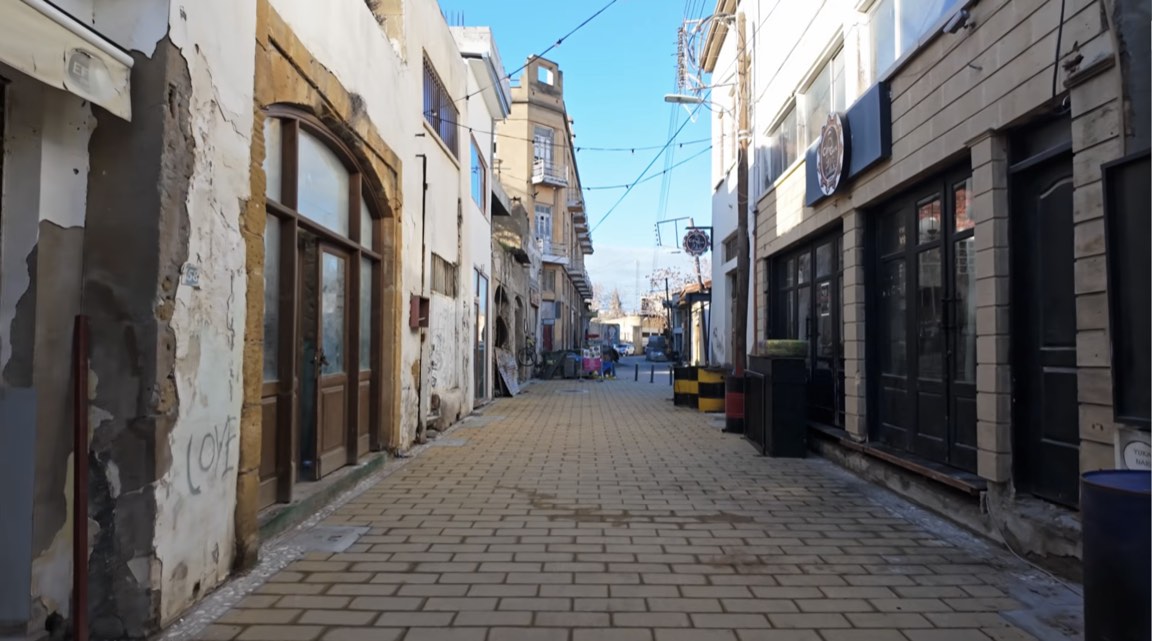
The contrast crossing into North Cyprus is immediate and impossible to miss: the northern side reads as noticeably less developed than the Republic of Cyprus side, visible within moments of stepping across. Before this trip, I'd carried a fair number of assumptions about what North Cyprus would actually be like, mostly shaped by vague, secondhand impressions, and being wrong about most of them was a useful reminder not to trust assumptions over what's actually on the ground, a lesson that echoed a similar moment crossing into Palestine on an earlier trip.
Lunch at a fully vegetarian Turkish restaurant
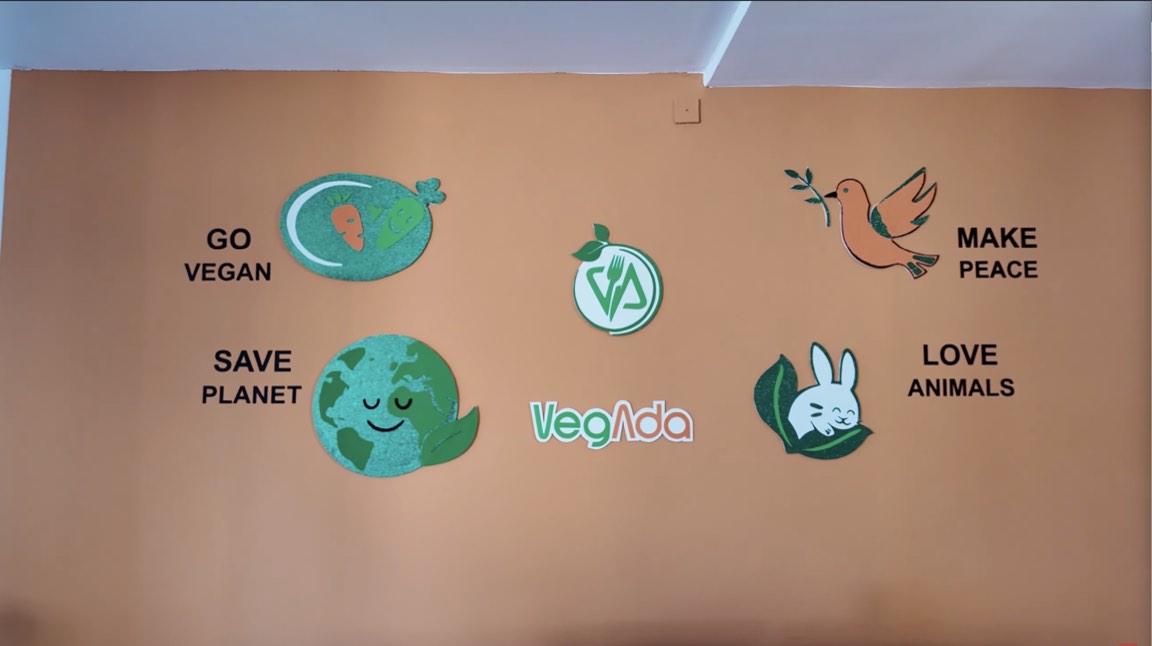
Hungry after the crossing, the first search result for vegetarian food pulled up a restaurant called Vegada (still not entirely sure how to pronounce it), and it turned out to be a genuinely pleasant surprise, this part of Cyprus had noticeably more vegetarian and fully vegetarian restaurants than the southern side, a detail I hadn't expected walking in. A framed list on the wall named notable vegetarians, Newton among them, alongside Natalie Portman as a well-known vegan, purely there to celebrate the lifestyle, not to nudge anyone toward it.
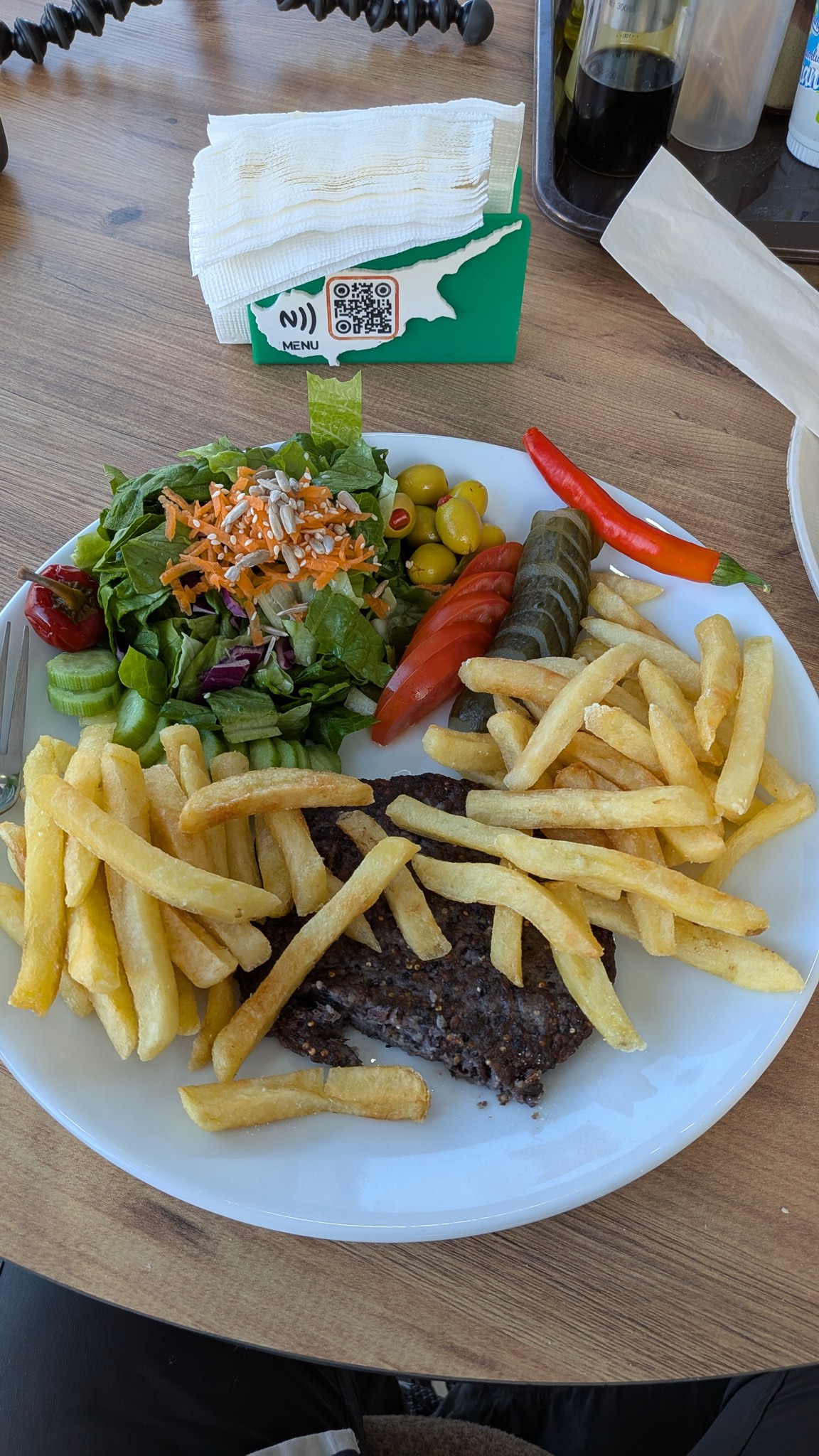
The menu had plenty of Turkish vegetarian options, okra curry with rice, chickpea curry with rice, falafel. I ordered a black bean burger, served with chips, salad, olives, a whole chilli pepper on the side (which turned out to be genuinely spicy despite looking mild), plus a glass of ayran, the yoghurt drink, and a pot of Turkish tea, poured from a small double-kettle setup where the tea itself brews above a lower pot of water, with strength depending on how long you let it steep. Everything on the plate, down to the unlabelled sauces and syrups I couldn't quite identify, added up to a properly satisfying meal, complimentary tea included.
Prices, currency, and why locals cross over to shop
North Cyprus runs measurably cheaper than the south: petrol here priced out to roughly 90 to 95 rupees a litre (in local currency conversion) compared to about 120 rupees on the Republic of Cyprus side, and clothing and general goods followed the same pattern. It's common enough that locals on the southern side cross over specifically to shop and refuel before heading back, since Nicosia itself straddles both sides of the divide.
The currency here is the Turkish lira, same as in Turkey itself, and worth noting is what this really signals: banking, mobile signal (my phone picked up Turkish roaming automatically), retail chains, almost everything here runs as a direct extension of Turkey, despite the "Turkish Republic of Northern Cyprus" branding suggesting a separate country. Only Turkey itself formally recognises North Cyprus as an independent state; no other country in the world does, which raises an obvious question I genuinely don't have an answer to: what practical difference does non-recognition actually make, when everything here is this fully integrated with Turkey regardless?
Kyrenia, the north's main holiday town
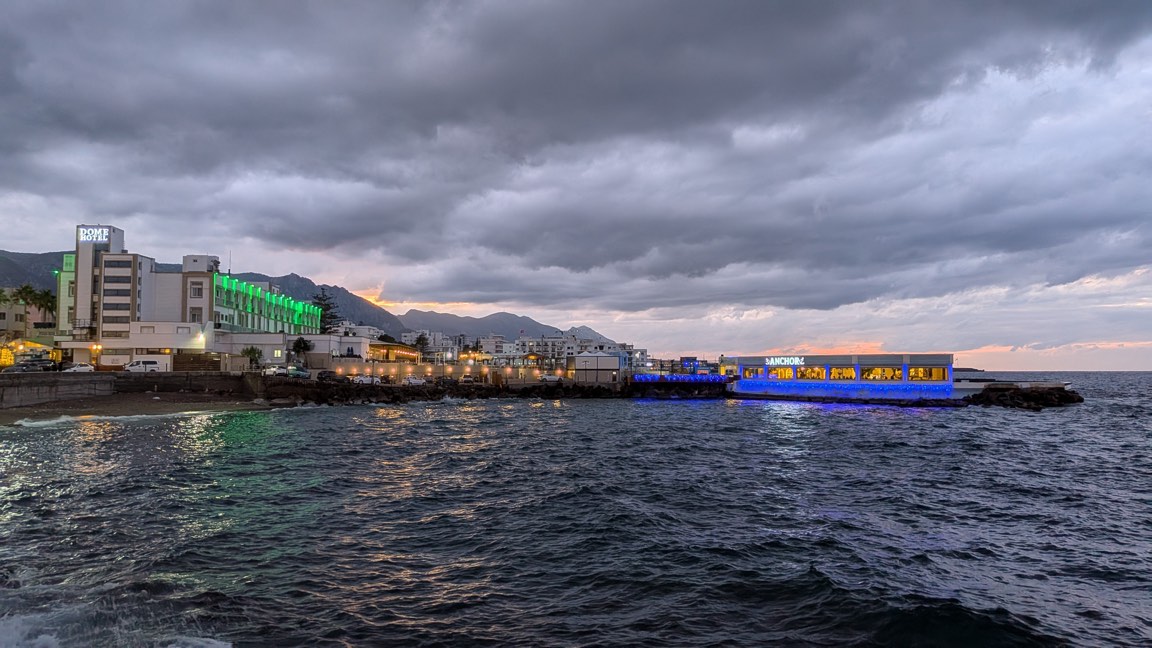
After a longer-than-expected search for parking, the destination for the afternoon was Kyrenia (Girne), a harbour town considered the primary holiday destination on this side of the island. Many of the boats moored here belong to British and other European owners who keep houses or boat slips in the town specifically. A Byzantine-era castle overlooks the harbour, smaller in scale than some I've covered elsewhere but with a genuinely distinct atmosphere, more Turkish in style compared to the European character of a castle like Malta's, worth a look even without going inside.
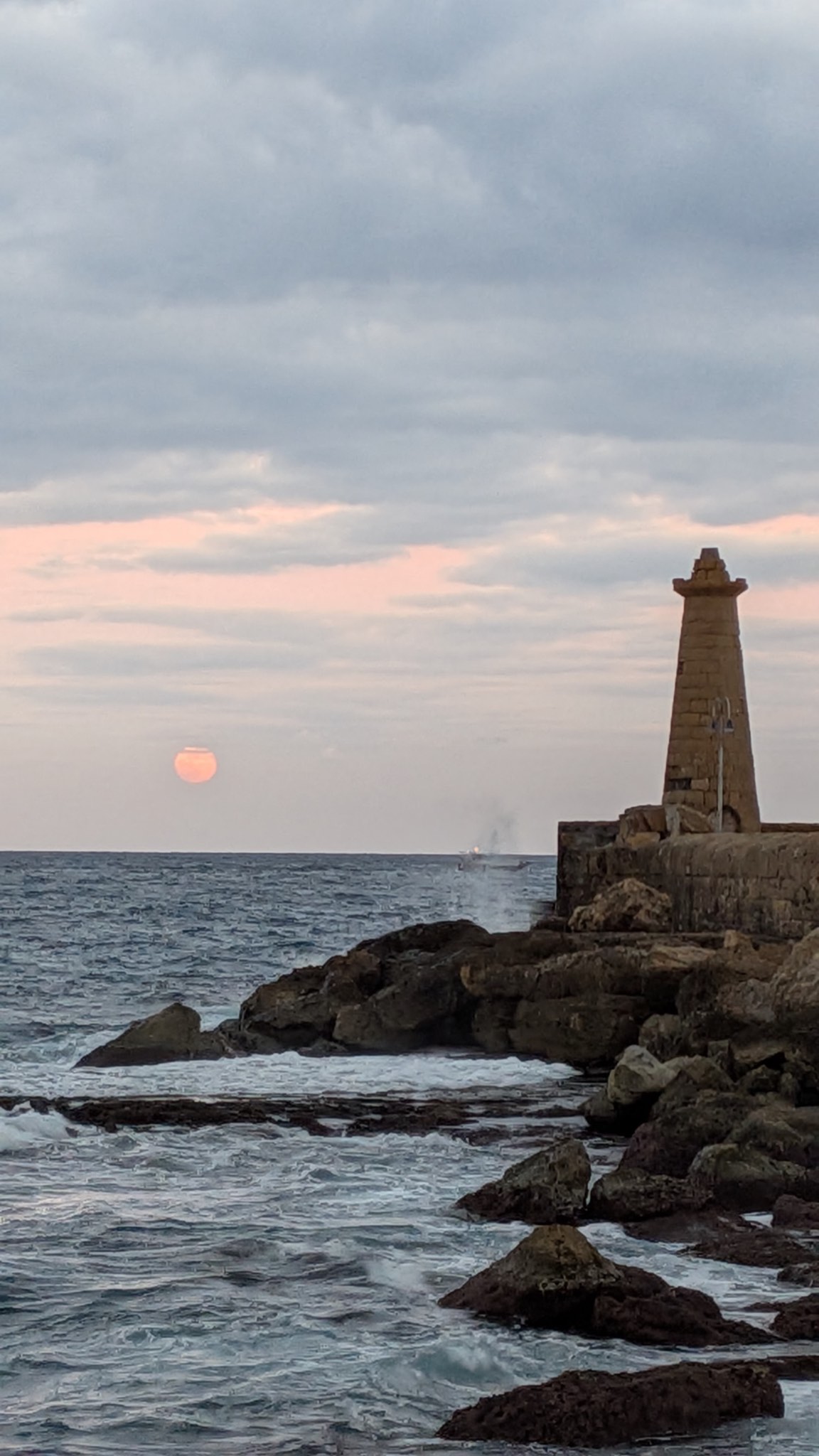
Turkish forces landed at two points during the 1974 conflict, this bit of the historical picture ties directly back to Kyrenia, which was one of the original landing sites. A sunset walk along the harbour closed out the visit, timed just late enough to miss the sunset itself but early enough to catch moonrise on the opposite side, along with the Turkish flag and the North Cyprus flag both flying together, since the original Cyprus flag has no presence on this side of the line at all.
A beach kid's honest reaction
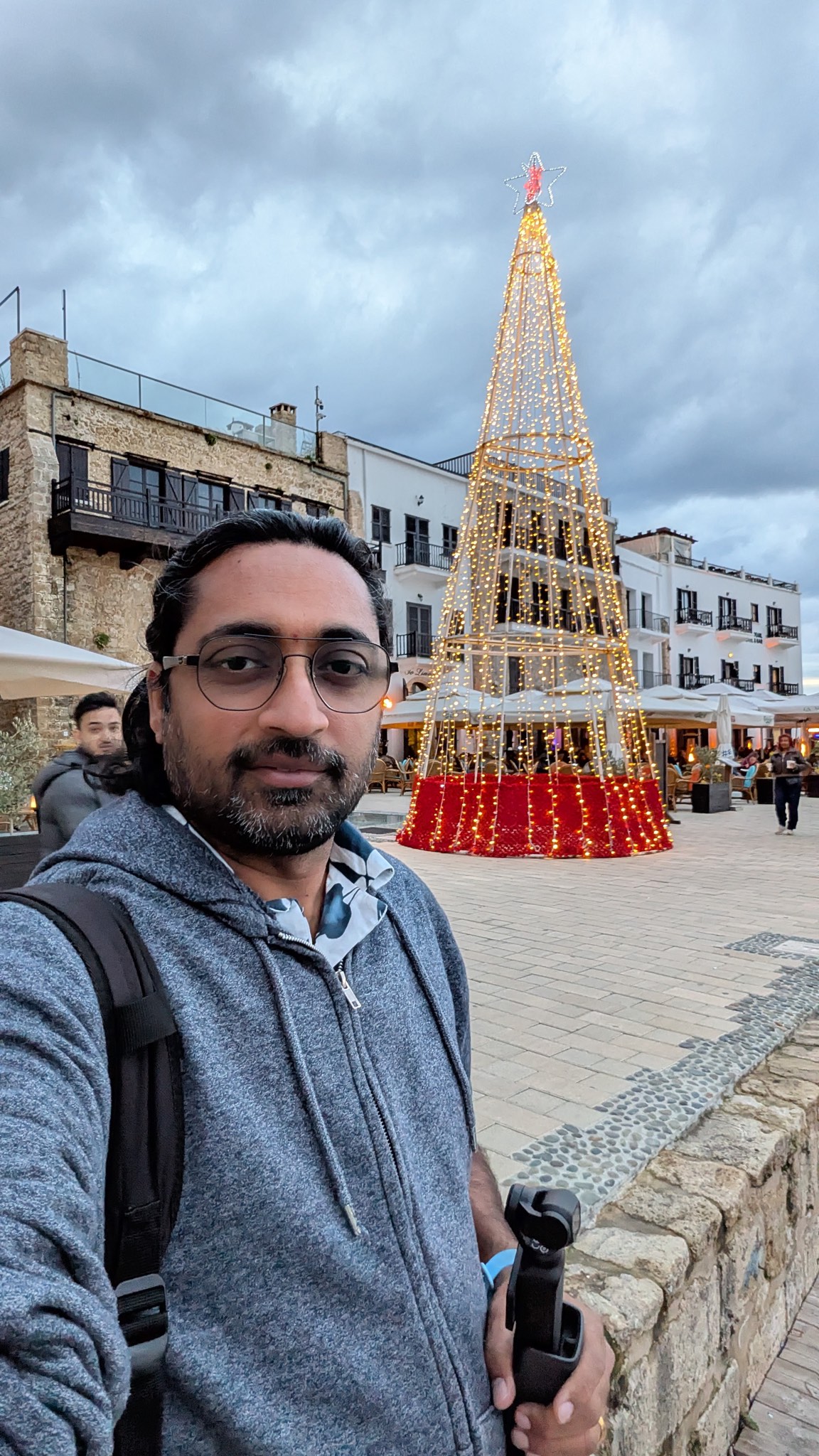
Having grown up in Vizag, a coastal city, beaches carry a certain pull that's hard to shake, and Kyrenia's harbourfront scratched that itch nicely to close the day before heading back across the same crossing toward Nicosia's southern half.
Practical tips for crossing into North Cyprus
- Crossing: Ledra Street in Nicosia is the easiest pedestrian crossing, just a passport check on each side.
- Currency: carry Turkish lira, prices run noticeably lower here than in the Republic of Cyprus.
- Cars: a rental car from the Republic of Cyprus generally can't cross the border, arrange separate transport or a taxi on the northern side.
- Food: genuinely good vegetarian and vegan options are easy to find, more so than expected.
- Kyrenia: worth a half-day trip from Nicosia for the harbour and castle, allow extra time for parking.