
A new country to open the year: Cyprus, starting in the city of Paphos. It's a proper beach destination, just not in winter, temperatures hovered around 16 to 17 degrees, cooler than the number suggested. Beaches were still worth a visit, but the real focus here turned out to be archaeological, this city has UNESCO-listed ruins spread across a surprisingly large area.
Cyprus Episode 1: the Paphos Archaeological Park, the Tombs of the Kings, and a boat tour that didn't go to plan.
The Villa of Theseus, and a house too big to picture
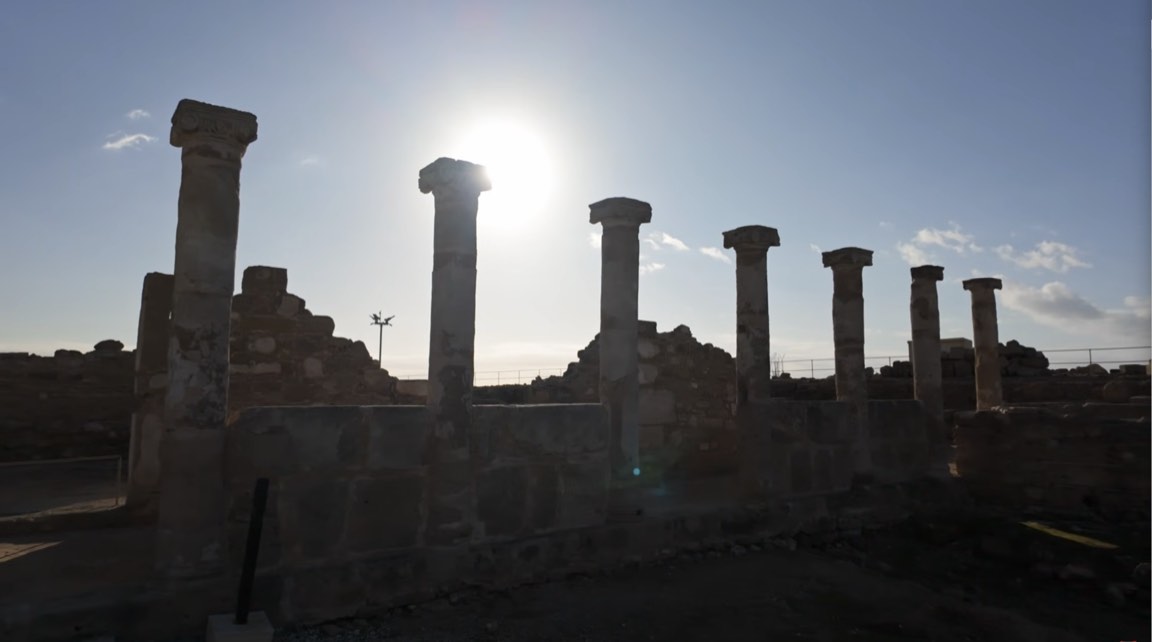
The Paphos Archaeological Park opens with its largest structure: the Villa of Theseus, a private residence for someone genuinely wealthy in antiquity, spanning over 100 rooms across roughly 9,600 square metres. Walking through, sections of the original mosaic flooring and some walls have been carefully preserved. The layout still shows a bath complex, a frigidarium, essentially an ancient version of natural room cooling that functioned a bit like a refrigerated space, and a tepidarium, a warm-bath area closer to a modern sauna or steam room, along with what would have been a central courtyard used as a play area.
Three more houses, each telling a different story
Right next to the Villa of Theseus is a much smaller structure called the House of Orpheus, still only partially excavated, which is why it looks modest compared to its neighbour. One theory here is that part of the original house was demolished at some point, possibly for road widening or converted to farming use, which would explain its reduced size today. Both houses date to the 2nd century AD, roughly the same era as Petra's rock-cut tombs, when homes on this scale were clearly within reach for the city's wealthier residents.
A short walk away is the House of Dionysos, Paphos's most mosaic-rich site, extensively preserved and restored. Built in the 2nd century AD and destroyed, most likely by an earthquake, in the 4th, archaeologists have since excavated, restored and conserved it carefully enough that a protective roof structure now shelters the whole site from further weathering.
A lighthouse with no real connection to any of it
At the far end of the archaeological park stands a lighthouse, built in 1988, long after the ruins around it were already ancient history, so there's no historical connection between the two. What happened instead was practical: as the park's boundaries were mapped out, this lighthouse simply ended up inside them, alongside a few scattered old stones nearby that had weathered down to nothing more than rock. Climbing the stairs partway up (before a locked gate stopped further progress) gave a clear view back over the city, blue-framed windows on the lighthouse itself and on a small building beside it adding a nice visual detail against the sea.
Paphos owes its historical importance to this same coastal position: as a harbour town on an island, it was a key stop for ships throughout antiquity, and that role as a trading port continued right through into the modern era.
The Agora, the Odeon, and a fortress of forty columns
Further into the park sits the Agora, the ancient equivalent of a town's common area, shops, theatres and public gathering space rolled into one. Beside it stands a small open-air Odeon theatre, noticeably smaller than similar structures I'd seen recently in Jordan or in Greece, but well maintained on its own scale.
Nearby, a partially collapsed structure known as Saranda Kolones, literally "forty columns," gets its name from an early estimate of how many columns originally stood here, in reality there were likely more, but the name stuck regardless, the same way Petra's Treasury kept its name despite the myth behind it turning out to be false. A locked underground tunnel beneath the site remains unexplored, at least by anyone I could ask that day, and a lone pigeon seemed to have claimed the ruins for itself. Built in the 7th century, during the Byzantine period, this is the newest structure in the whole park, and the site itself was recognised as a UNESCO World Heritage location in 1980, twenty years after excavations first began in 1960. It remains an active dig even now, with archaeologists expecting more to surface here over the next decade or two.
Coffee at the harbour, before things went sideways
Before the next activity, a coffee stop at a harbourfront shop felt in order, and Cypriot coffee turned out to be genuinely good, a well-made latte enjoyed with a direct view over the harbour where the day's next plan was waiting: a boat tour out to a nearby shipwreck and blue lagoon.
Tombs of the Kings, ancient burial chambers without any kings
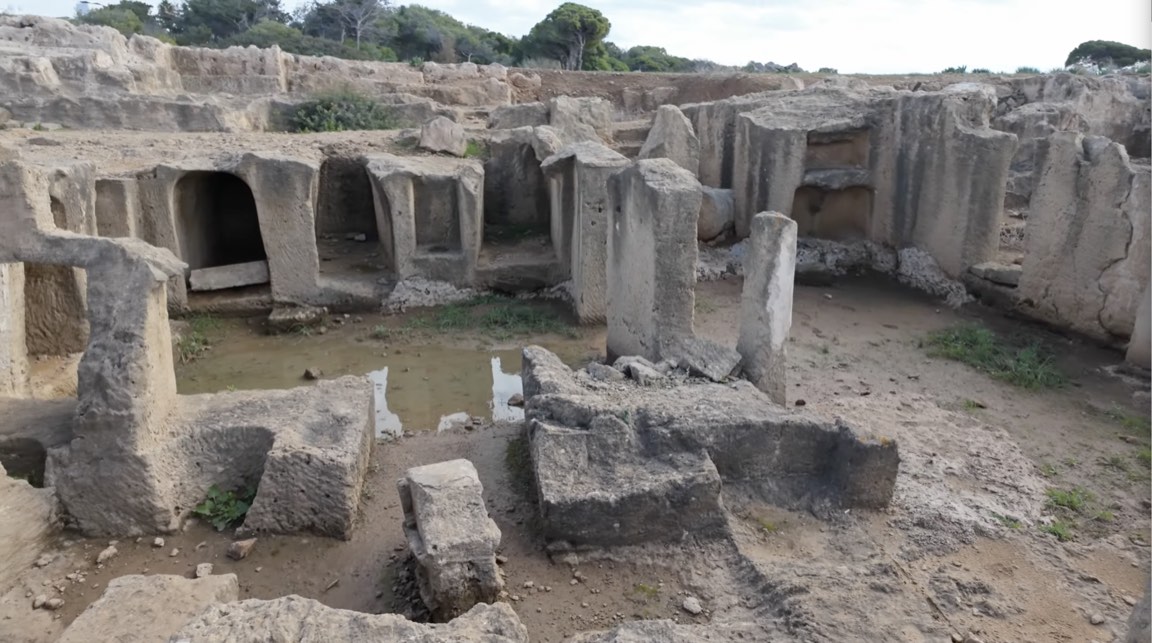
With the boat tour pushed back due to rough seas, the free time went toward the Tombs of the Kings, a UNESCO World Heritage site with, refreshingly, completely free parking everywhere I went in Cyprus. Despite the name, no actual kings are buried here, an on-site sign clarifies this directly, the tombs simply earned the "king-sized" name from their scale, built for the era's wealthy elite, governors and prominent families rather than royalty.
These tombs are carved directly into rock rather than built up, structurally similar to what I'd seen at Petra, though on a considerably smaller scale here. There are eight separate tomb complexes in total, believed to have each belonged to a different family, carved more than 2,000 years ago during the Hellenistic period. No remains are visible inside any of them today, partly because organic remains decompose naturally over that span of time, and partly because later civilisations, Romans, then Byzantines, reused these same tombs as shelters rather than leaving them as burial sites. Some chambers still show carved columns and doorways clearly enough to picture how they originally looked, arranged across what turned out to be three or four separate underground levels.
The boat that never quite made it
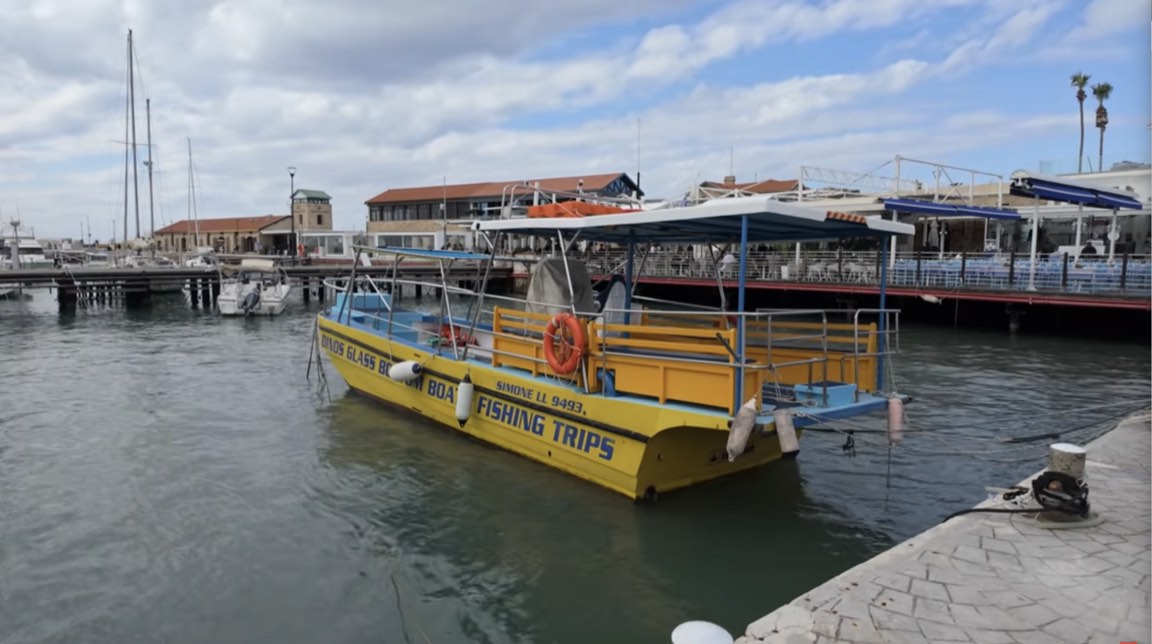
Back at the harbour, the boat finally departed, delayed from its original slot to a later one because of how rough the sea had turned. The plan was a glass-bottomed boat out to a nearby shipwreck, an actual ship that sank here in the 1970s, sitting in water shallow enough, around seven to eight metres, that it's normally visible from the surface, plus a stop at a blue lagoon comparable to the one I'd already seen in Malta.
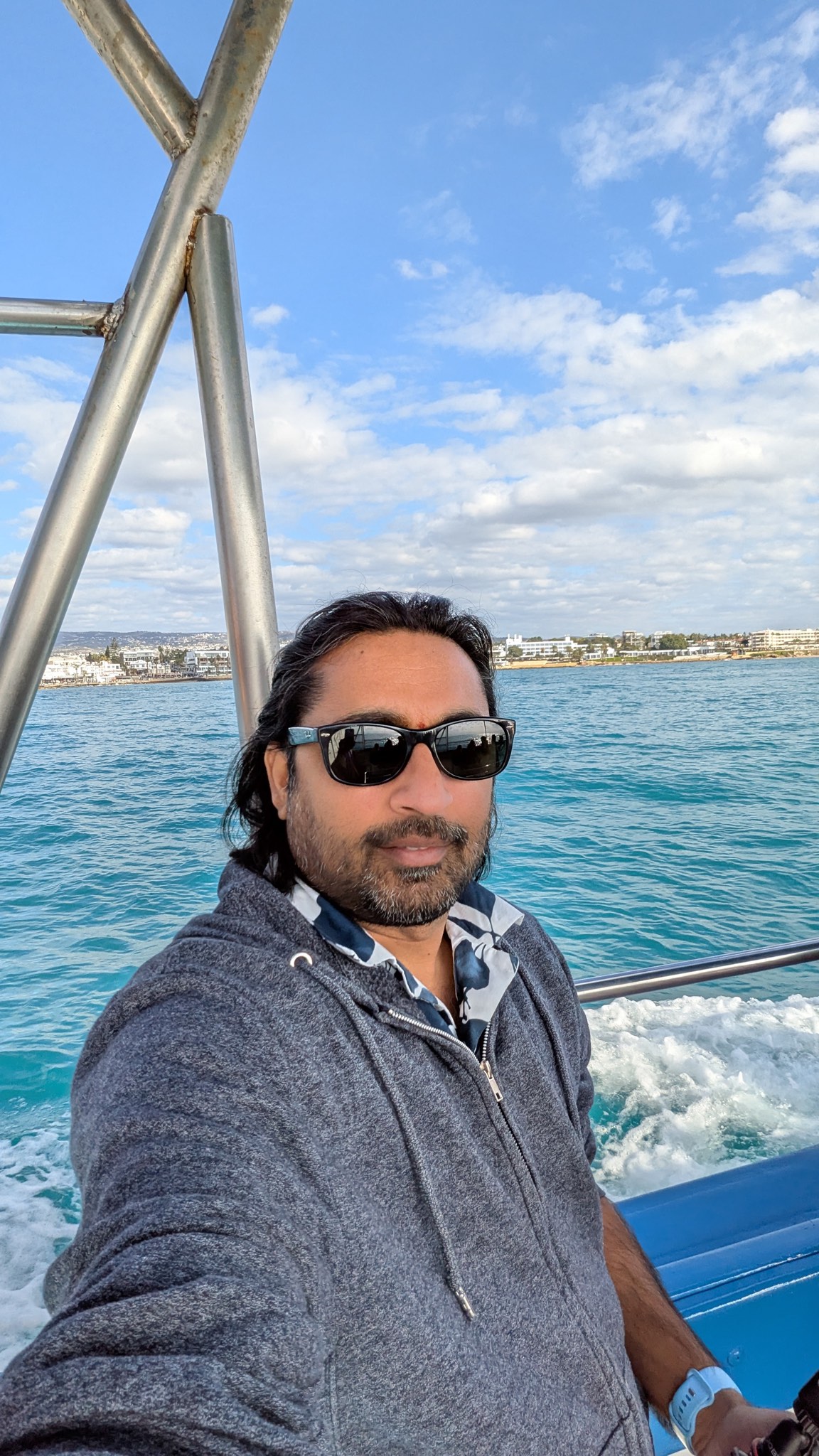
The sea had other plans. Waves rolled the boat around badly enough that after roughly fifteen minutes of waiting near the wreck site with zero visibility, the operator turned back without reaching the lagoon at all, rough water churns up the sand below and destroys any chance of clear visibility regardless of how shallow the wreck sits. I ended up half-joking that I'd sail the boat myself, since our guide clearly wasn't getting us anywhere either.
A modest castle, closing out the day
With the boat tour cut short, a quick stop at Paphos Castle rounded out the afternoon, a small structure originally built during the Byzantine period, though what stands today is largely an Ottoman-era reconstruction, built specifically to control the harbour rather than serve as any kind of military stronghold. History here runs a similar course to Malta's: Arab forces attempted to take the city at one point but failed, while the Ottomans succeeded in holding it for a period afterward.
The evening closed with a walk along the promenade, past souvenir shops (a fridge magnet added to the running collection), popular chains like Pizza Express and a Starbucks alongside it, and a genuinely good Israeli restaurant, Hummus Elia, with strong vegetarian and vegan options worth seeking out.
Onward to the capital
With Paphos's major historical sites covered, the plan for the next leg was Nicosia, Cyprus's capital, with a scattering of worthwhile stops along the way. Like Malta before it, Paphos also had a noticeably large Nepali workforce, a detail worth asking locals about if you're curious what draws people here for work.
Practical tips for Paphos
- Timing: visit in warmer months if beaches and boat tours are the priority, winter seas here can be genuinely rough.
- Archaeological Park: budget at least half a day, the Villa of Theseus, House of Dionysos and Saranda Kolones are spread across a large active dig site.
- Tombs of the Kings: free parking and free-feeling scale, worth pairing with the Archaeological Park on the same day.
- Boat tours: book with flexibility in mind, rough seas can delay or cut a tour short with little notice.
- Getting around: a rental car makes covering Paphos and the road toward Nicosia far easier than relying on public transport.