
The staged train "attack" from the previous Wadi Rum video wasn't a real raid, it was a re-enactment of the 1916 Arab Revolt, done convincingly enough that plenty of viewers apparently thought it was genuine. From there, good roads led straight to Petra, one of the Seven Wonders of the World, and a place I ended up needing two full days to properly cover.
Jordan Episode 2: the Siq, the Treasury, and the climb to the Monastery.
Walking the Siq, a natural gorge built into a city entrance
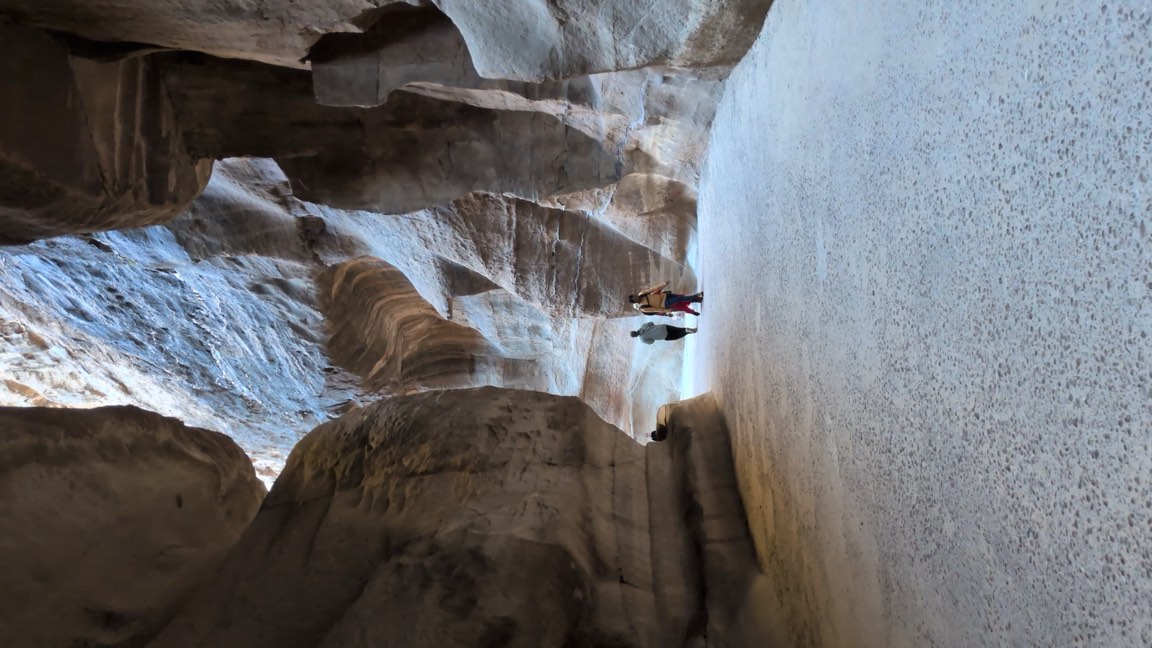
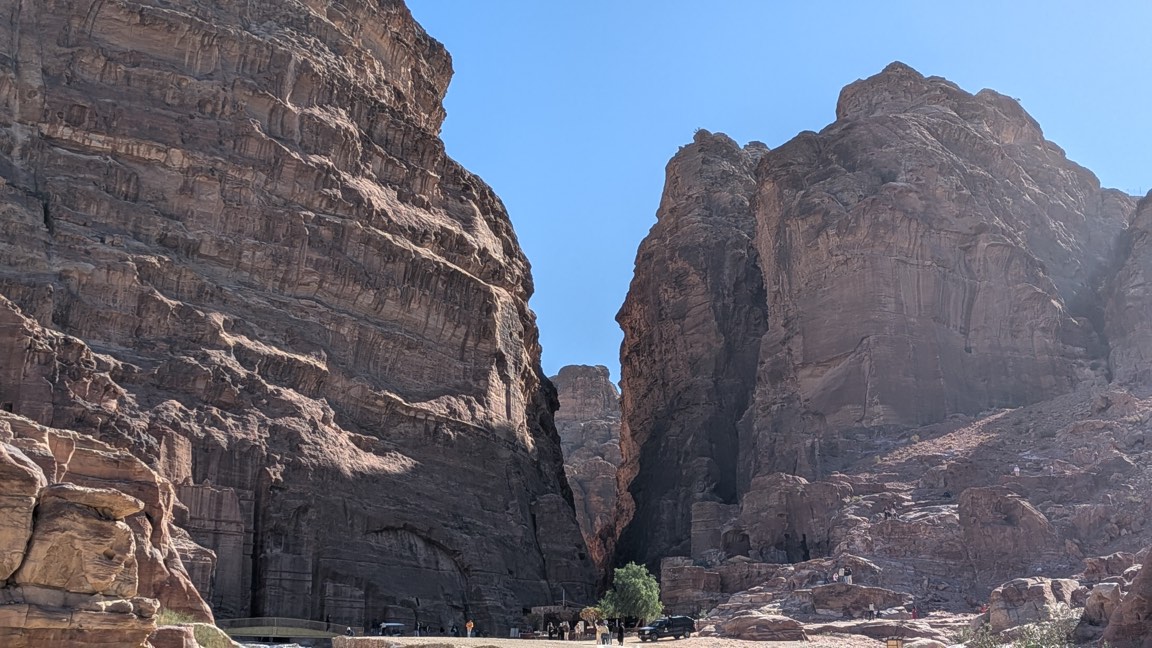
Petra is an ancient city, and the walk into it starts through the Siq, a narrow gorge formed naturally between towering rock walls, roughly 1.2 to 2 kilometres long depending on where you start. Partway through, an arch that once stood at the entrance is gone now, brought down by an earthquake, and a smaller man-made tunnel nearby, carved back in the 1st century BC, was built specifically to divert floodwater away from the city, an early piece of engineering that still holds up. Walking through the Siq itself, with rock walls rising on both sides, the scale takes a while to register; the deeper in you go, the larger it feels.
The Treasury, and why it isn't actually a treasury
The Siq opens directly onto the Treasury, known locally as Al-Khazneh, and it's the single most photographed structure in Petra for good reason, the moment it comes into view is genuinely striking. It's also the building Indiana Jones and the Last Crusade used for its climactic scenes, which is exactly why so many visitors recognise it instantly without having been here before.
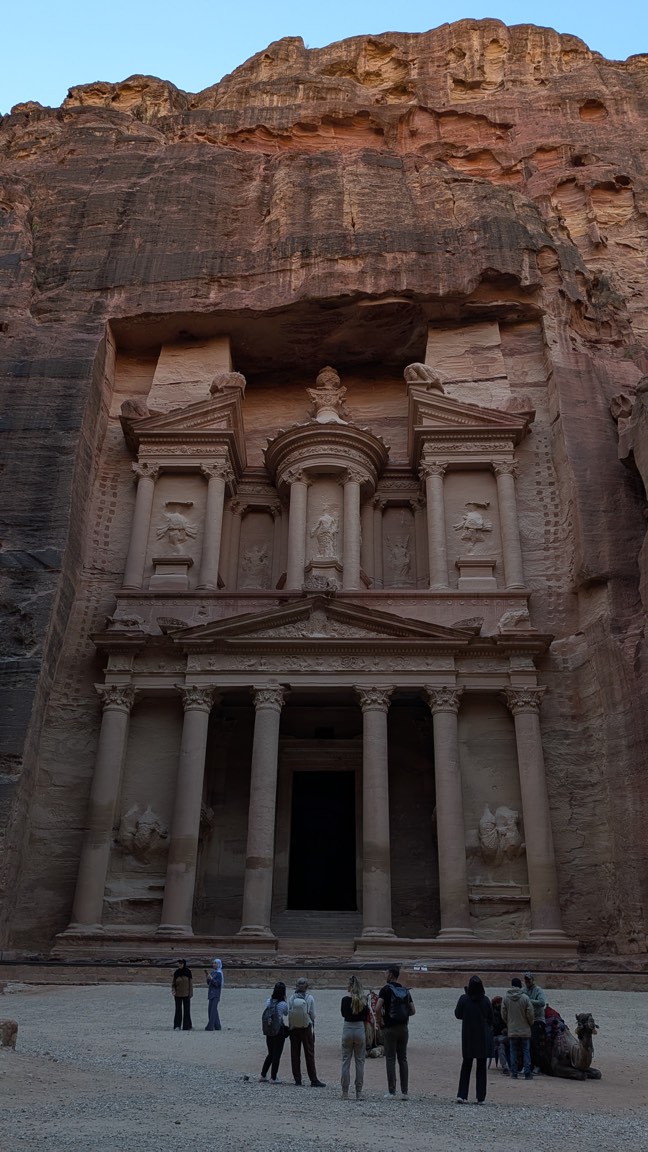
The name "Treasury" is misleading. This was built in the 1st century AD, not as a treasury but as a royal tomb, during the height of the Nabataean kingdom, when Petra served as its capital. What it was never used for was treasure, that's a myth, but a persistent one: an urn carved high on the facade fuelled a local belief that gold was hidden inside it, and marks visible on the stone around it, worn and pitted rather than clean geometric holes, look far more consistent with people trying to shoot or break their way into that urn over the years than with construction scaffolding, which is the more commonly repeated explanation. Either way, no treasure was ever found, but the name Al-Khazneh, "the treasury," stuck regardless.
Later, Romans took over the site, and a 4th-century earthquake caused real damage. As trade routes shifted toward what eventually became the Suez Canal corridor, Petra lost its commercial relevance and was largely abandoned, known only to local Bedouins who lived in and around it quietly for centuries. It stayed effectively hidden from the outside world until 1812, when a Swiss explorer named Johann Burckhardt, travelling in disguise as a local Arab, rediscovered it and brought word of it back to Europe.
Climbing above the Treasury
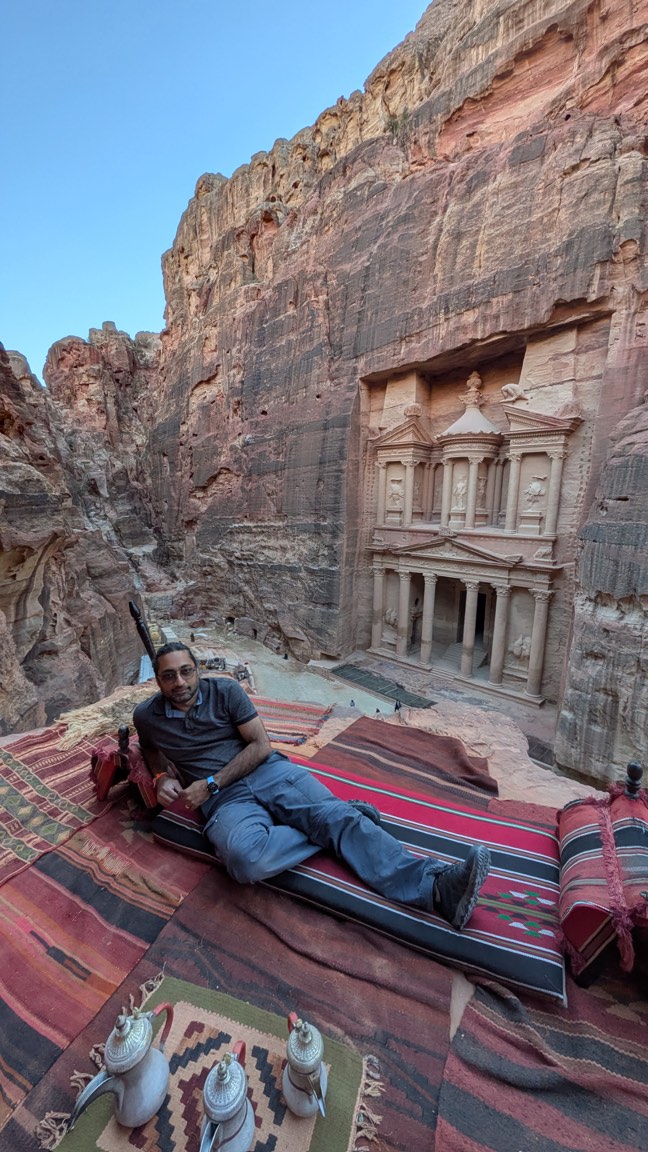
For an extra 10 to 20 Jordanian dinars, there's a climb up the rock face directly across from the Treasury for a view looking down onto it from above. It's genuinely steep, and with a real fear of heights, this wasn't an easy climb for me, at one point I had to lie flat just to look over the edge safely. The payoff, though, is worth it: sitting up there with a cup of tea, looking down at the full scale of the Treasury from a completely different angle, is a different experience from seeing it at ground level.
Petra by Night
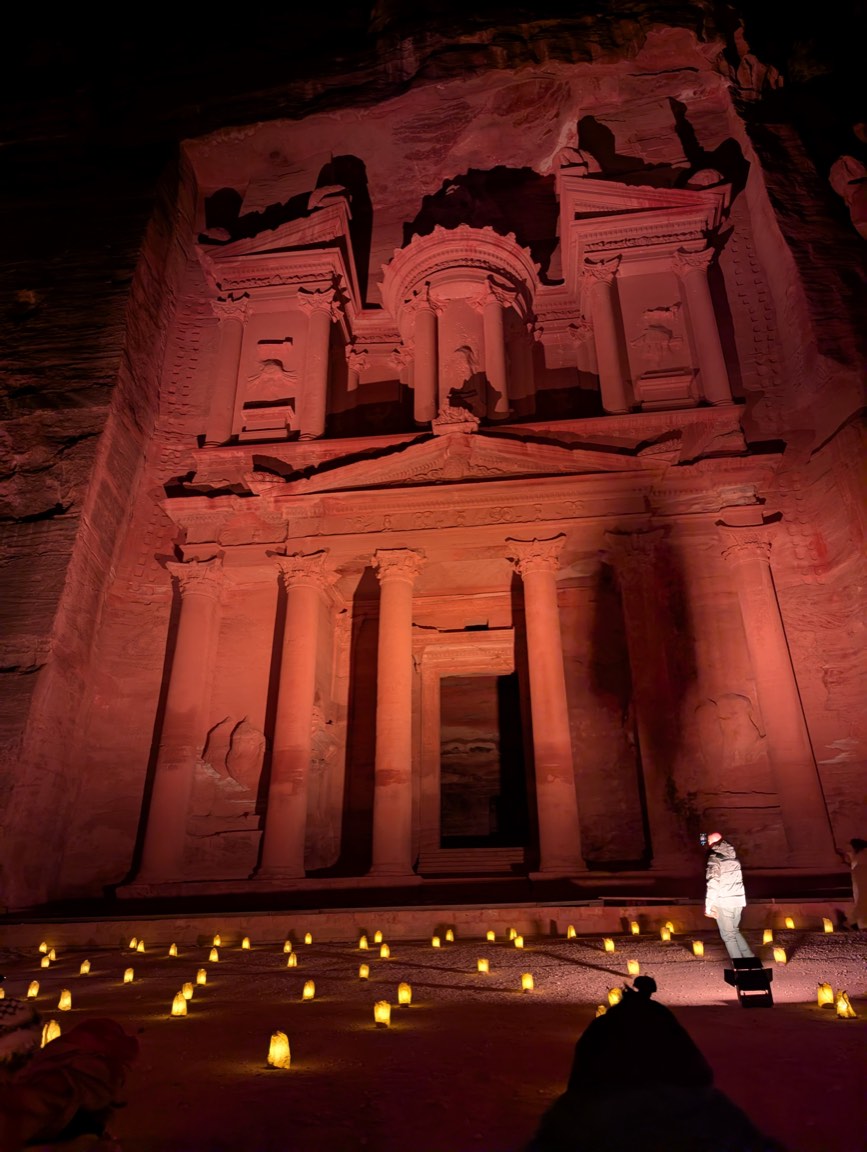
I came back to the Treasury after dark for Petra by Night, when the path through the Siq is lined with candles and the facade itself is lit up in warm colour against the black rock behind it. It's a slower, quieter version of the same walk, and seeing the Treasury lit up like that after already standing in front of it in daylight made for a genuinely different impression of the same building.
A few personal, unverified observations
Walking further past the Treasury, a couple of carvings caught my eye that I can't back up with any real history, just my own impression. One looked, to me, like a conch and a wheel together, a shankha and chakra, and another nearby reminded me of Arjuna's chariot with Krishna as the charioteer. These are entirely my own readings, not documented facts, so take them as a traveller's imagination rather than archaeology, though it's the kind of connection I've made before, including in an earlier video about Telugu film locations in Austria for Namo Venkatesa.
Little Petra, entered by accident
My second day started from a different direction, through what's known as the back entrance, near a smaller site called Little Petra. I hadn't originally planned to come in this way, directions from different people along the route kept contradicting each other, but it worked out well: Little Petra turned out to be a genuinely worthwhile stop I'd have otherwise missed. It has its own set of rock-carved chambers, on a smaller scale than the main site, and historically served as something closer to an entertainment or gathering space for the city's residents rather than a residential or religious site itself.
The Roman Theatre, carved rather than built
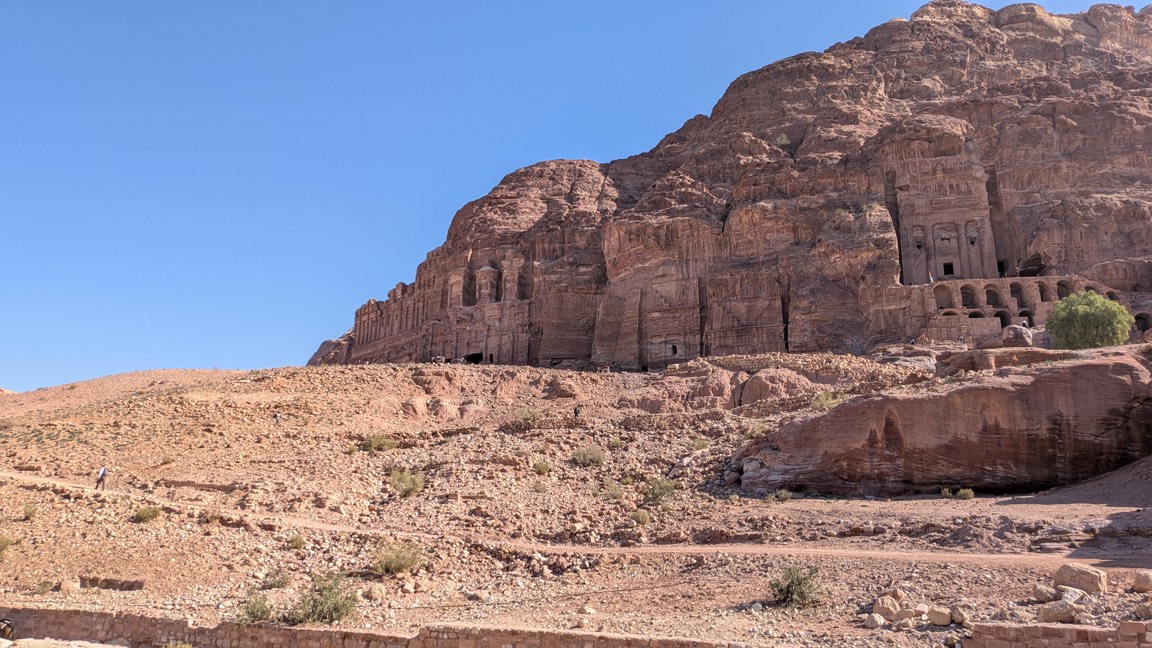
Continuing in from there led to the Roman Theatre, and despite the name, this wasn't actually built by Romans, it was carved directly into the rock by the Nabataeans. What the Romans added later was the structure in front of the stage. The seating itself is entirely rock-cut, not built up from separate stone blocks, which is easy to miss unless you look closely at how continuous the rock face is behind the rows. Facing the theatre across the valley is a row of some of Petra's largest tomb facades, cut directly into the cliff face on a scale that rivals the Treasury itself, just without the crowds gathered in front of them.
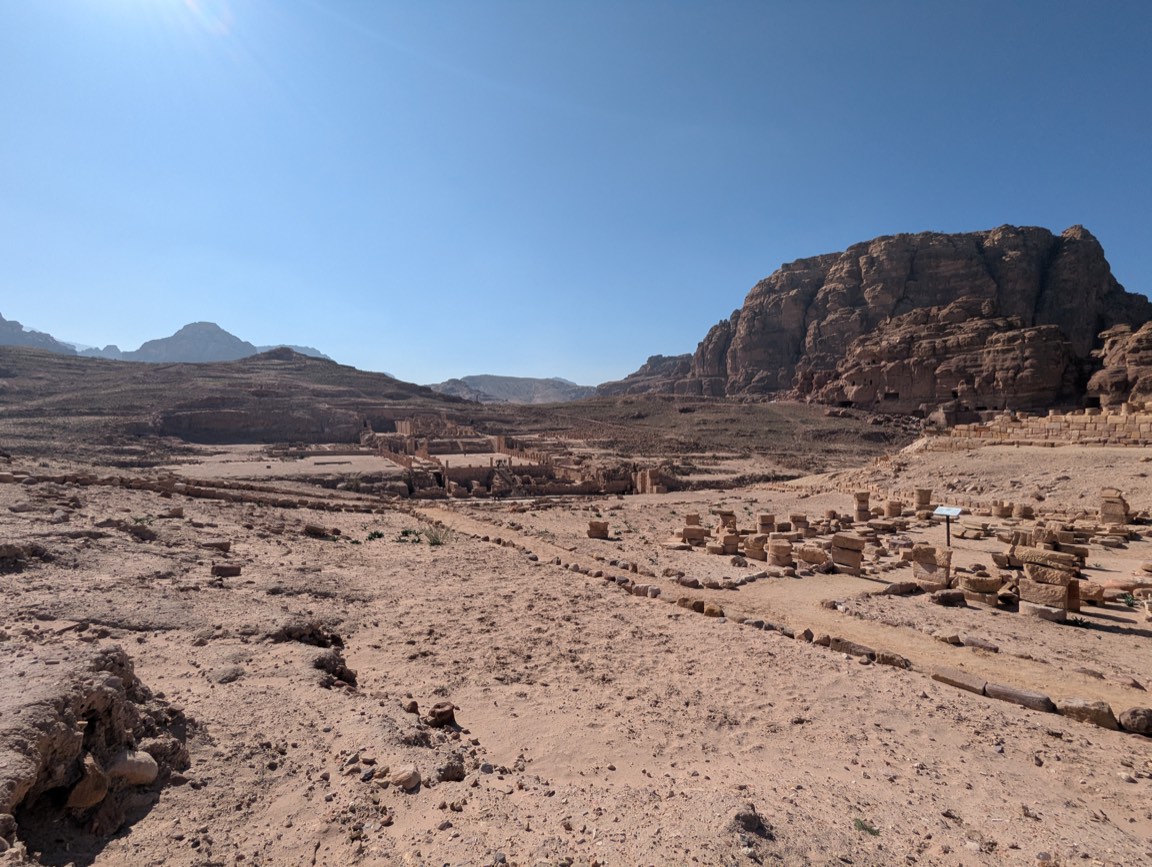
Past the theatre lies what was once Petra's main city and colonnaded street, part Roman-era addition, part original Nabataean construction, including the remains of what would have functioned as the city's shopping street in antiquity.
800 steps to the Monastery
From the main city area, the walk to the Monastery, known as Ad-Deir, runs about 800 steps uphill. Despite the name, this wasn't originally built as a monastery at all, it started as a gathering and assembly hall for the city's residents, used for events and communal meetings. Centuries later, during the Byzantine period, it was repurposed as a church, which is where the "Monastery" name actually comes from.
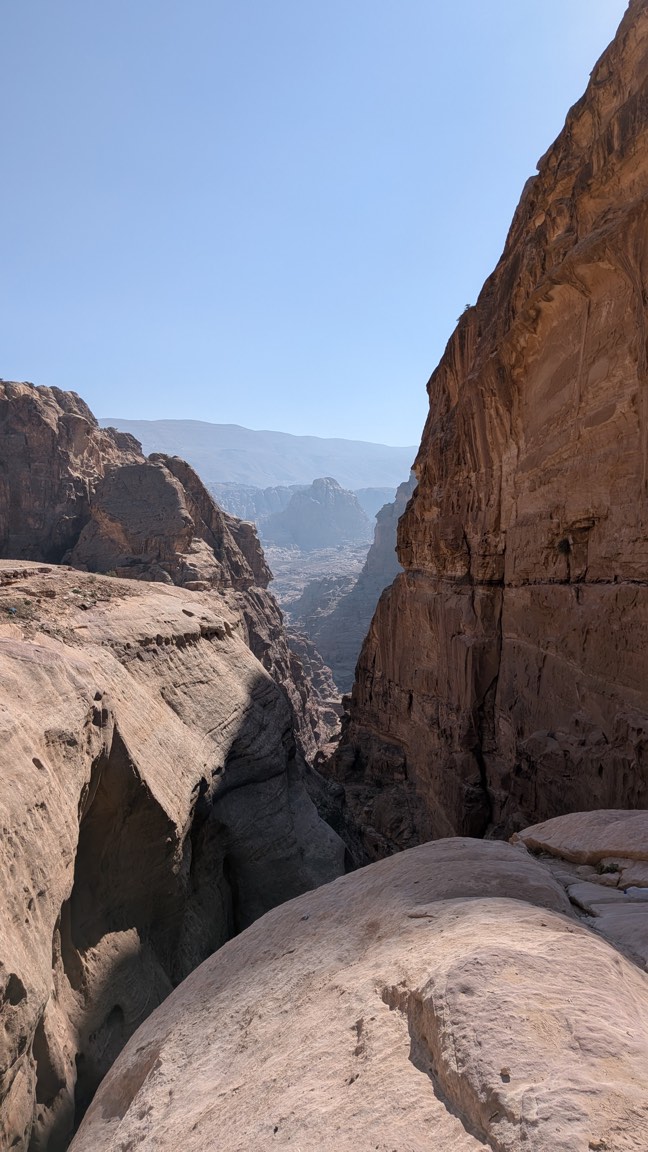
The 800 steps are tiring, no question, but the view from the top makes the climb worth it, both of the facade itself, comparable in scale to the Treasury, and of the surrounding valley beyond it.
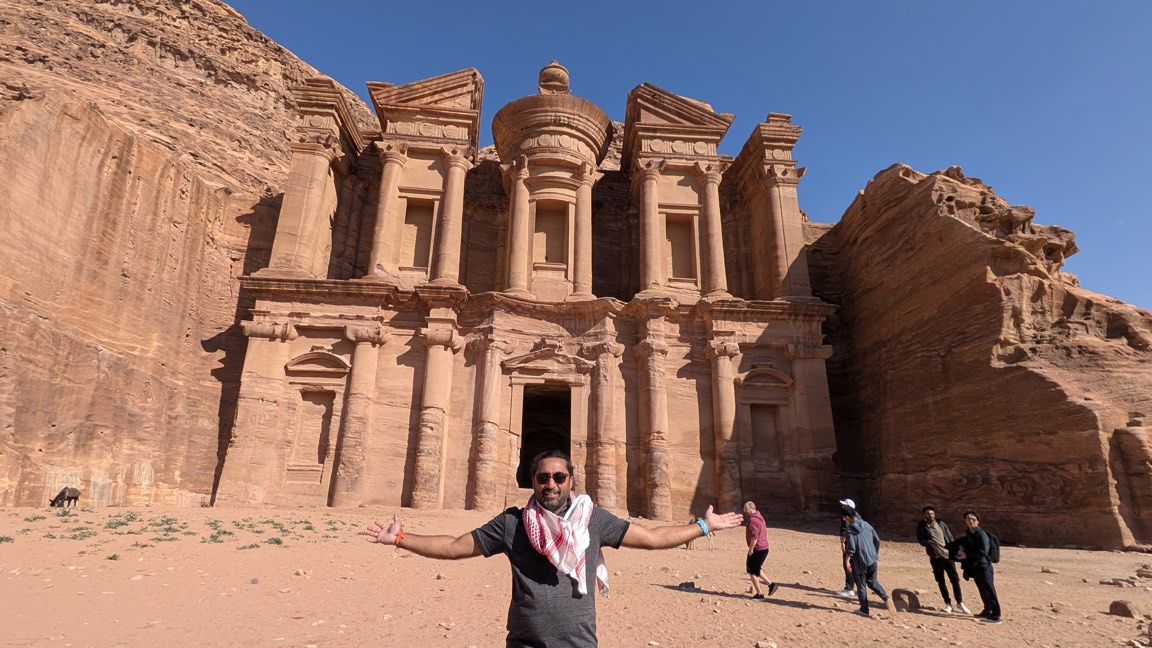
"Just for photos"? I'd disagree
Someone I know who'd visited both Wadi Rum and Petra told me Petra wasn't as impressive, in his words, "only good for photos." I'd push back on that. Petra rewards a slower, more deliberate look: once you actually register how much of this city was carved directly out of solid rock rather than built up piece by piece, the scale of effort involved is what makes it a genuine World Wonder, not just a striking photo opportunity. It's also worth knowing that the "Seven Wonders" list is really eight sites in practice: seven modern wonders plus one ancient wonder, Egypt's pyramids, which don't appear on the modern list at all.
Two days, and still worth every step
Between the Siq, the Treasury, the climb above it, Petra by Night, Little Petra, the Roman Theatre, the main city, and the 800 steps to the Monastery, Petra took a full two days to see properly, and even then I'm not certain I saw every corner of it. A 450-year-old pistachio tree near the entrance was still standing there both times I passed it, a small, steady detail in a site defined mostly by how much has already fallen or been rebuilt.
Practical tips for Petra
- Time needed: budget at least two days if you want to see the Treasury, Little Petra, the Roman Theatre and the Monastery properly.
- Entrances: the main entrance leads straight to the Siq and Treasury; the back entrance near Little Petra is a good option if you're starting from that side of the site.
- The climb above the Treasury: costs an extra 10 to 20 dinars and is genuinely steep, worth it for the view but not for anyone uneasy with heights.
- Petra by Night: runs on specific evenings each week, check ahead and book separately from daytime entry.
- The Monastery: the 800-step climb is tiring but manageable at a steady pace, with good rest points along the way.
- Jordan Pass: covers Petra entry along with several other sites and the visa-on-arrival fee, worth arranging before you land.