North Macedonia doesn't come up often on most travel lists, and Skopje is exactly the kind of capital that rewards showing up without much research: a giant statue at the centre of a genuine international dispute, a clock frozen at the precise minute an earthquake changed the city forever, and, by some estimates, close to a thousand statues that not everyone here is convinced were worth the money.
Macedonia Square, the Stone Bridge, Skopje Fortress, and a city rebuilt after a devastating earthquake.
A vegan lunch and a name worth getting right
A three-hour walking tour through the city, done with almost no advance research, ended right at lunchtime near a vegan restaurant: watermelon juice with mint, a spicy vegan burger loaded with hummus, chilli sauce and tahini, and a side of healthy chickpea-and-beetroot chips. A good start before the real exploring began.
One note worth getting right from the start: the country's official name is the Republic of North Macedonia, but locals generally prefer being called simply Macedonia, and out of respect, that's the name used throughout this visit and this post.
Macedonia Square, and Alexander's one recorded setback
Macedonia Square is the city's massive central plaza, dominated by an enormous statue of a rider on a rearing horse: Alexander the Great, commonly called a Greek hero, though he was, in fact, Macedonian, from this very region, not Greece. Across a nearby bridge stands a second statue of Philip II, his father.
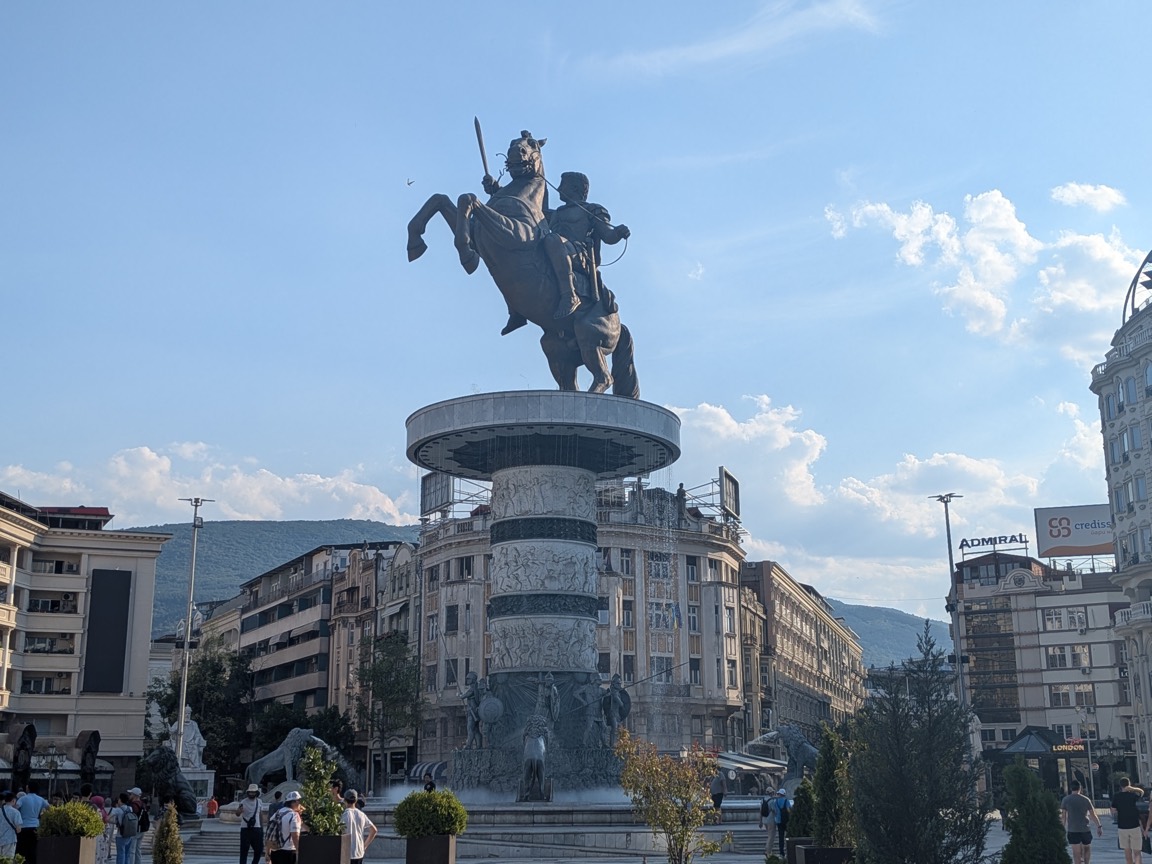
Alexander's campaigns are famous for one thing above all: he essentially never lost, right up until he reached what's now northwest India, where he came up against Porus, likely a version of the name Purushottama, along the banks of the Hydaspes. History books tend to phrase it diplomatically, saying he "stopped" there rather than saying he lost, but by most readings, that's effectively what happened. The square around his statue today is a genuinely lively public space, complete with a small train for children to ride, a casino, and views over the Vardar River running alongside it.
Mother Teresa's birthplace, and a broader Balkan pattern
Skopje holds real significance for Mother Teresa: she was born in this exact city, though the house she was born in was destroyed in a later earthquake and never rebuilt, leaving only the general site behind, along with a small museum, closed at the time of this visit and open only on Saturday and Sunday afternoons. Her fuller story, and Albania's own claim on her, was covered in detail in an earlier stop on this trip through Tirana.
Macedonia sits within the wider Balkan region, alongside Greece, Albania and Bulgaria, all covered earlier on this trip, and shares a broadly similar history: centuries of Ottoman rule leaving behind large Muslim populations, though Macedonia, unlike Albania, saw much of its population revert to Christianity over time. Today the country is roughly 65% Orthodox Christian, alongside a Muslim minority, and, much like its neighbours, a majority on both sides who identify with a religion largely in name rather than active practice.
A clock stopped at the exact minute of a disaster
Near the main square stands the City Museum of Skopje, housed in a building still bearing an odd architectural scar: a section that looks abruptly cut off, because it genuinely was. The building's clock is frozen at 5:17, and the reason is specific and sobering: at 5:17 on the morning of 26 July 1963, a massive earthquake struck Skopje, destroying roughly 80% of the city. This building, then a railway station, had half its structure collapse in the quake, and the stopped clock was deliberately left unrepaired ever since, a permanent marker of the exact moment. Most surrounding buildings were rebuilt after the disaster; a few, including one next to the museum, survived largely intact.
A river walk, three bridges, and an odd currency
A pedestrian street near the river echoes Sofia's own Vitosha Boulevard, right down to a matching statue installed for the same visual effect, lined with restaurants that fill up properly once evening sets in. The Vardar River running through the city eventually flows out through Greece into the Aegean Sea, and its banks are lined with walking paths and three separate pedestrian-only bridges. Two boat-house structures along the riverbank sat closed and seemingly unused, looking like they'd make a genuinely good restaurant or boathouse if someone reopened them properly.
Macedonia's currency is the denar, not the euro, since the country is part of neither the European Union nor the Schengen Area, its name a leftover influence from centuries of Ottoman rule. In practice, most businesses, taxis included, happily accept euros alongside denars, converting on the spot, so visitors rarely run into trouble either way.
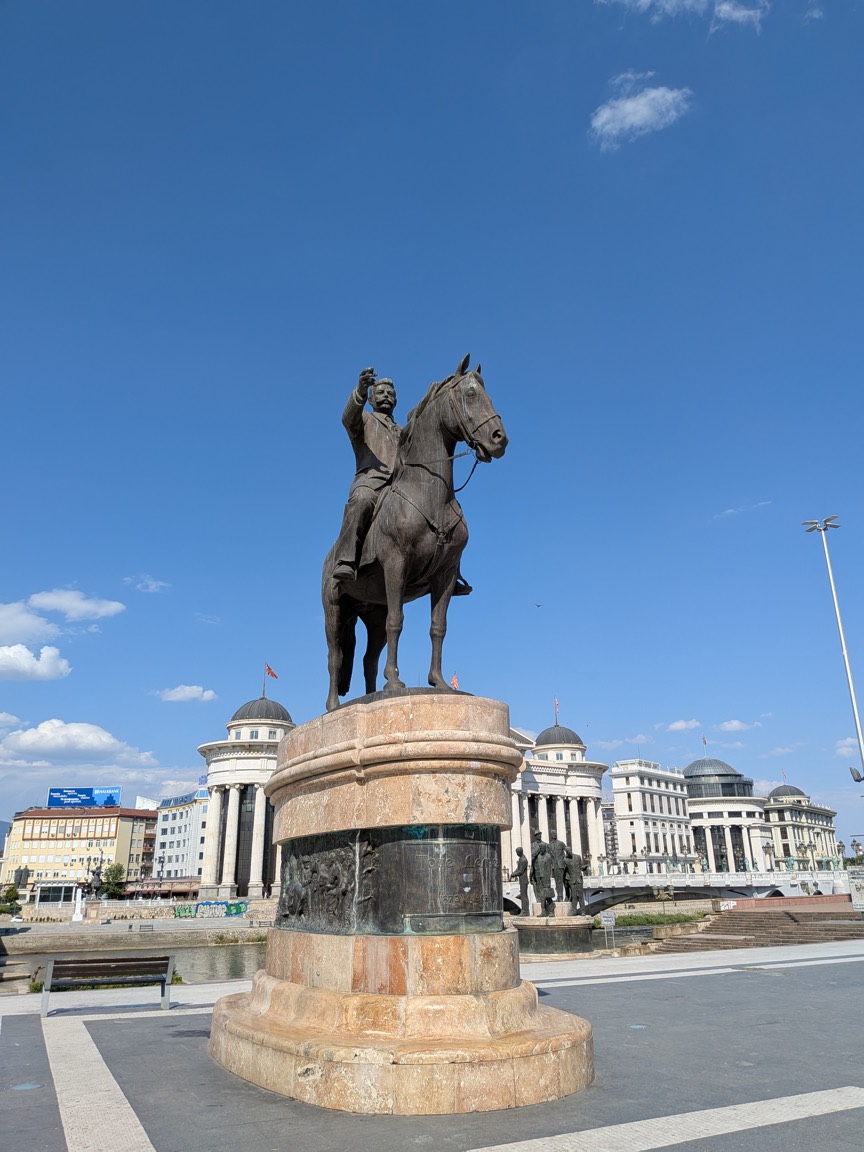
The most famous of the three bridges is the Stone Bridge, a genuinely old structure and the only one of the city's bridges to survive the 1963 earthquake intact. It leads toward the Old Bazaar on one side. The other two bridges, the Art Bridge and the Bridge of Civilisations, are recent additions from a 2014 city redevelopment project, each lined with statues from a range of different sculptors, part of a much larger citywide statue programme that added close to a thousand statues across Skopje, a project locals themselves are divided on, with plenty grumbling that the spending went too far.
Fountains, statues, and a flag with a complicated history
Past the bridges, a large fountain built around the theme of motherhood shows a sequence of statues tracking a pregnant woman through to a growing child, genuinely thoughtful in its design rather than purely decorative. Nearby, a second grand fountain sits beneath the statue of Philip II, Alexander's father, matching the scale of the main square's centrepiece.
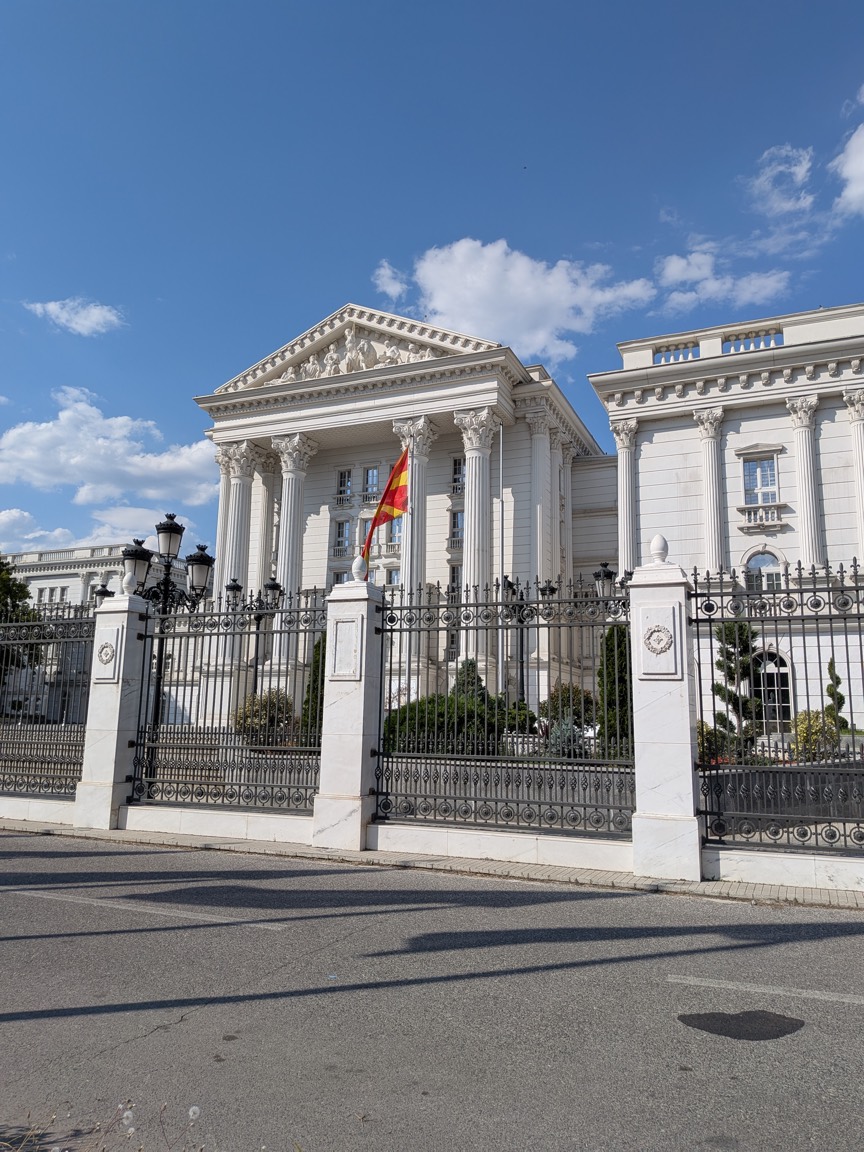
Even the souvenir magnets tell a small piece of history: two different Macedonian flags appear side by side on sale here, the older one featuring a golden sun-burst design, associated directly with Alexander, whom both Macedonia and Greece separately claim as their own. Greece has its own region also called Macedonia, and objected to the newer country using the sunburst symbol and the name Macedonia outright, eventually leading to the country changing its flag design and, more significantly, formally renaming itself the Republic of North Macedonia, largely to smooth the path toward European Union membership. Despite the concession, EU membership still hasn't materialised. It's a relatively poor country with limited leverage, and the country's first proper shopping mall only opened around 2013, just over a decade before this visit.
Close to the main square stands the Macedonia Gate, a white triumphal arch covered in carved reliefs and topped with statues, another piece of the same citywide monument-building spree.
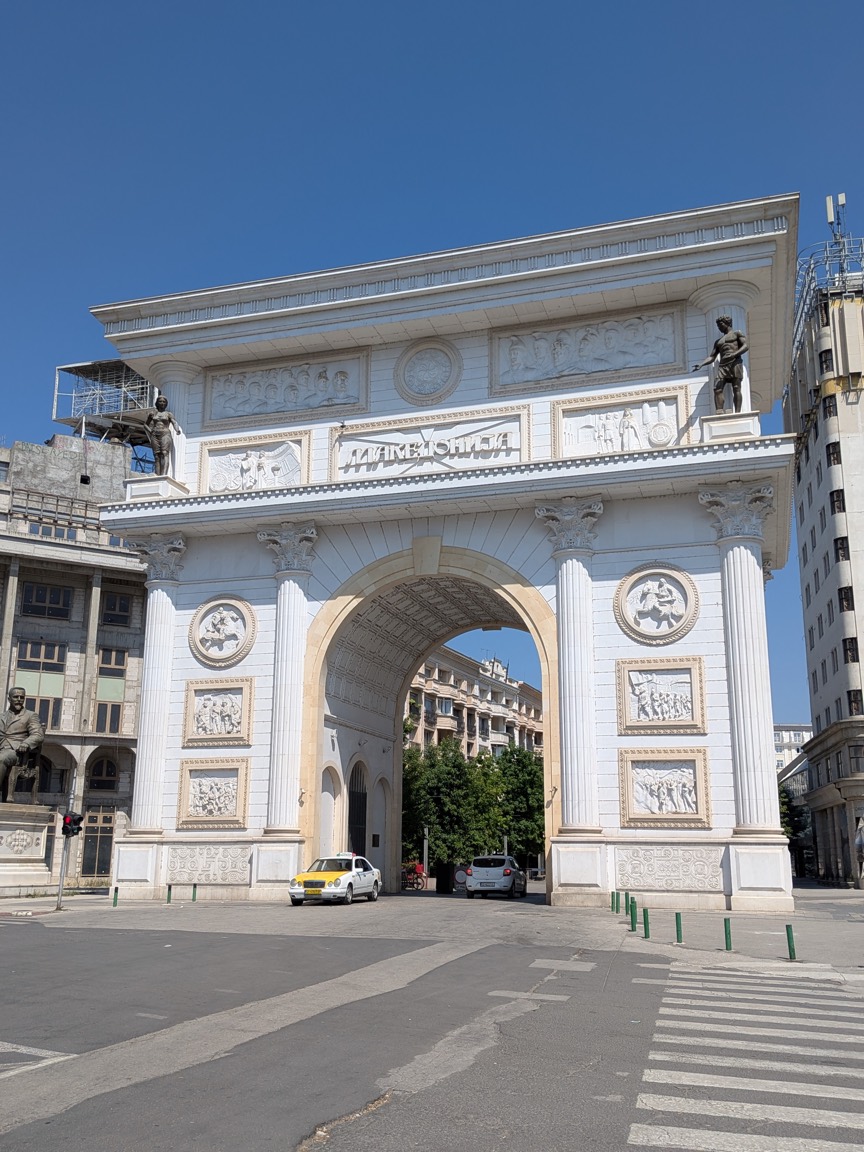
The Old Bazaar and Skopje Fortress
The Old Bazaar unfolds as a series of streets each themed around a specific trade, one lined entirely with ice cream shops, another dedicated to leather goods, another to jewellery, most shops closed on the weekend of this visit apart from a handful. Gold and silver jewellery-giving customs here mirror Indian traditions closely, gifted for nearly any occasion and often passed along between families over time. One particularly lively street doubles as the city's nightlife strip after dark, lined with bars, restaurants and clubs.
Above the bazaar sits Skopje Fortress, free to enter and noticeably under-maintained, its most interesting exhibit an actual leftover machine gun from the Second World War era rather than any older cannon. The fortress officially closes by 6pm rather than at sunset, catching more than a few visitors off guard, though the views from just outside the gate are still worth the climb.
Skopje after dark
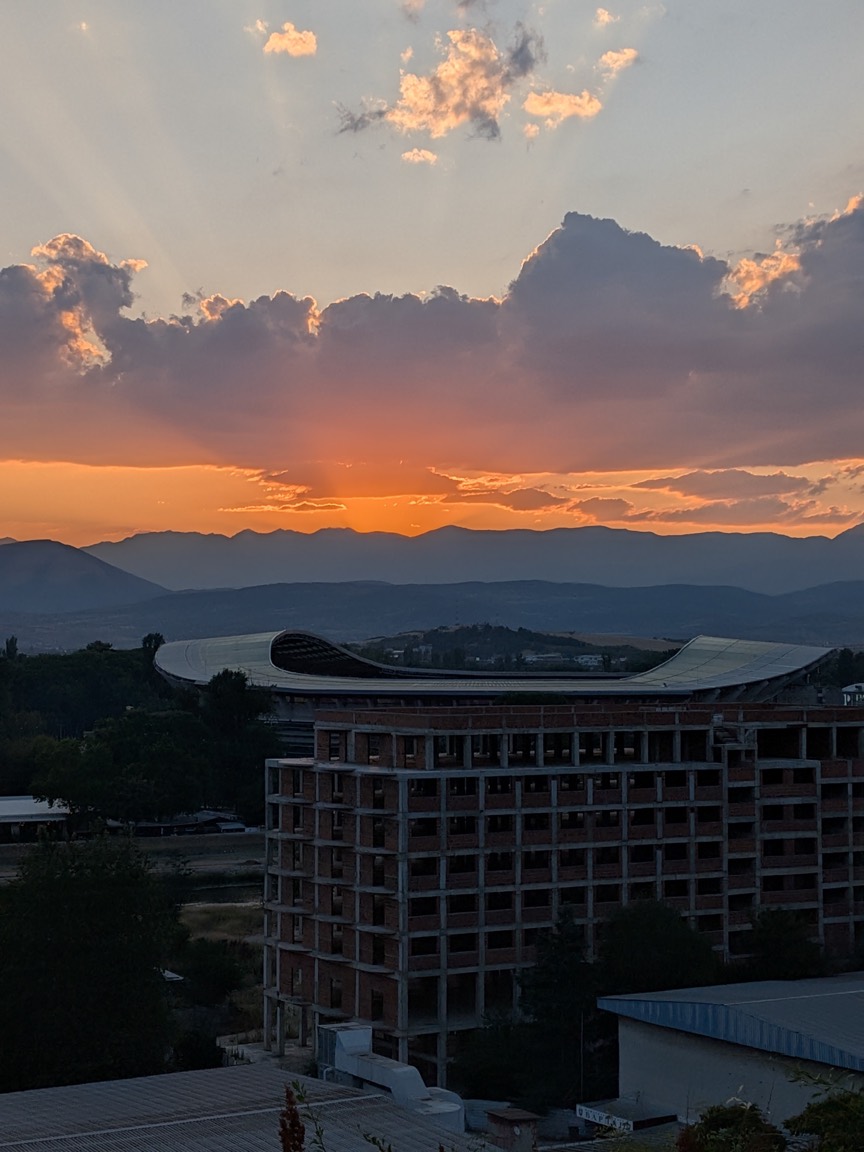
Returning after sunset transformed the city entirely: the Stone Bridge lit up and reflected across the river, the statue-lined bridges glowing under warm lighting, and Macedonia Square itself, ringed with LED screens locals half-jokingly compare to New York's Times Square, though the screen quality itself has some catching up to do. Even the casino building from earlier in the day looked entirely different once properly lit, and the fountains across the square rounded off a genuinely pretty evening in a city that, on paper, doesn't get nearly enough credit.
Practical tips for Skopje
- Currency: both euros and Macedonian denars are widely accepted, no need to stress about exchanging in advance.
- Skopje Fortress: go before 6pm, it closes earlier than sunset despite what you might be told locally.
- Mother Teresa Memorial House: only open Saturday and Sunday afternoons, plan accordingly.
- Macedonia Square: visit twice if you can, once in daylight and once after dark, it's a genuinely different place lit up.
- Old Bazaar: some shops close on weekends, a weekday visit gets you the fuller experience.