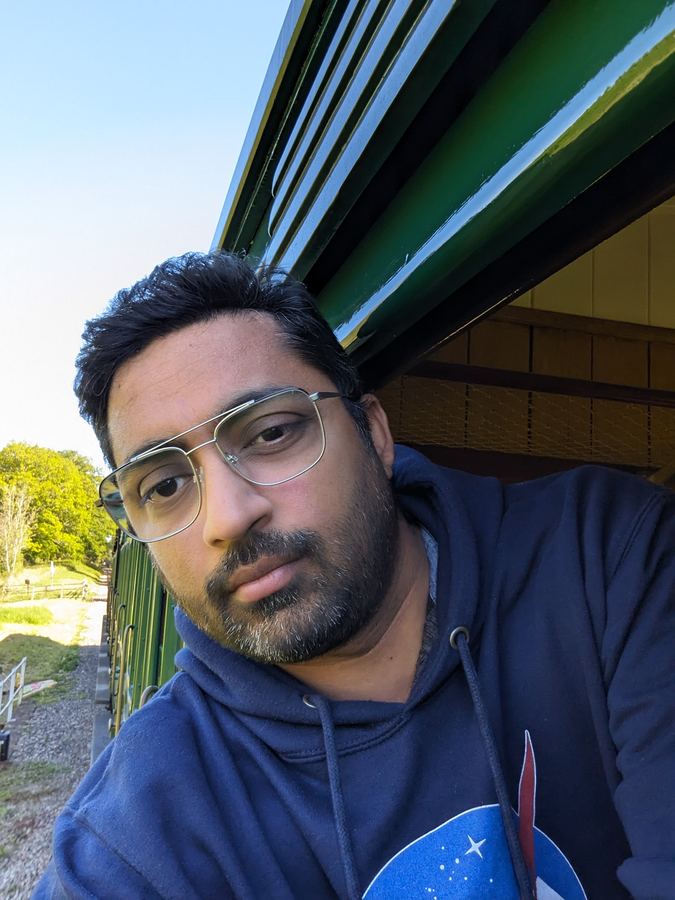
Transnistria, Pridnestrovie in its own language, is a breakaway strip of land wedged between Moldova and Ukraine, and as far as the United Nations and literally every other country on Earth is concerned, it doesn't exist. It broke away from Moldova in 1990, fought a war to make that stick, and has been running itself ever since with its own currency, army, passport and telecom network, recognised only by two or three equally unrecognised states like itself. Crossing in felt less like entering a country and more like stepping through a door into 1995, Soviet symbols, Soviet prices, Soviet everything, still fully intact thirty-odd years after the actual USSR stopped existing.
The full crossing: Bender Fortress, the Sheriff monopoly, Tiraspol's Lenin statue, Gagarin Alley, and a very Soviet lunch.
Crossing a border with no embassy on the other side
Every foreign government treats Transnistria as a no-go area, which in practical terms means zero diplomatic help if anything goes wrong, and standard travel insurance that stops covering you the moment you cross in. I wasn't brave enough to do this solo, so I went with a local guide, Lilia, who turned out to be the owner of a small Moldovan tour operator called Moldova to Visit (more on her at the end of this post, because she earned it). We drove up to the checkpoint, cameras strictly off, filming at the border is not allowed, and the crossing itself was almost anticlimactic: a guard checked the passport, handed over a loose entry slip that functions as a visa, and never even looked at my face properly. He asked if I wanted an official stamp in my passport. I said no, no point taking the risk when there's a lot more of the world left to see, and a Transnistria stamp is exactly the kind of thing that raises eyebrows at other borders later. And that's really the headline fact about this place: no country's police or Interpol has any jurisdiction here at all. Anyone actually looking to disappear could, in theory, just walk in.
Bender Fortress: Romanian walls, Ottoman rule, a torture museum
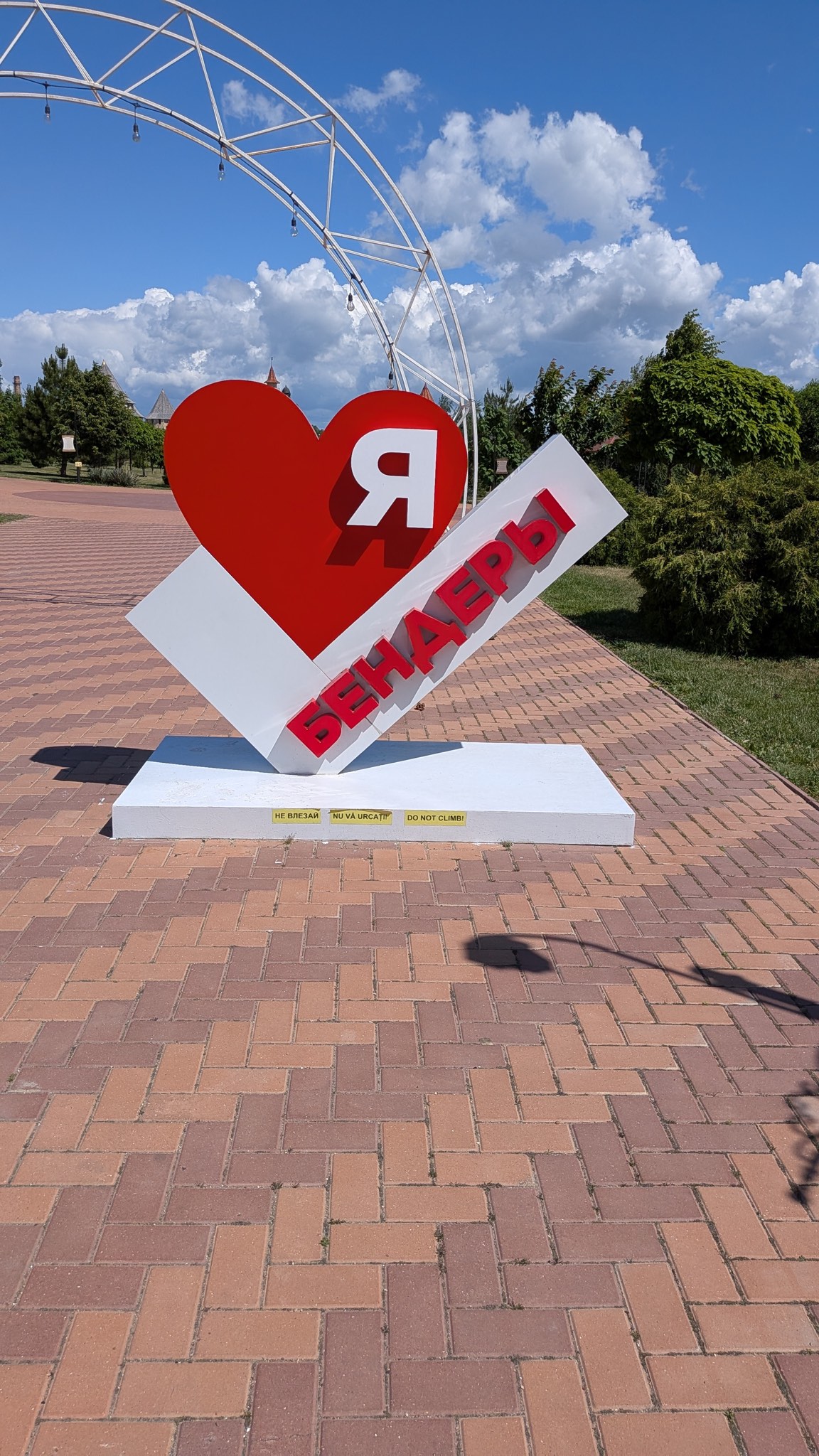
First stop after the border was Bender, Transnistria's second-largest city, and its fortress right on the riverbank. The fortress was originally built by the Romanians in the 14th century, later held by the Ottomans, and passed through several more hands before the Russian Empire eventually took it over, you can still see the layered symbolism at the entrance, Ottoman-period marks on one side and Russian imperial symbols on the other. Inside is a small museum, including a genuinely unsettling museum of torture documenting exactly how different crimes were punished, steal a horse, for instance, and you'd be made to walk wearing horseshoes nailed directly into your own feet. Climb to the top of the fortress walls and you get a full panoramic view over the military garrison still stationed behind it, useful, since drones are essentially impossible to fly into this country at all.
A city frozen in 1990: cinemas, Ladas, and a train to Siberia
Walking Bender's streets afterward felt like a genuine time capsule. A 1950s-built Soviet-era cinema still screens ordinary films today, entirely in Russian, with a Lenin statue standing directly across from its entrance. A local bakery, itself operating out of a building that dates to the Soviet period, sells potato-filled pastries that turned out to be a rare vegetarian option in a very meat-heavy region. Down by an old, mostly abandoned train station sits a genuine 1940s-era wagon of the exact type used to deport people to Siberia after the Second World War, parked beside a monument to the railway engineers who once built locomotives on this very spot. Vintage Lada cars from the 1960s are still driven daily rather than kept as museum pieces, and abandoned buildings, a former hospital here, a former bakery-and-café there, sit untouched simply because nobody has the funds to either restore or demolish them. Even the war memorials tell a longer story than just World War II: this ground also commemorates soldiers lost in Transnistria's own 1992 war with Moldova, and in Afghanistan.
Sheriff: the company that owns everything
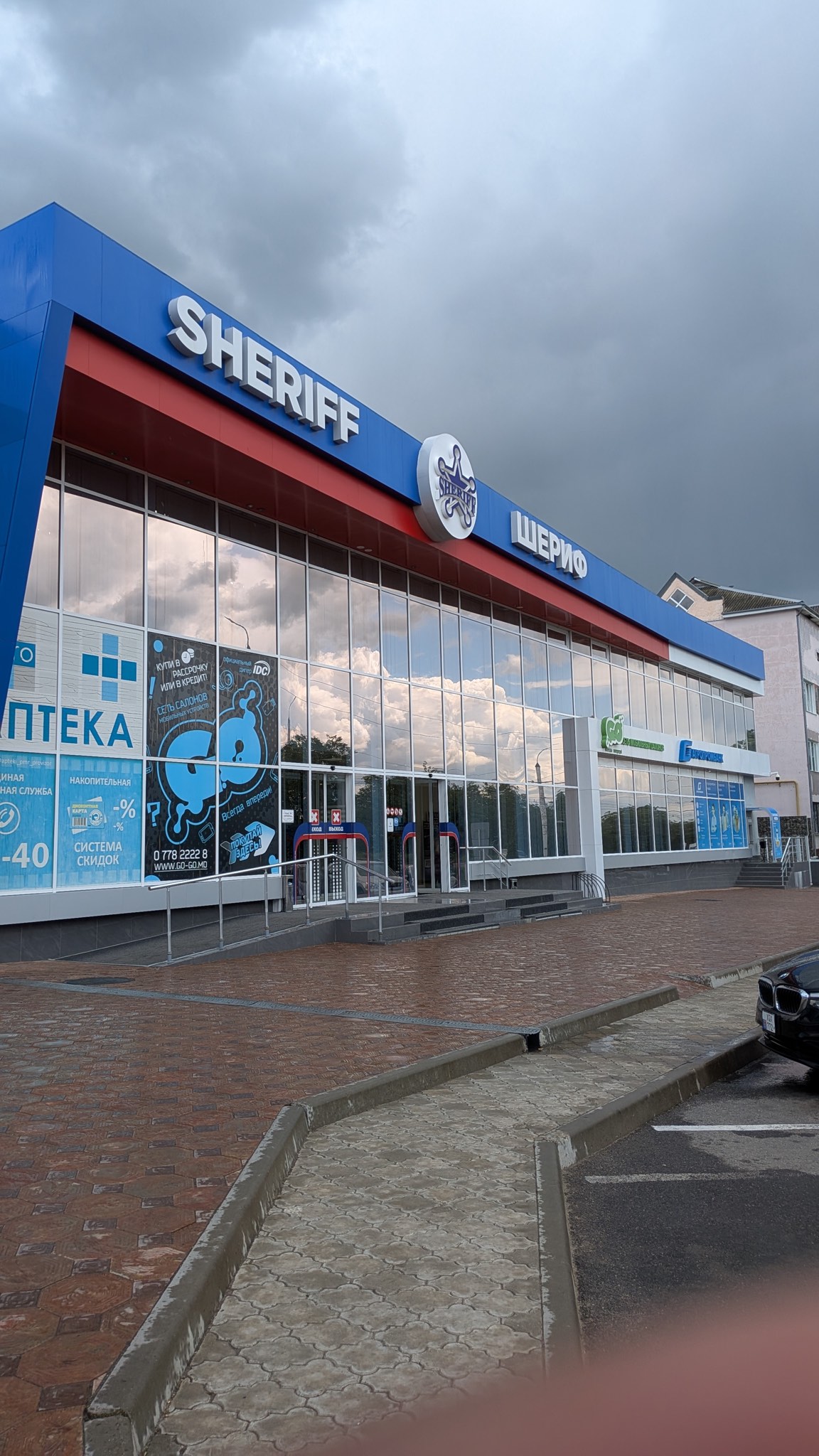
The single strangest thing about the local economy has a name: Sheriff. Since the USSR collapsed, this one conglomerate has quietly absorbed almost the entire Transnistrian economy, supermarkets, petrol stations, banks, mobile networks, retail chains, and, memorably, the country's own top football club, which Sheriff simply bought outright. Locals call it a mafia as much as a company, and it's not really a joke, it's the same pattern that played out across the wider ex-USSR, where whoever had the right political connections at the moment of collapse ended up owning everything that followed.
Money that only works inside these borders
Nothing outside Transnistria's own currency is accepted here, not Euros, not US Dollars, not even Moldovan Leu, despite Transnistria technically being part of Moldova on every map that matters internationally. First stop was an exchange counter: 400 Moldovan Leu got roughly 378 Transnistrian Rubles, a currency that shares a name with Russia's but is entirely separate and worthless anywhere else on the planet. A walk through a Sheriff-owned supermarket afterward looked reassuringly normal, frozen vegetables, familiar snack brands like Doritos next to unfamiliar Russian ones, cheap vodka and cognac moving fast off the shelves, and phones from brands most of the world barely knows outside this part of Eastern Europe.
Tiraspol's main square: tanks, an eternal flame, and Suvorov on horseback
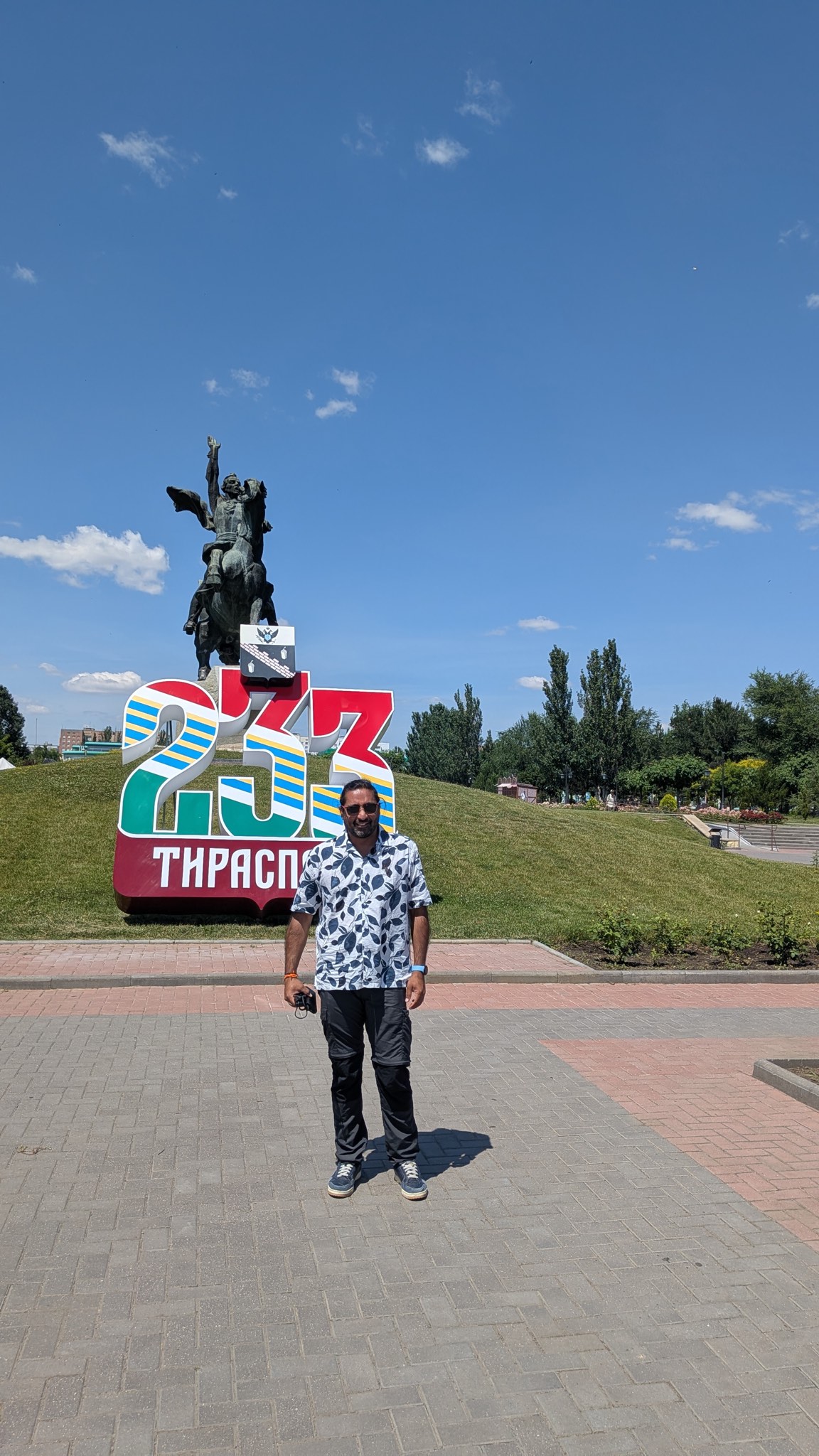
About fifteen minutes further is Tiraspol, Transnistria's capital, and its main square does not undersell the Soviet theme. An original World War II-era tank sits on display, alongside an eternal flame memorial to Russian and local soldiers killed across every conflict this region has fought, not just the World Wars, but the 1992 war and Afghanistan too. Towering over the square on horseback is Alexander Suvorov, the Russian general credited with founding Tiraspol in 1792, funded in part by Catherine the Great, whose own statue sits facing his from a nearby park. Nearby, three flags fly together: Transnistria's in the centre, flanked by the flags of a couple of other post-Soviet unrecognised states, a small, strange little club of nations that mostly only recognise each other.
Government House: a giant Lenin, and two flags that say it all
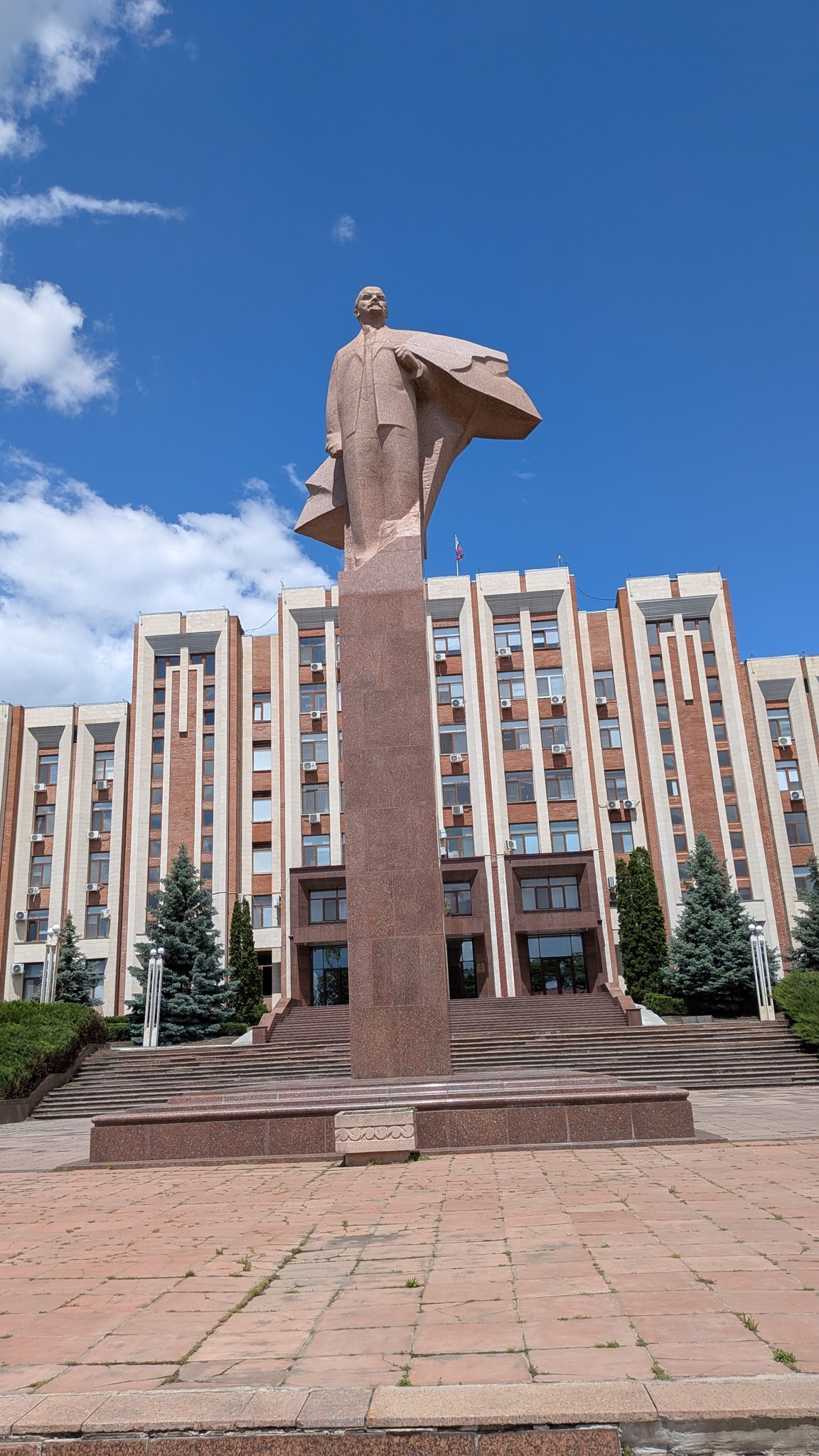
Nothing sums up Transnistria faster than the view outside its Government House, the Soviet-style Secretariat building where the country's leadership actually works. Standing in front of it is a Lenin statue large enough to be visible from blocks away, and above the building fly exactly two flags: Transnistria's own, and, right beside it, Russia's. The national emblem is still built directly on the old Soviet template, hammer and sickle included. It's the single moment on this trip that made "welcome to the USSR" stop being a joke and start being a literal, accurate description of where I was standing.
Yuri Gagarin Alley: the Soviet space race, remembered fondly
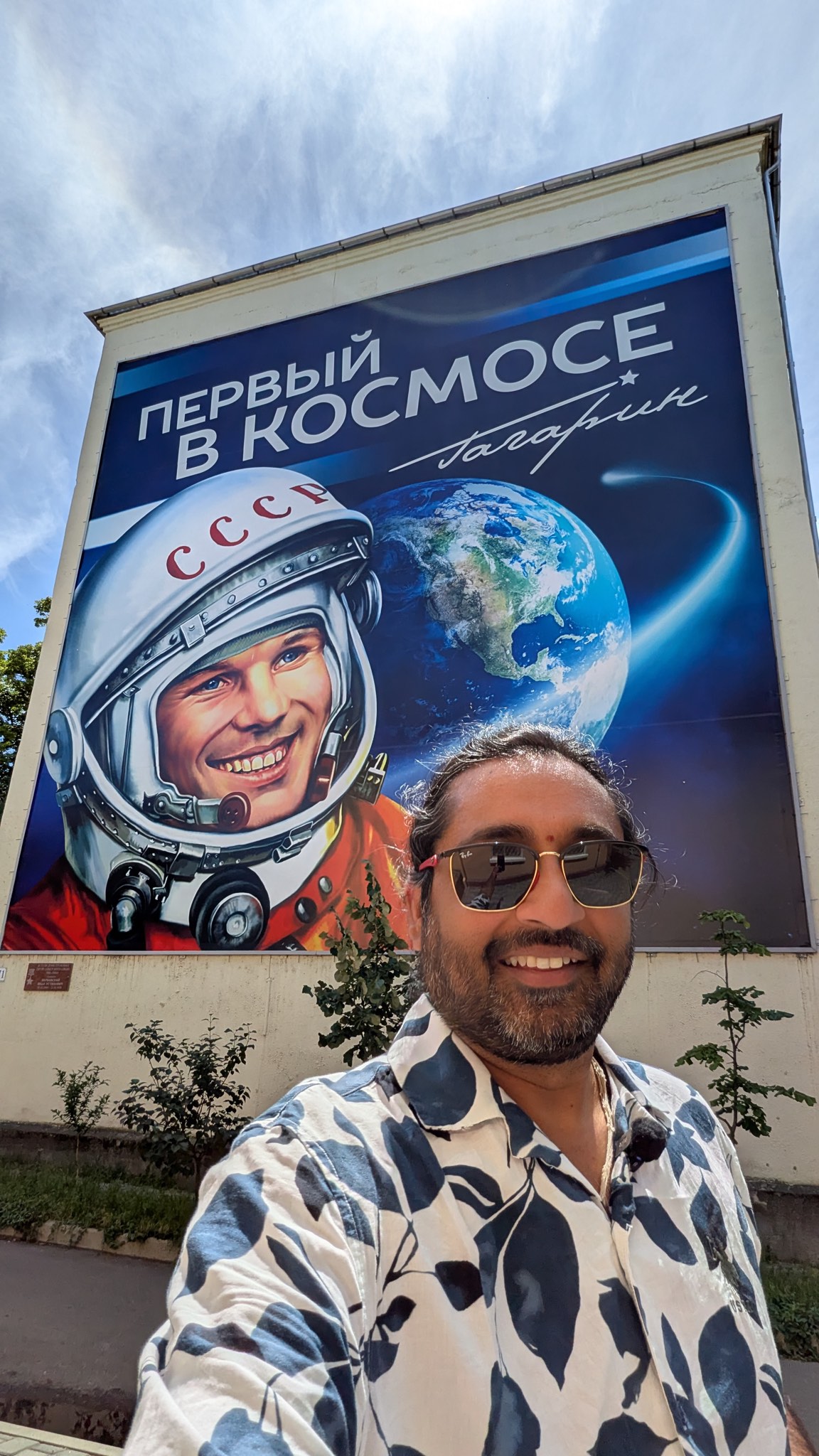
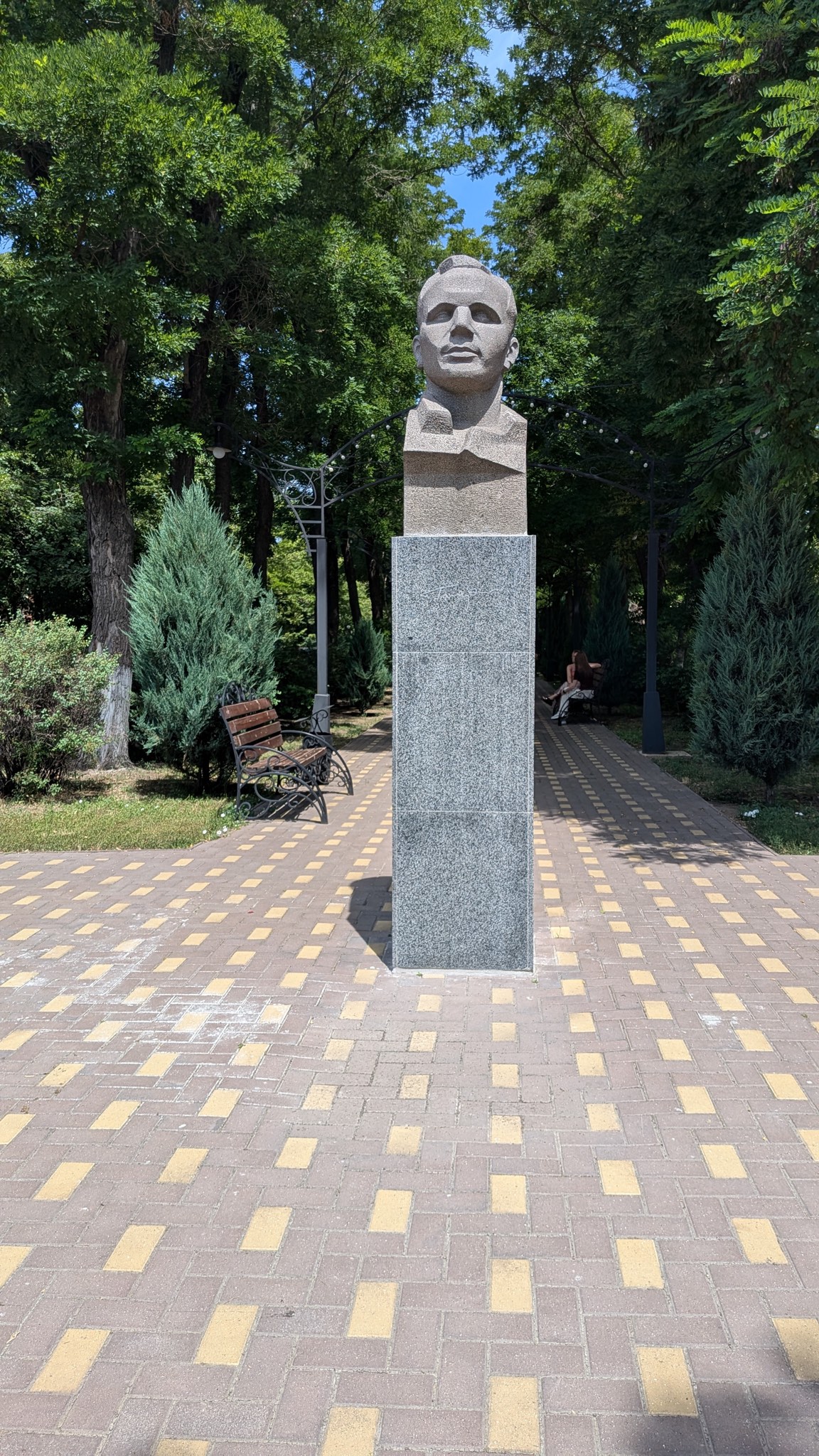
A whole street here is dedicated to Yuri Gagarin, the Soviet cosmonaut who became the first human in space in 1961, commemorated with a stone bust and a huge mural declaring, in Russian, "First in Space." It's a direct callback to the Cold War-era space race between the US and USSR, and standing in front of a mural this proud of it, it's easy to feel exactly how big a national moment that launch still is here, more than sixty years on. Practically speaking, this stretch of Transnistria also sits barely 20 kilometres from the Ukrainian border, close enough that the geopolitics of the wider region never feel very far away, even walking past a mural about a decades-old space mission.
Free university, and an unexplained Harry Potter
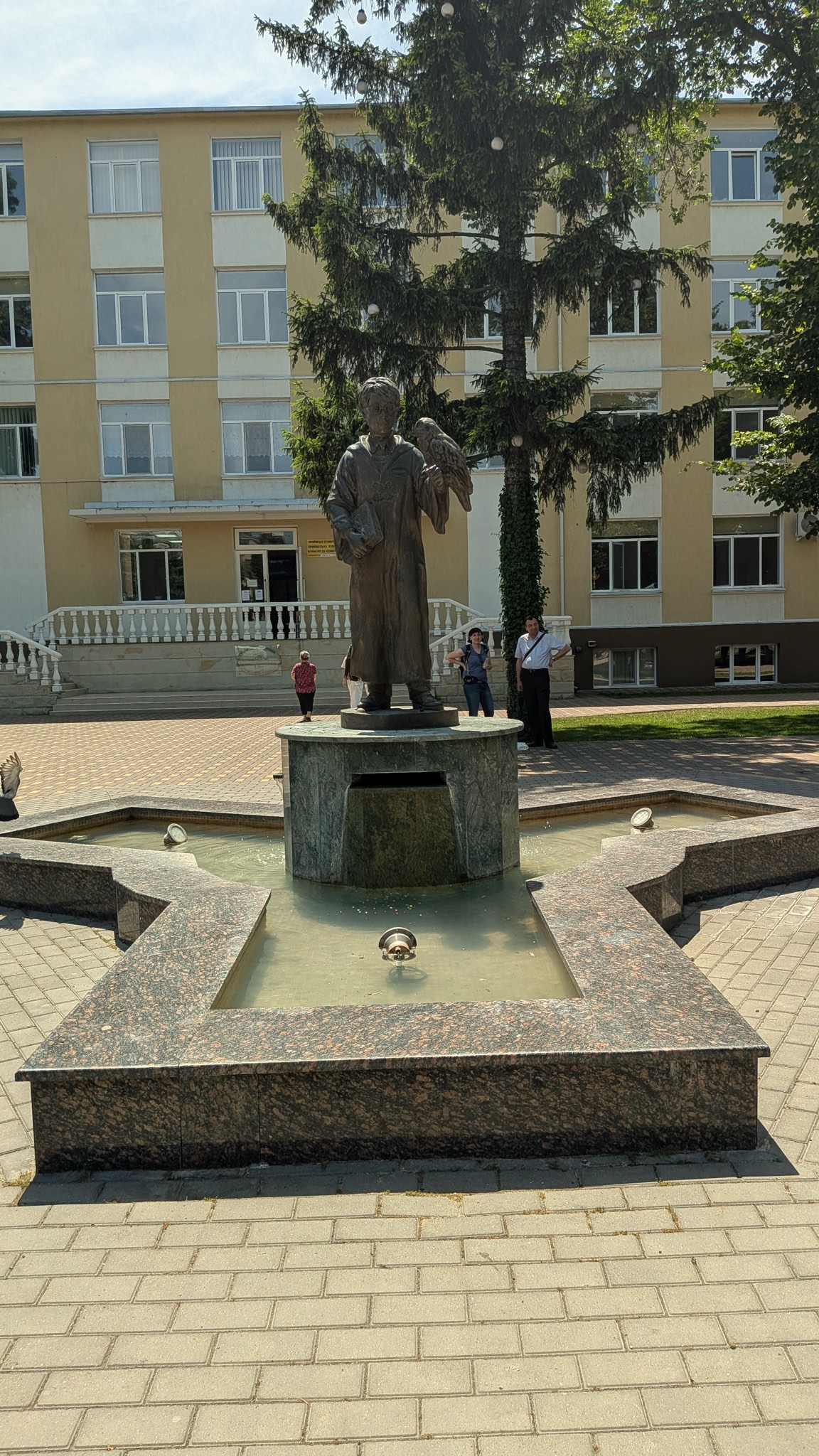
Tiraspol's university is free for local residents, a deliberate incentive, since Moldovan students face real tuition fees and this is one way Transnistria keeps its own young people close to home. Somewhere on that same campus stands a statue nobody can fully explain: a bronze Harry Potter, book in one hand, owl perched on the other. The closest thing to an official reason is that Harry was, famously, a good student, so the university adopted him, semi-seriously, as a mascot for studying hard. It remains one of the odder things to stumble across in a country otherwise devoted to preserving 1990.
Lunch, back in the USSR
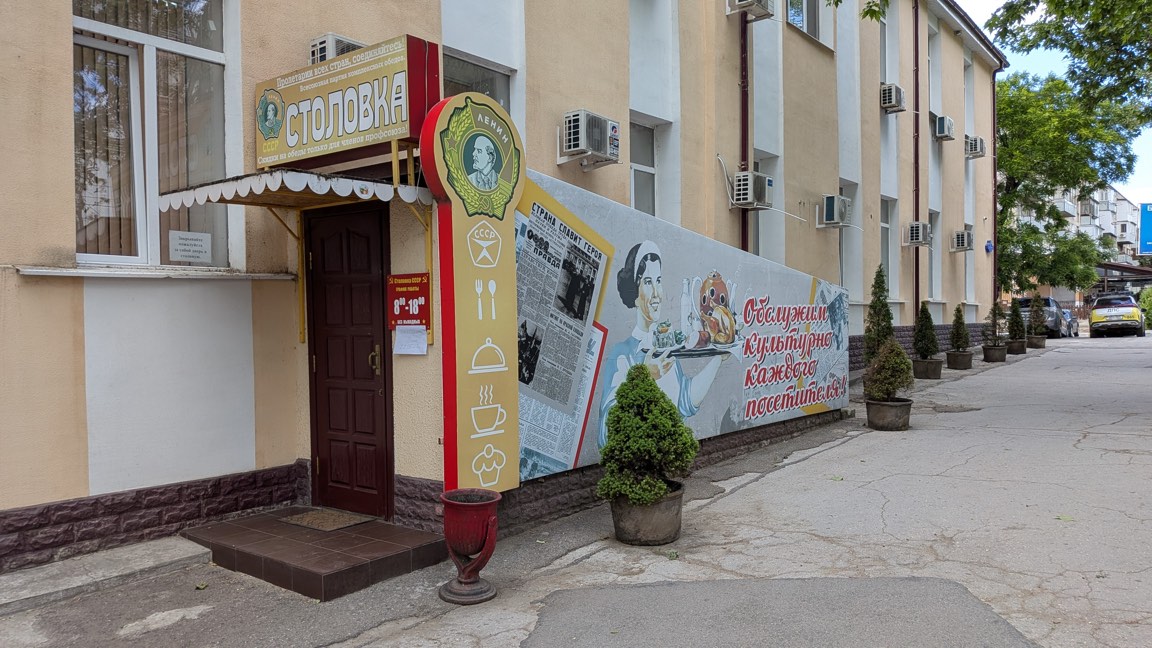
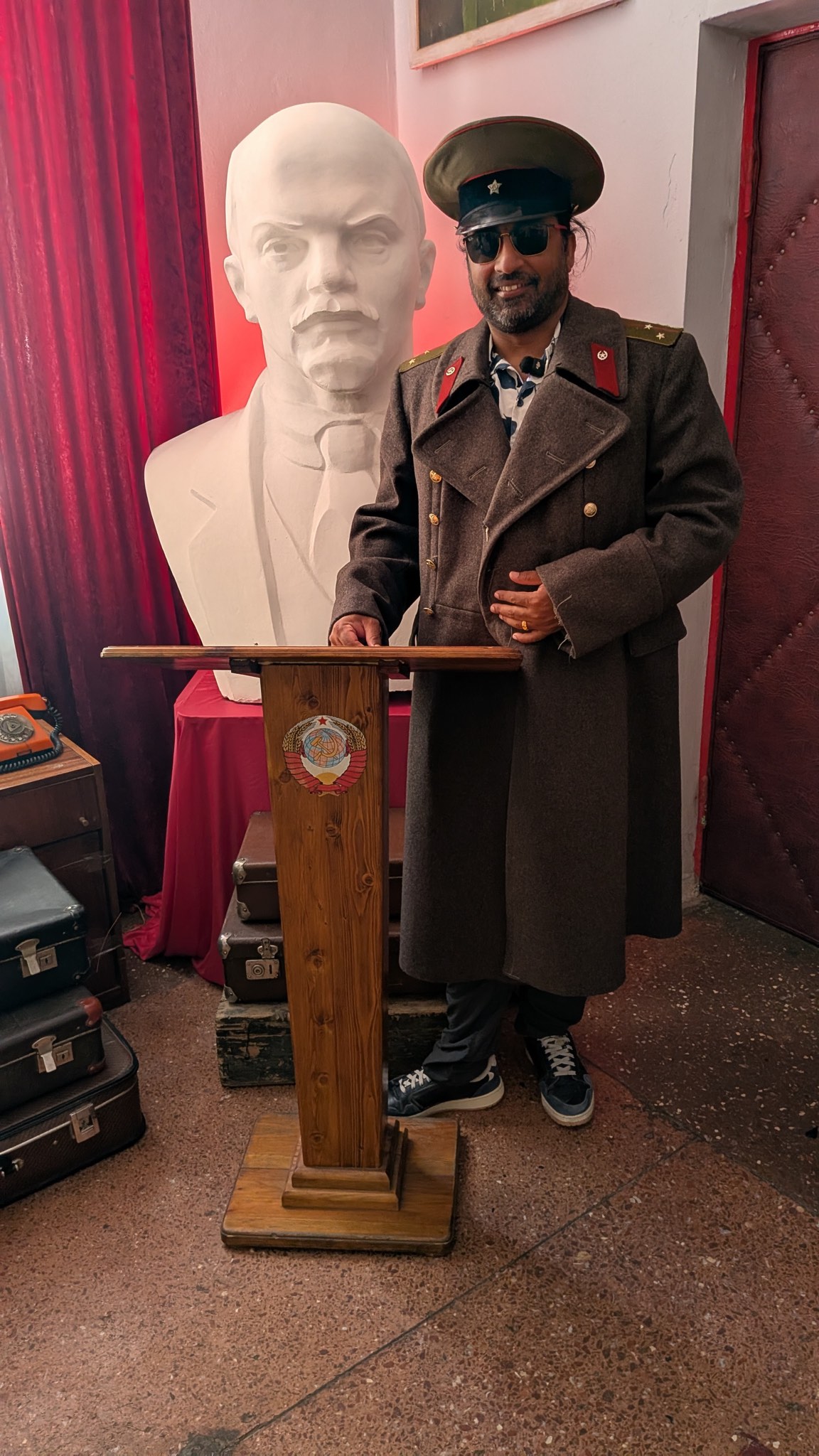
For lunch, the theme went from ambient to explicit: a Soviet-nostalgia restaurant kitted out with vintage radios, old military uniforms available to try on, red curtains, a stack of period suitcases, and a bust of Lenin watching over the whole dining room. I ordered vareniki, potato dumplings, with sour cream, which the guide described, only half joking, as the dish for people without much money; the wealthier version comes stuffed with meat instead. Tasty, simple, and about as on-theme a meal as this trip was ever going to produce.
Plastic coins, trolleybuses, and a street of ten Lenins
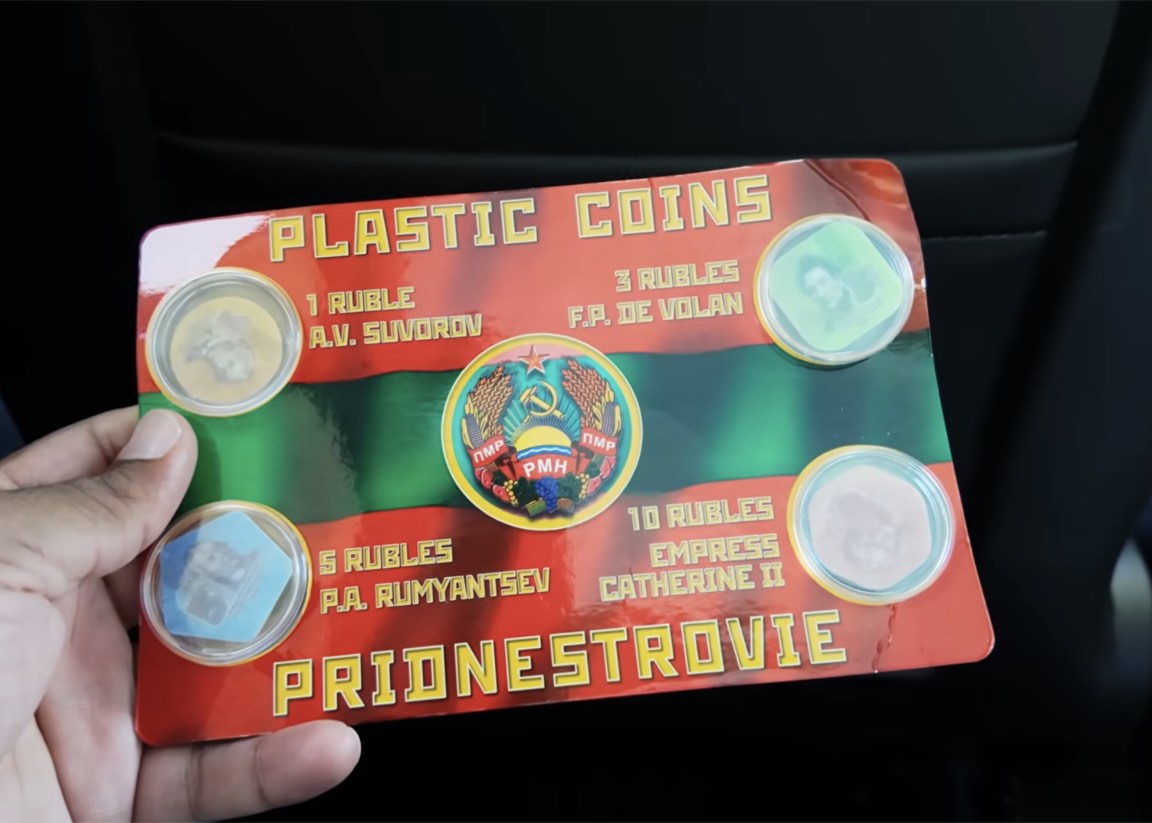
A few last, very Transnistrian details: the country mints its own plastic composite coins, 1, 3, 5 and 10 Rubles, each a different geometric shape (circle, hexagon, square and more) so they're identifiable by touch, each printed with a different figure from local and Russian history, from Suvorov to Catherine the Great. The national bank sells them, but it happened to be closed on a Saturday, so I picked up a souvenir set from a gift shop instead. Getting around, Tiraspol still runs old-style Russian trolleybuses on overhead wires, including one that lost its connector mid-route and needed the driver to physically get out and reattach it. And somewhere on a single street I lost count of just how many Lenin statues were lined up one after another, this country, it turns out, is not remotely subtle about who it still honours.
The flag nobody else kept
The single detail that stuck with me most: Transnistria's flag is the only national flag left in the world still carrying the hammer and sickle. It's literally the old flag of the Moldavian Soviet Socialist Republic, unchanged, just kept flying long after every other former Soviet republic quietly retired theirs. Everything else here, the currency, the passport, the army, right down to a street lined with Lenin statues, follows from that same simple decision: while the rest of the map moved on, Transnistria decided not to.
The guide who made this trip work
None of this would have been possible, or nearly as enjoyable, without Lilia from Moldova to Visit. She runs the company herself, knew exactly what could and couldn't be photographed at the border, translated menus and street signs on the fly, and turned what could have been a tense, confusing day into a genuinely fun one, she even tried to talk me into staying for the evening's disco at the Palace of Culture. I liked the experience so much that I booked a second day with her and her team for a trip out to the Cricova wine caves the very next day (that's its own video, if you want to see where the Transnistria trip led next). If you're planning a Transnistria day trip from Moldova, I'd point you straight to her: @moldovatovisit on Instagram or moldovatovisit.com.
Practical tips for visiting Transnistria
- Go with a local guide: with no embassy support and no valid travel insurance inside Transnistria, a guide who knows the border process is worth it.
- Border crossing: no photos or filming allowed at the checkpoint. You'll receive a paper entry slip rather than a passport stamp, you can request a stamp, but there's rarely a reason to.
- Currency: only Transnistrian Rubles are accepted, no Euros, Dollars or Moldovan Leu. Exchange money as soon as you arrive.
- Cards: foreign bank cards generally don't work here; carry enough cash for the day.
- Photography: avoid photographing military personnel, barracks, or anything near the Russian peacekeeping positions.
- Timing: it's an easy day trip from Chisinau, Bender and Tiraspol together comfortably fill one day.
I've never seen the actual USSR, and I never will. But for one very strange, very memorable day, Transnistria gave me the closest thing to it that still exists anywhere on Earth, right down to the flag.