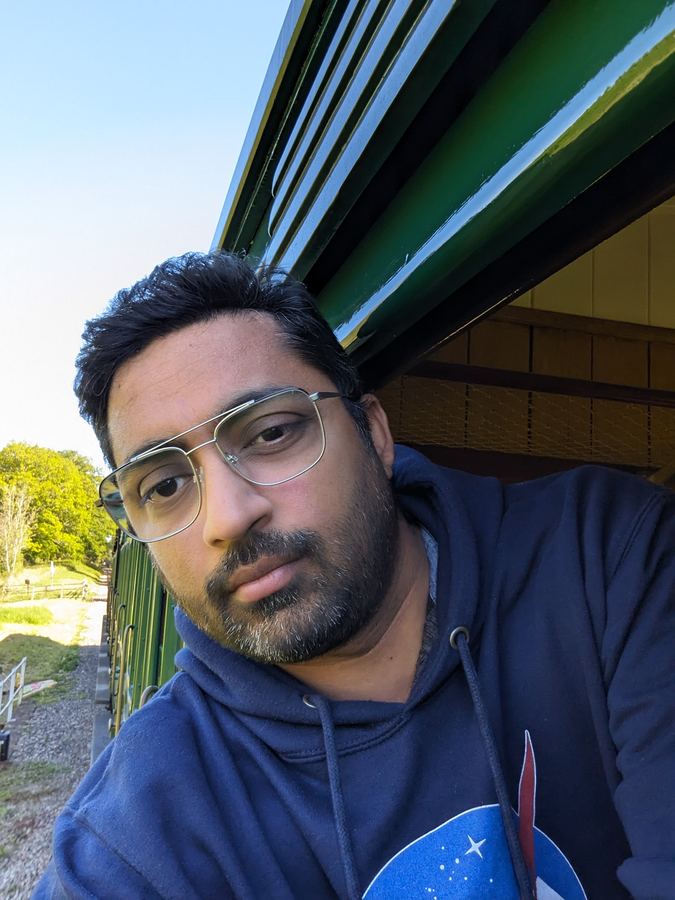
For the first time in my life, I crossed into the Arctic Circle. I landed in Tromso, Norway, with just one day to spend before flying out again, and this is everything that happened in those 24 hours, right up to a Northern Lights display I genuinely wasn't sure I'd get to see.
24 hours in the Arctic Circle: the frozen lake, the old town, and the Northern Lights.
Landing in the Arctic, for the first time ever
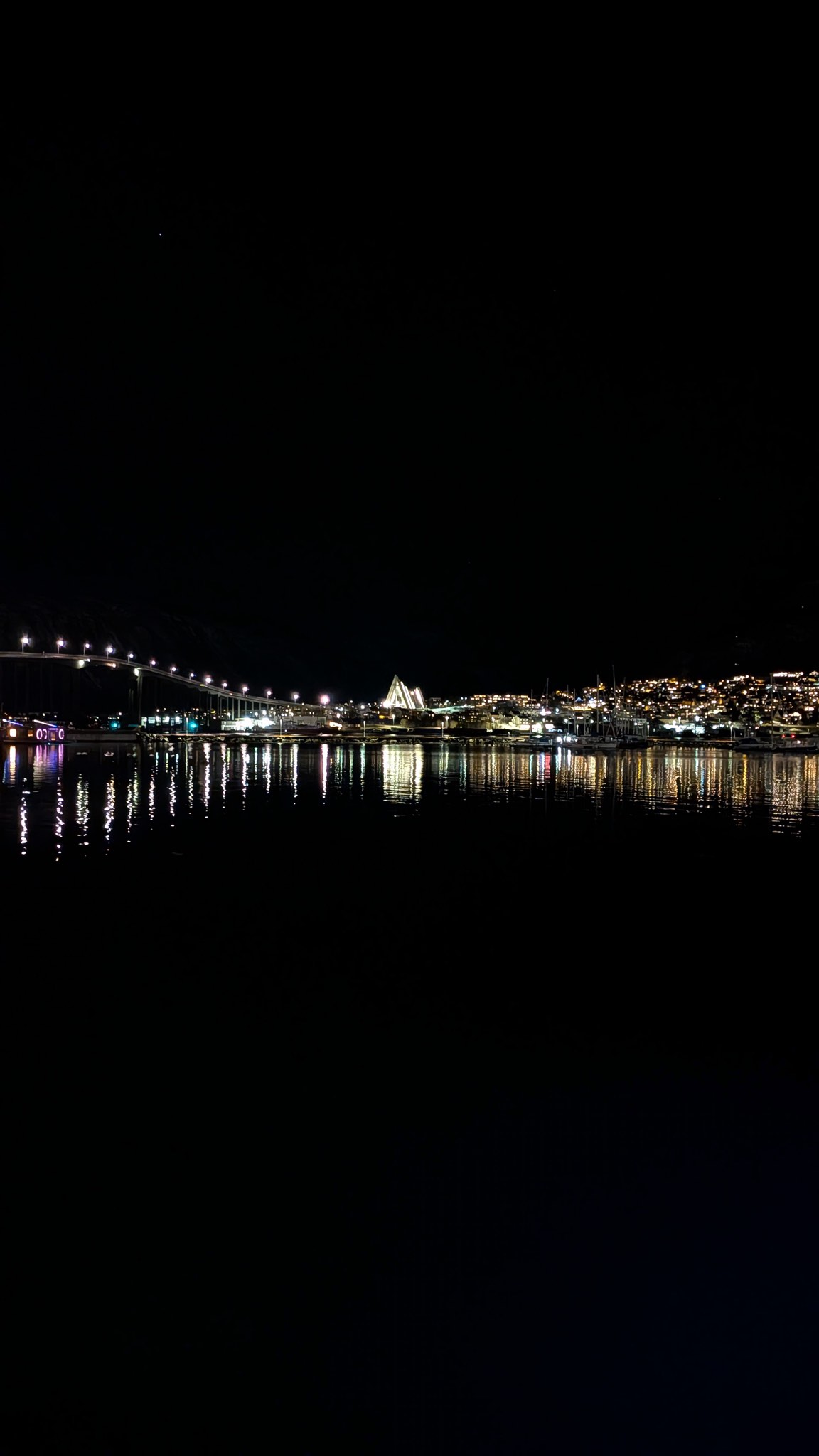
I touched down in Tromso with only one full day planned in the city, which meant working out the transport situation fast. From the airport, there are three ways into town: a taxi, an airport express bus (125 kroner), or the regular public city bus, which locals call the "Bybuss," for a lot less at 50 kroner. I took the public bus. Stepping outside the airport, the cold hit immediately, and behind me was still-lying snow, which is exactly what you'd expect crossing into the Arctic. Fifteen minutes later the bus dropped me in the city centre, and my first look at Tromso, lit up at night, was honestly stunning.
A costly trip, and why it's worth saying so
In my last video I broke down exactly what my Grenoble trip cost, and I'm doing the same here, because as far as I know, this is the most expensive trip I've taken on this channel so far, for just 24 hours in the city. I'll put the exact costs on screen through the video and total it up at the end. For now, though, it was late, so I called it a night. Most people who come to Tromso come specifically to see the Northern Lights, or Aurora Borealis, a natural glow that fills the sky in green, pink, and other colours when conditions are right. City light pollution dulls it considerably, so serious sightings usually mean a dedicated tour further out. Still, I went for a short walk that first night just to see what I could find. It showed, faintly, just enough to catch on camera if not fully with the naked eye.
A very different Arctic morning
Waking up the next morning completely changed how the city felt. In the dark the night before, I hadn't registered any of it properly, but daylight showed mountains all around, genuinely stunning ones, right behind what turned out to be a fairly rough hostel. That hostel cost 70 pounds for one night, no curtains, no real privacy around the beds, and honestly not worth the price; I've stayed in far nicer 20-pound hostels elsewhere and clearly got unlucky here. Around it, houses in every colour lined the streets, something Norway does consistently well, and which I've shown before on other videos from this region.
The frozen lake: Prestvannet
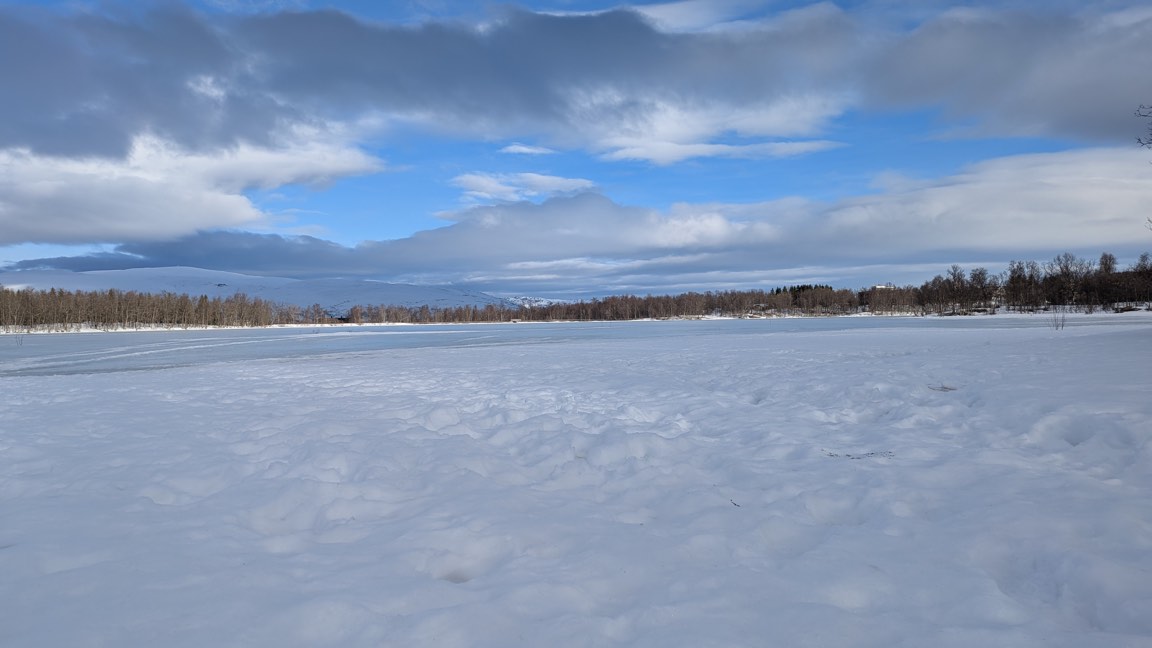
First thing in the morning, before even eating breakfast, I headed straight for one of Tromso's best spots: a fully frozen lake blanketed in snow. It isn't a naturally formed lake, originally it was a small stream that the city manually expanded into a reservoir to supply drinking water, since it sits at the island's highest point, ideal for gravity-fed distribution across Tromso. It no longer serves that purpose; today it's simply preserved as a nature reserve. For close to ten months of the year it stays fully frozen solid, only thawing for around two months in between. By the time I visited, late March, the ice was already getting risky to walk on, and signage around the lake explicitly warns against going further between the 1st of May and the 31st of July. I kept testing the snow with my foot as I walked; some patches held firm, others gave way completely underneath me. A full path circles the lake with marked trail distances, and it's barely 15 minutes from the city centre by bus, making it an easy, must-visit stop for anyone in Tromso.
Breakfast, then into the city centre
After the lake, breakfast was overdue: a pizza-style dish topped with spinach and tomato, plus a coffee, coming to about 77 kroner total, less than I'd braced myself for. City centre exploring came next, what locals call "Sentrum." The main pedestrian street here runs entirely heated underneath, likely one of the only roads in the world built with under-floor heating specifically to stay snow-free year-round, which explained why it stood out as completely clear while everywhere else nearby still had snow sitting on it. Along this street sits the city's oldest building, a bank, right beside the small Tromso Cathedral, open to the public only on Tuesdays and Fridays, which ruled it out for me since I was there on a Sunday. The shopfronts lining this street come in bright, distinct Arctic colours, yellows and greens I genuinely can't name properly, but which look striking against the snow regardless.
Trolls, the Sami people, and reindeer everything
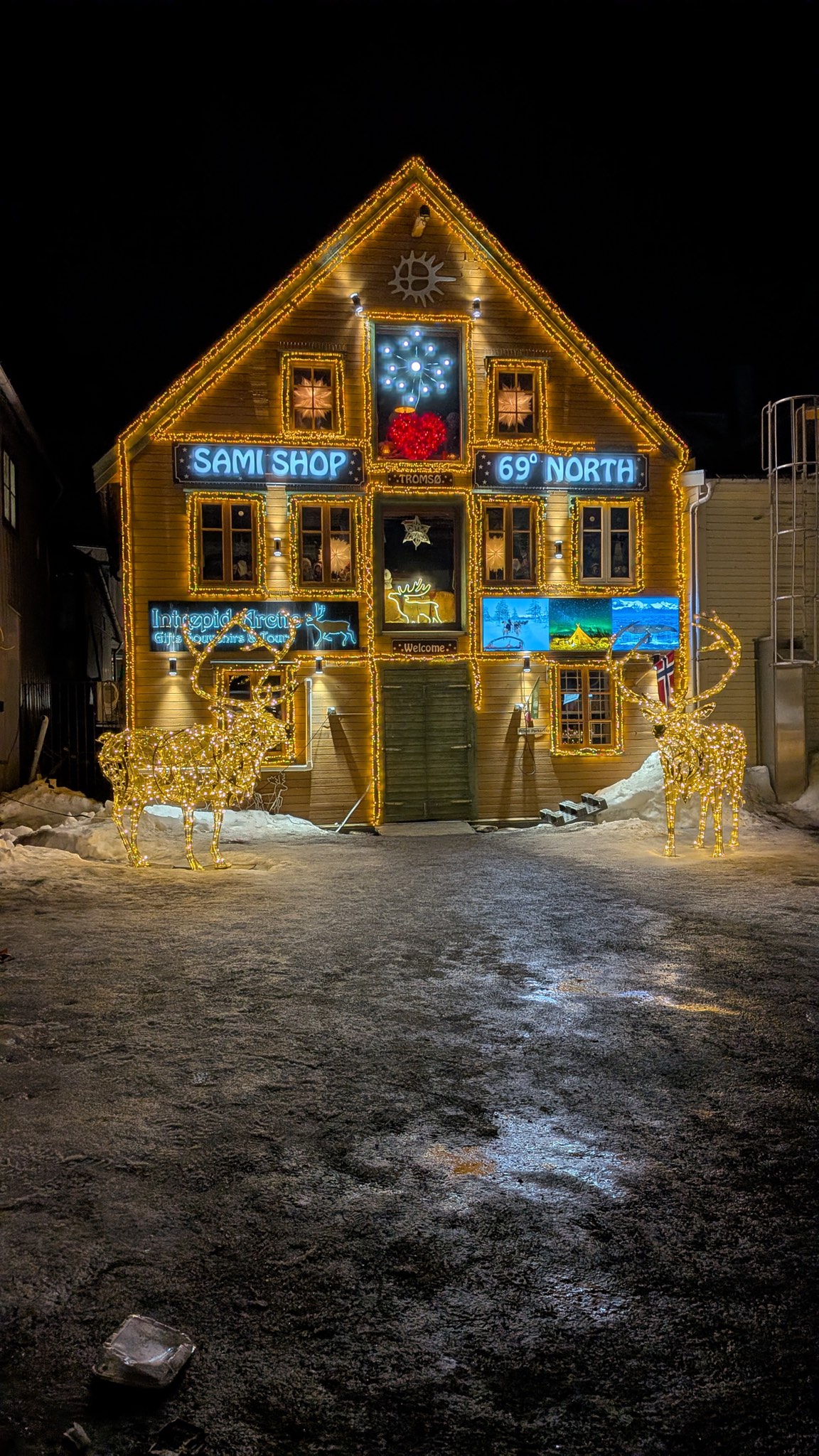
Norway's arctic regions have a strong troll folklore tradition, mythical characters that show up across regional film and popular culture, and Tromso leans into it, troll figures decorate doorways across the old town, and a dedicated troll museum exists if you're travelling with kids. More significant, though, is the Sami people, the indigenous community native to this arctic region, who hold specific cultural and legal rights here, including exclusive rights to herd reindeer; no one else is permitted to raise them commercially in this region. Reindeer shed and regrow their antlers annually, so Sami shops sell antler-crafted goods without needing to harm the animals for the material. I picked up a fridge magnet at one Sami souvenir shop for 99 kroner, keeping up a habit I have of grabbing one from every place I visit.
Reindeer-related tours are a big draw here too: sled rides across the snow, the chance to interact with the reindeer directly, and sometimes a shot at Northern Lights during the same outing. I haven't done one myself, but I've put a discount link below for anyone who wants to. Reindeer meat shows up on local menus regularly too, burgers, soups, hot dogs, alongside pork, beef and vegetarian versions, though I skipped the vegetarian hot dog after catching a smell I wasn't fond of.
The fish-shaped library, and the main square
A large public library sits right in the central area, open to everyone, and built distinctively in the shape of a fish, a direct nod to how central fishing has been to Norway's economy and way of life for generations. Past the library and the shopping street sits Tromso's main square, quiet when I passed through, but apparently the site of most evening activities and events in the city, music, games, gatherings. A queue outside one small bar ran close to an hour long by the time I saw it. A dedicated Northern Lights gift shop nearby runs a free indoor show alongside its souvenirs, genuinely worth a look if you're passing, since free attractions are fairly rare in Norway generally.
The Gateway to the Arctic
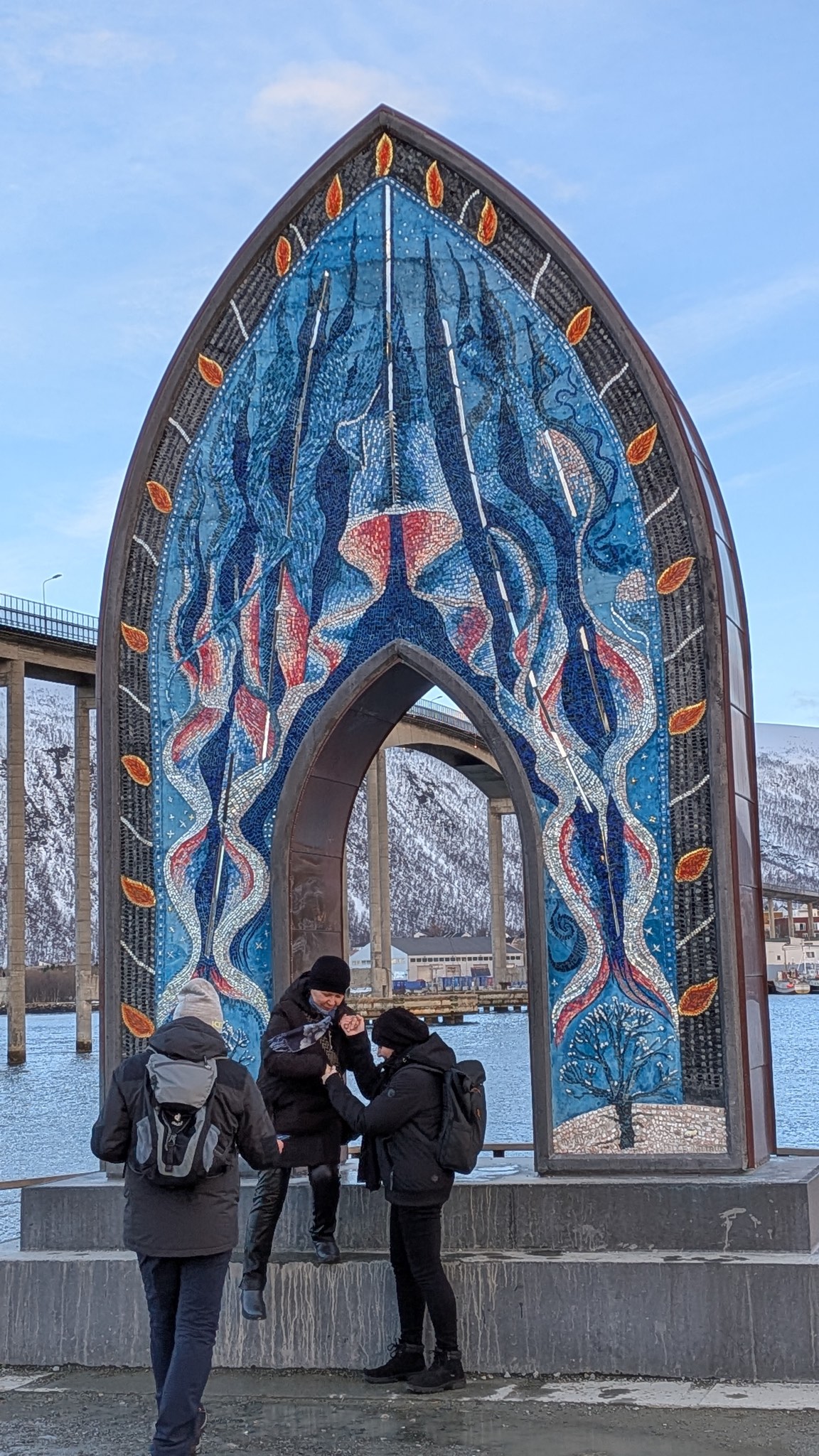
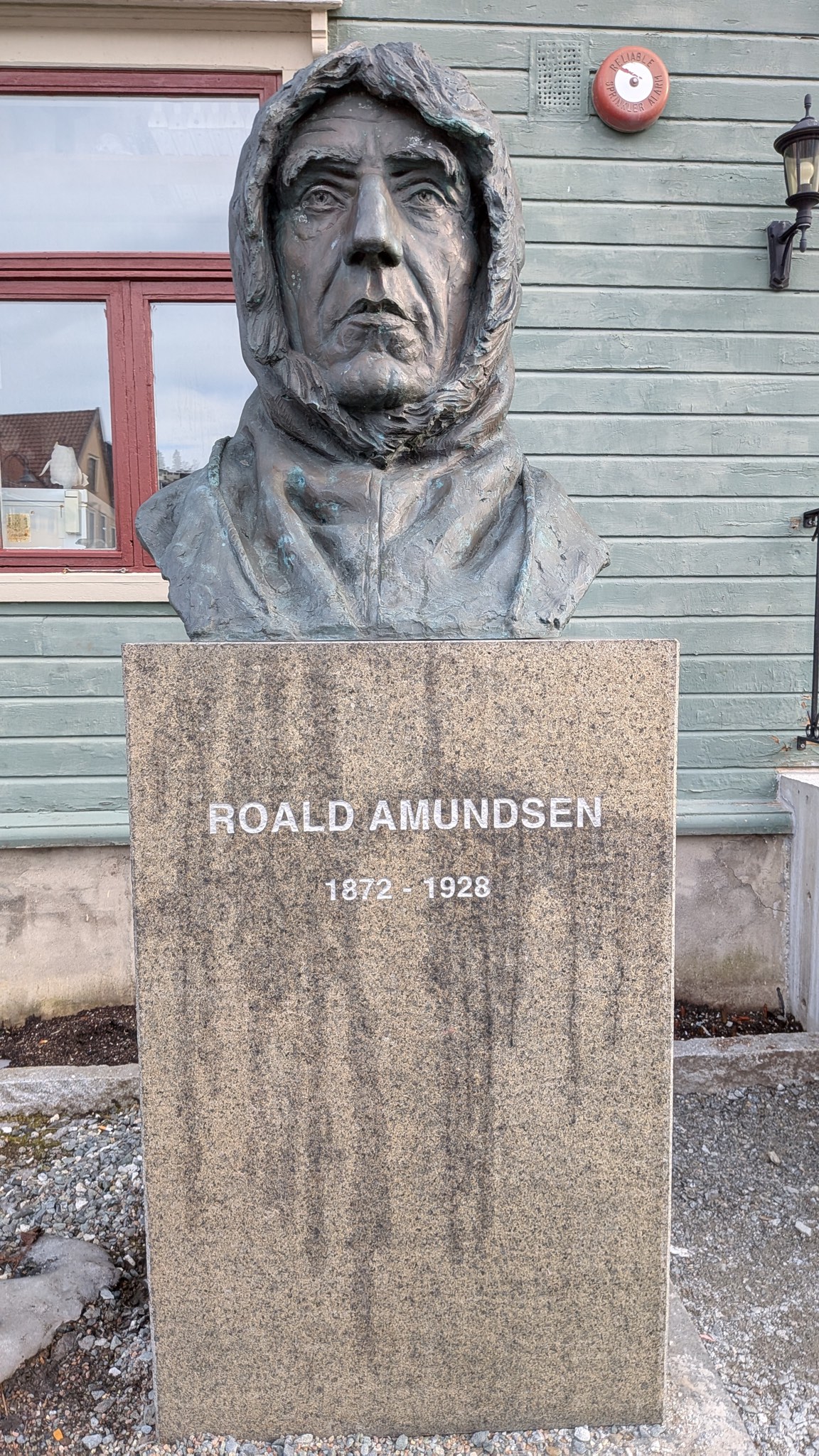
One monument in particular stood out: a striking mosaic archway known as the Gateway to the Arctic. The name comes from what lies just beyond it, a bridge crossing over to the Norwegian mainland, since Tromso itself sits entirely on an island. Historically, this exact crossing point is where Arctic expeditions departed from; explorers based themselves in Tromso before setting out, since reaching the Arctic is difficult enough that very few people ever manage it, and almost all of them left from right here. Roald Amundsen, generally credited as the first person to reach the South Pole, based several of his Arctic expeditions out of this same city, and a bronze bust of him stands elsewhere in town today. That history is exactly why Tromso earned the nickname it still carries.
Crossing the bridge to the mainland
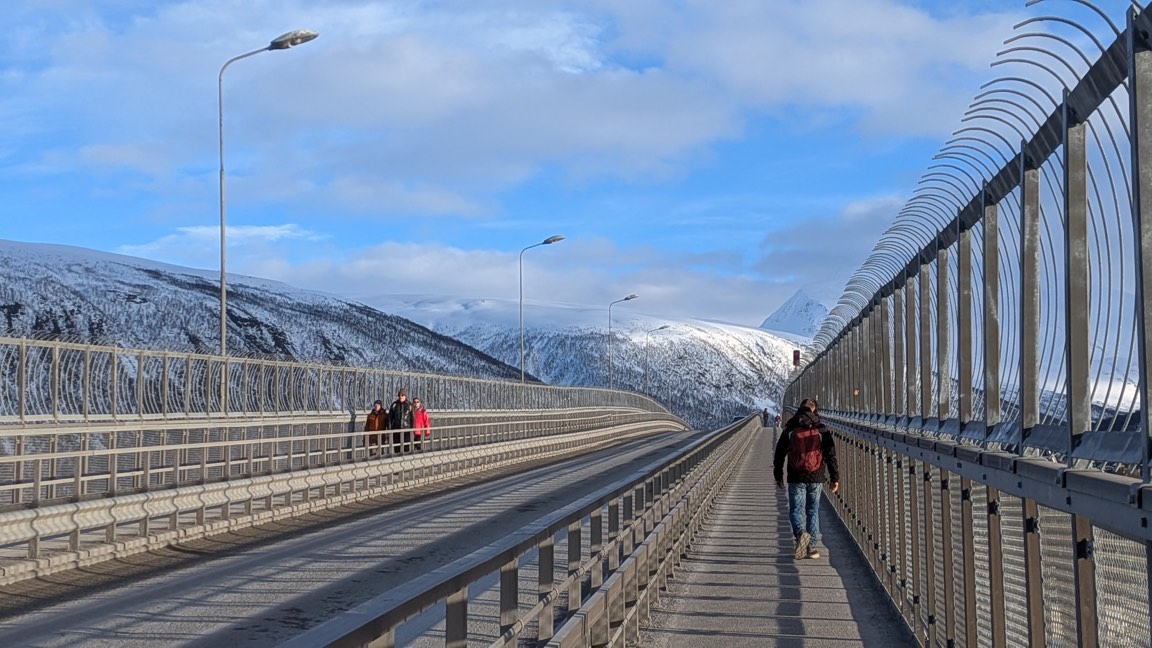
Tromso being an island means reaching Norway's mainland requires crossing its main bridge on foot, and there's a rule worth knowing before you do: one side of the bridge is reserved strictly for cyclists, the other strictly for pedestrians, clearly signed at the crossing point. Walking across, cold wind picking up the whole way, the views opened up beautifully, snow-dusted mountains on both sides, a small hill with fresh snow visible right below the walkway. Love locks, unsurprisingly, cover sections of the railing here too, same as practically every notable bridge across Europe.
The Arctic Cathedral, and a very northern McDonald's
Once across, the striking triangular structure visible from the bridge is the Arctic Cathedral, a comparatively modern building. Despite its name and appearance, locals were clear that it carries no real religious significance, it was built primarily to visually mark the entrance into the Arctic side of the city, a landmark rather than an active place of worship in the traditional sense.
From there, in a change of pace, I made a point of stopping at what's officially recorded as the world's northernmost McDonald's. I don't normally eat at McDonald's while travelling, usually opting for Indian food, local cuisine, or Italian instead, but a genuine record like this felt worth the detour. I went in expecting limited vegetarian options and found a solid vegetarian salsa burger instead, paired with a Coke Zero, my usual order pattern regardless of country. Eating there felt like a small, slightly silly bragging right, the world's northernmost McDonald's, at least for however long it holds that title before someone builds one further north still.
Sunset at the beach the locals actually use
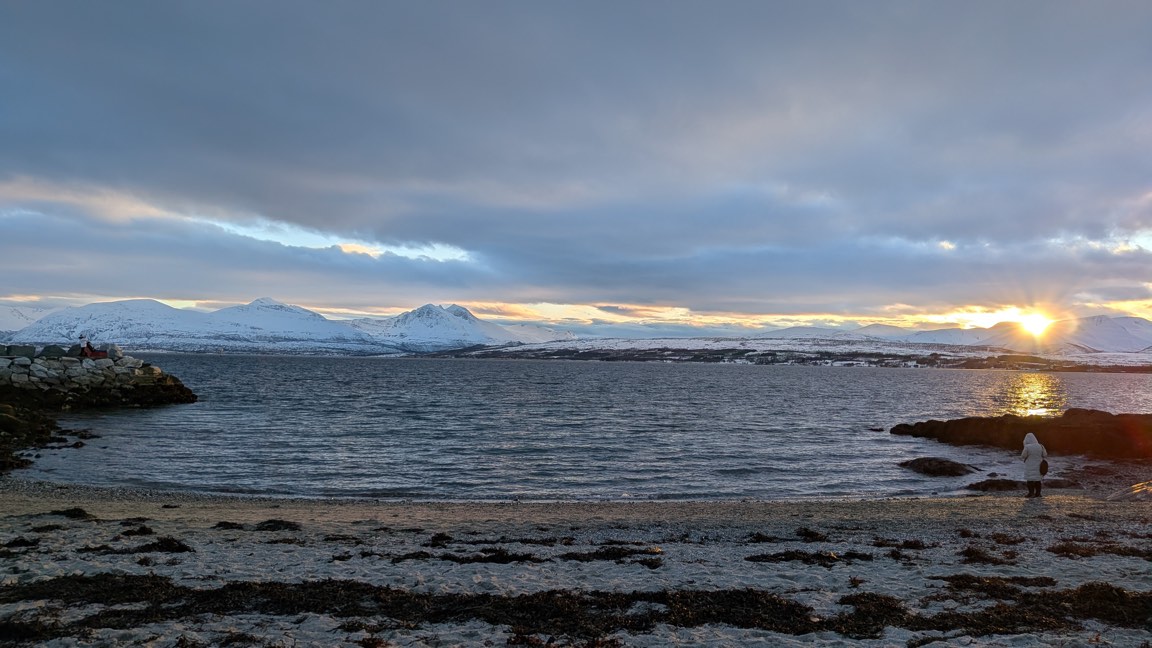
On the bus earlier, a fellow passenger had recommended a specific beach, not the one tourists usually find, but the one locals themselves go to, especially for sunset. I timed my visit to arrive right as the sun was setting, and it did not disappoint: golden light spreading across the water, mountains layered behind it in every direction, and a small local crowd out having barbecues nearby, along with what looked like a casual photoshoot in progress. It's the kind of view that's hard to fully capture on camera, mountains ringing the water on every side, the sun catching the waves directly.
The Northern Lights hunt, right before my flight
With the day nearly done and my flight approaching, one thing was still unresolved: I hadn't properly seen the Northern Lights yet, only that faint glow from the first night. Heading back toward the airport, clouds were building overhead and I genuinely expected to leave without seeing them properly, which is exactly why serious sightings get called a "hunt," it's never guaranteed. Then, with a stroke of luck, my flight was delayed by an hour, buying me extra time right when I needed it most.
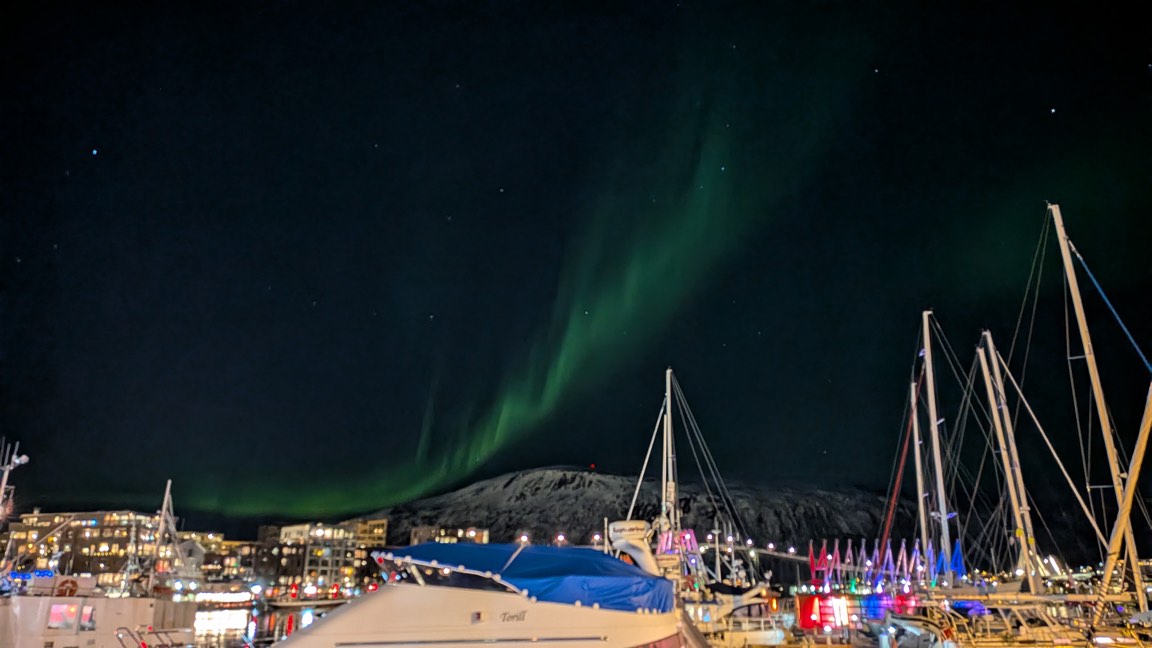
And then it happened. What had looked like a faint cloud suddenly resolved into unmistakable green light, moving, spreading, growing brighter by the minute, until it stretched clean across the entire sky from one horizon to the other. I stood there filming with my hands going numb (my gloves and hand warmers were still back at the hostel, a mistake I fully own), unable to feel the cold properly over the sheer excitement. This, genuinely, is what the Arctic is all about.
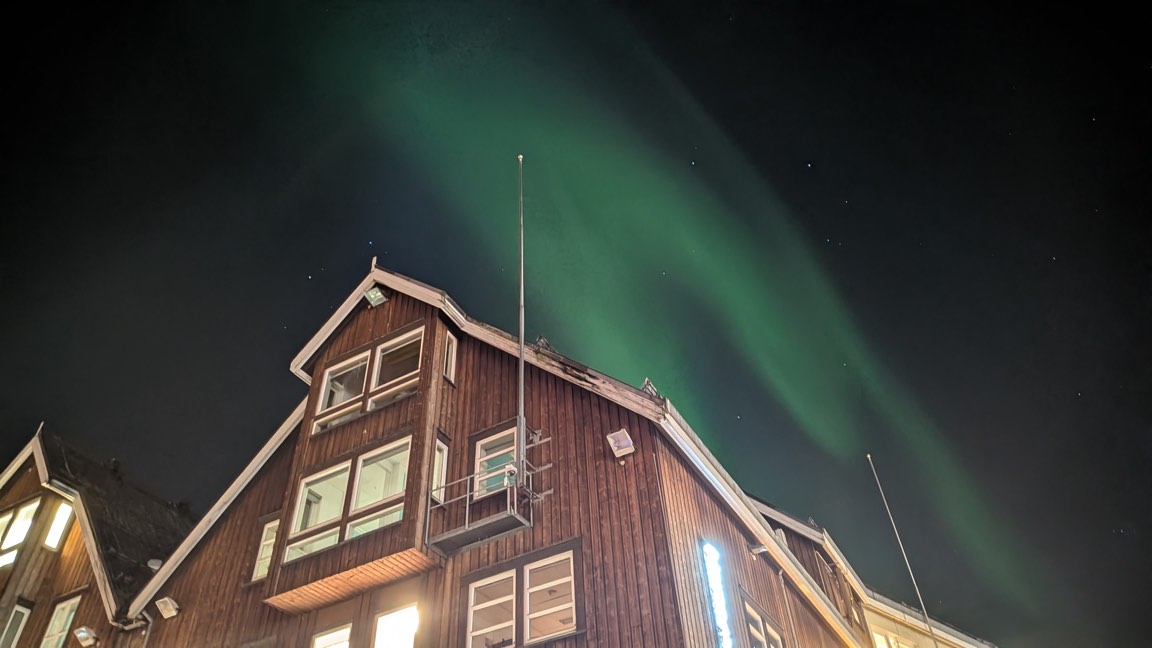
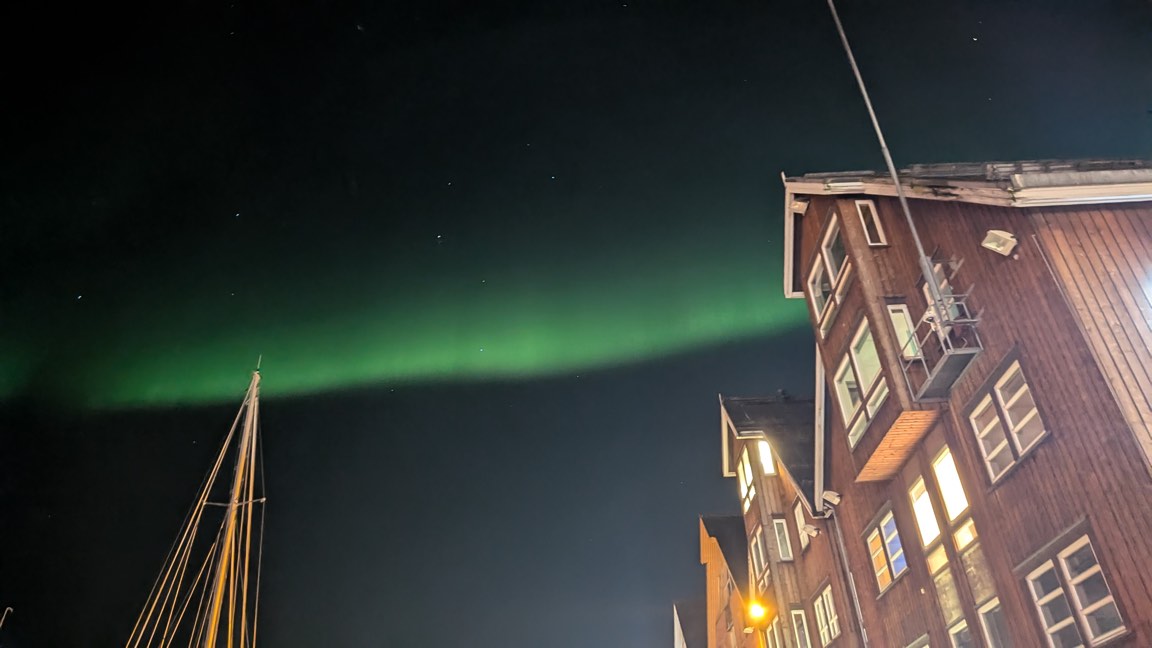
Other travellers I spoke with on the way out told me some people drive 150 kilometres or more into the night, spending 150 to 200 pounds on dedicated tours, and still come back with nothing. I saw a full sky display without ever leaving the city centre, and I know exactly how lucky that makes me. If you watched the video and saw this too, consider yourself lucky right along with me.
Worth every kroner, in the end
This was, by a fair margin, the most expensive 24 hours I've spent on this channel so far, but between the frozen lake, the Gateway to the Arctic, a sunset the locals themselves chase, and a Northern Lights display that filled the entire sky right as I was about to give up on seeing one at all, I'd call it money well spent. My first trip into the Arctic Circle turned out better than I let myself expect going in.
Practical tips for Tromso
- Getting into the city: the public "Bybuss" (around 50 kroner) is far cheaper than the airport express bus (125 kroner) or a taxi.
- Currency: Norway uses the Norwegian krone (NOK); budget for a genuinely expensive trip compared to most of Europe.
- Prestvannet lake: visit early and stay on marked paths, especially from late spring, when the ice starts to weaken.
- Northern Lights: city light pollution weakens the view; a dedicated tour further out improves your odds, but a clear night in the city centre can still deliver, as it did for me.
- Cathedral hours: Tromso Cathedral is open to the public only on Tuesdays and Fridays.
- Pack properly: gloves and hand warmers matter more than you'd think if you end up standing outside for an hour waiting on the sky.