
Malta sits in the middle of the Mediterranean, below Italy and above Africa, and going in, there was almost nothing known about it beforehand. Valletta, its capital, turned out to be a genuinely dense day: a fortress gate opening onto a Christmas market, a noon cannon ceremony centuries old, a boat trip across the harbour, and a small church with a surprising Tamil film connection.
Valletta's fortress gate, the noon cannon, the Three Cities, and Dingli Cliffs.
Through the gate, into a Christmas market
Valletta Gate opens into what looks, from outside, like a fortress rather than a capital city, and the first thing waiting just past it was an unexpected Christmas market in full swing, lit fountains and all, set aside for a proper look after dark later in the day.
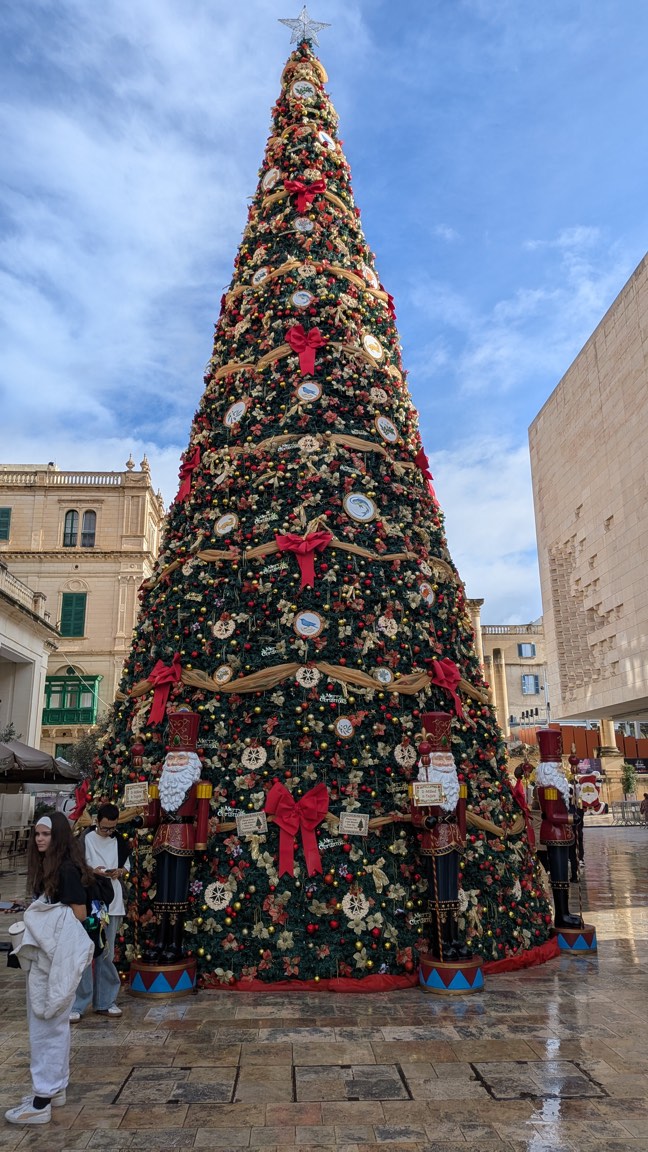
Just past the gate stands Malta's Parliament building, modest enough in scale to bring to mind Brasília's similarly compact parliament, covered on an earlier stop on this trip, closed for the weekend but pretty regardless. From there, Republic Street, Valletta's main pedestrian thoroughfare, runs past the Courts of Justice, the country's supreme judicial body, and Malta's National Library, lined the whole way with cafés, souvenir shops and buildings distinctive enough to look genuinely film-ready.
St. George's Square, and a city built to be attacked
Republic Street opens onto St. George's Square, home to the Grand Master's Palace, now Malta's Presidential Palace, originally built for the head of the Knights of Malta's military order, later home to a long line of rulers before becoming the president's residence. A guardhouse stands opposite, its original purpose to watch over the palace, though no guards remain posted there today.
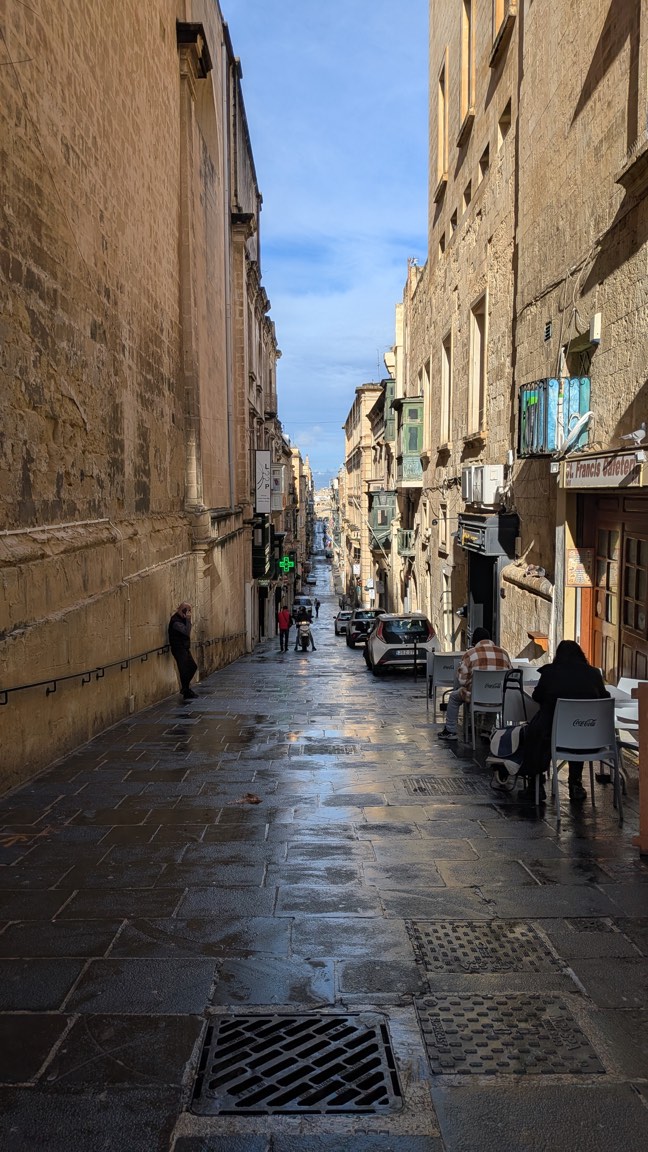
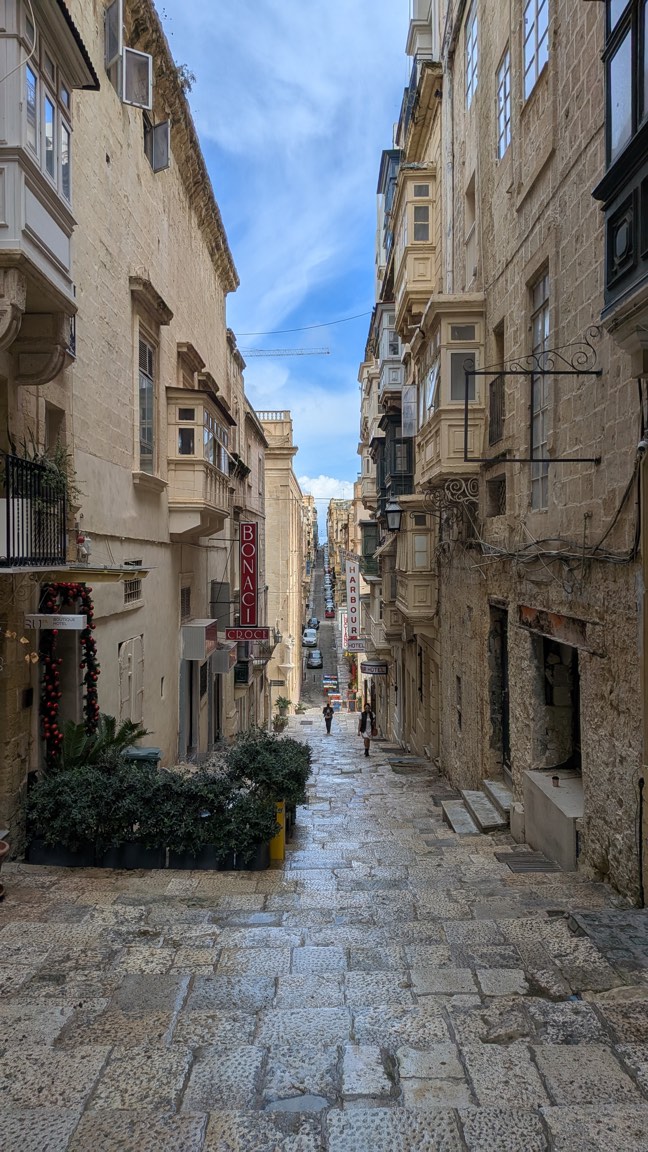
Valletta's narrow, colourfully-doored streets are laid out in a rigid grid, and that's deliberate: after the Knights of Malta defeated an Ottoman siege in the 1500s, the city was purpose-built as a heavily fortified capital designed to withstand exactly that kind of attack again. That strategic value, sitting squarely between Europe, Africa and the Middle East, made Malta a target for essentially every major regional power over the centuries, the Ottomans, French and Spanish among them, before British rule eventually settled in and left behind a lasting legacy: left-hand driving, red post boxes and telephone booths straight out of London, and English as one of the country's official languages.
A cannon that's fired every day for centuries
Upper Barrakka Gardens sits above Valletta's Saluting Battery, and it's here that the day's most memorable moment happened: a cannon, loaded and fired live, part of a tradition stretching back hundreds of years, originally used purely to mark the time at noon and four in the afternoon, long since made obsolete by clocks but kept alive as ceremony regardless. Watching an actual cannon fire for the first time, the sound and recoil were genuinely startling, followed by sweeping 270-degree views across the Grand Harbour from the gardens above, water so vividly blue it was hard to look away from.
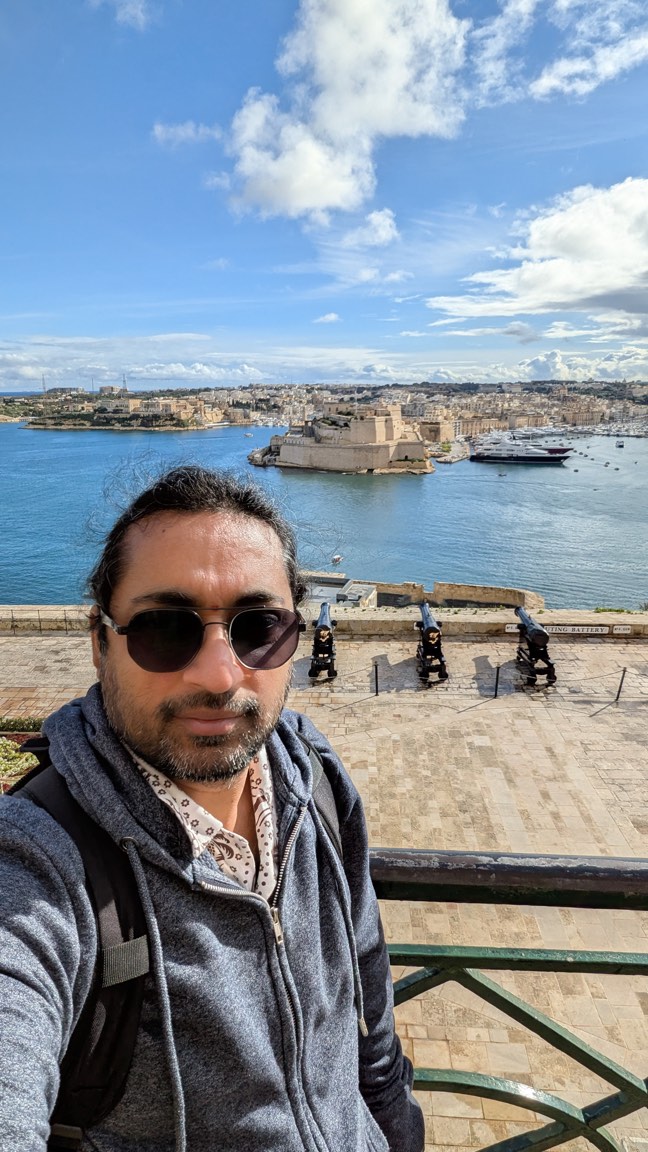
A lift down to Lower Barrakka Gardens for one euro leads out toward the harbourfront, lined with private yachts and small boats that locals keep for leisurely summer outings.
Across the harbour to the Three Cities
A short ferry ride across the Grand Harbour leads to the Three Cities: Birgu, Senglea and Cospicua, two of them technically peninsulas. Birgu, the first stop, carries an older, prouder name: Città Vittoriosa, the Victorious City, earned after the successful defence against the Ottoman siege that led directly to Valletta's own construction. Before Valletta existed, Birgu was Malta's capital, and its clifftop Fort St. Angelo, a ten-euro entry, remains the area's main draw, its own sweeping harbour views arguably rivalling Upper Barrakka's.
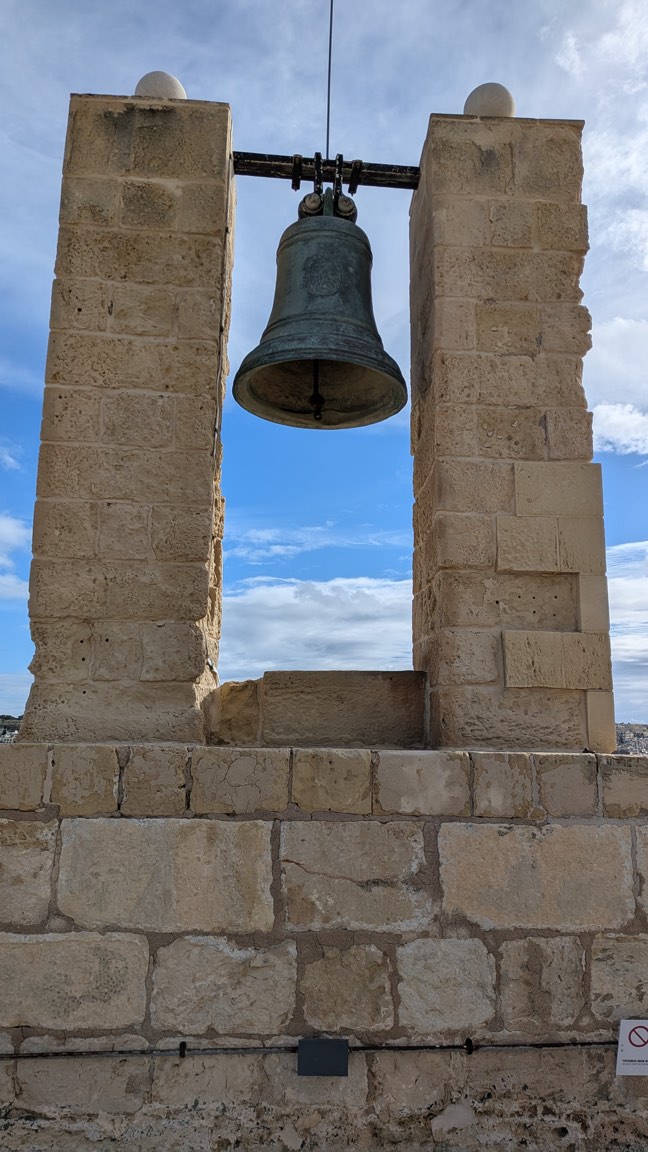
Senglea and Cospicua, by comparison, are mostly residential, with a scattering of minor sights, a clock tower here, quiet streets there, worth a quick pass through but not a place to linger long. A stop at an Indian restaurant along the way, unplanned but well-timed given an empty stomach since the previous night, turned up a genuinely good paneer kadai with soft rotis and a cumin-and-black-pepper lassi, an unusual but surprisingly good combination.
Dingli Cliffs, and a sunset that didn't cooperate
Dingli Cliffs, Malta's highest point, offer a properly dramatic drop straight into the Mediterranean, and on a clear day, a sightline toward Tunisia roughly 380 to 400 kilometres away across the water, close enough to hint at Africa's proximity to these islands, though a fear of heights kept this particular visit to a respectful distance from the edge. Clouds rolled in just in time to spoil an otherwise promising sunset, a bit of bad luck given the clear skies earlier in the day.
A tiny church with a Tamil film connection
Right near the cliffs sits St. Mary Magdalene Church, a small chapel that wouldn't ordinarily be worth the detour, if not for its role as a filming location for a well-known Tamil film song, the Tamil version of a track also released in Telugu, though the Telugu version was shot elsewhere entirely, in the United States. A moment of alarm on the surrounding rocks, something lying motionless that looked unmistakably like a snake, turned out, on a closer and considerably more cautious look, to just be a cluster of snails.
Valletta lit up for Christmas
By the time the Christmas market reopened after dark, its lights, a giant wheel, and a nearby concert stage had transformed the city entirely. Valletta holds the title of the smallest capital in the European Union, smaller EU-member capitals don't exist, though Vatican City, not itself an EU member, remains smaller still on a technicality. Oddly, the crowd that evening leaned heavily Malayali, enough that it briefly felt more like a Kerala street festival than a Maltese one, a small preview of just how large the Indian community across Malta turns out to be.
One last stop before calling it a night: St. Publius Church, another filming location tied to the same Tamil film song covered earlier at the cliffside chapel, though the bulk of that song, including its dance sequences, was actually filmed in Mdina, Malta's old walled capital, saved for a separate stop on this trip.
Practical tips for Valletta
- Saluting Battery cannon firing: time your visit for noon or 4pm to catch the ceremony live from Upper Barrakka Gardens.
- Three Cities ferry: a quick, cheap way to see Birgu's Fort St. Angelo without a long detour by road.
- Dingli Cliffs: go on a clear day for the best chance of seeing all the way to the horizon.
- Christmas market: if visiting in December, see it once by day and once lit up after dark, they're genuinely different experiences.
- Driving: Malta drives on the left, so navigation habits from India or the UK carry over directly.