
A country with fewer than a thousand residents, millions of visitors a year, and one of the highest per-capita crime rates anywhere, for reasons that have nothing to do with danger and everything to do with pickpockets. Vatican City sits entirely inside Rome, and a single morning here is mostly masterpieces.
The Vatican Museums, Raphael's rooms, St. Peter's Square, and the line in the pavement that marks the border.
A country inside a city
Vatican City covers about 0.44 square kilometres, roughly 44 hectares, which makes it the smallest country in the world by area. It is also the smallest by population, with somewhere between 750 and 800 residents. It sounds like a contradiction, a "city" that is also a "country", but that's exactly what it is: a city-state, fully independent, sitting entirely inside Rome.
It also has a reputation for the highest crime rate per person in the world, and the reason is simple arithmetic. Around six million visitors pass through every year, against fewer than a thousand residents, so even small crimes, pickpocketing and bag-snatching mostly, look enormous once you divide by the local population. It's a good reason to keep your valuables close while you queue.
The history of the Vatican is long enough to need a video of its own, so this trip stuck to the practical question: what can you actually see in one morning?
What's actually here
Mostly museums. The Vatican Museums are the main event, and at the end of the route sits the Sistine Chapel, the Pope's own chapel. Photos and video aren't allowed inside the chapel, so it can't be shown here, only described.
Beyond the museums, the Papal Apartments, where the Pope lives (Pope Francis at the time of this visit), are visible from outside but open only to pilgrims. St. Peter's Basilica, the largest church in the world, stands on the other side of the square. The Vatican Gardens sit behind everything, but entry was quoted at around 200 euros, so they stayed a view from a distance.
Dressed for the day
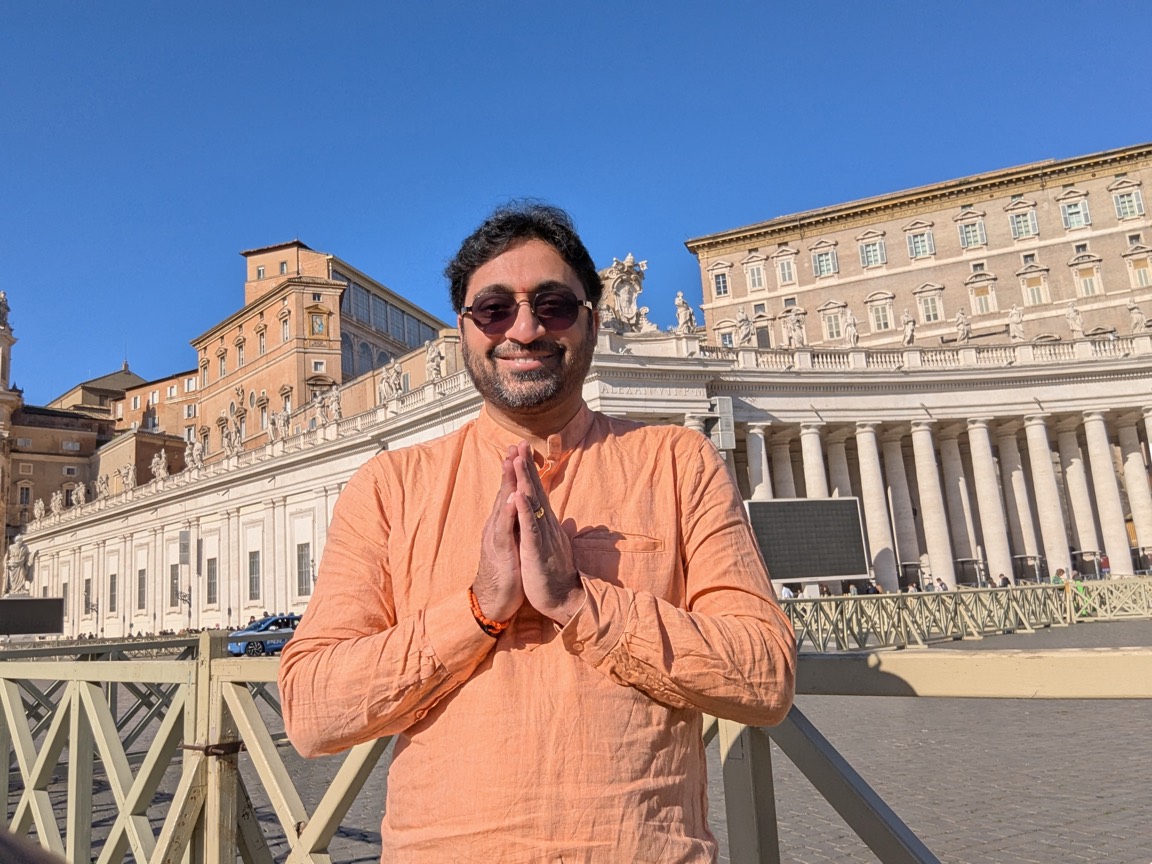
The morning began the way it usually does at home: a prayer, a tilak on the forehead, and an orange kurta. Turning up to another faith's headquarters dressed like this wasn't a statement against anyone, quite the opposite. The point is that you can respect another religion and still follow your own.
Plenty of people in India feel awkward wearing a tilak or traditional clothes to the office, and yet here, in the middle of one of the most famous religious sites on earth, nobody stared or cared. Wear what you like, however you like.
Through the Vatican Museums
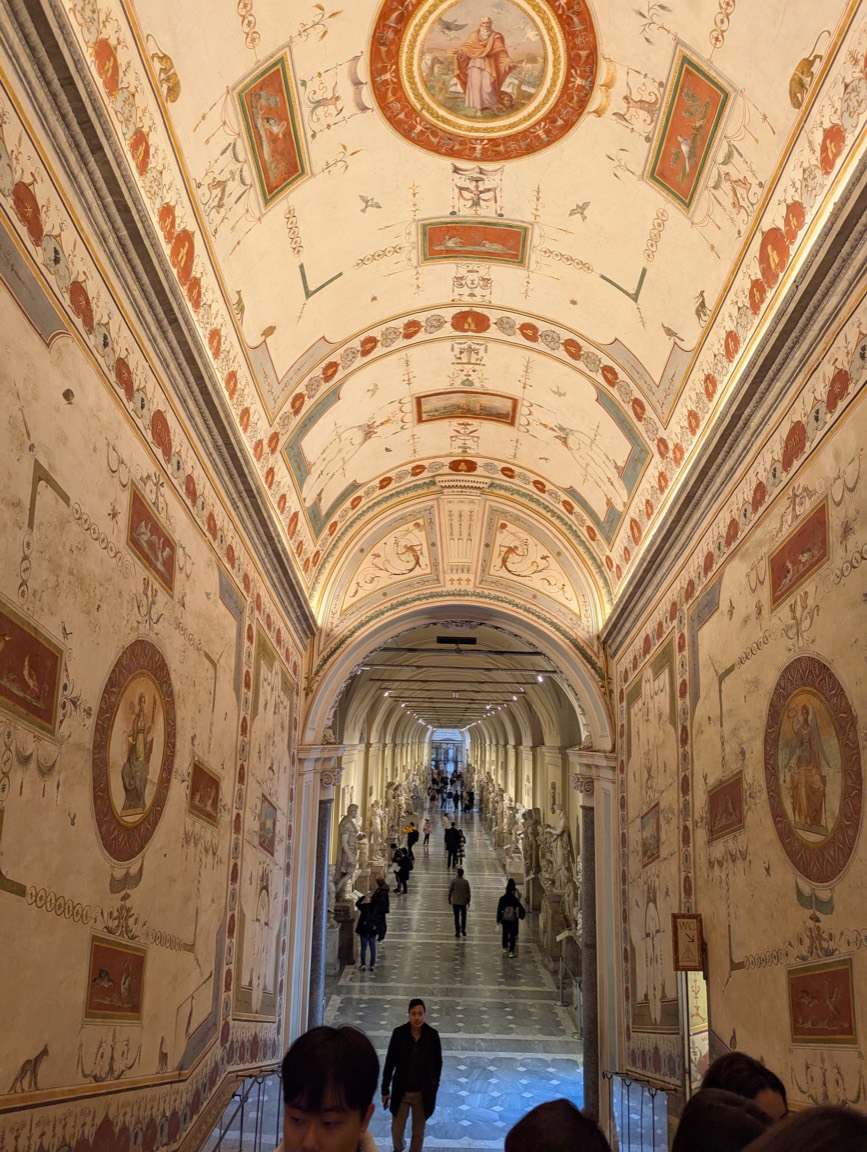
The route starts with antiquities. Apollo, the Greek sun god, turns up here in a Roman version, since the Romans borrowed the god and made their own. Nearby, Laocoön appears in agony, his suffering carved so convincingly into the marble that it's hard to look away.
Several pieces are made of porphyry, a purple-red stone brought from Egypt and once used for coffins. It is extremely hard, so carving it takes special tools and a lot of training, which makes the finished statues even more impressive.
The long galleries that follow are lined with tapestries, paintings made in cloth, showing scenes from the childhood of Christ, while the ceilings overhead are painted so richly that it's easy to forget to look straight ahead. One gallery holds a map of Italy labelled Italia Nova, and a huge painting that shows local rulers coming to the rescue when Vienna was attacked.
Raphael's rooms
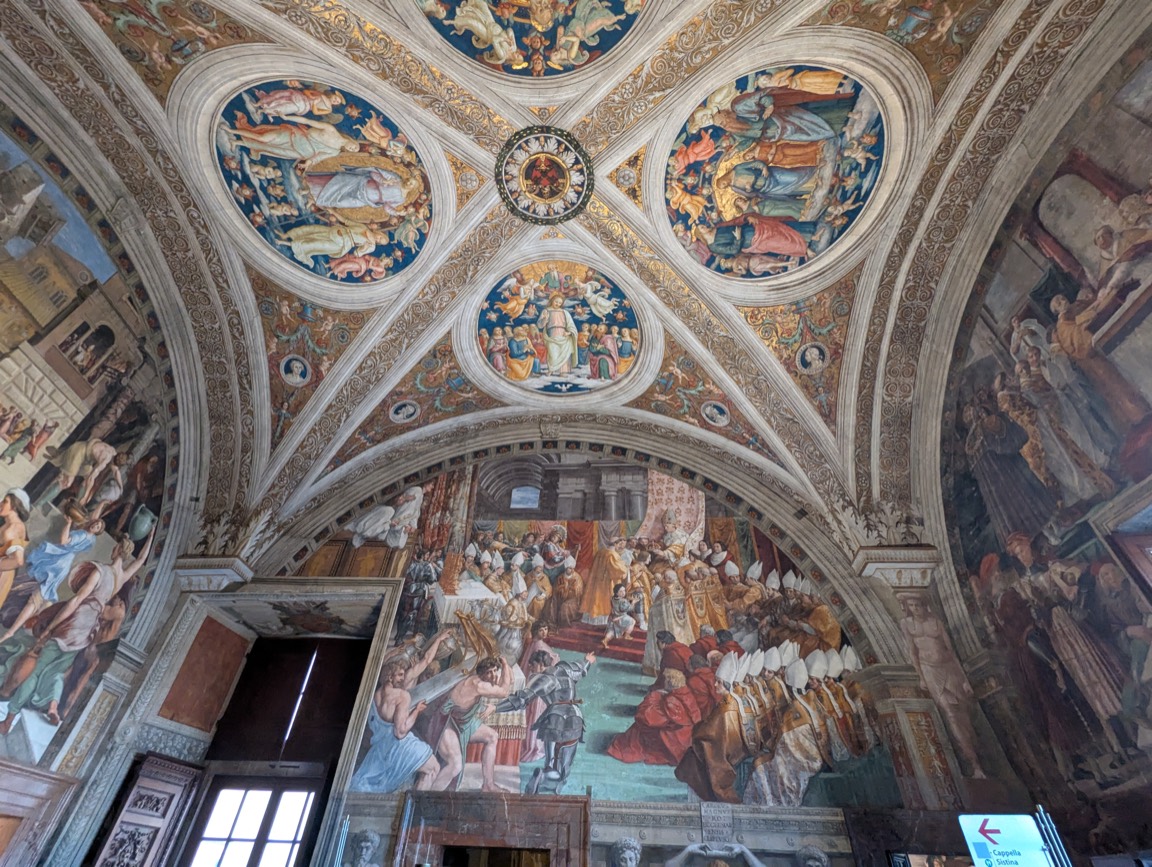
The rooms of the old papal apartments are covered in paintings by Raphael. One of them shows Pope Julius. Another, The School of Athens, gathers Aristotle, Socrates, Pythagoras, Euclid and other great thinkers into a single frame, the kind of scene that rewards standing still for a few minutes instead of following the crowd.
The Sistine Chapel
The museum route ends in the Sistine Chapel, home of Michelangelo's paintings from the Creation through to the Last Judgment. With no photos or video allowed, there's nothing to show here, which is probably how the place is best experienced anyway: looking up, without a screen in the way.
St. Peter's Square, and a border with no passport check
The queue for St. Peter's Basilica was far too long to join after the museums, so the plan changed and the rest of the morning went to walking around St. Peter's Square instead.
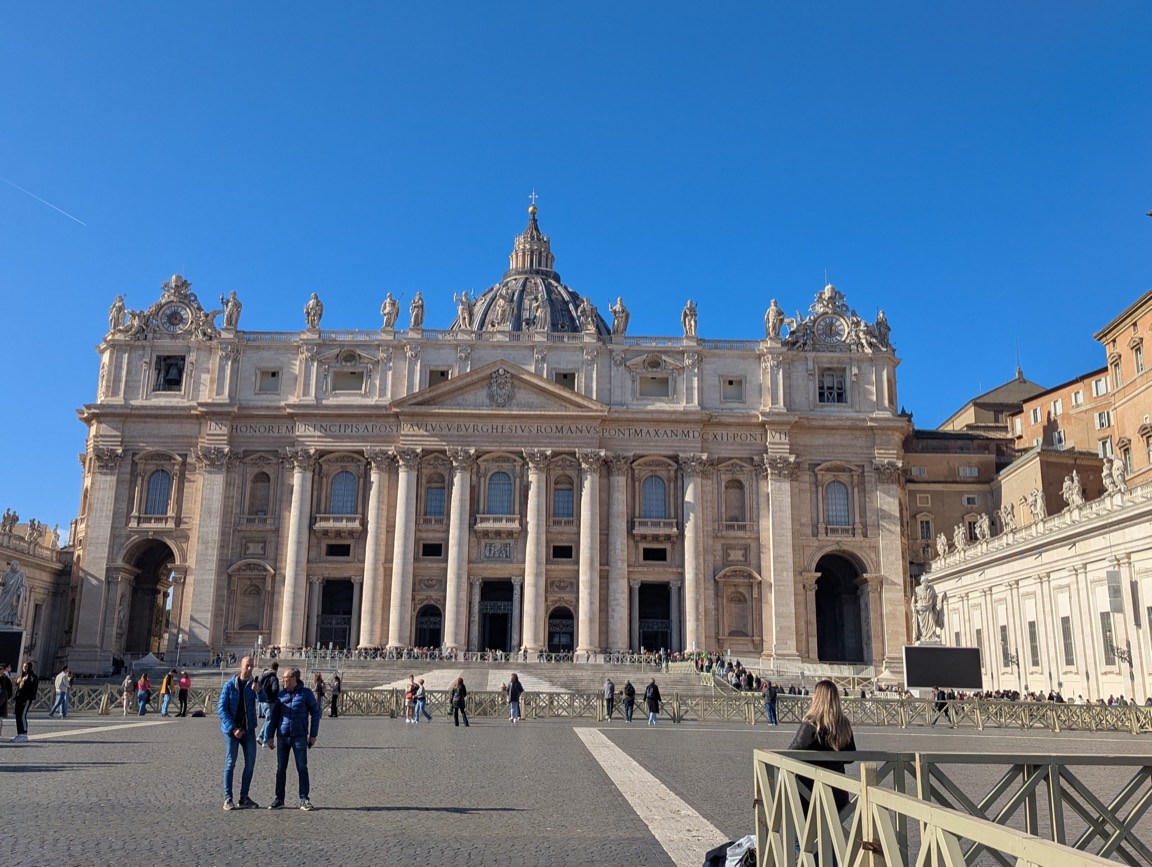
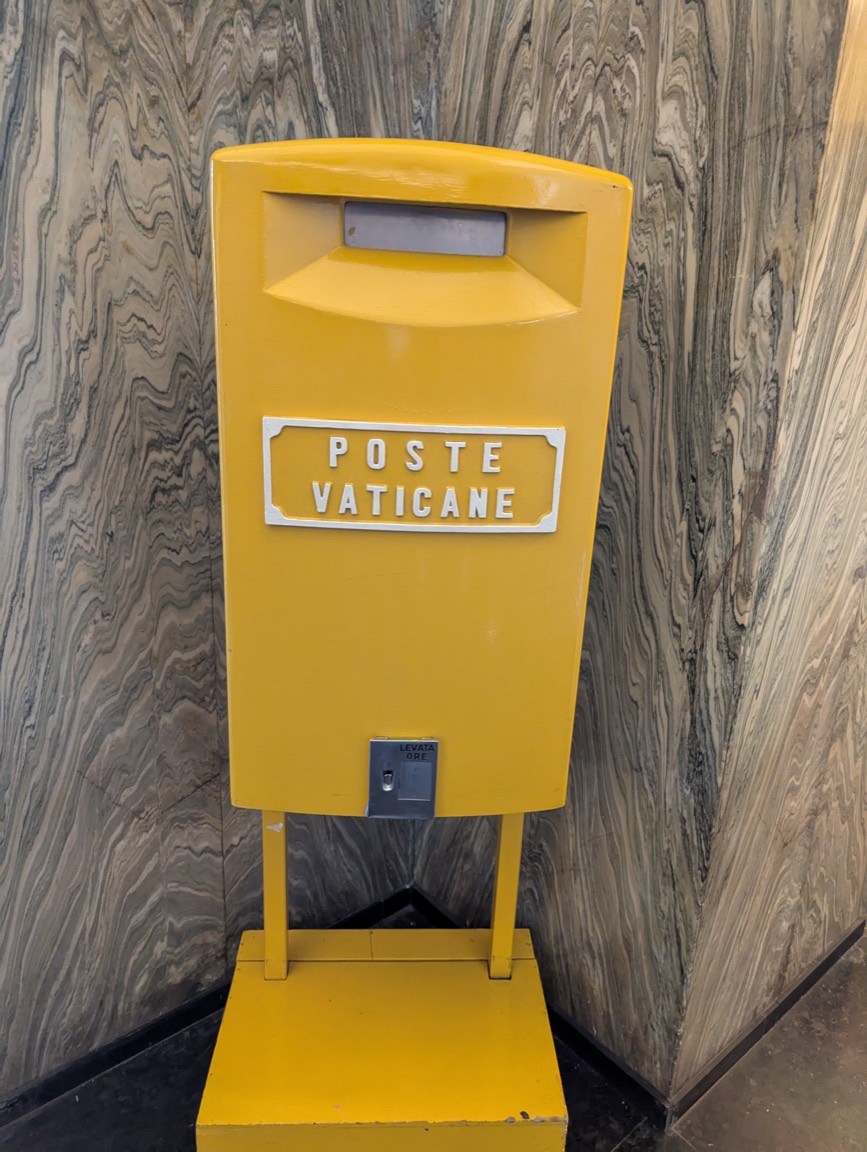
A boundary wall runs around the Vatican, and across the square a line in the pavement marks the border: Italy on one side, Vatican City on the other. No passport, no visa, just a step over a line. The country even has its own postal service, as the bright yellow Poste Vaticane postbox shows.
Back in Italy, for pizza
Having stepped back across the line, lunch was a margherita pizza. It's named after Queen Margherita, and its colours, green basil, white mozzarella and red tomato, are the colours of the Italian flag.
Practical tips for Vatican City
- Sistine Chapel: no photos or video inside, so put the camera away and look up.
- St. Peter's Basilica: check the queue after the museums, it can be long enough to change your plans.
- Vatican Gardens: entry costs extra, quoted at around 200 euros, so plan for views from outside unless you want to pay.
- Crowds: keep valuables close, pickpocketing is the main crime here.
- What to wear: cover your shoulders and knees for the churches, and wear whatever else makes you comfortable.