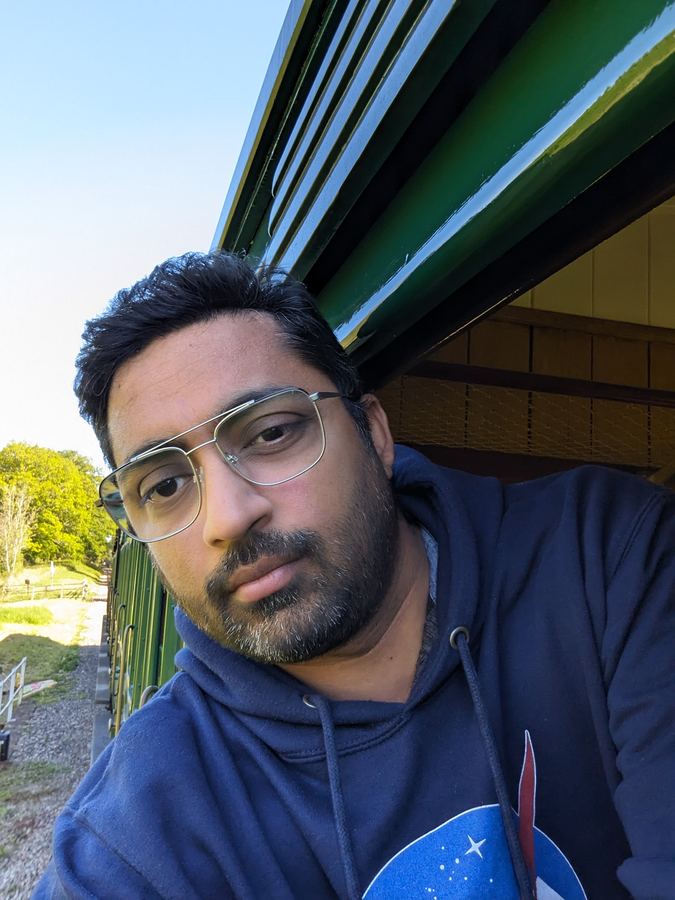
A flight connection through Vienna turned into a full day exploring Austria's capital before continuing on to two more countries. Grand imperial architecture, a heavy piece of history at one particular square, a small Hindu temple that took some finding, and a proper answer to where a well-known Telugu film was actually shot.
St. Stephen's Cathedral, the Hofburg Palace, Heldenplatz, and a Namo Venkatesa filming location.
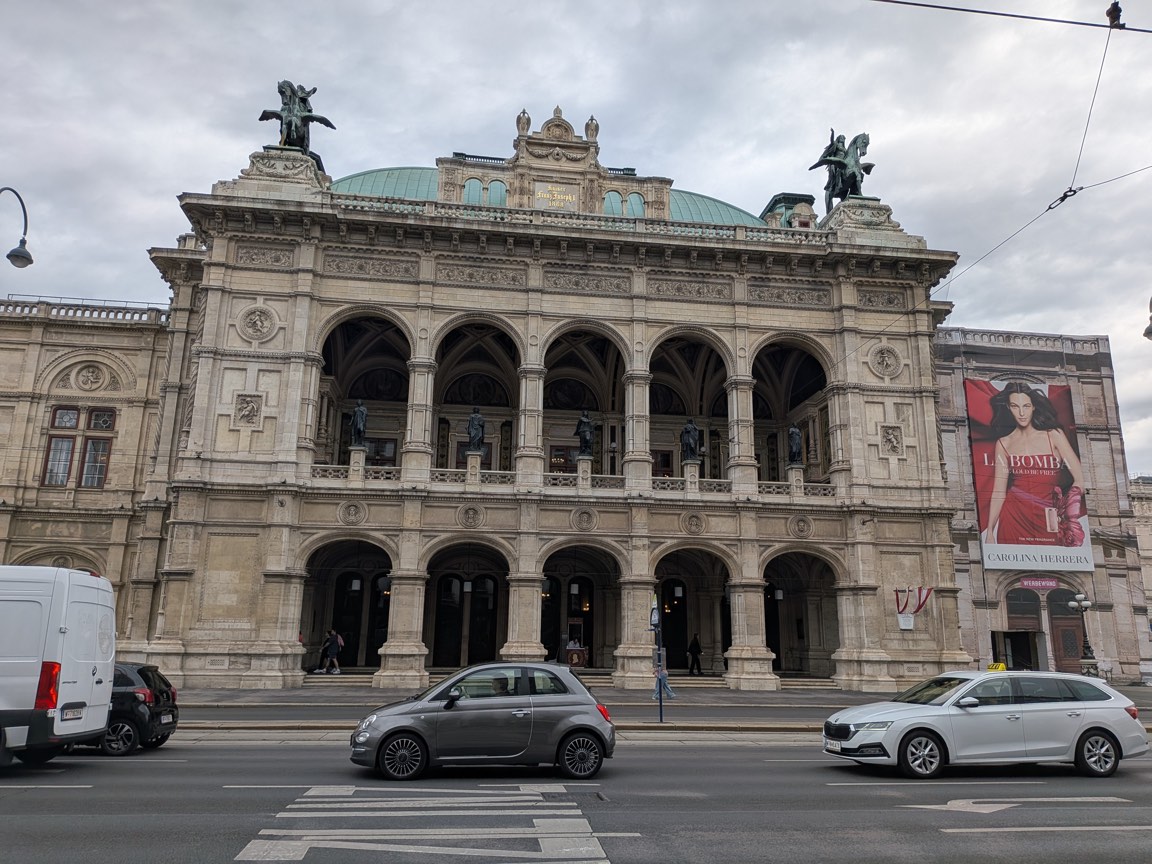
The day started early, passing the Vienna State Opera House on the way toward the old town centre.
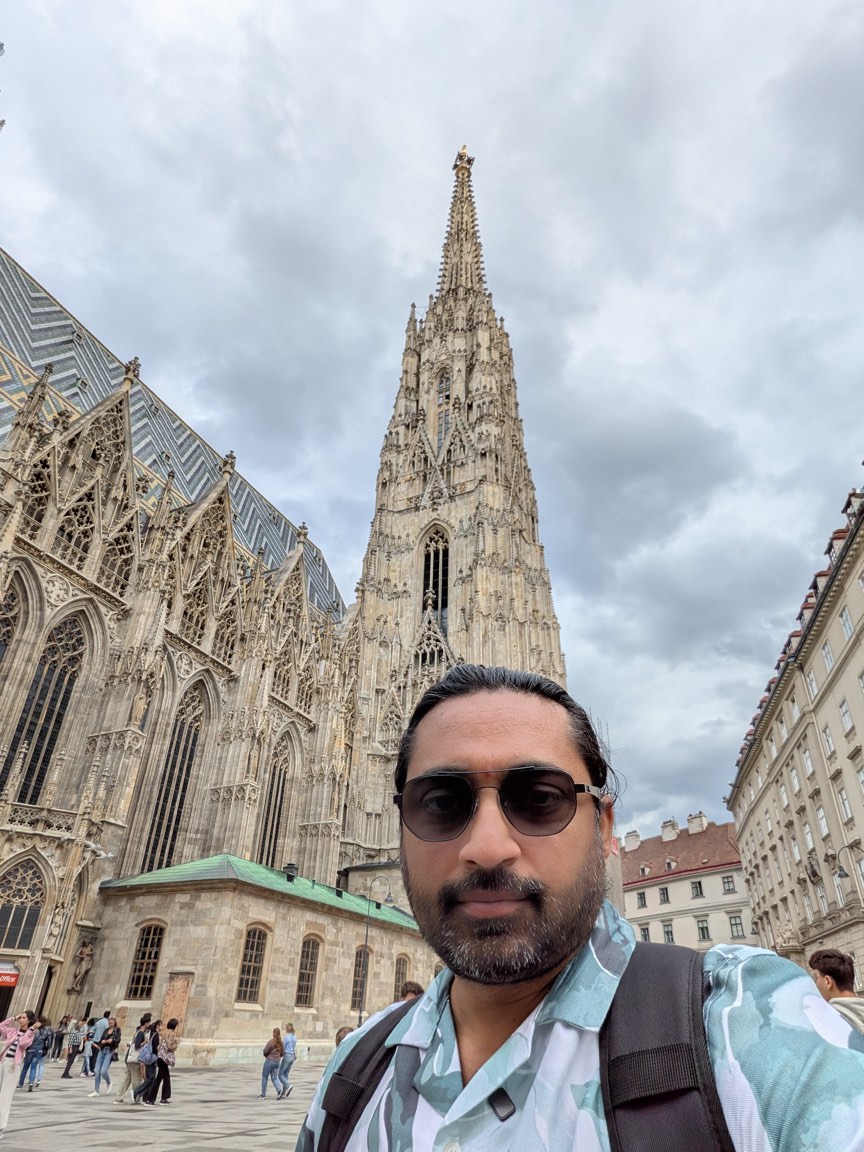
St. Stephen's Cathedral, and two towers that don't match
From there, the walk continued to Stephansplatz, the exact centre point Vienna expanded outward from, named for St. Stephen's Cathedral standing behind it, first built in the 11th century. The cathedral's defining feature is its two mismatched towers: the first, taller spire was completed, but money ran out before the second could match it, so it was left shorter for roughly three to four hundred years until it was finally completed during the Renaissance period, in a noticeably different architectural style from the first. Remarkably, the cathedral survived the Second World War without a single direct bomb hit while buildings all around it were destroyed, only to catch fire afterward and require partial reconstruction anyway. It remains Vienna's most recognisable landmark.
Graben and Kohlmarkt, from a Roman ditch to Bulgari
Just beside the cathedral runs Graben, a street that was literally a protective ditch during the Roman period, now lined with cafés and high-end stores. Its plague column, difficult to pronounce and easy to miss, commemorates the end of a devastating plague outbreak in the 1600s, comparable in scale to what the world experienced with COVID, built as a thanks to God once it passed.
Graben leads into Kohlmarkt, once home to the city's coal traders and now a strip of luxury brands, Bulgari, Dolce & Gabbana, Breitling among them, leading straight toward the Hofburg Palace. Demel, a cake shop along this street with a queue outside, was reportedly the supplier of choice for Austrian emperors, and remains famous for it today.
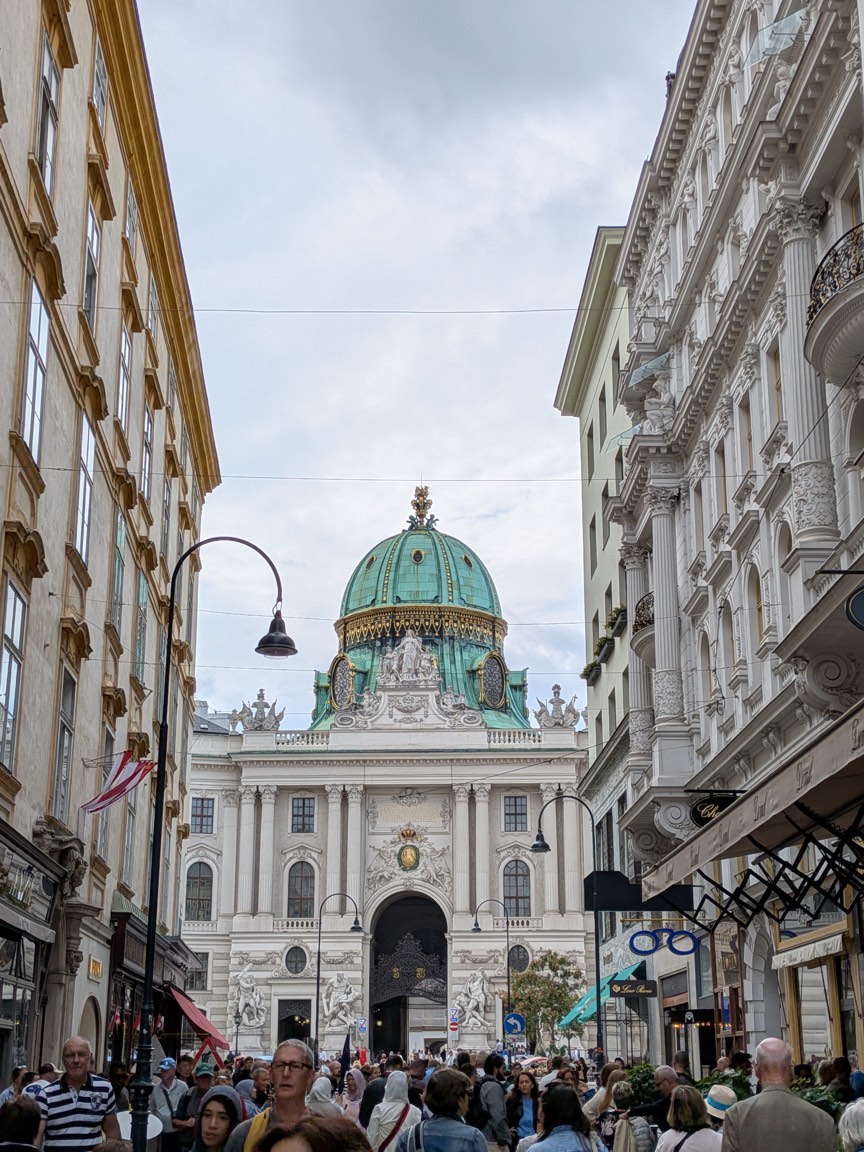
The Hofburg Palace, home to emperors and then presidents
The Hofburg's main entrance, the Michaelertor gate, opens onto Michaelerplatz, named for St. Michael's Church standing beside it. Past the gate, the scale of the palace becomes obvious, along with the Sisi Museum, dedicated to Empress Elisabeth of Austria, easily confused with Britain's queens of the same name but an entirely separate figure. The Hofburg served as home and office to Austria's emperors until the monarchy collapsed in 1918, after which it became the residence of Austria's president, a role it still serves today, alongside several museums housed within its grounds.
Heldenplatz, and a hard piece of history
The palace grounds open onto Heldenplatz, Heroes' Square, built to honour Austria's historic warriors. It's also the site of one of history's darker moments: Adolf Hitler, born and raised in northern Austria before moving to Germany, returned here after annexing Austria into Nazi Germany and addressed a massive crowd gathered in this exact square, a moment met, at the time, with overwhelming public support. It's a sobering piece of history to stand with directly, a reminder that Hitler remains, in every serious sense, one of history's most destructive figures, without meaningful comparison.
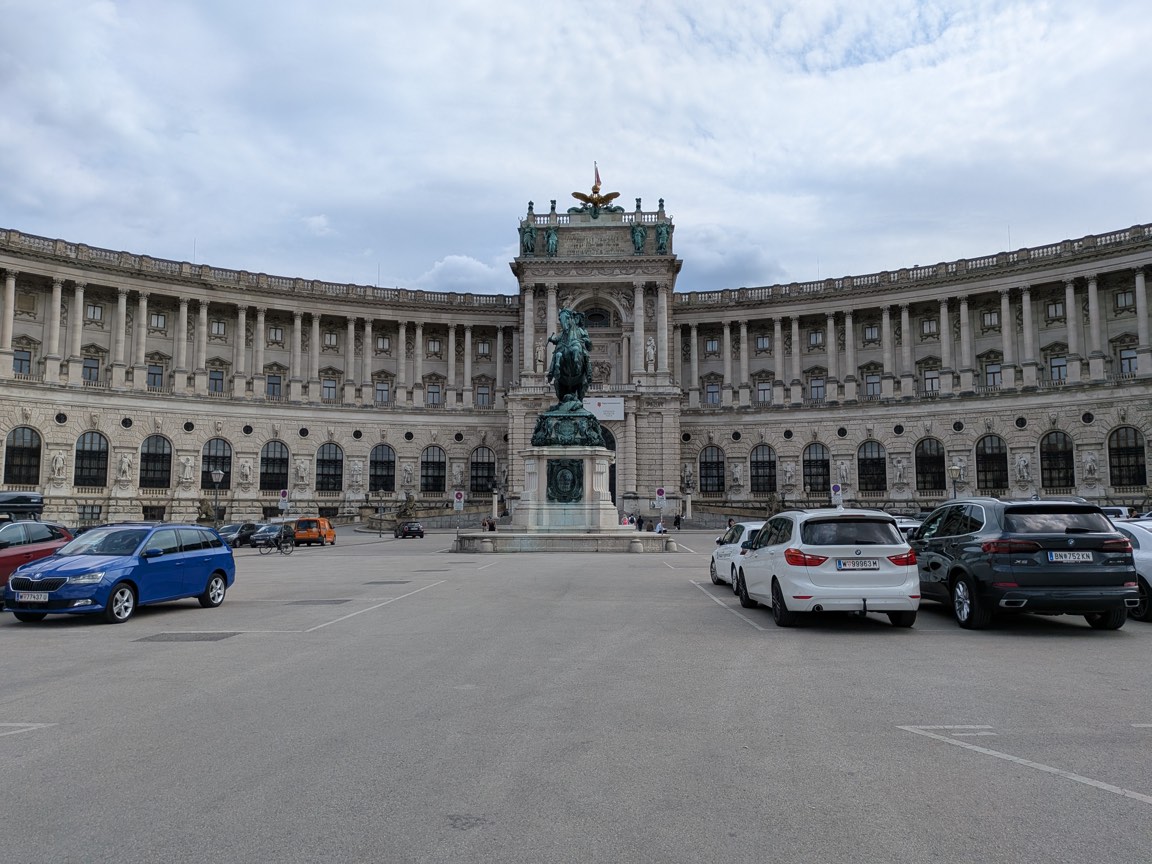
Today the square is better known for horse-drawn carriage rides in period costume for visitors chasing a royal photo, and for something else entirely: this stretch of the Hofburg grounds is where major scenes from the Telugu film Namo Venkatesa were filmed, the same backdrop appearing behind several key moments in the movie.
Twin museums, and a green monument in between
Nearby stands Vienna's Natural History Museum, an 18-euro ticket that gave me pause given London's equivalent is free to enter, though it's reportedly well worth a visit for anyone with the time. Facing it is an almost identical twin building, the Kunsthistorisches Museum, housing an extensive art collection, with the Maria Theresa Monument standing between the two, honouring the Austrian empress and coated in the same weathered copper-green patina familiar from the Statue of Liberty.
A short walk further leads to the MuseumsQuartier, a large complex holding around ten separate museums, including a well-regarded modern design museum, with combined tickets covering several at once for those interested. Lunch happened inside, at an Italian spot serving a spicy penne arrabbiata with a vegan parmesan option on request, a small but appreciated accommodation.
A small Hindu temple, tucked into a residential street
A detour into Vienna's eighth district led to something unexpected: a small Hindu temple, found after some searching, with its posted hours suggesting it might be closed outside Sunday afternoons. The door turned out to be unlocked but uncertain territory to enter uninvited, until a visitor arriving to prepare for the next day's events noticed the camera, smiled, and opened it up properly for a look inside: modest shrines to Ganesha, Krishna, Ram, Lakshmi and Shiva, a space for bhajans, and a donation box. No resident priest, just a handful of devotees gathering on Sundays to keep it running, a small, quietly persistent community keeping a piece of home going far from it. Vienna's architecture, block after block, right down to buildings tucked away from the main streets, stood out as the most consistently striking of any city on this trip so far.
Karlskirche, and a Telugu film location worth setting straight
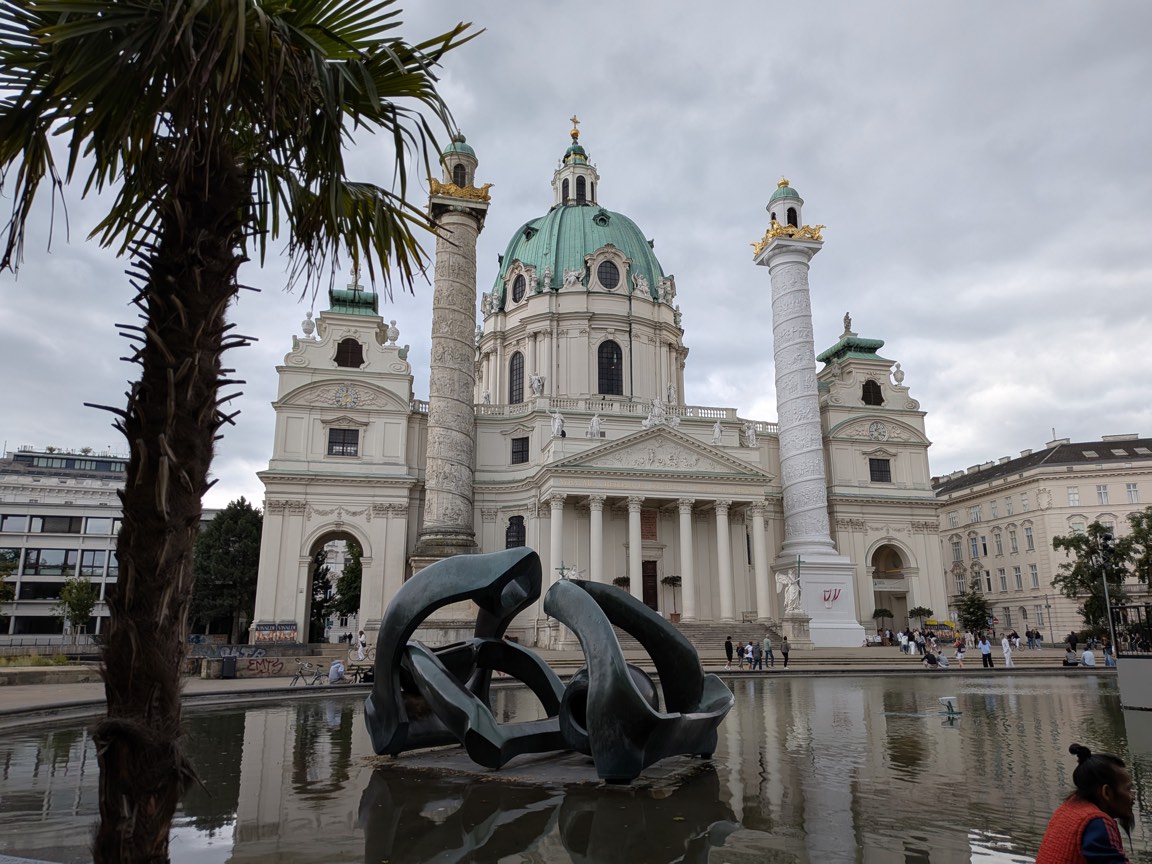
St. Charles's Church, Karlskirche, was a deliberate stop for two reasons: its own striking architecture, and its role as another real filming location for Namo Venkatesa, several key scenes shot in this exact spot, matching the film's blocking closely enough to line up the camera angle almost shot for shot, aside from the chairs and plants now occupying space that was cleared for filming. Worth setting the record straight here: the film's setting is presented as Paris rather than Vienna, an indirect sleight of hand not unlike a similar one covered in an earlier Istanbul video from this trip, involving a different Telugu film credited to the same director.
An evening of unexpected finds
Outside Vienna's City Hall, a film festival was underway, complete with a large outdoor screen and rows of seating, timed to start after dark. Nearby, a public display of weather instruments, a thermometer, a barometer, and a hygrometer for humidity, gave a small, oddly satisfying readout of the exact conditions outside. The Austrian Parliament building, grand and imposing though less colourful than the older architecture seen earlier in the day, and the National Theatre, ornately detailed down to its smallest features, rounded out the walk.
An unplanned bonus came next: a classic car rally, Ferraris, a Rolls-Royce, a Mini, a Mustang, an Aston Martin, parked up in a row purely by chance timing, a genuinely happy surprise for anyone who loves cars. Dinner closed the day at an Israeli street food stall, falafel included, a small callback to an earlier trip through Israel covered in past videos, before heading back to rest ahead of an early start toward the next country the following morning.
Practical tips for Vienna
- St. Stephen's Cathedral: free to view from outside, the mismatched towers are easiest to spot from Stephansplatz itself.
- Hofburg Palace and Heldenplatz: budget real time here, the grounds, museums, and history all warrant a slow visit.
- Natural History Museum: worth the ticket price if you have the time, even though it isn't free like some equivalents elsewhere.
- MuseumsQuartier: combined tickets make sense if you plan to visit more than one museum inside.
- Karlskirche: a quiet, striking stop, and a fun detour for anyone who knows the Telugu film shot here.