
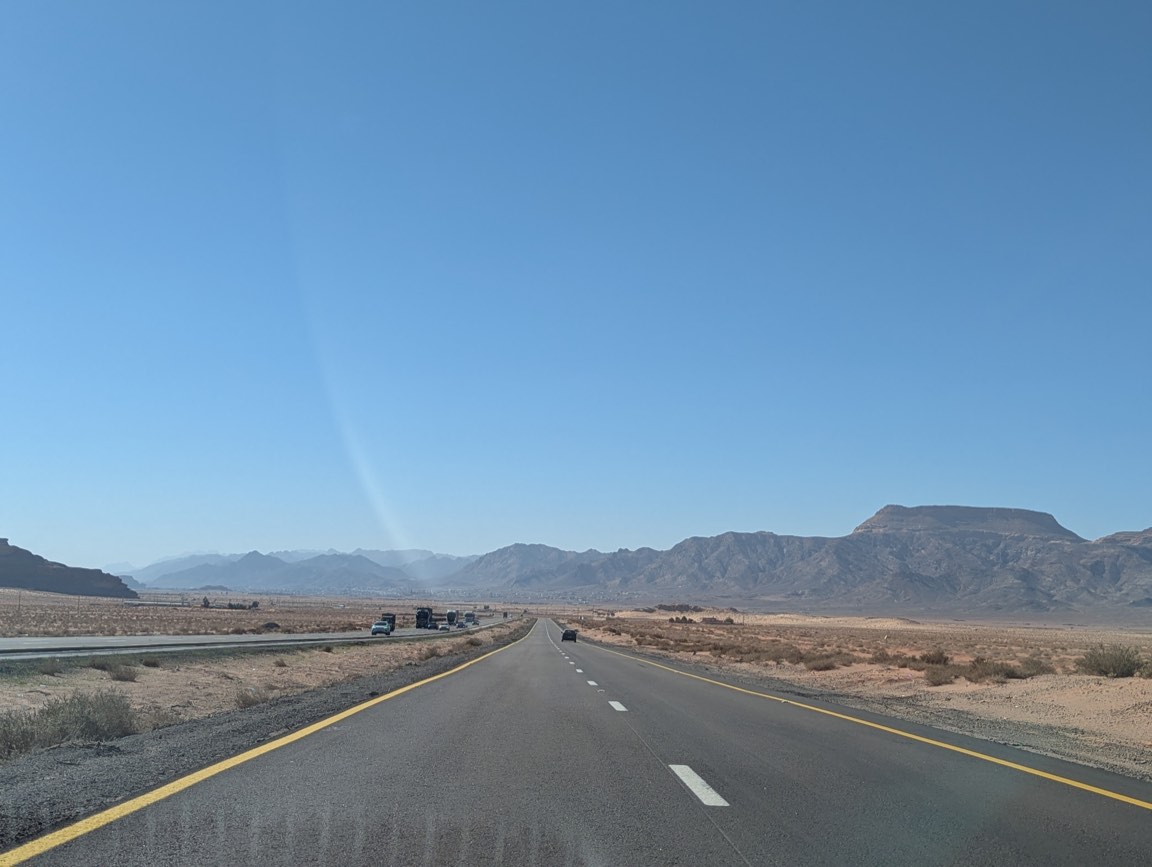
A rental car is essentially mandatory to get anywhere in Jordan, so with one booked, I pointed it toward the desert for the very first video of this trip. Jordan is a desert country, and it felt right to open the series there too: one full episode, entirely in Wadi Rum, sleeping in the sand, gazing at stars, and riding a jeep and a train before Petra even came into view.
Jordan Episode 1: a night in a Martian tent, sand boarding, and a staged train raid in Wadi Rum.
A night inside a Martian tent
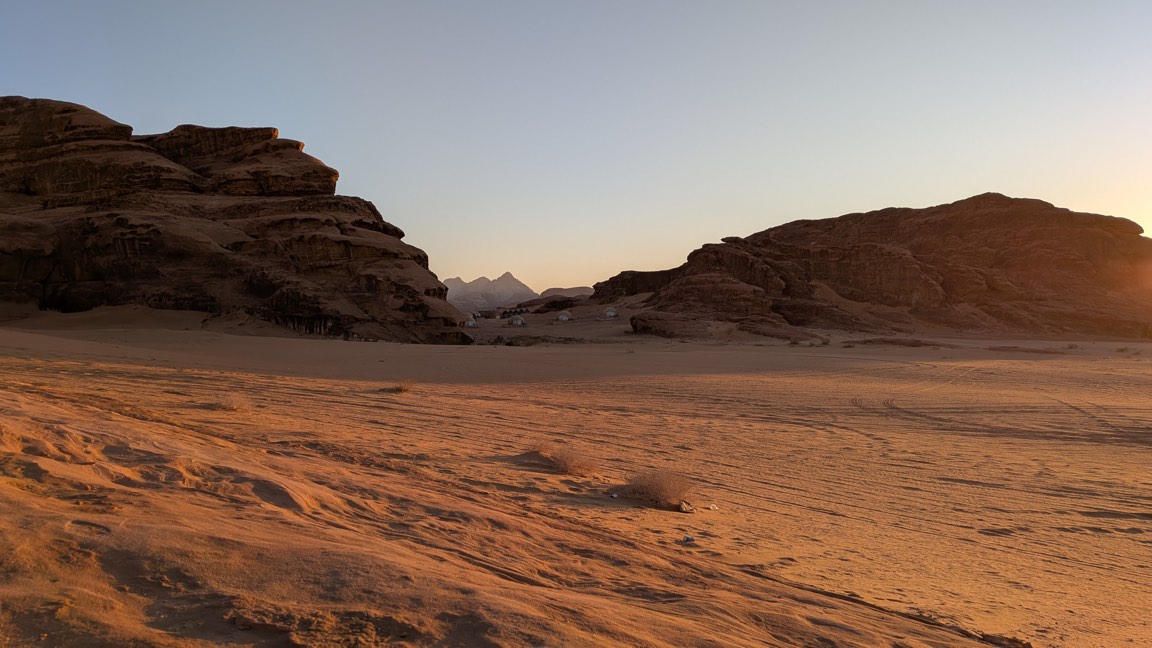
Wadi Rum has two types of desert camps: a normal tent, and what's called a "Martian tent", named for the 2015 film The Martian, large parts of which were shot right here. Inside, it's surprisingly luxurious: a proper bed, neat interiors, and a clear panel facing out toward the dunes so you can lie back and watch the desert without leaving the bed. Stepping outside, red rock formations rise in every direction under a sky that shifts from pale blue to a deep red as the sun drops, exactly the Mars comparison the tent's name promises.
Sunset, and editing videos with the best view in the office
Between filming, there's also the less glamorous work of actually cutting the footage together, and doing that from a camp chair outside the tent, watching the light change over the dunes, is not a bad office. I'd already missed a sunset in Malta on an earlier leg of this trip, so I made sure not to miss this one. Given how dry Wadi Rum's climate is, rain interrupting the view was never really a risk, and the sunset delivered in full: warm light catching the rock faces, then fading into a deep, star-ready dark.
Star-gazing in one of the darkest places I've been
After dinner and some games at the camp, the group headed out for a bit of star-gazing. There's genuinely nothing to point a camera at here except the sky itself, but with zero light pollution, the number of stars visible to the naked eye is something else. I've always had a casual interest in astronomy, and a place like this is exactly when that pays off. A camera flash washes it all out, so the real version of this only exists if you turn every light off and just look up.
Martian Rock, and Hollywood's favourite desert
The next morning, after a sunrise that didn't quite cooperate, came the desert's single most photographed spot: Martian Rock, the actual filming location for The Martian, its red-toned stone matching the real Martian surface closely enough that it needed almost no digital alteration, the same iron-oxide "rust" chemistry that colours Mars colours this rock and the sand around it too. The one giveaway that you're still on Earth: power lines running along the rock, something the real Mars obviously doesn't have. A small souvenir shop sits beside it, mostly camel-themed gifts, plus a nod to a much older film shot in this same desert: Lawrence of Arabia, and a life-sized cut-out let me claim honorary "local Bedouin" status for a photo.
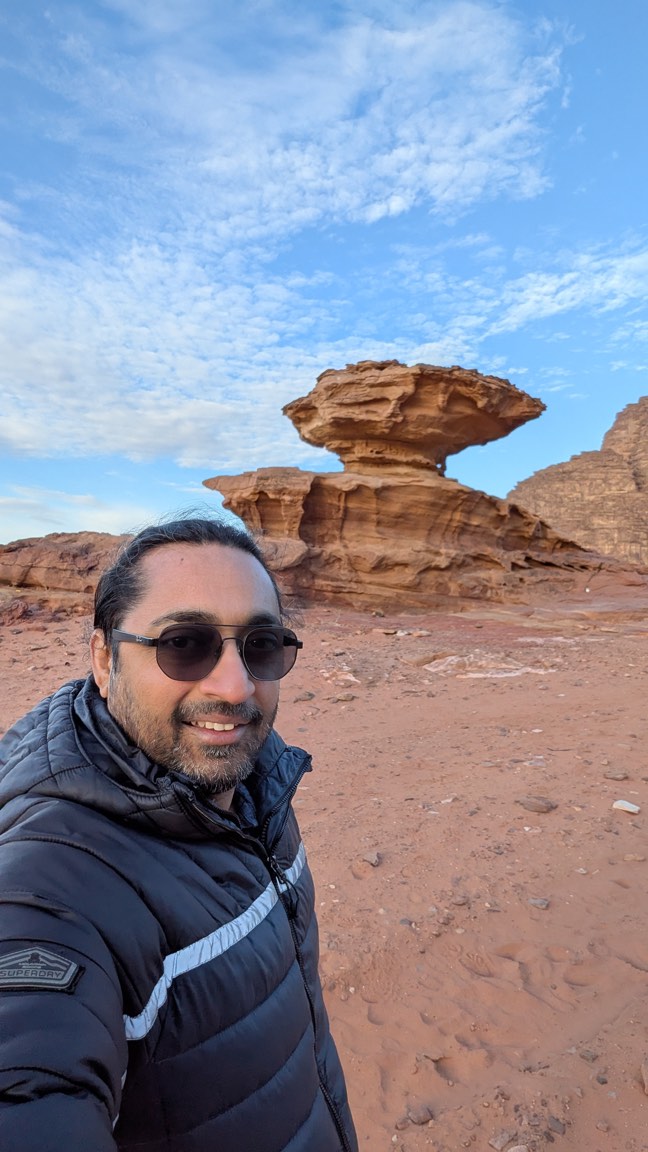
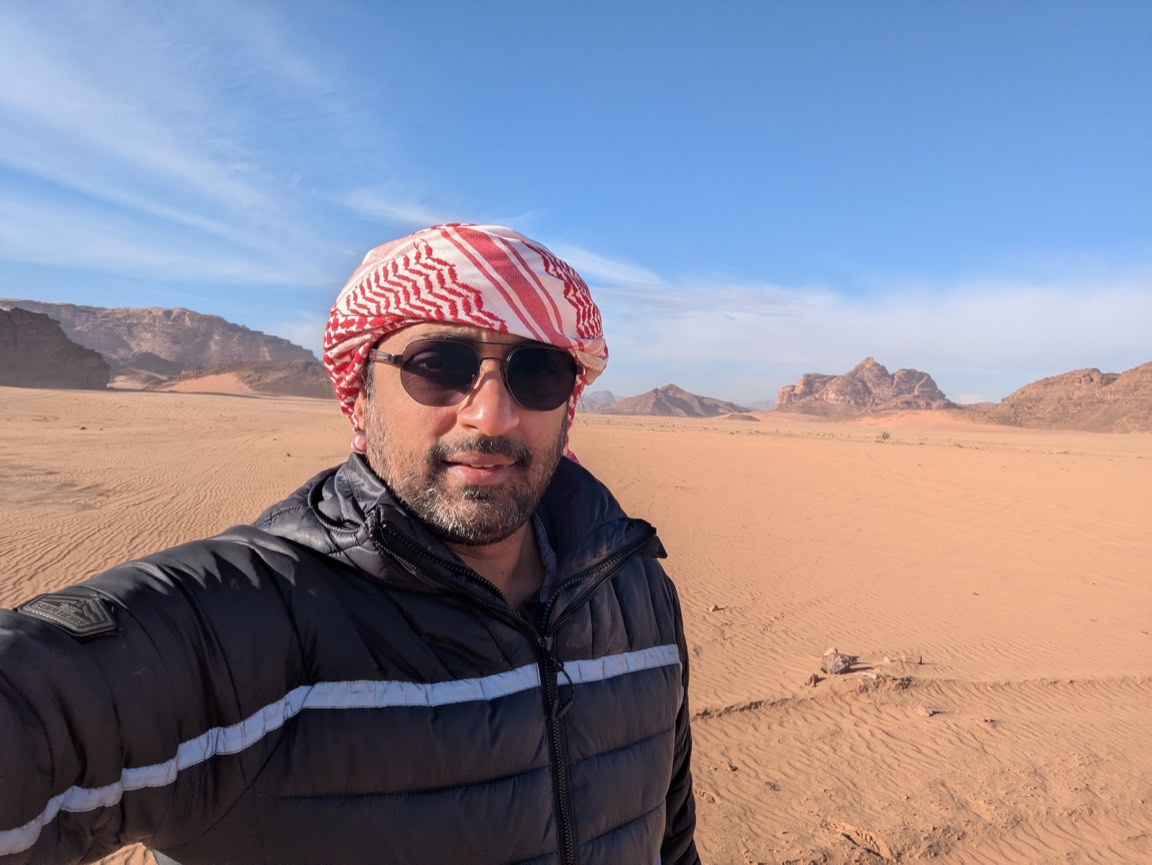
Wadi Rum's film résumé doesn't stop there. This same stretch of desert has stood in for Mars in Aladdin's genie sequences, for a planet in the Star Wars saga (worth rewatching with this in mind, since the rock formations are unmistakable once you've seen them in person), for Will Smith's 2019 film Gemini Man, and for both Dune films. Driving through it, with the landscape completely empty in every direction, it's obvious why: there's nothing modern in frame no matter which way the camera points.
The Lawrence of Arabia Cave
A short walk from Martian Rock is a narrow cave associated with Lawrence of Arabia, the 1948 biographical film often ranked among the greatest ever made, even if it plays a little slow by modern pacing standards, the cinematography still holds up completely. A carved face marks the cave's entrance. Inside, it narrows fast: I made it partway in before the passage got tight enough, and the promise of a much larger chamber further ahead wasn't quite worth the squeeze, so I turned back and let that one stay unexplored.
Sand boarding down a red dune
Climbing a dune in soft sand takes real effort, and coming back down on a board is the reward for it. I'd tried this once before in Dubai, on finer, softer sand that made standing up on the board realistic; Wadi Rum's sand is coarser and the dune itself steeper, so standing wasn't a safe option here. Sitting down and sliding worked fine instead, it's not the most thrilling ride if you've done it properly elsewhere, but as a one-off desert experience it's worth the climb.
Hamad, and 800 kilometres of memorised desert
My guide for the jeep tour was a local Bedouin named Hamad, and talking to him mid-drive turned into one of the more interesting parts of the day. The desert he was driving across, he told me, stretches roughly 800 kilometres, and that day alone he covered somewhere between 14 and 35 kilometres of it, depending on which answer he gave first. I asked how he actually knows the route, since there's no road, no signage, nothing to navigate by that I could see. His answer was simple: he does this every day, for tourists, and the desert is simply familiar to him the way a home street would be to anyone else. Every place he took us to felt deliberately chosen, not just convenient stops.
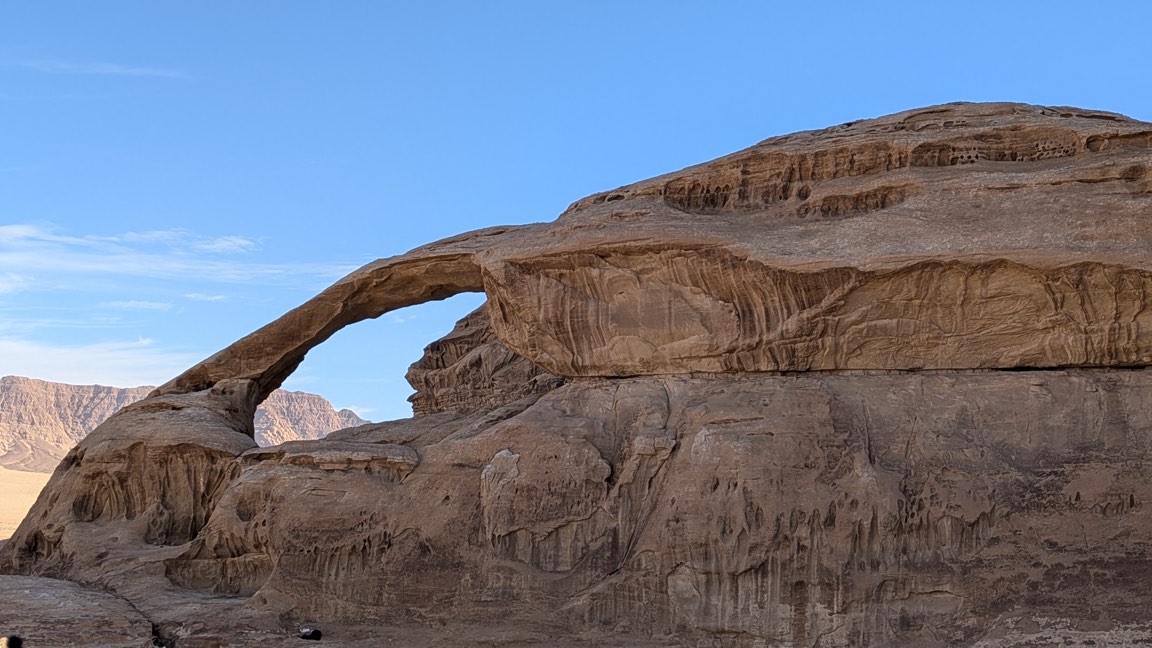
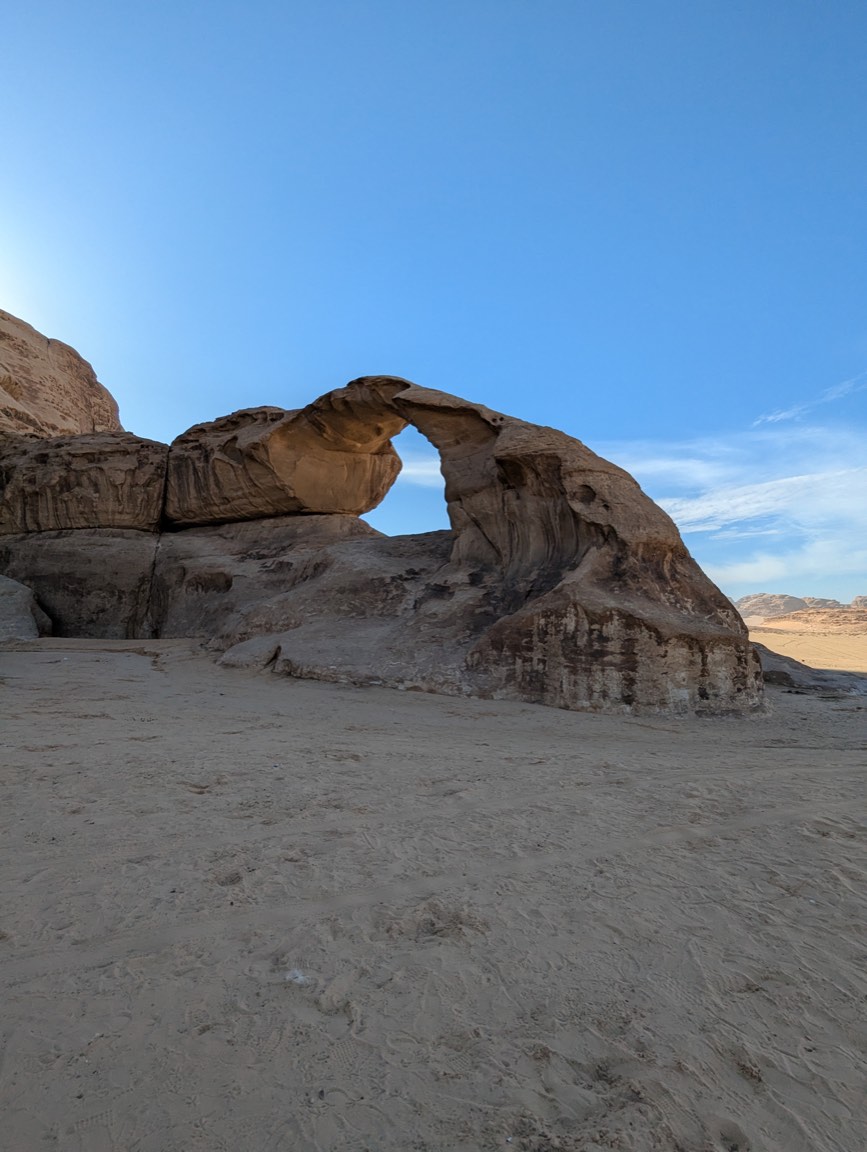
A heritage train, and a staged Arab Revolt raid
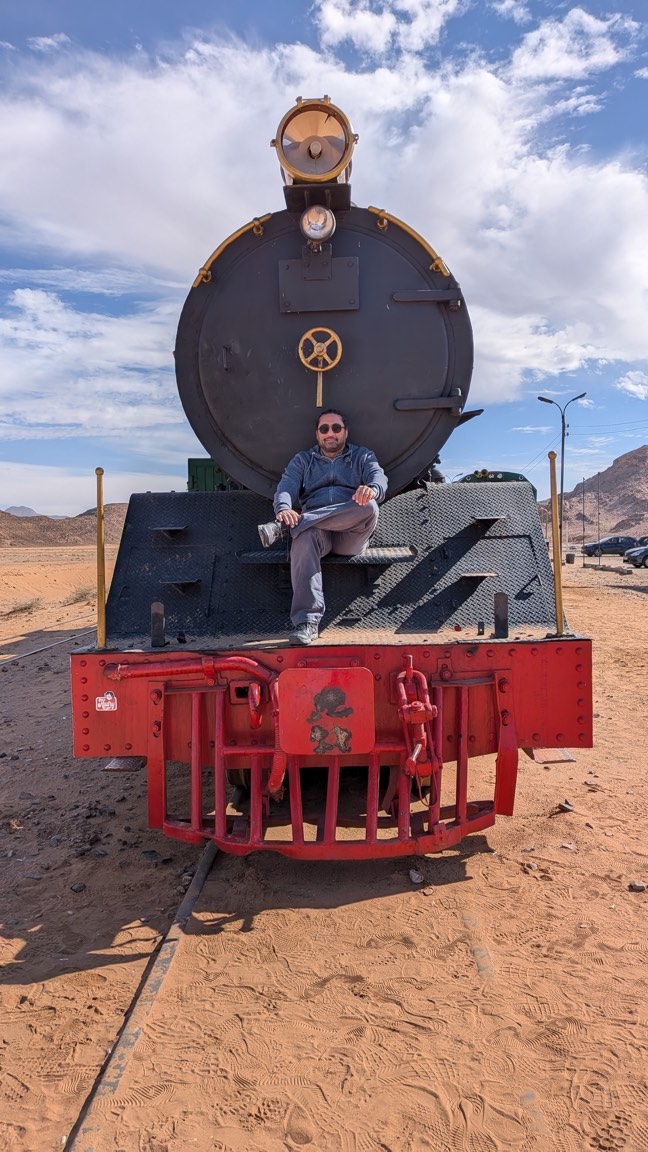
The last activity was one I went into with zero expectations: a ride on Wadi Rum's heritage railway, a line preserved specifically because the original road network made the old route commercially unnecessary, kept running now purely as a heritage experience. I climbed into the engine car first, all manual controls, a diesel engine paired with a coal one beside it, before finding a seat in the open carriage.
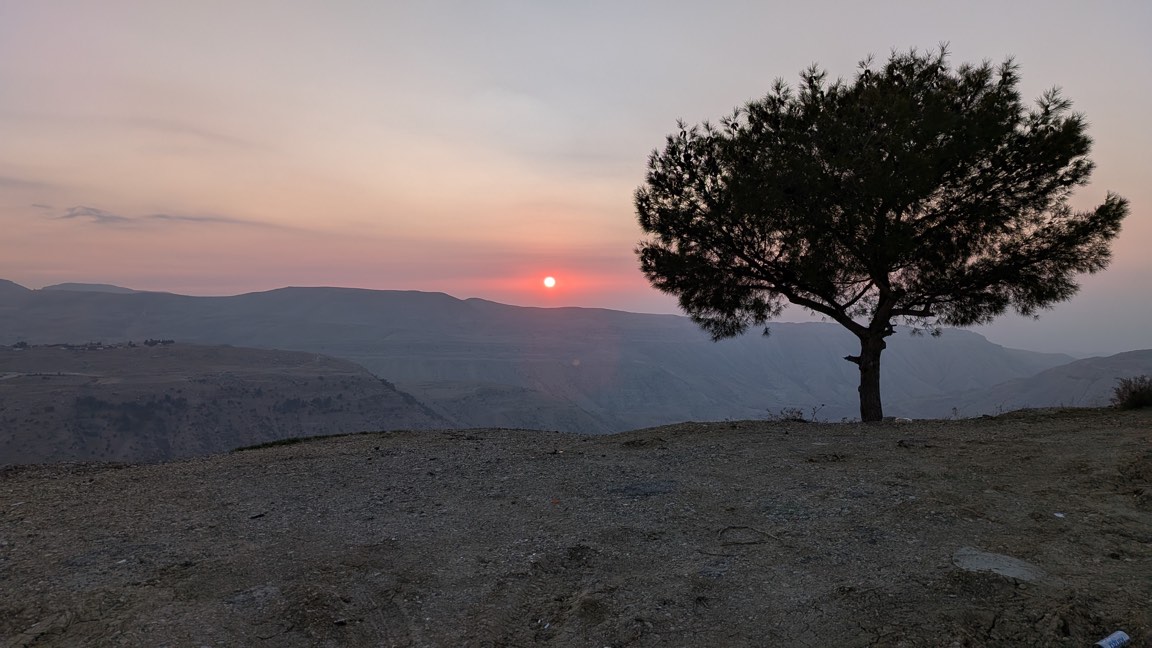
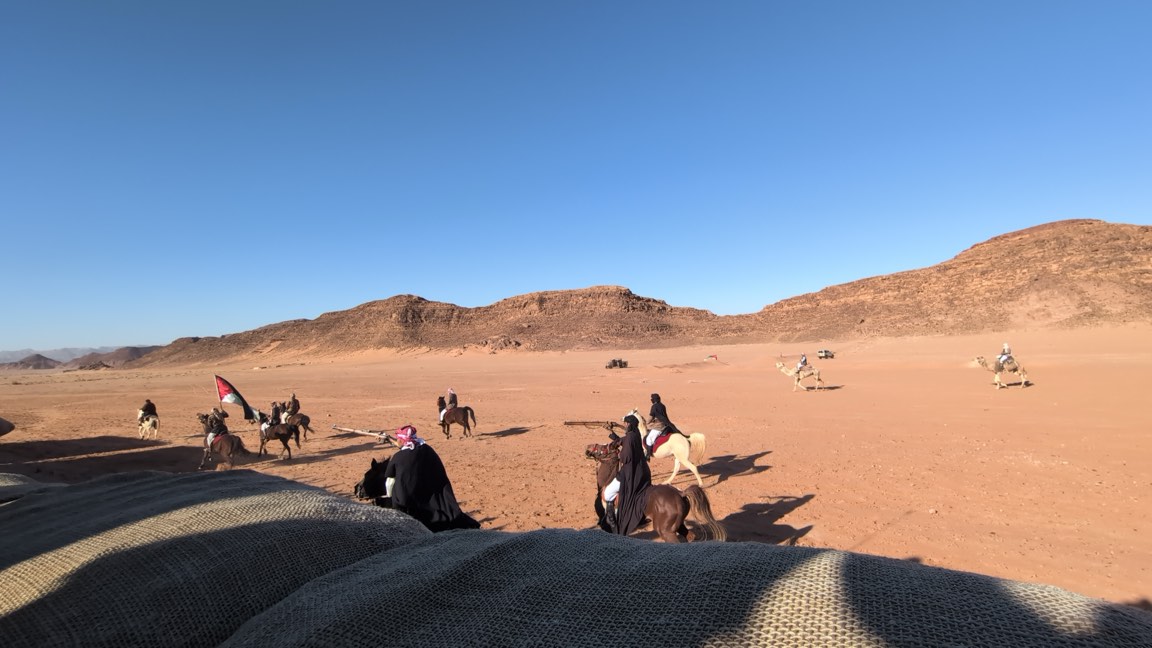
Then, mid-ride, what looked like a full re-enactment kicked off: performers on horseback, dressed for the period, "attacking" the train alongside it as it moved, complete with shouting, running figures and blank gunfire, staged around the Arab Revolt history tied to this exact stretch of railway. Security and a visible police presence were on hand throughout, but for a few minutes it felt genuinely dramatic, more theatre than I'd expected from what I'd assumed would be a slow, scenic add-on to the day.
One episode, entirely in the desert
Everything in this video happened without leaving Wadi Rum: a tent, a rock, a cave, a dune, a jeep, and a train. It felt right not to rush this stretch just to get to Petra faster, since the desert on its own turned out to have enough packed into it for a full episode, before the "World Wonder" even entered the frame.
Practical tips for Wadi Rum
- Camp choice: a "Martian tent" costs more than a standard tent but is worth it for the panel view facing the dunes.
- Star-gazing: turn off every light, including your phone screen, and give your eyes a few minutes to adjust for the full effect.
- Sand boarding: ask about the sand and slope before deciding whether to stand or sit, coarser sand and steeper dunes make sitting the safer option.
- Film locations: Martian Rock and the surrounding valleys have doubled for Mars, Star Wars, Aladdin and Dune, worth rewatching those before or after your visit.
- Heritage train: check timings in advance, the staged Arab Revolt re-enactment doesn't run on every departure.