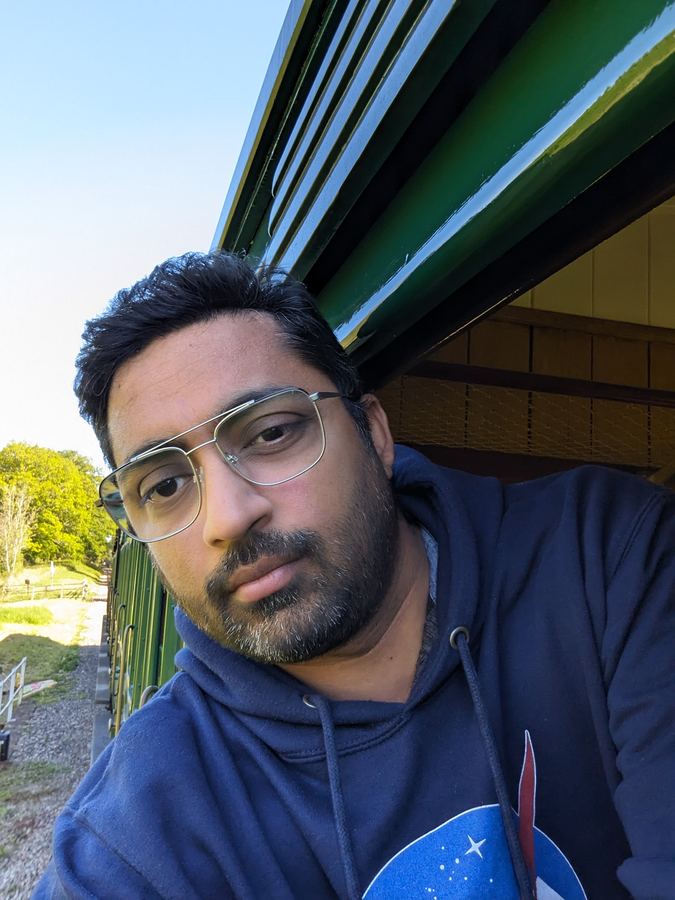
A rainy start, a Roman gate, a mosque that has been a temple, a church and a mosque, and a waterfall that falls straight into the Mediterranean: one afternoon and evening in Antalya, and what it all cost.
Kaleiçi old town, Hadrian's Gate, Kesik Minare, the Düden waterfall, the old harbour, and a full cost breakdown.
Looking for paradise
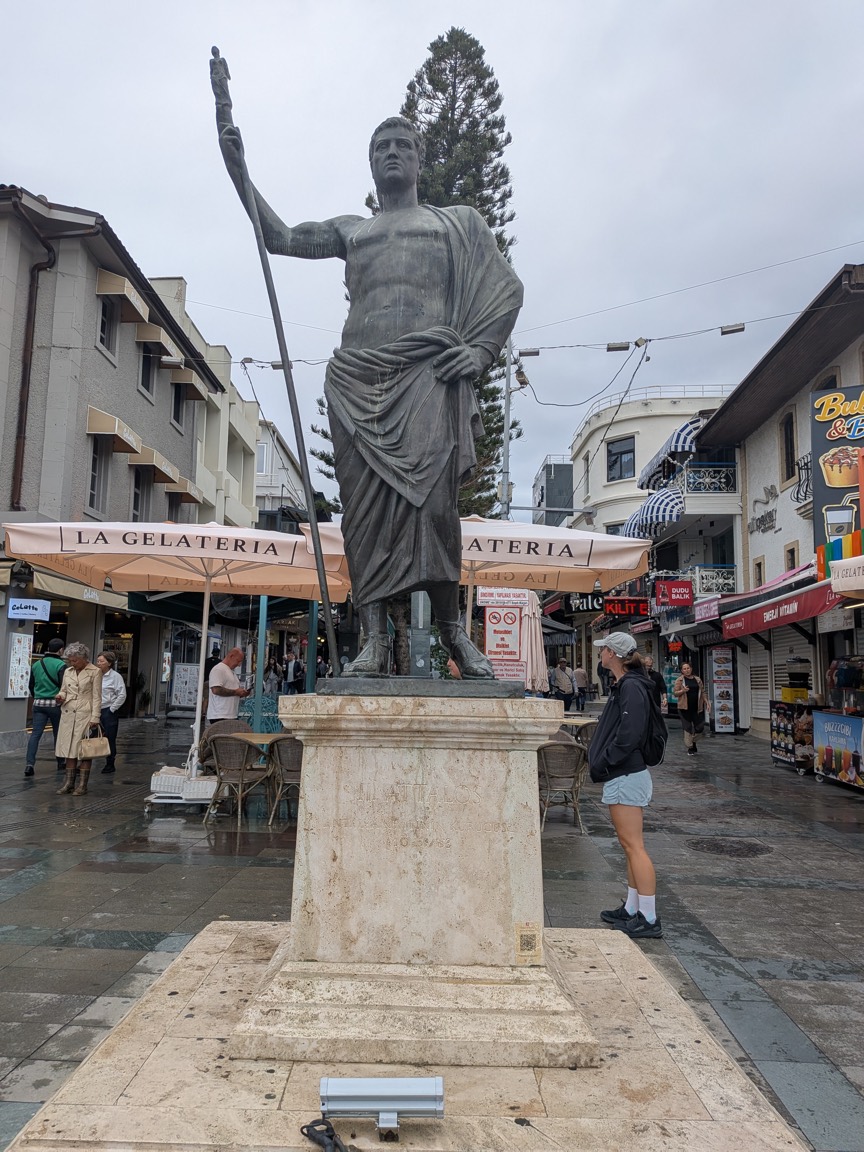
The story told here is that a king once sent his men out with one instruction: stop wherever you find paradise on earth. They kept going until they reached this stretch of the Turkish coast and stopped. The king was Attalos II of Pergamon, who founded the city around 150 BC and gave it his name, Attaleia, which slowly became Antalya. I can't say how much of the paradise story is history, so treat it as a legend. Whether the place lives up to it was the question I set out to answer.
The day did not start well. My flight the night before was badly delayed, and it rained heavily all morning, so it was already half past one before I got going. I had planned to see much more than I did, but as I say in the video, that is travel: without a little uncertainty it would not be half as much fun.
Kaleiçi, the old town
The old town, Kaleiçi, begins at the clock tower, and the name means "inside the fortress". The clock tower is its entrance, so that is where I started. Right beside it stands the Yivli Minare Mosque, built in the 13th century. Its name comes from the minaret, and "yivli" means grooved, which you can see from the fluted shaft. Anyone who has seen the Blue Mosque in Istanbul will recognise the style.
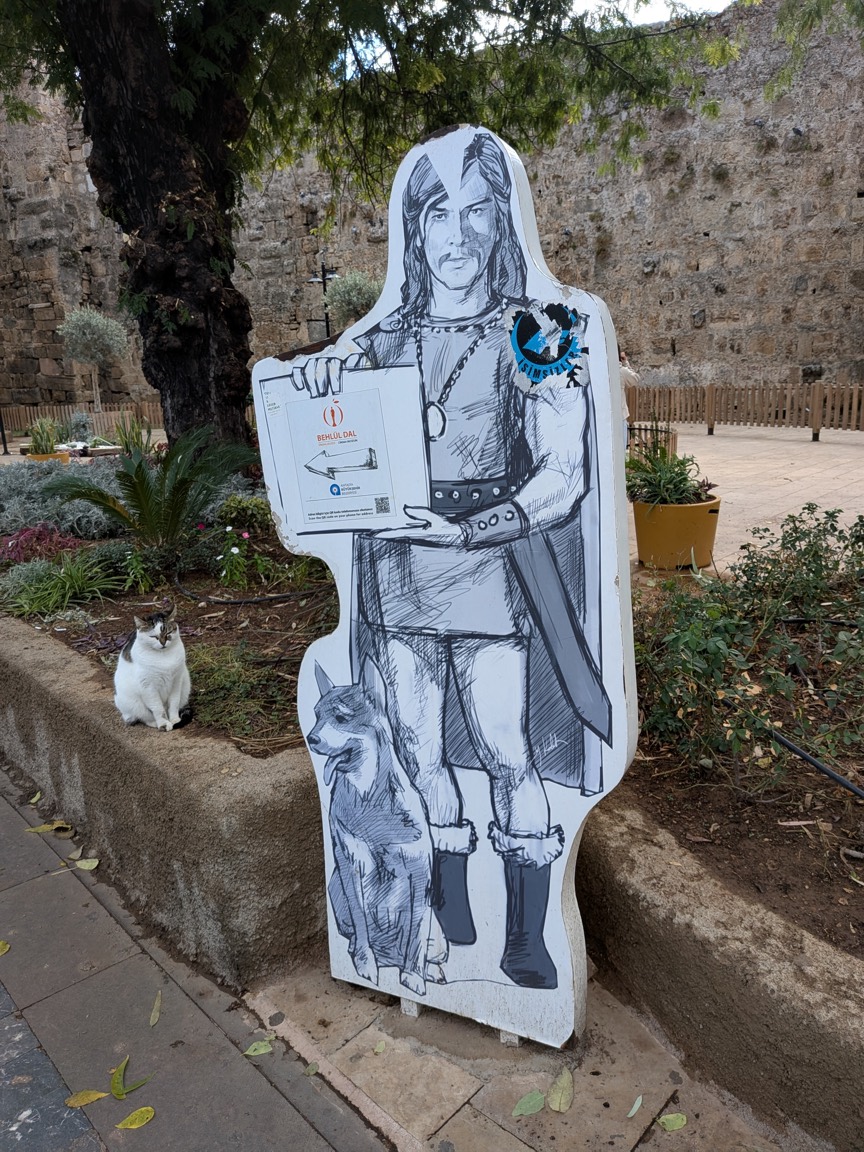
The old streets are full of character: upper-floor balconies that look just like the ones in Istanbul, a large carpet shop, and a bar called Piyo, which in Hindi means "drink". Money-changers are everywhere, and I found cash gets a better rate than a card, and there is room to haggle if you walk inside. Euros, dollars or pounds all work.
A vegan lunch
It was already late lunchtime, and I had barely eaten the night before, so food came first. I like to find vegetarian places with the HappyCow app, which has never let me down in any country so far, and it led me to a vegan restaurant in the old town. I ordered tamarind juice with honey, which I had never seen before and loved, then cashew and ginger with basmati rice, a side of fried okra, and a sesame dip with yoghurt. The rice dish was properly tasty, the okra a little softer than I expected, and the sesame dip was good with it.
It came to 1,460 Turkish lira, roughly ₹2,800 at the time. That is on the expensive side, but vegan places usually are, as I found in Split too, and the upside is knowing nothing in the food is a surprise.
Hadrian's Gate
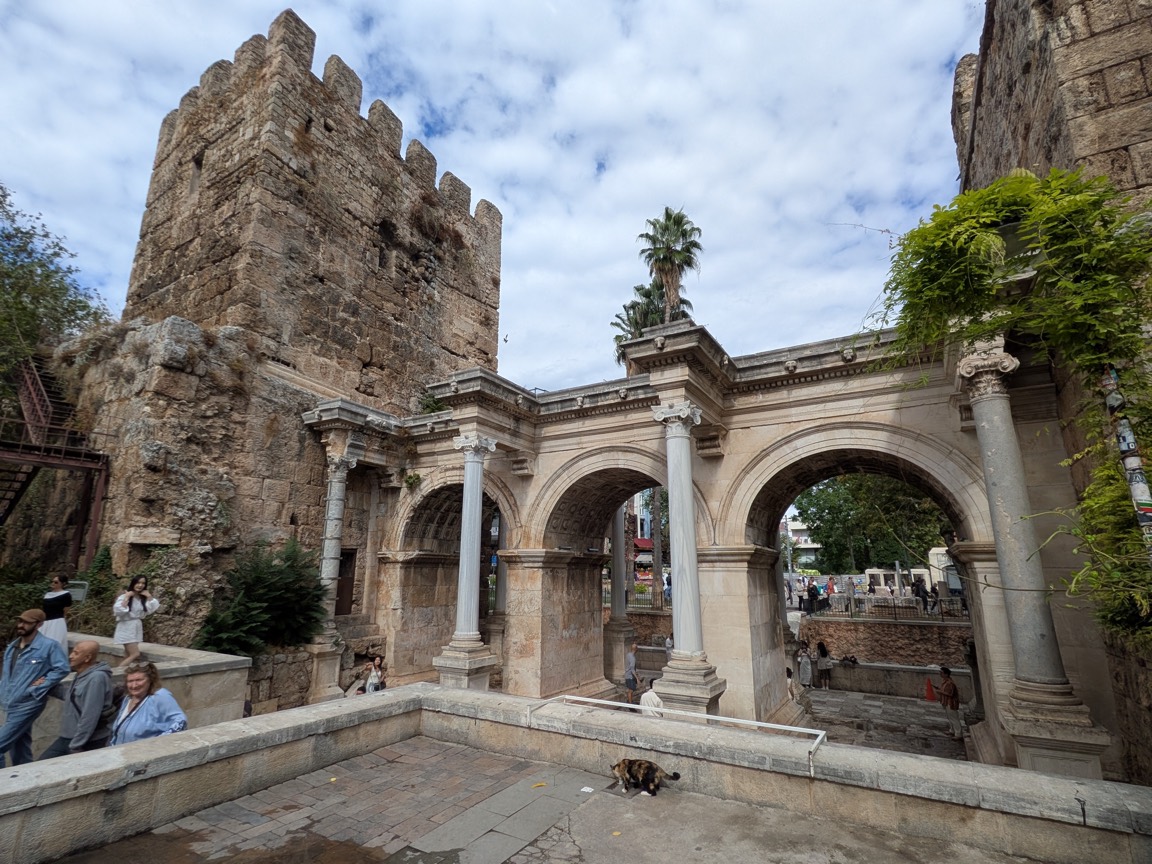
The next stop was Hadrian's Gate, which the Turks call Üçkapılar, meaning "three gates", because it has three arches. It was built in AD 130 to welcome the Roman emperor Hadrian when he visited the city, and it is one of two ancient structures from the old city still standing here. If you enjoyed the Athens post, there is a Hadrian's Gate there too.
On the ground, you can see deep grooves worn into the paving. They are said to be marks left by Roman chariot wheels, and they have been kept as they are. Whatever you make of the story, it is a nice thing to find underfoot. The ceiling of the arches is beautifully carved too, and if you walk in from the old-town side you get the full effect.
Kesik Minare, a building with three lives
Kesik Minare means "cut minaret", because the tower looks as though it was sliced off partway up. It began as a Roman temple, was turned into a Byzantine church, and became a mosque after the Ottomans arrived. A fire in the late 19th century left it in ruins for a long time, and it reopened for prayers in 2021. Three lives in one building, a pattern you find all across this part of the world.
A little further on I passed the Scottish and Irish pubs lined up side by side, each run by someone who has clearly settled here.
Hıdırlık Tower and the cliff edge
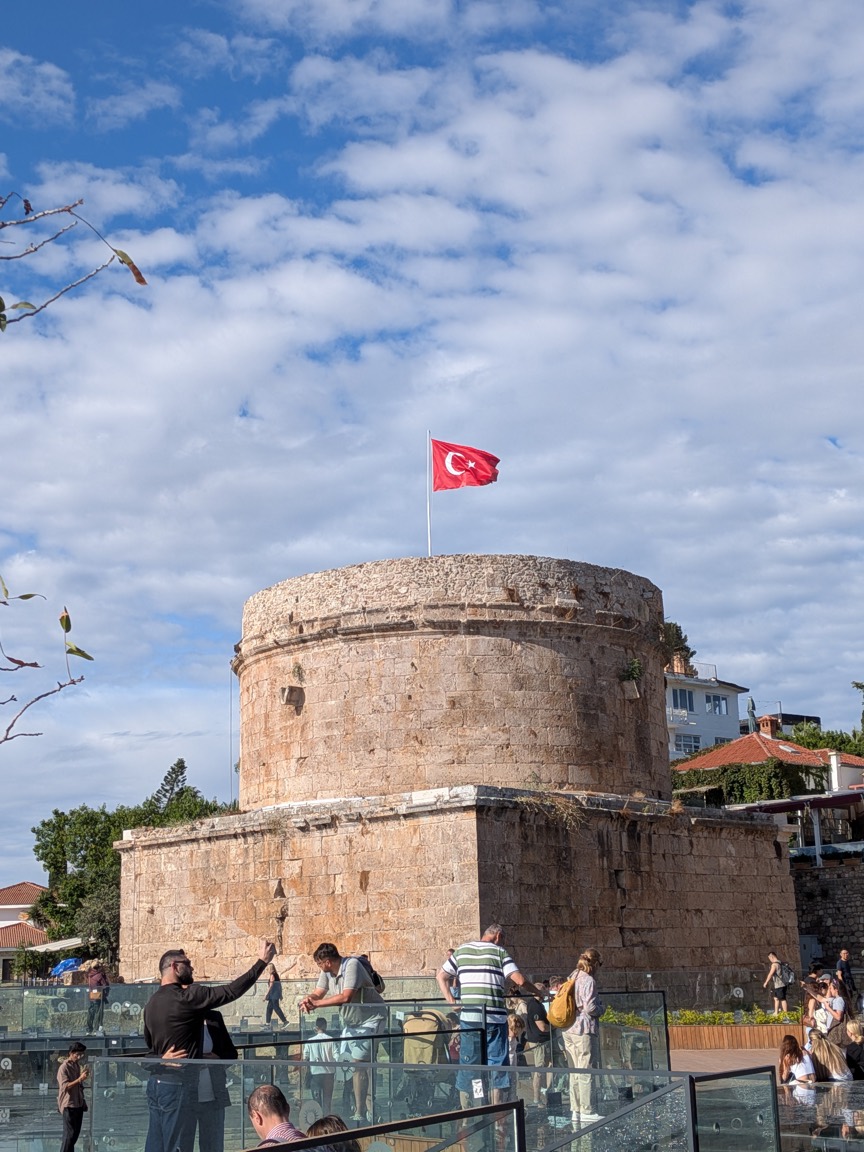
By the sea, a tall round tower stands at the cliff edge, with beaches stretching away behind it. It looks like a watchtower, but it is an ancient tomb. Tombs are common in this region, and this is the best preserved of the old structures here. Next to it are rooftop restaurants, where you pay a premium to sit, but a Turkish tea with that view is hard to beat. There is also a glass floor over the ground that shows what lies below.
The waterfall that falls into the sea
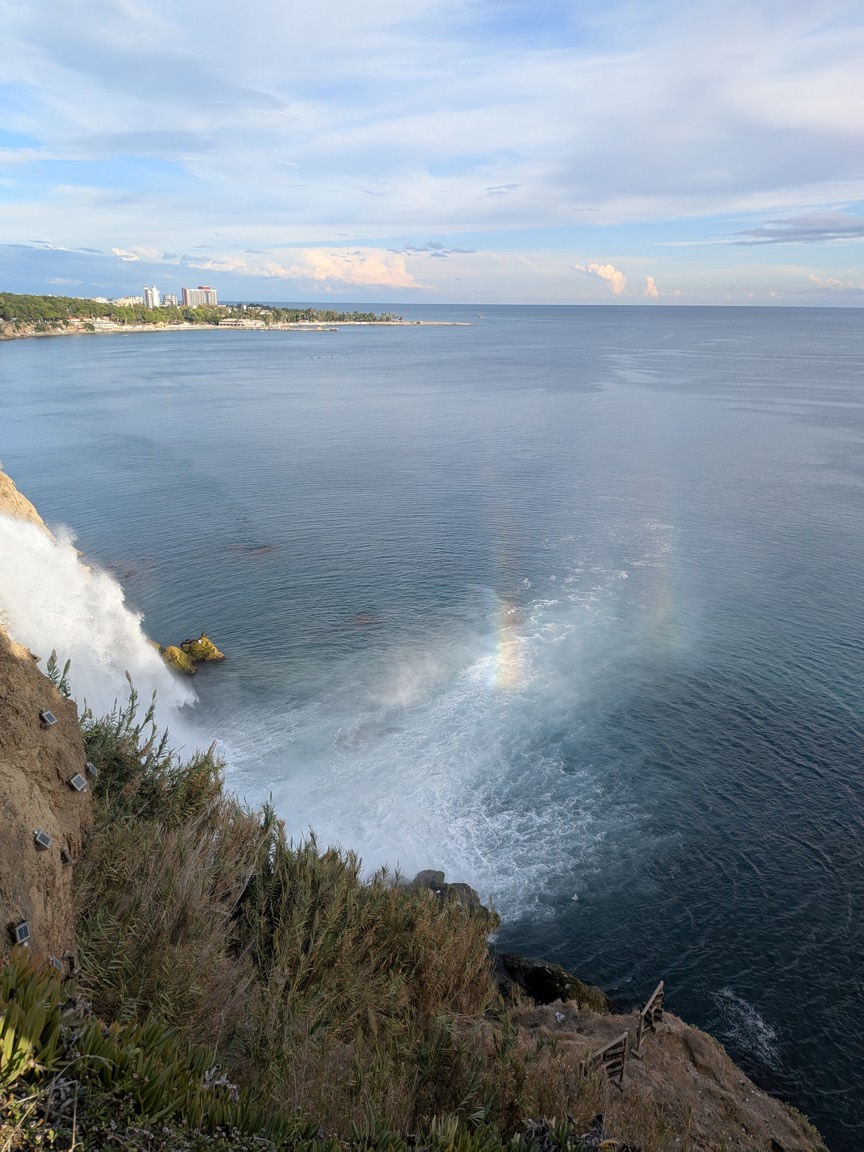
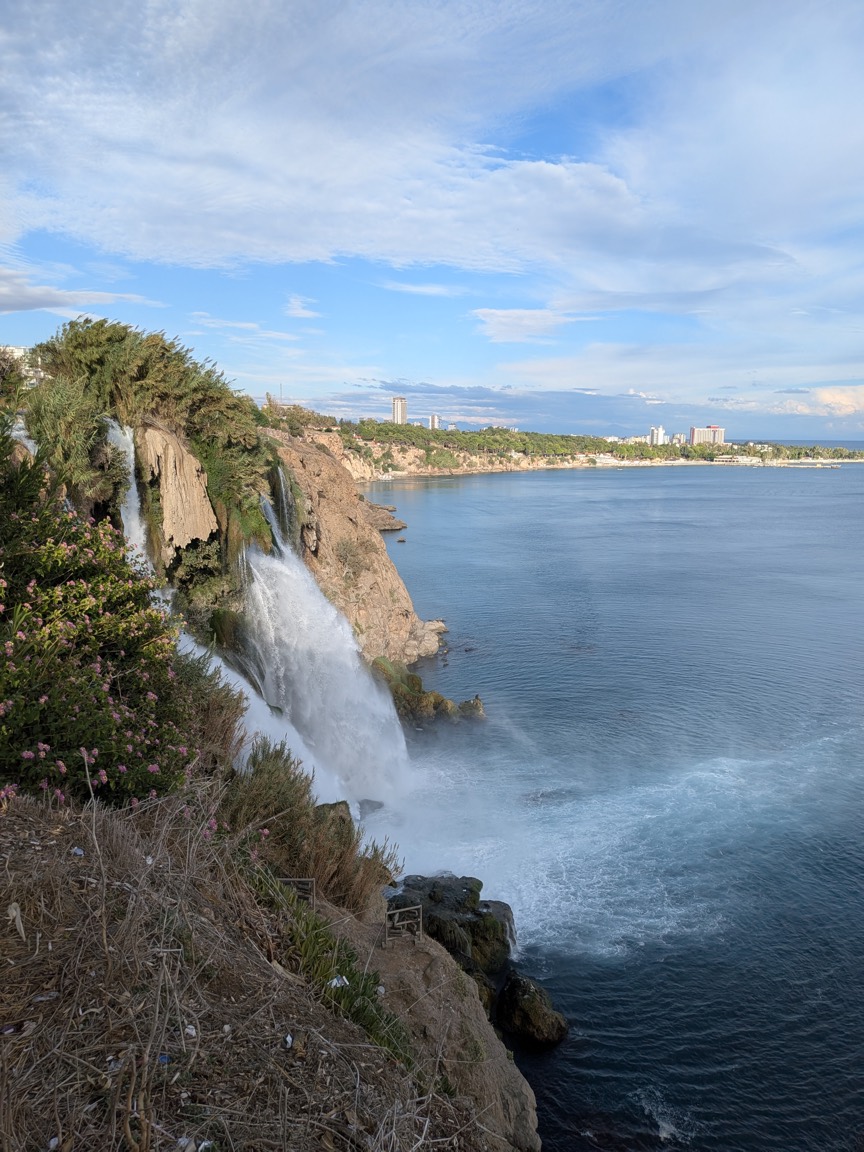
Many of us have seen waterfalls, but one that drops directly into the sea is rare. This is the Lower Düden Waterfall, in the Lara area, and the river drops straight off the cliff into the Mediterranean. A large plane crossed the sky just as I was filming, because the airport is close, so if you bring a drone, check the rules first. I did not know about the airport when I packed mine.
A man was fishing right under the falls, which looked thrilling and probably dangerous, with a rainbow in the spray and the water pouring from behind. There is a large park around the falls with a wide cycle path, though mostly people walk it. Children have a play area, with planes passing overhead. Public places here often have free Wi-Fi, which was a nice surprise.
Lara is known for its beaches, but nearly all of them belong to hotels. To use one, you either need to stay at the hotel or pay the hotel for access.
The old harbour and a free lift
By the time I reached the old harbour it was already evening, and I had missed the day's boat trips. A small theatre in Roman style overlooks it, though it is not actually Roman. A night boat trip was on offer for two hours later, but it was expensive and I skipped it, since a boat tour would come in the next video. The harbour is lined with seafood restaurants that fill up as evening comes, as you would expect in a seaside town.
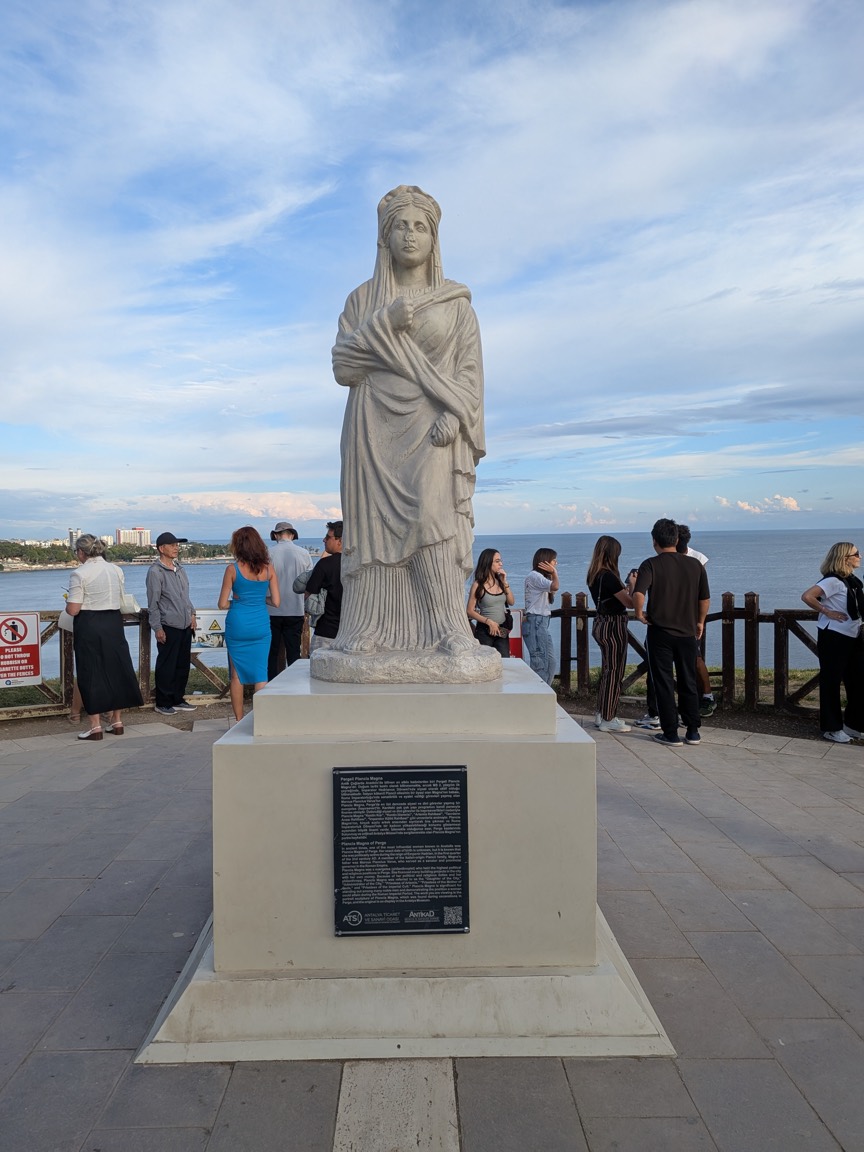
The road runs along the top of the cliff while the marina sits below, and a panoramic lift connects the two. It is free. From the top there is a lovely view of the harbour and the hills beyond, with soft evening light, and an open area with sculptures and the Turkish flag. It felt a lot like the beach road back home in Visakhapatnam.
The room, and what it all cost
I stayed in a hotel, and it came as a good deal: £29 a night with breakfast included, against £24 for a hostel bed. For £5 more I got my own bed, a private bathroom and nobody disturbing me, which is what I care about most. The room was basic but had everything: a comfortable bed, storage, a small TV, a dressing table, air conditioning and a clean, decent-sized bathroom. The buffet breakfast had lots of fruit, olives, bread and plenty of vegetarian options.
A lira, written TRY, was worth roughly ₹1.9 when I travelled, so 100 lira was a little under ₹200. Here is how the costs worked out:
- Vegan lunch: 1,460 lira, about ₹2,800.
- Street pizza: about 350 to 360 lira from a small place, so a full vegetarian meal can come in at around 750 to 800 lira.
- Public transport: 50 lira a ride, which is just under ₹100.
- Hotel: £29 a night with breakfast, against £24 in a hostel.
Getting in from the airport, I took the tram. The catch is that the tram runs from International Terminal 1, so if you land at Terminal 2, take the free shuttle to Terminal 1 first. Eating cheaply here is easy, with vegetarian options everywhere.
That was Antalya, a day shortened by rain. I only travel at weekends, so one rainy day costs a lot. The next video leaves the city for the Turkish Riviera, the coast south of Antalya, and the places I was really looking forward to.
Practical tips for Antalya
- Weather: it rained all morning, so keep a flexible plan and an umbrella.
- Money: bring cash in euros, dollars or pounds, change it at an exchange office, and compare rates.
- Airport: the tram runs from International Terminal 1, with a free shuttle from Terminal 2.
- Free lift: the panoramic lift between the clifftop and the harbour costs nothing.
- Vegetarian food: the HappyCow app finds vegetarian and vegan places quickly, though vegan restaurants can cost more.
- Drones: the airport is close to the falls, so check the rules before flying.