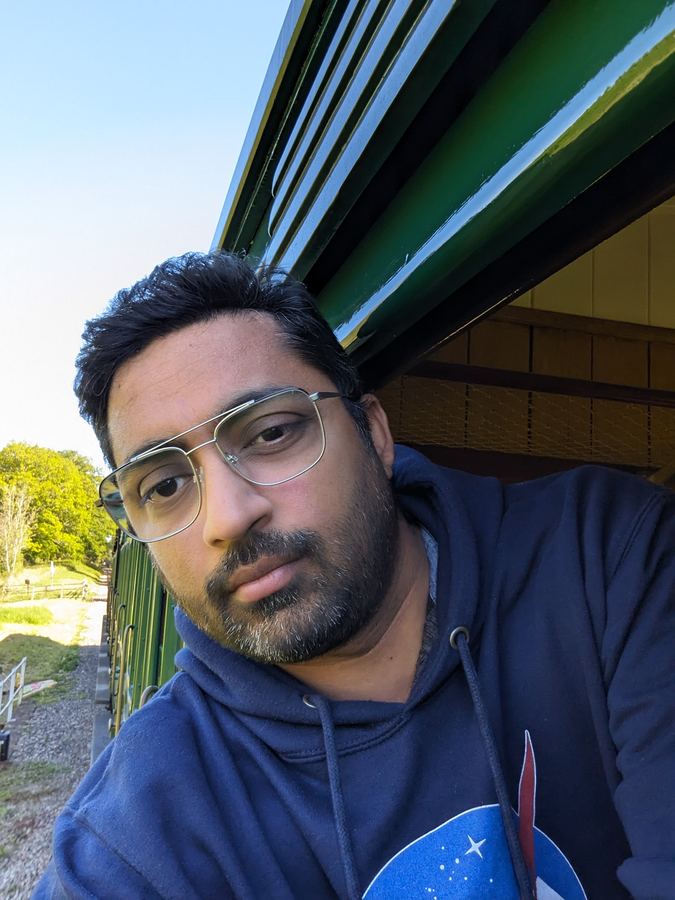
Two completely different sides of Belgium in a single day: Antwerp, a rich trading city of cathedral towers, guild houses and diamond shops, and Doel, a village just across the harbour that was nearly erased for the port and still hasn't recovered.
Antwerp Cathedral, Grote Markt, the Scheldt, the diamond district, and the almost empty village of Doel.
Two sides of Belgium
The last few videos were all about wars: the First World War, the Second, and the Cold War. This one was supposed to be a rest, a relaxed and refreshing stop in a proper city. Antwerp fits that description, and it comes with a story about how it got its name, which comes later. A short drive away, though, is somewhere that feels like a different world entirely.
Antwerp Cathedral and the old centre
Every European city seems to have a main cathedral, and Antwerp's is hard to miss. Its tower is about 123 metres tall, and you can spot the spire and the clock from almost anywhere in the city. The square around it is beautiful, especially in the evening, when there are people, music and a proper buzz. Inside the cathedral hang paintings by Peter Paul Rubens, whose statue stands in the old centre, a reminder of how seriously Belgian cities take their painters.
Not every big old building is what it looks like. One huge, ancient-looking structure beside the cathedral turned out to be a Hilton hotel rather than a church. The weather was just as quick to change its mind: a blue sky one minute, a heavy shower the next, so a coat was a good idea.
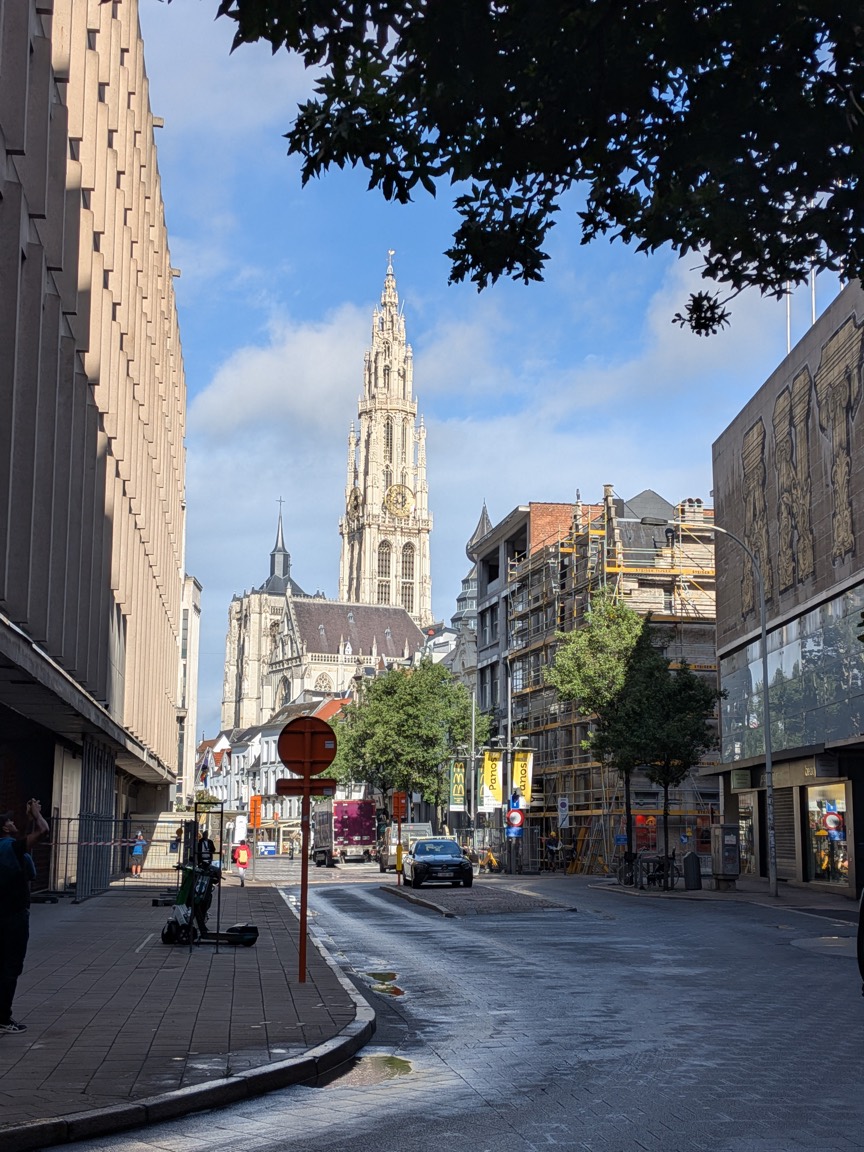
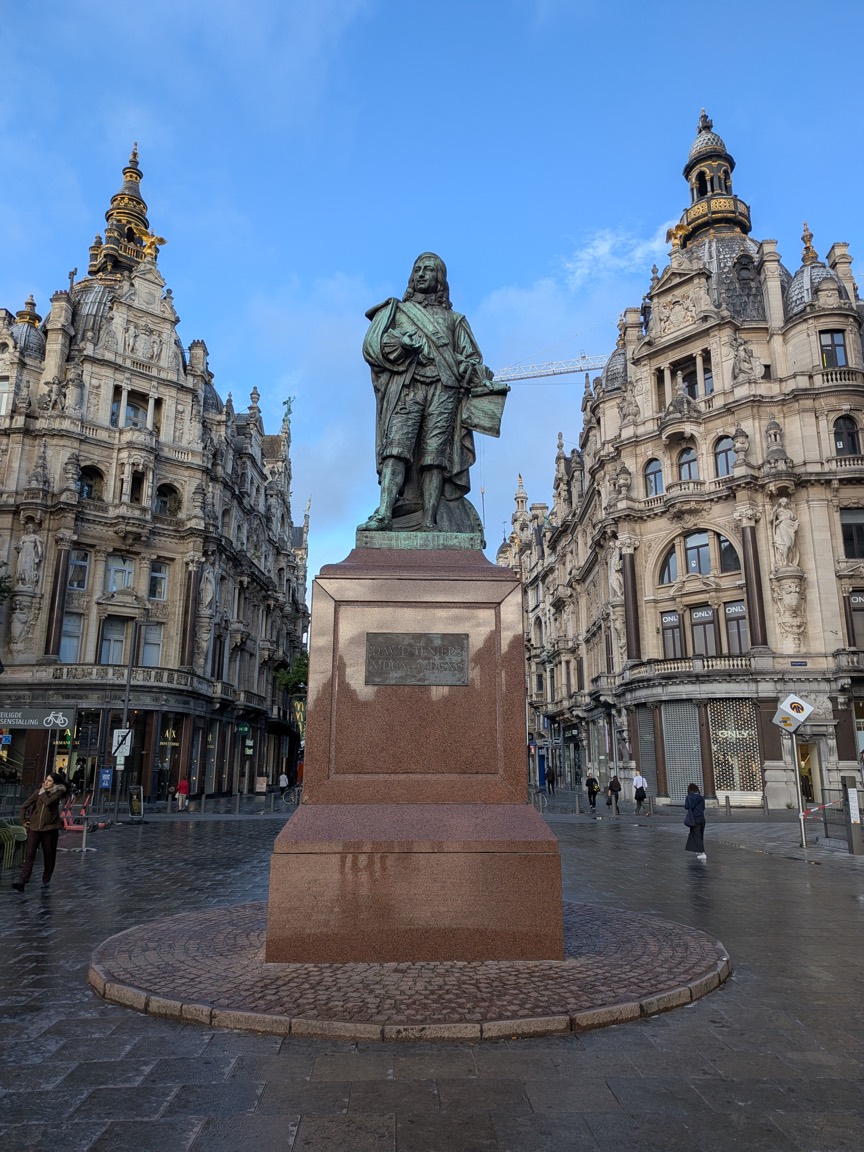
The streets around the cathedral are lined with restaurants and hotels in lovely old buildings. Belgium's two most famous exports, beer and chocolate, sit in shops side by side. The Grote Markt, the main square, has a beautiful fountain and a City Hall, the seat of the city's local government, where the flags of many countries fly. India's flag hangs right next to Israel's, which was a pleasant sight. Nearby stand the guild houses, where the city's traders once met to do business, since Antwerp grew rich on its port and the trade that came through it.
Breakfast at Saravanaa Bhavan
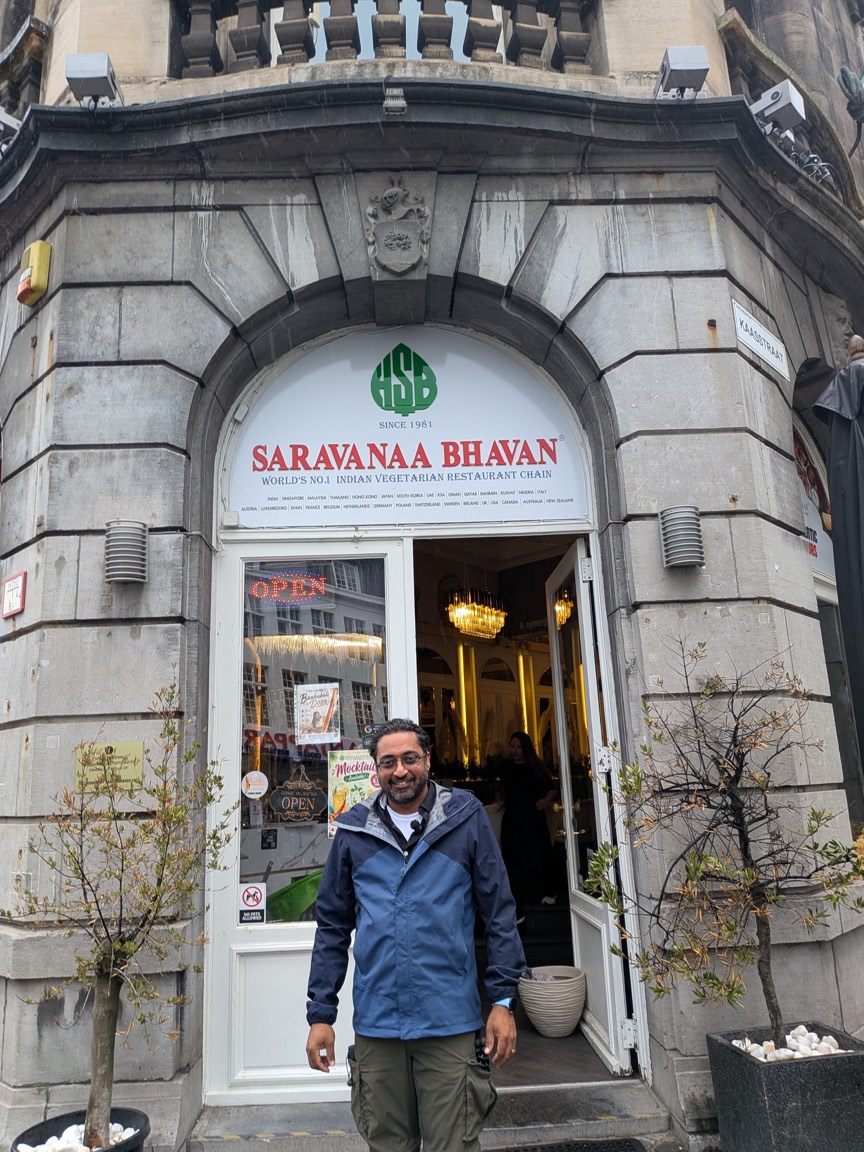
While the rain came down, a South Indian breakfast seemed like the right answer. It was the first Saravanaa Bhavan I had eaten at in Belgium, found by chance when I went looking for a coffee: mini ghee idli with sambar, and proper South Indian filter coffee, which is a very good reason to dodge the weather. The manager turned out to be Telugu and called from leave to ask whether the food was good. Saravanaa Bhavan branches have not always been great lately, but this one was.
The View, the Scheldt, and how Antwerp got its name
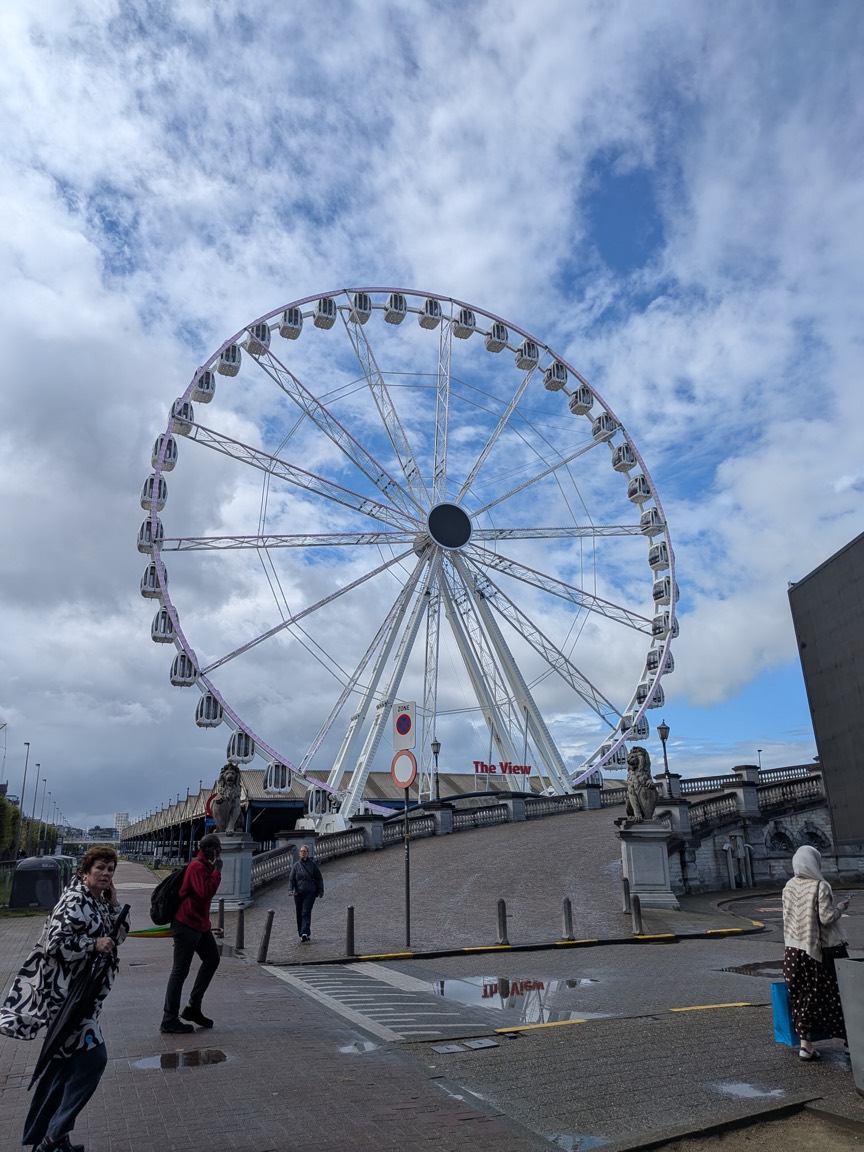
Antwerp has a giant Ferris wheel called The View, and the riverside around it gives wide views over the city and the water. The river is the Scheldt, and with the clouds and the water it reminded me of the Krishna and the Godavari back home, calm and very pleasant. On the far side sits the harbour, with windmills beyond it, and the harbour comes back into the story later.
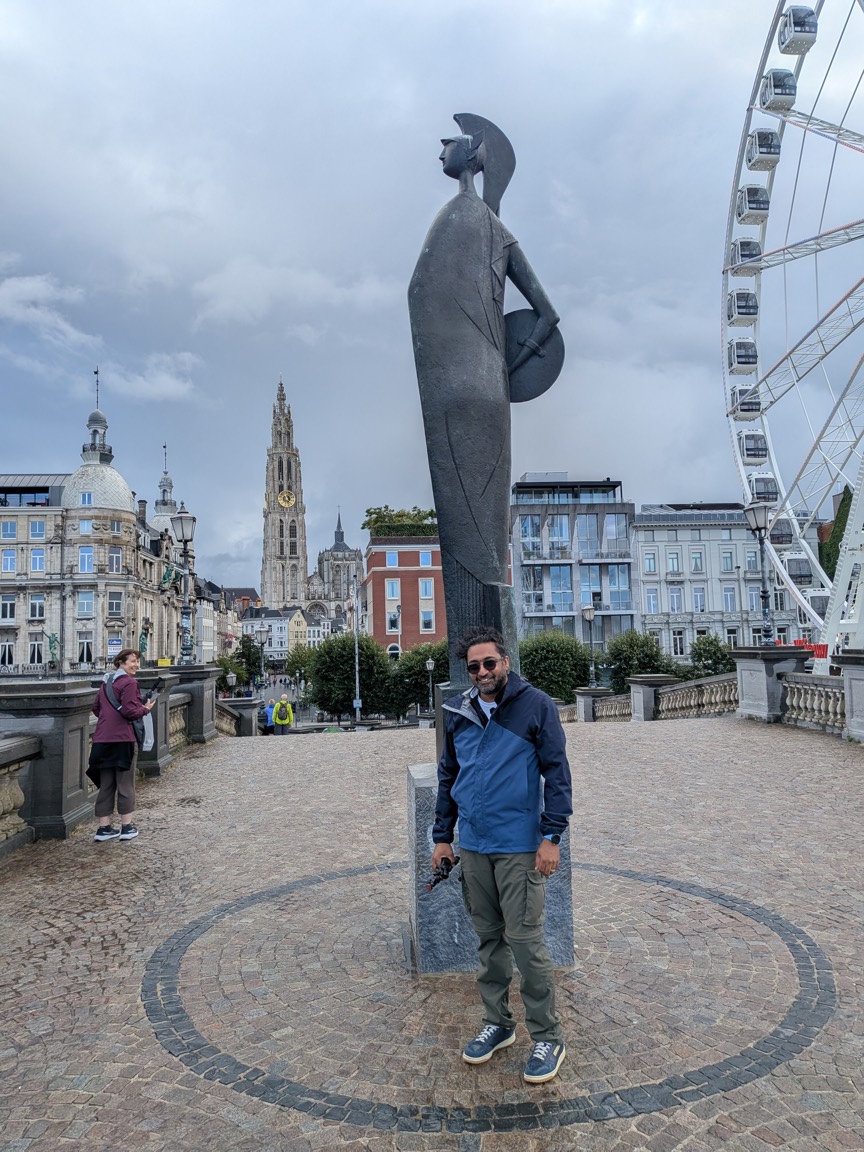
The name has a legend behind it. A giant once lived by the river and demanded money from anyone who wanted to cross. Those who paid passed. Those who refused had a hand cut off and thrown into the water, which made the giant a local terror. Then a Roman soldier, Brabo in the story, came along, refused to pay, and cut off the giant's hand and threw it into the river instead. In Dutch, hand is "hand" and to throw is "werpen", so the town became Antwerpen. It is a legend rather than history, but it is a very good one.
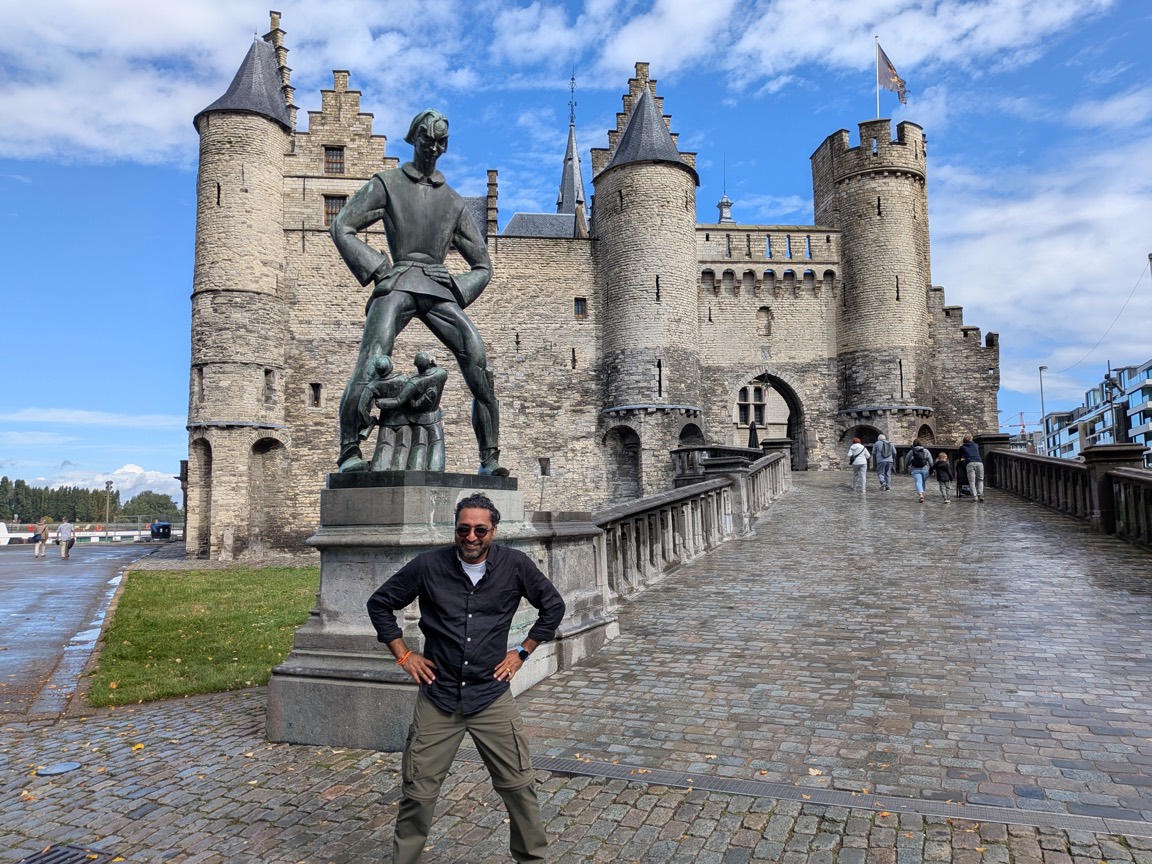
The river is also where Het Steen stands, the old castle on the waterfront. Its first form dates to the 11th century, it was rebuilt in the 13th century, and again in the 19th, so what you see today is a couple of hundred years old on top of something much older. A giant statue stands in front of it, with two children at its feet, and there are plenty of giants in Belgium's stories. Nearby, the KBC building will make any Indian visitor think of Kaun Banega Crorepati, but here it is simply a Belgian bank's headquarters.
A city walk, and a diamond question
One long pedestrian and cycling street cuts through the centre, lined with designer stores. The mix of grand European buildings gave it a Prague-and-Budapest feel, and on one building the city's name is spelled out in Dutch, Antwerpen.
Antwerp is also famous for diamonds. Roughly 80% of the world's rough diamond trade is said to pass through the city, and for many years it was the centre for polishing them. Everyone who heard I was going to Antwerp asked whether I was buying diamonds. I wasn't, but I did go and look in a shop window.
The drive to the harbour
From the city, the road leads towards the harbour, the main one for Belgium, where cargo ships come in from the sea up the same river. Much of the land here is low, and dykes hold the water back, a thing the Netherlands is famous for, and without them the country would have disappeared long ago. Windmills dot the horizon and the Dutch border is close, so there is a Dutch feel in the air too.
A nuclear power station stands beside the harbour. One of its reactors was closed after repeated problems. It has nothing to do with what happened to the village next to it, the next stop.
Doel, the village that wasn't demolished
Doel was once a lively village, and its history is a story of planning, protest and neglect. In the 1970s, plans were drawn up to redevelop the harbour, and they involved clearing the village entirely. Those plans were put on hold, then returned in 1998 in a new form that again meant removing the town. Many residents decided there was no future here and left, and others sold their homes to the developers. Where there were once many families, only about nine or ten still live in Doel.
Then the government changed course. Around 2018 the plan was revised and the village was confirmed to stay, helped by the families who had organised, protested and lobbied for it. Whether people return remains to be seen. For now, the empty houses are covered in graffiti and left to the weather.
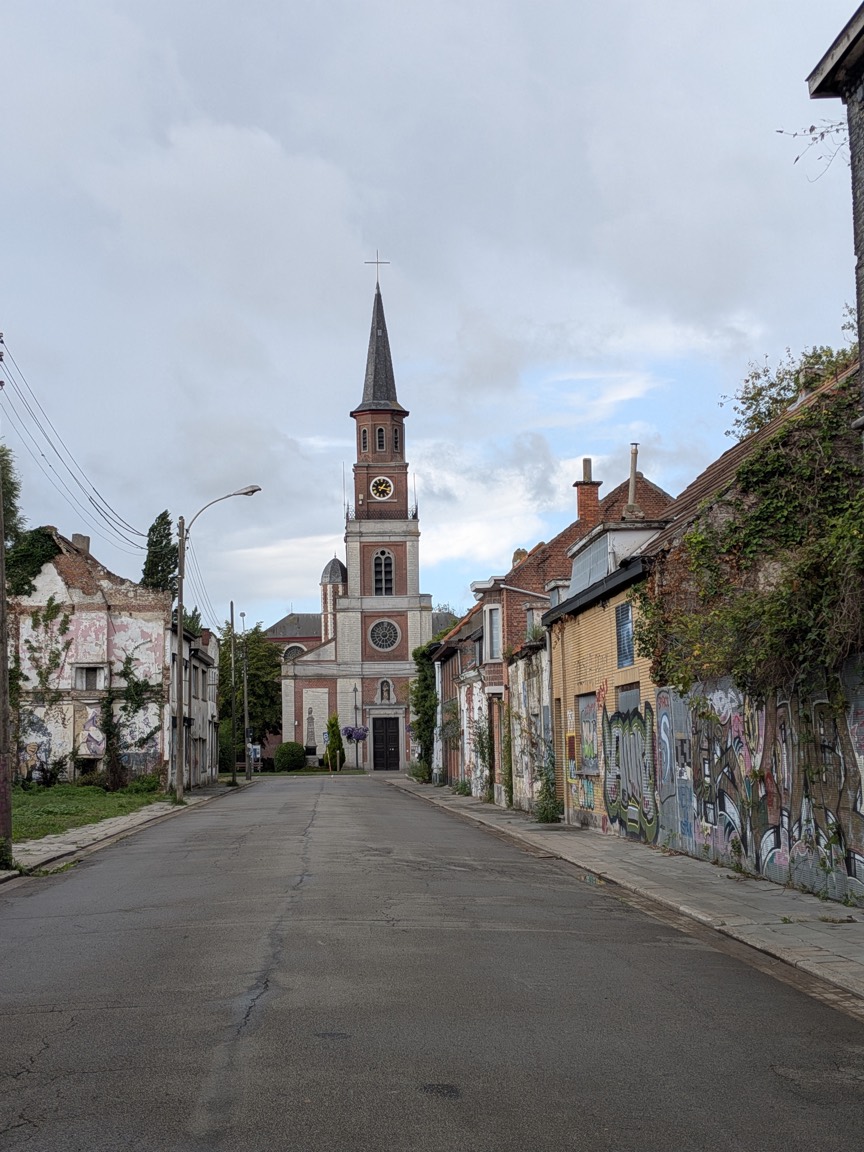
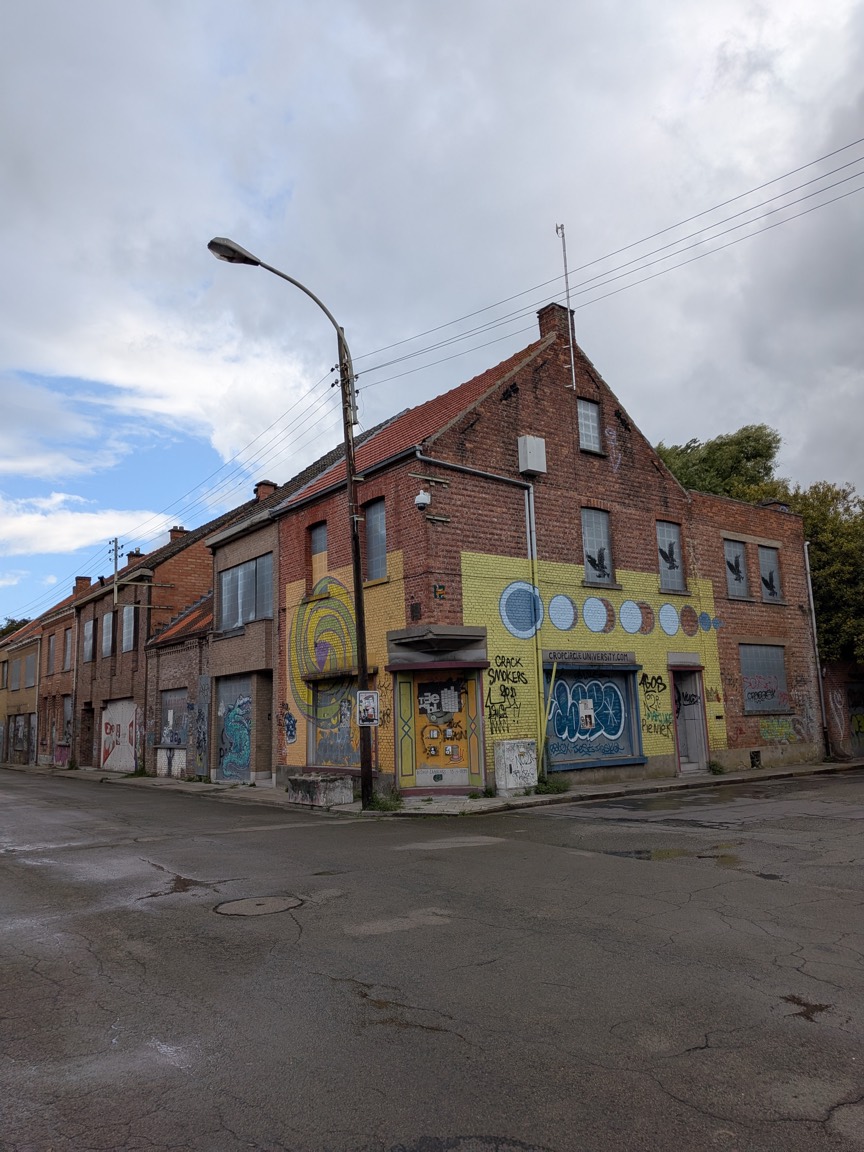
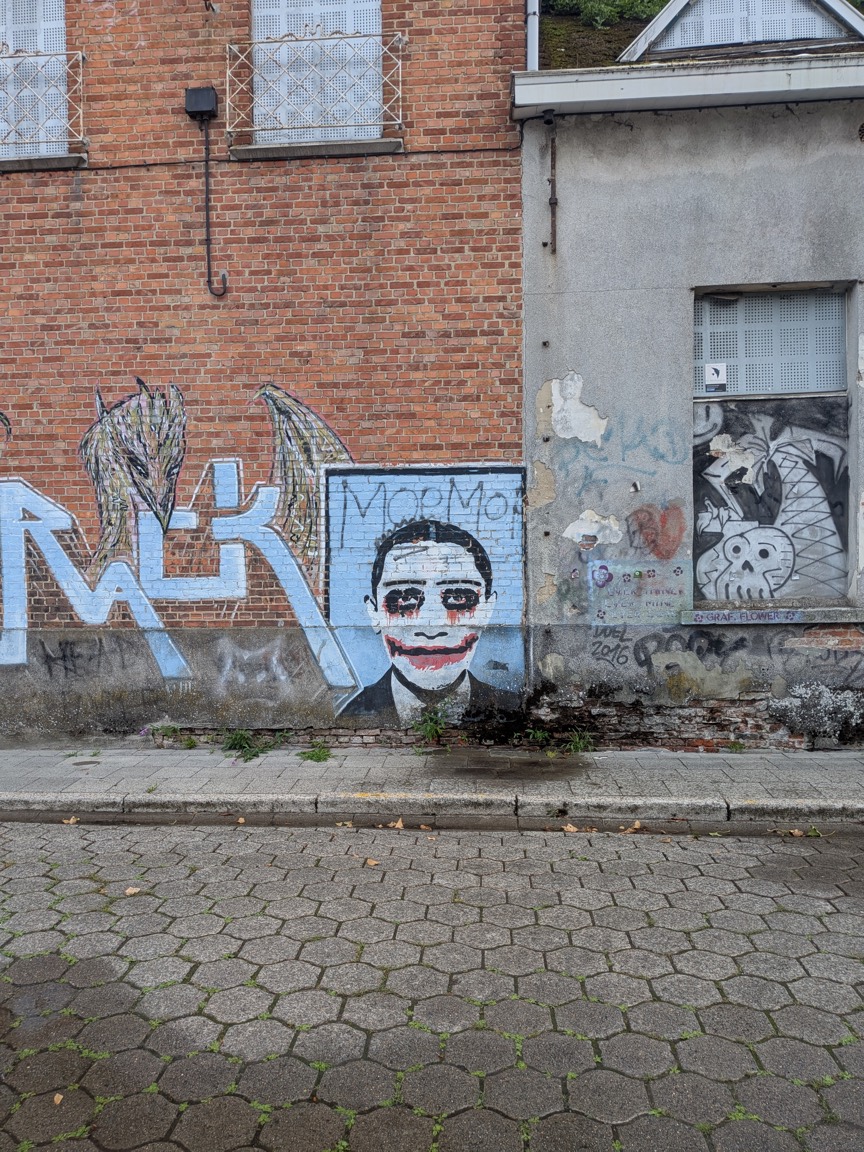
The school stayed open until around 2009 or 2010, though I'm not sure of the exact date, and the church is still in use. A sign at the entrance explains the rules: this is an inhabited village, so respect the residents, do not enter damaged houses, and vandalism is prosecuted. Real people live here, in a few of the houses, so keep your voice down. Entry has been closed at weekends, because the empty village used to attract rowdy parties, so visitors come on weekdays or park outside and walk in, and the barrier opens for residents with an ID. There is even a bus stop, with a single bus a day, number 31, at 6:50 in the morning.
The village reminded me of Varosha in Famagusta, North Cyprus, which also stood empty for years, though for entirely different reasons: that one was a result of war, while Doel emptied because of a development plan.
Back to the ferry
After Doel it was back to Calais and a ferry home. It was a varied day for a single country, and a good example of how much Belgium packs in: a rich old trading city and a nearly silent village, only a short drive apart.
Practical tips for Antwerp and Doel
- Weather: bring a coat, Antwerp's weather swung from clear to a downpour in minutes.
- Doel: visit on a weekday, or park outside the village and walk in, since entry has been closed at weekends.
- Respect the residents: a few people live there, so speak quietly, stay out of damaged buildings, and do not add to the graffiti.
- Antwerp Cathedral: the tower is visible from across the city, so use it to find your way around.
- South Indian food: Saravanaa Bhavan does a good breakfast of idli and filter coffee near the centre.