
This was my last day in Moldova, and I wanted it to cover as much ground as one day reasonably could, from Chisinau out to two monasteries, an ancient cave village, and finally straight down into the earth. Moldova's history, spirituality and wine trade all showed up in the same 24 hours, which felt like a fitting way to close out the country.
The full day: Curchi Monastery, the cave monastery at Orheiul Vechi, a village lunch, and the underground wine city of Cricova.
Curchi Monastery: a hospital, an asylum, and now a monastery again
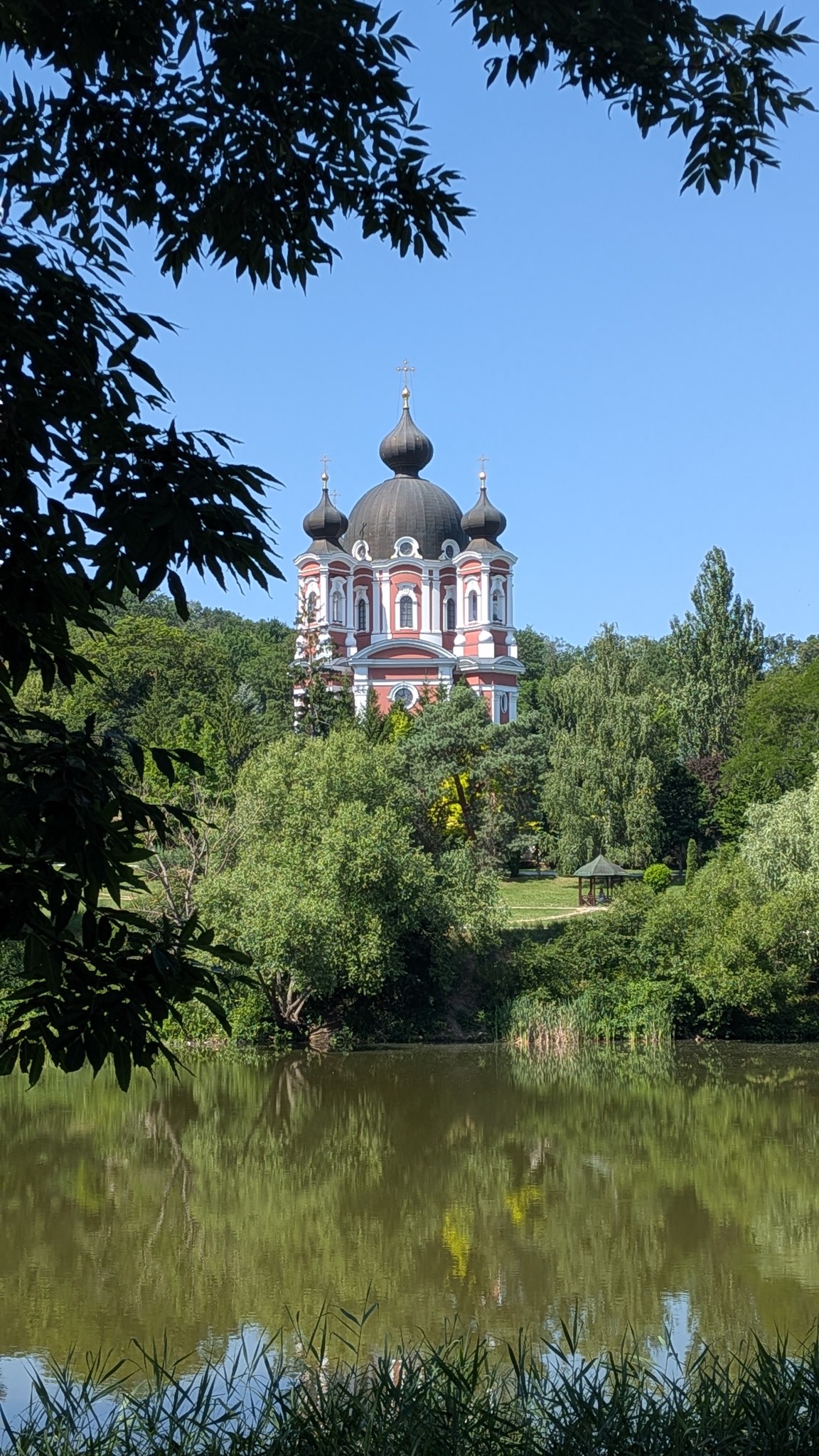
The day started at Curchi Monastery, founded in 1774 and set beside a small lake with a park circling it, the kind of spot worth just sitting by for a while before going anywhere near the church itself. Its history is heavier than the peaceful setting suggests. The monastery served as a hospital during the World Wars, and under Soviet rule it was converted into a psychiatric facility from roughly 1960 until 1999, since religion had no place in Communist-era institutions. Only around 2000 was it restored and reconsecrated as an active monastery again. What stands today, despite the 18th-century founding date, is almost entirely recent restoration work: vivid biblical frescoes covering the interior walls and ceiling, and three separate churches on the grounds, one for winter, one for spring, one for summer, housing a community of around 70 monks.
One thing I'd genuinely never seen before, at any monastery anywhere: a car blessing ritual taking place right there on the grounds, bread placed on the vehicle while prayers were read over it, essentially a vehicle baptism. Fresh natural spring water also runs down from the surrounding hills straight past the monastery, cold and clean enough that visitors just cup their hands and drink.
Orheiul Vechi: a horse-drawn buggy into an ancient canyon
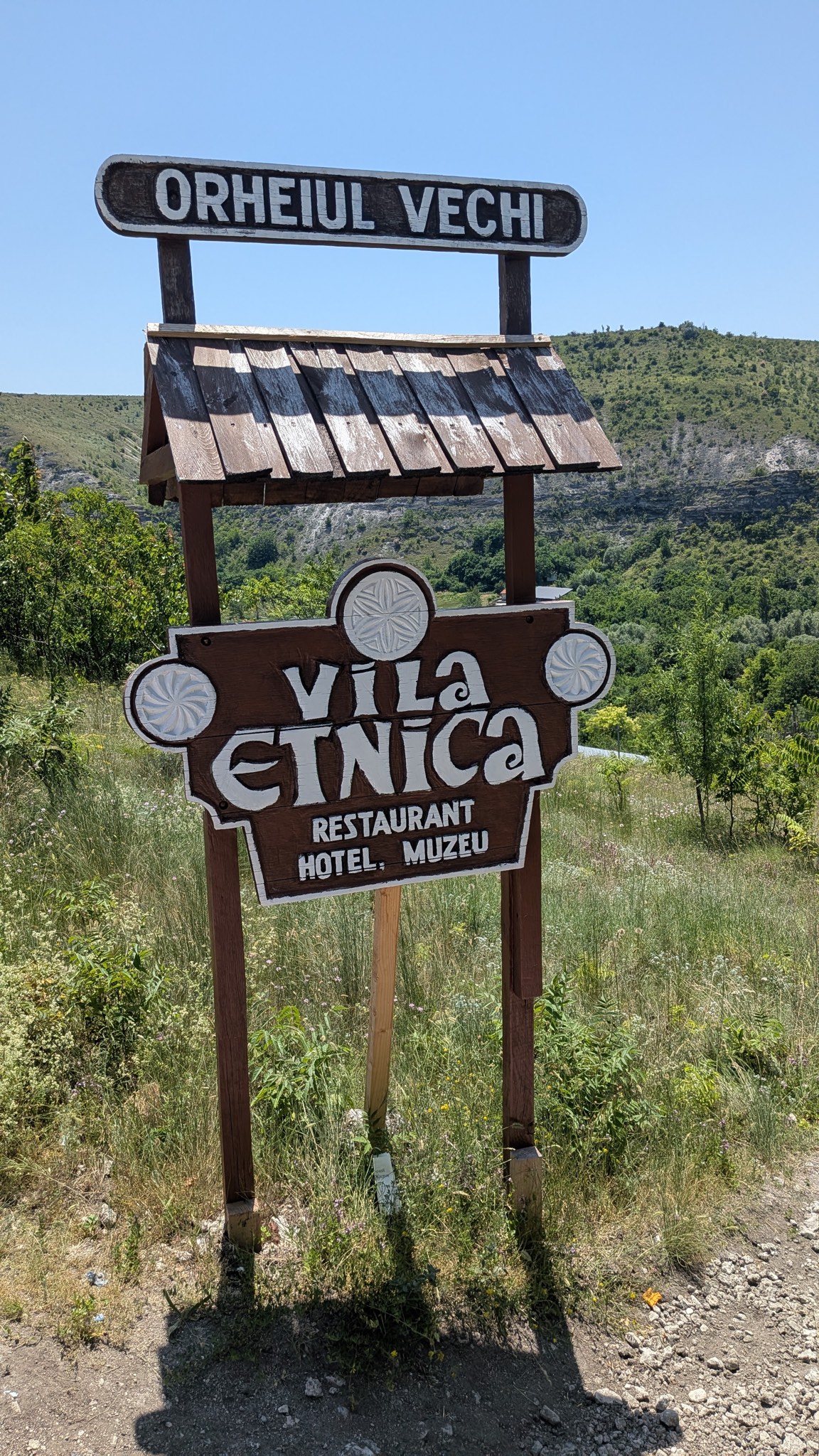
Next was Orheiul Vechi, Old Orhei, a limestone canyon carved by the Raut river over thousands of years, once actually seabed before geology turned it into the valley it is today. Cars aren't allowed into the pedestrian village zone at the bottom, so the way in is a traditional horse-drawn buggy, the local equivalent of a taxi rank, lined up in genuinely large numbers for visitors who'd rather not walk the whole descent.
The Cave Monastery and its resident monk
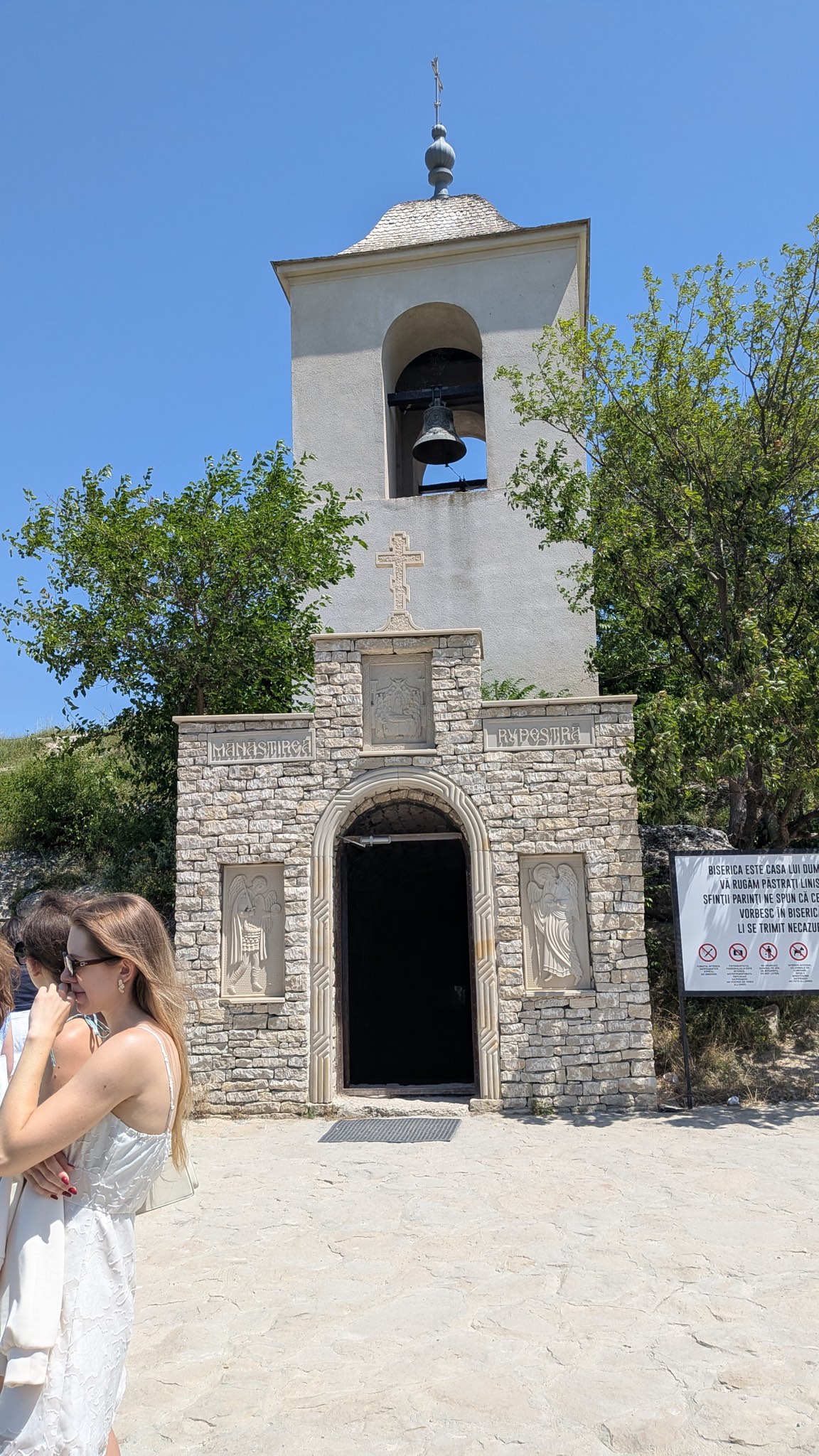
Carved directly into the cliff face is the Cave Monastery (Manastirea Rupestra), reachable by a stone stairway and entrance built into the rock itself. A monk in his 90s has lived inside this cave for around 80 years, following his own rules for visitors, quiet voices, modest dress, and no photography, though he made an exception once he found out I was there making a YouTube video. Inside, the cave is lit almost entirely by candlelight, and visitors can buy and light their own candles as part of a visit.
Walking the cross, and a wall of written wishes
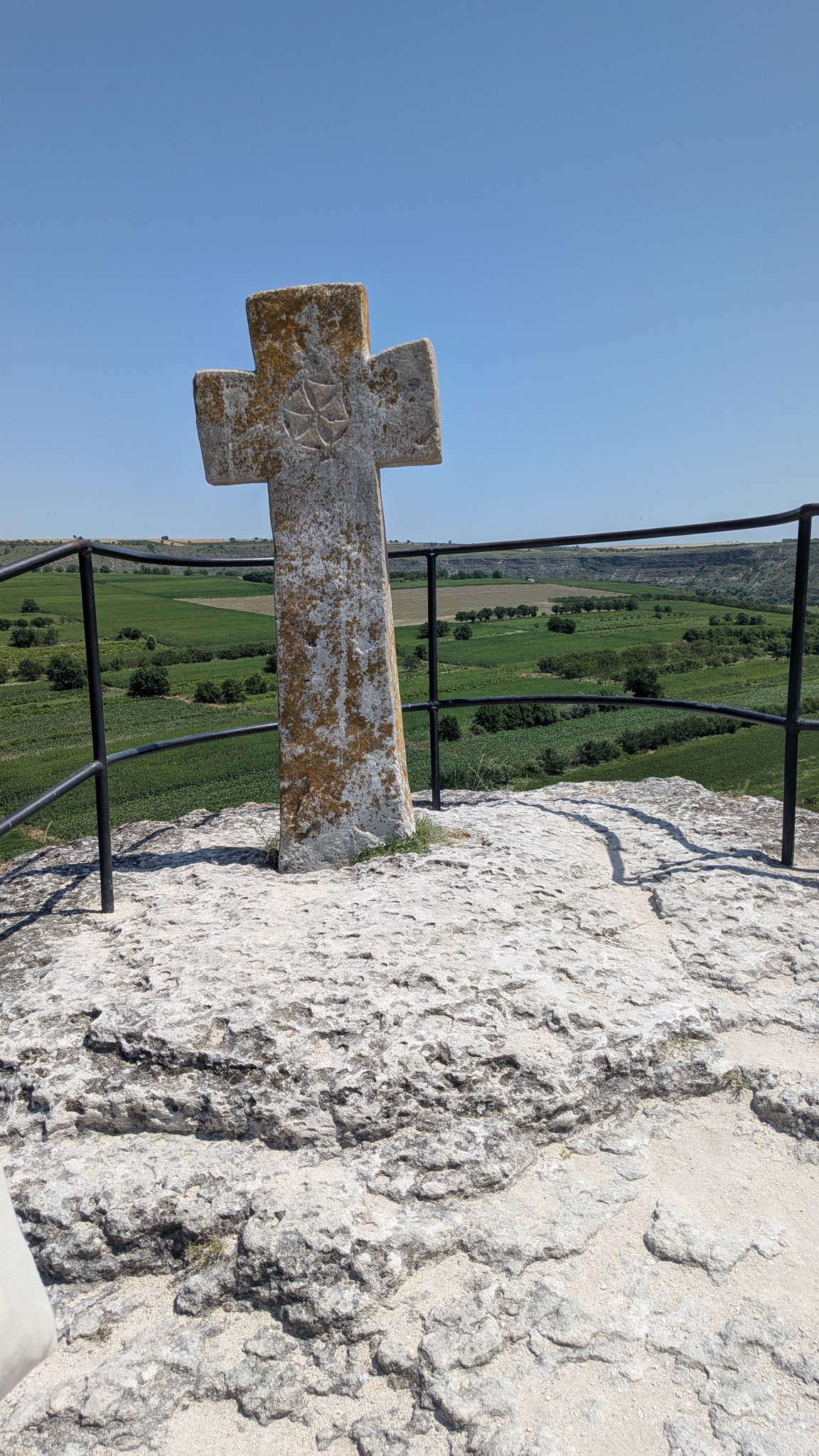
Stepping back outside the cave onto the cliff-edge viewpoint, the view opens up completely: a winding river far below, canyon walls on both sides, and two small villages visible in the valley floor. A stone cross stands at the edge of this lookout, and the local tradition is to walk a full circle around it, reportedly three times, and make a wish as you go. Nearby, in the natural pockets and crevices of the cave walls, visitors tuck coins and slips of paper with wishes written on them, the same instinct I'd seen at the Western Wall in Jerusalem, just carried out on Moldovan limestone instead of Old City stone.
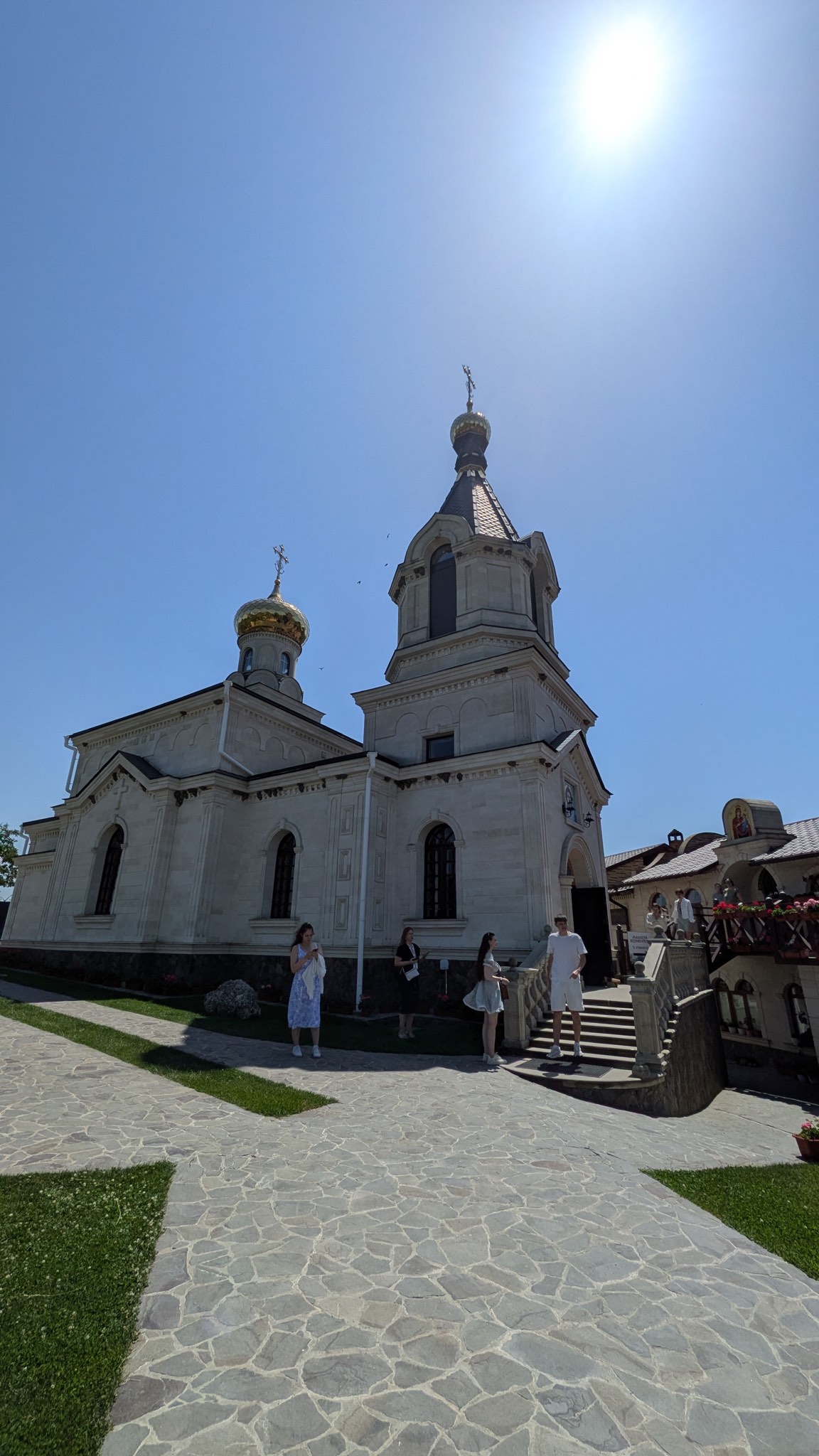
A short walk from the cave sits a second, much larger church, built roughly a century ago on the site of an older one that was destroyed. It follows the same Orthodox style as everything else on this trip, painted ceilings, gold-topped domes, and a steady stream of locals still coming to pray inside it.
A village frozen in time, and lunch with a Borș, Sarmale and Plăcintă
Stone steps lead down from the church area into the village itself, past traditional clay-and-straw homes with thatched roofs, open-fire cooking areas, and old wooden furniture still in use. The most distinctive detail is the colour, a specific shade of blue that's applied almost everywhere on these homes, paired with ornately carved wooden support pillars that UNESCO has specifically recognised for their craftsmanship.
Lunch was quick and simple at a village restaurant, since time was tight: fresh bread with cream and chillies to start, followed by a bowl of vegetarian Borș (beetroot soup), Sarmale (stuffed cabbage rolls), and Plăcintă, a traditional Moldovan pastry that must, by definition, include cheese and egg to earn the name. A couple of local cats wandered through partway into the meal, in exactly the way restaurant cats everywhere seem to know when food is on the table.
Underground to Cricova: a city built entirely of wine
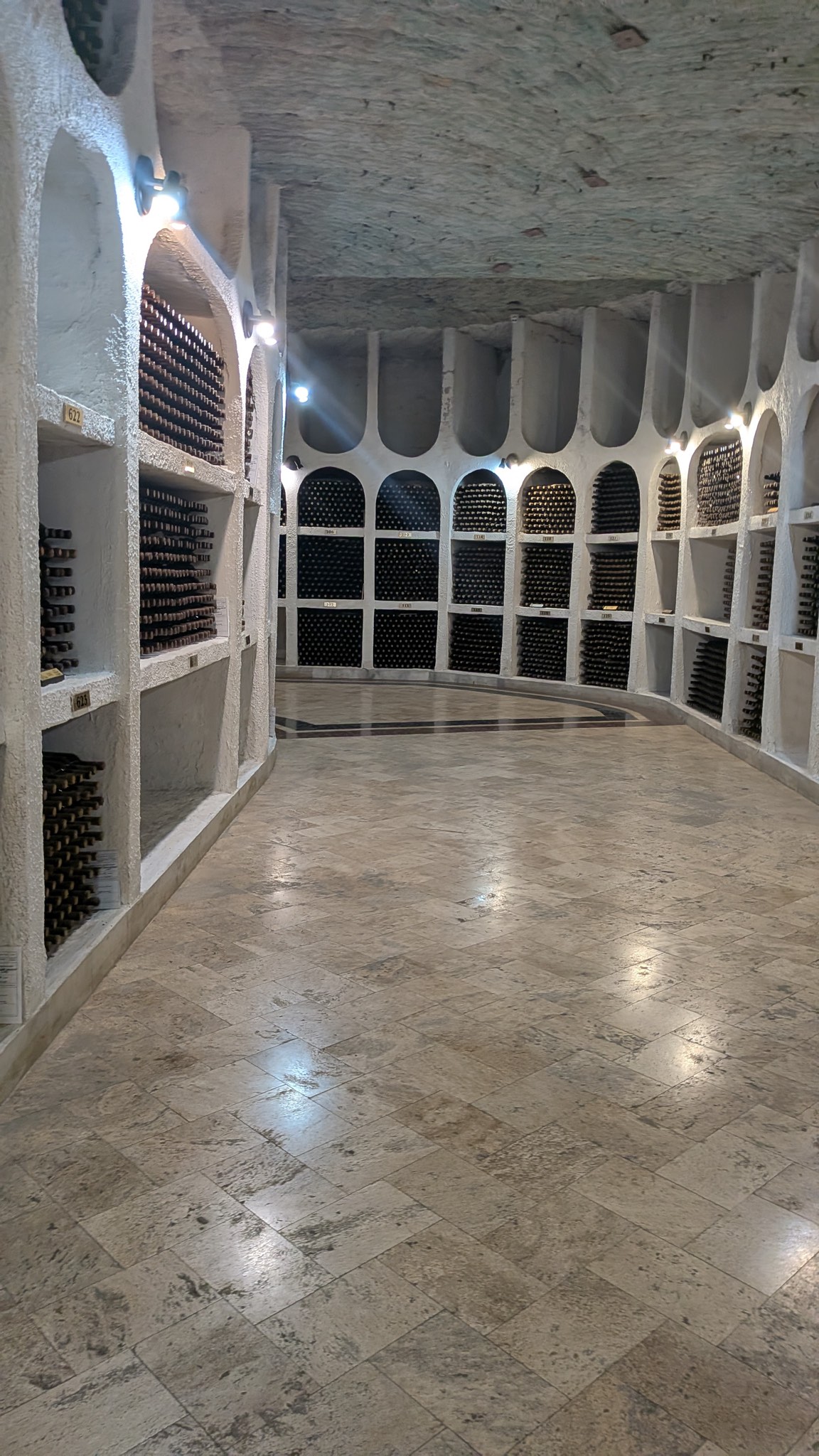
From here, everything changed direction, literally, straight down into the Cricova underground wine complex, over 120 kilometres of limestone tunnels originally left behind by centuries of limestone quarrying, later repurposed into what's essentially a subterranean city. Streets down here have real names, mostly after grape varieties, Bulevardul Cabernet among them, and an electric tourist train carries visitors between the different sections since walking the whole thing simply isn't practical.
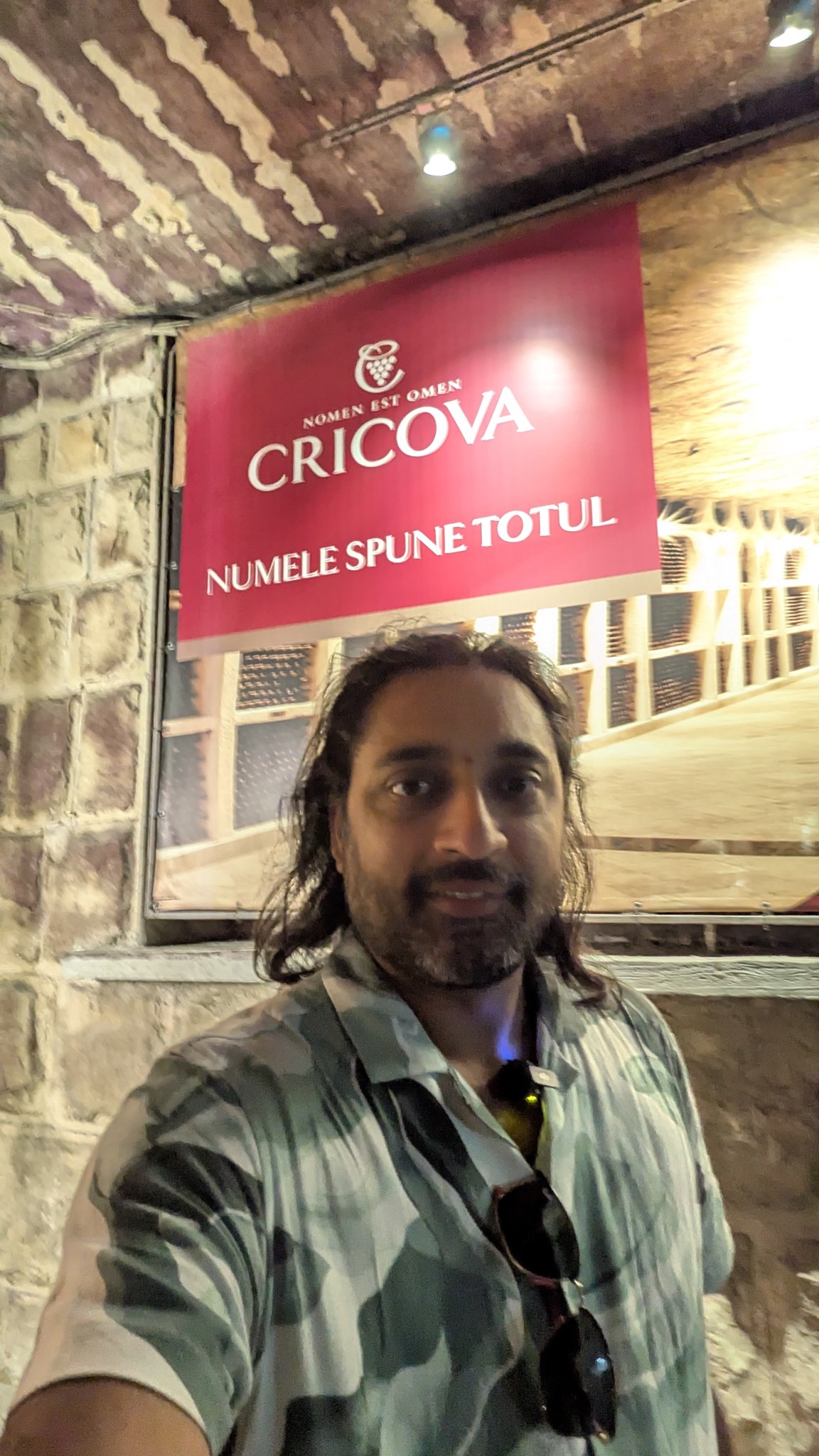
Our guide for the tour, Marcel, explained that sparkling wine alone takes roughly a month to produce here, longer than still wine, and that the bottles resting in the fermentation section have to stay untouched at a constant 13 degrees Celsius, fixed atmospheric pressure and fixed humidity throughout the process. Further along, there's even an underground cinema, normally used by staff for regular films, but for tour groups it plays a short documentary on how the wine here actually gets made.
Yuri Gagarin got lost down here
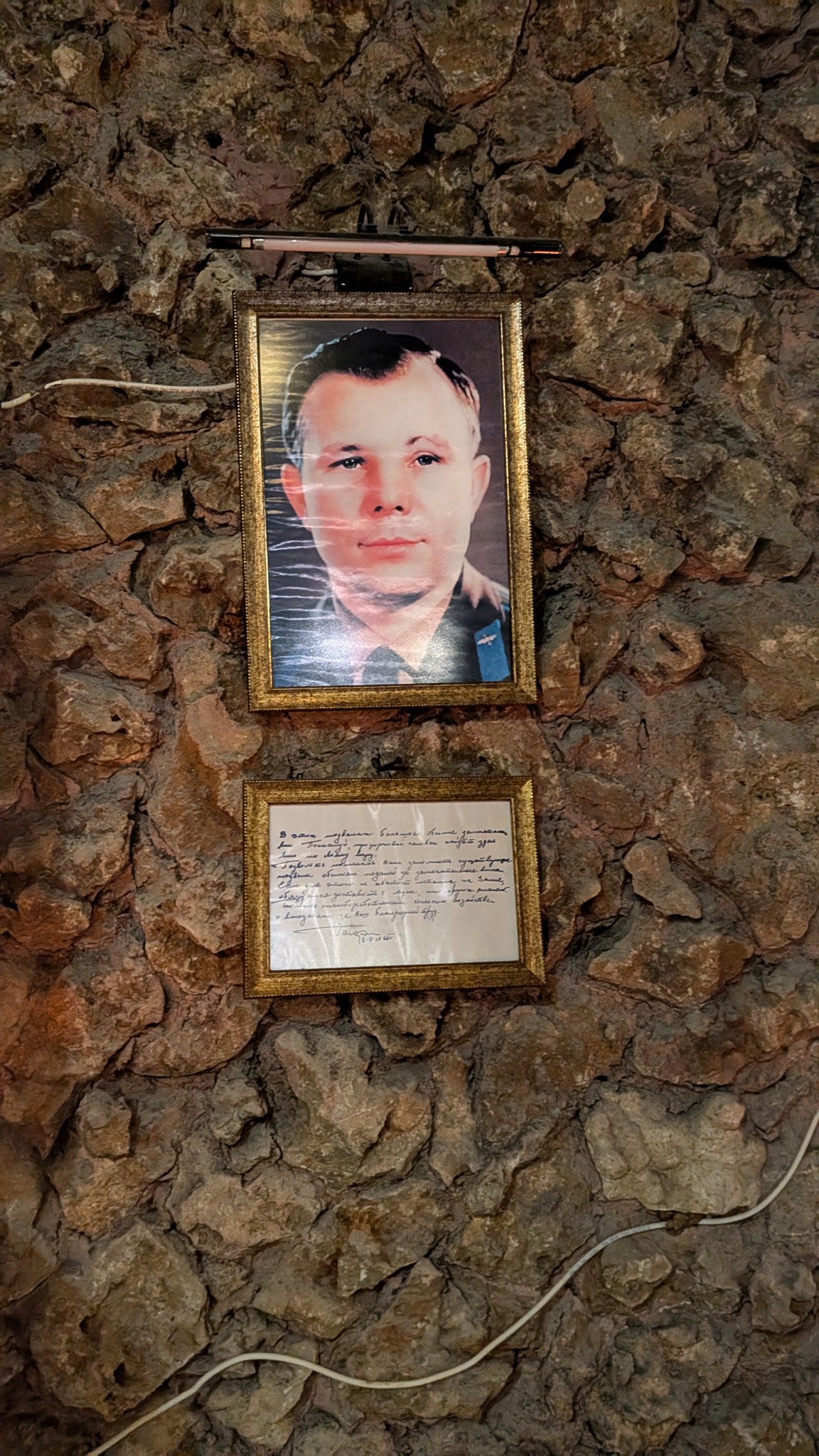
Easily the best story of the day: Yuri Gagarin, the Soviet cosmonaut and first human in space, visited Cricova in the 1960s and got genuinely lost inside the tunnel network, famously joking afterward that flying in space had turned out to be easier than finding his way out of this cellar. A framed photo of him and a handwritten note are still displayed on the tunnel wall today, and one of the tasting halls used to carry his name in honour of the visit.
A wine collection with real records
Wine production at Cricova alone accounts for roughly 3% of Moldova's entire national economy, a striking figure for one winery in one country. The collection includes rare, genuinely historic bottles, including one from 1902, labelled as Jerusalem wine and the only surviving bottle from that particular batch anywhere. Presidents, prime ministers and other heads of state have toured and tasted here over the decades, and Cricova has an active application in with UNESCO to be recognised as a World Heritage Site.
A wine tasting, from someone who doesn't drink
The tour ends with a formal wine tasting, red first at room temperature, then rose, then white and sparkling both served chilled, walnuts and biscuits laid out alongside as snacks. I don't drink alcohol, so the whole session was mostly about smelling and appreciating rather than actually drinking, which the crew filming with me found fairly amusing. Whatever I lacked in tasting notes, I more than made up for in enthusiasm for the walnuts and biscuits on the side plate.
Marcel's picks, in his own words
I asked Marcel what he'd tell someone planning a Moldova trip. His answer: Transnistria is "something very unique that you'll not see any places of the world," and while Cricova is the famous name, his personal favourite winery is actually Milestii Mici, which he finds more authentic even though Cricova draws the bigger crowds and the VIP visitors. He also mentioned that Chisinau hosts a wine festival every October, when winemakers from across the country bring their products to the main square in the capital.
The guide who covered both my Moldova trips
Marcel and his team run this Cricova and Orheiul Vechi tour through the same operator, Moldova to Visit, that guided me into Transnistria the day before. I liked that first trip enough to book straight back in with the same company, and this second day only confirmed it was the right call. If you're planning any part of a Moldova itinerary, from the breakaway republic to the wine cellars, I'd genuinely recommend starting here: @moldovatovisit on Instagram or moldovatovisit.com.
Wrapping up Moldova
Heading back to Chisinau closed out this leg of the trip entirely, my last video from Moldova. Of every country I've visited so far, Moldova stands out as one of the most genuinely different, still visibly developing, still finding its footing, but with real hospitality and real history at every stop. Transnistria, covered the day before this one, remains on a level of its own. Moldova, though, more than earned its place on the list.
Practical tips for Curchi, Orheiul Vechi and Cricova
- Timing: all three stops in one day is doable but tight, budget a full day and expect a rushed lunch if you want to fit in the wine tour properly.
- Orheiul Vechi: wear comfortable shoes for the stairs down to the Cave Monastery, and dress modestly, shoulders and knees covered, for both monasteries.
- Cricova: book a tour in advance rather than turning up, the tunnels are only accessible with a guide and the electric train.
- Wine tasting: non-drinkers are welcome, the tasting is as much about aroma and presentation as it is about actually drinking.
- Currency: Moldovan Leu (MDL). Village restaurants and monastery stops are inexpensive by European standards.
A monastery that survived being turned into an asylum and back, a monk who has lived inside a cave for eight decades, a village still painted the exact same blue it's always been, and a wine cellar big enough to lose a cosmonaut in. If this was going to be my last day in Moldova, I'm glad it was this one.