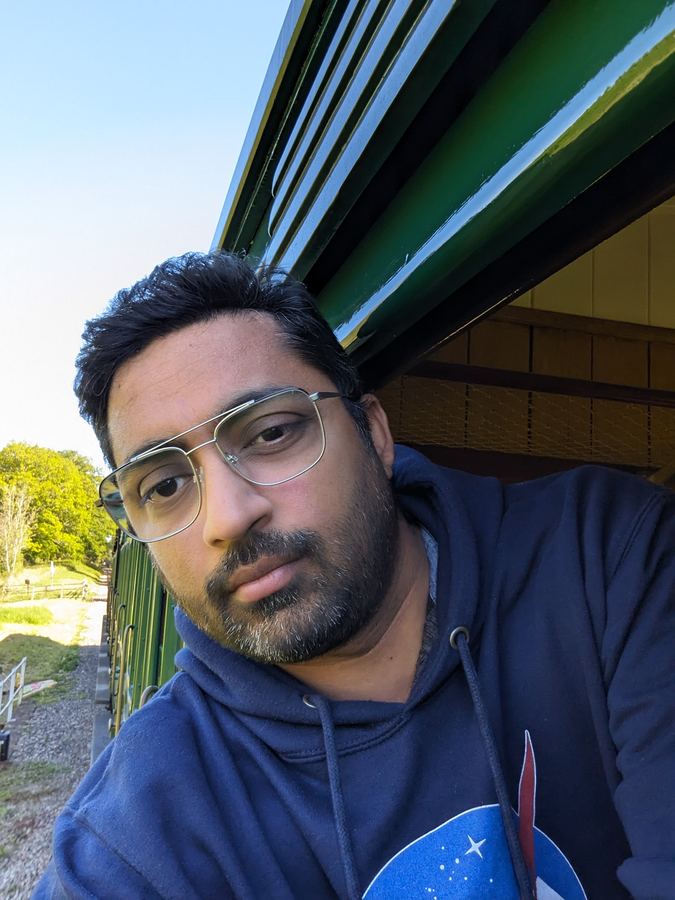
Growing up, "Bosnia and Herzegovina" was a name I mostly knew from old news footage: soldiers with guns, people running, empty ruined streets. This was my first real day in the country, landing the night before, and I wanted to see for myself whether that image still matched reality. It didn't, not even close, but the city's history turned out to be even bigger than I expected, starting with one very specific street corner.
Day 1: breakfast, the Latin Bridge, mosques and churches side by side, the old bazaar, and Mount Trebevic.
A vegan breakfast to start the day
After a late-night arrival and an early dinner the night before, I woke up genuinely hungry and headed to Brunch SA, a spot known for vegetarian and vegan options. I asked for their usual dish without egg, and got avocado toast instead, topped with tomatoes and a red spice powder that wasn't quite curry leaf powder but landed somewhere in the same family. It looked underwhelming at first glance, small portion, plain presentation, but it turned out genuinely tasty once I actually started eating. A citrus juice and a cream-topped mocha rounded things out before heading into the old town proper.
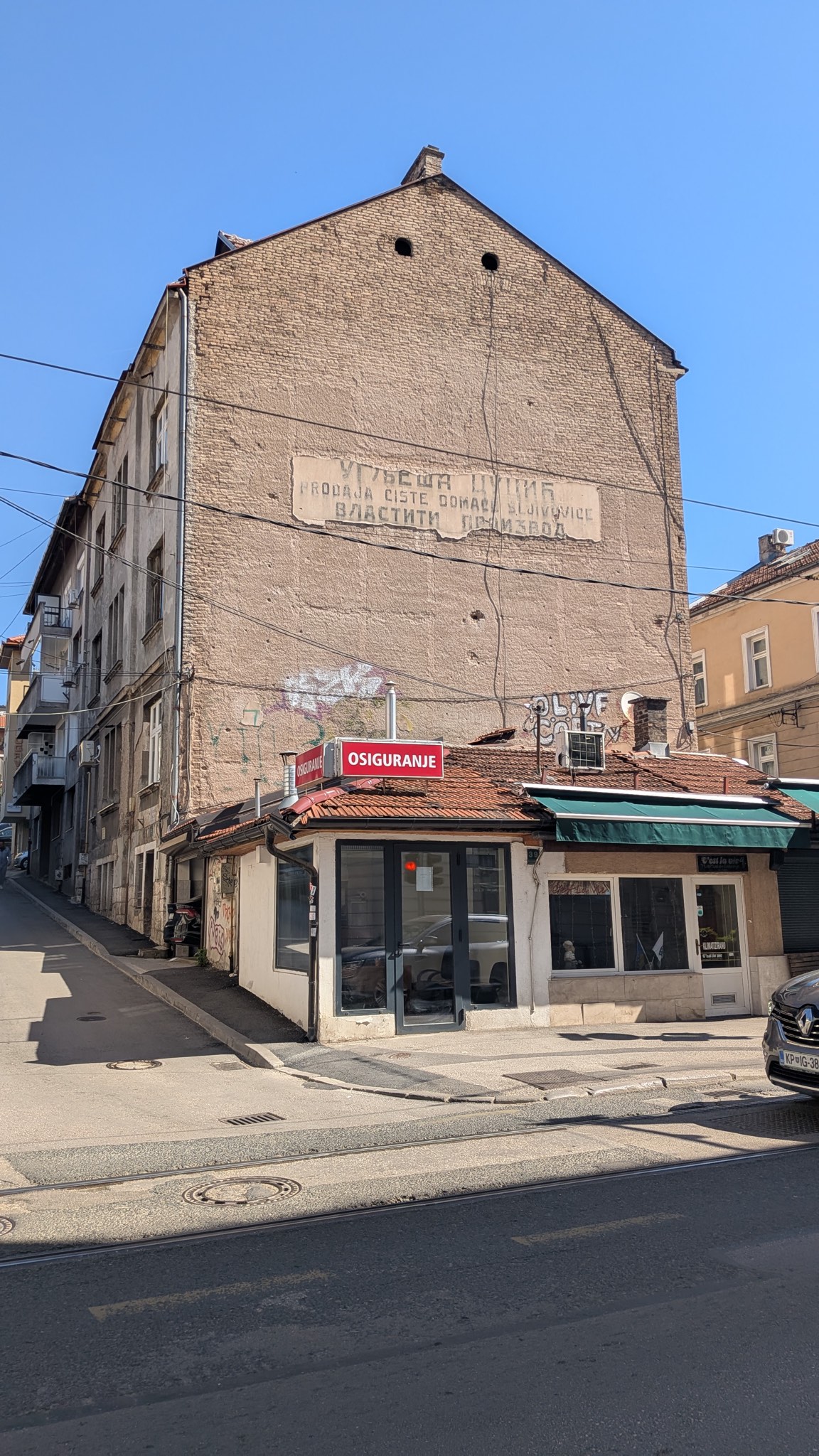
The Latin Bridge: where one bullet changed the world
Right by the Latin Bridge, I asked a question I already knew the answer to: does one bullet really change the world? At the time, Bosnia and Herzegovina sat under the Austro-Hungarian Empire (the same empire I'd already covered in an earlier Vienna video), and the local Slavic and Serbian population deeply resented that rule. That tension is the backdrop for what happened here on 28 June 1914, a date worth remembering on its own.
Archduke Franz Ferdinand, heir to the empire, was touring Sarajevo that day with seven conspirators positioned along his route, planning his assassination. An earlier bomb attempt failed, bouncing off his car and wounding people in the vehicle behind instead, who were rushed to hospital. Rather than cancel the rest of his visit, Franz Ferdinand decided to visit the wounded in hospital personally. His driver took what was meant to be a shortcut, hit a dead end near this exact bridge, and stopped to reverse. Purely by chance, one of the original conspirators, Gavrilo Princip, happened to be standing right at that spot, and shot both Franz Ferdinand and his wife at point-blank range. That single moment is what set off World War One.
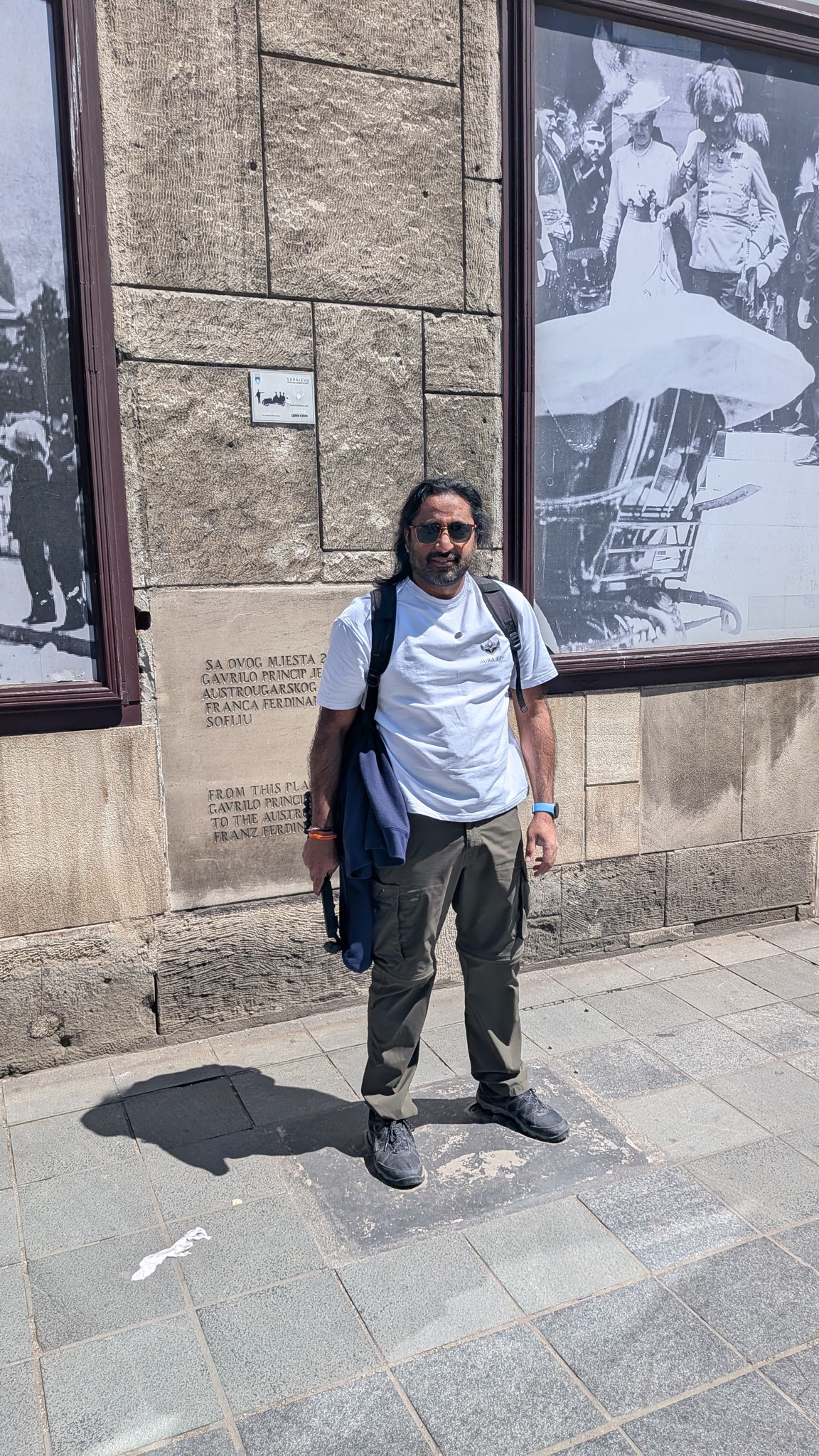
A small plaque and a set of historic photographs now mark the exact spot, along with four gilded markers set into the pavement where the shooter is said to have stood. It's a strange thing, standing on an ordinary street corner and realising this is genuinely where two World Wars' worth of consequences trace back to a single decision to turn down the wrong road.
A mosque, a church, and a synagogue, all within sight
Despite Sarajevo's Muslim majority, the city is dotted with churches, including its largest Catholic church, standing close enough to a mosque and a synagogue, marked by a visible Star of David, that all three are within easy walking distance of each other. A local explained something I hadn't expected: most of Sarajevo's Muslims aren't descended from outside settlers, they're local Slavic families who converted centuries ago, largely to avoid falling under Catholic rule during a period when a distinct local faith known as the Bosnian Church was being pushed out. That history of practical, not always deeply religious, conversion is part of why the city still carries such a strong culture of religious coexistence. It's also credited with saving lives during the Second World War: many local Muslims reportedly vouched for their Jewish neighbours as fellow Muslims to occupying Nazi forces, which meant Sarajevo lost proportionally fewer Jewish residents than many other European cities.
The Gazi Husrev-beg Mosque, one of the city's most prominent, draws enough worshippers that many pray outside when it's full, with separate areas for men and women inside. Its clock tower runs on an unusual local time system, resetting to 12 each day at sunset rather than midnight, a method historically used to track prayer and fasting times during Ramadan, still maintained today by someone whose job is literally to keep it accurate.
The line where East meets West
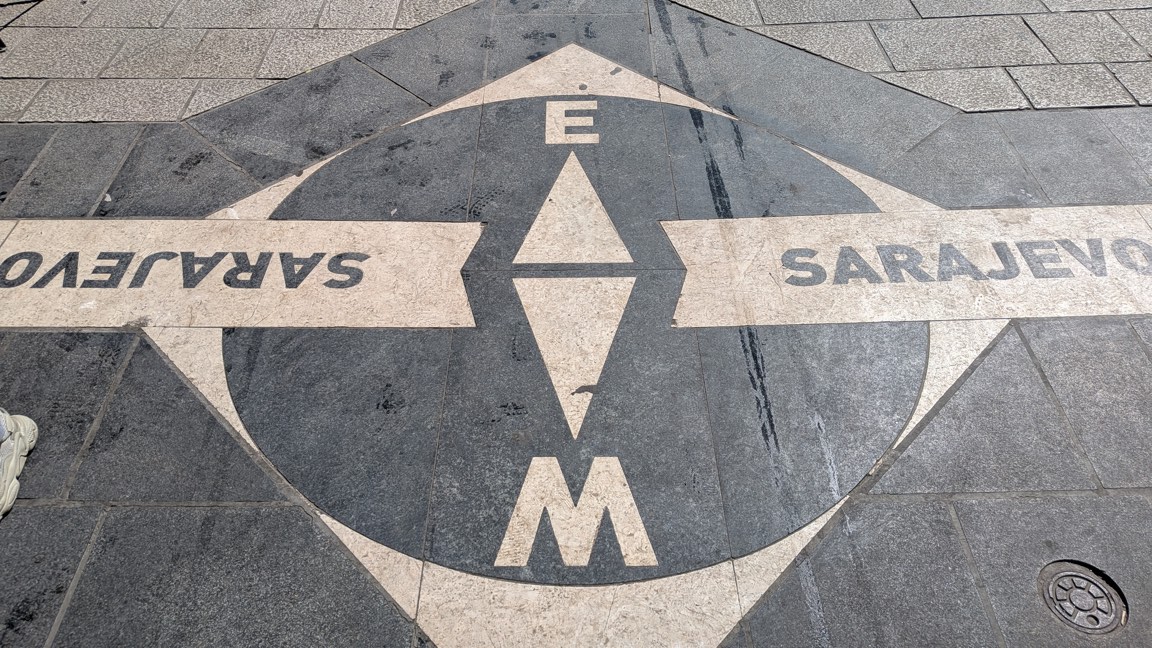
One specific spot in the old town marks something I found genuinely striking: a literal line embedded in the pavement, reading "Sarajevo" in both directions with an E and a W pointing either way, the Sarajevo Meeting of Cultures. Under Austro-Hungarian rule, the empire deliberately developed the western half of the city in a European style, the same architecture I'd already seen in Vienna, while leaving the eastern half to continue in its existing Ottoman style. That divide is still completely visible today: cross the marked line, and the entire visual character of the street changes within a few paces.
The old bazaar, baklava, and free drinking water
Heading east from that line leads straight into Sarajevo's old indoor bazaar, reminiscent of a smaller version of a similar market I'd visited in Istanbul: jewellery, bangles, souvenir magnets, watches, and an overwhelming number of baklava shops packed in among stalls selling attar and perfume, a nod to the city's Muslim population. Nothing particularly rare turned up while browsing, but the atmosphere alone made the walk worth it.
Along the way, a public drinking fountain gave a good excuse for a reminder: tap water across most of Europe, including here, is genuinely safe to drink, and refilling a steel bottle at fountains like this one beats buying plastic bottles at every stop, something I've pointed out on trips from Rome onward and one that a lot of Indian travellers still don't realise applies just as much here.
Burek for lunch
Lunch meant tracking down something properly local: burek, a layered pastry usually filled with meat but also available in vegetarian versions. I went with a pumpkin seed filling, topped with a dollop of sour cream, and it was genuinely excellent, and it brought back a specific memory of eating something almost identical in Budapest, on the very first trip I ever vlogged.
Mount Trebevic and the abandoned Olympic bobsled track
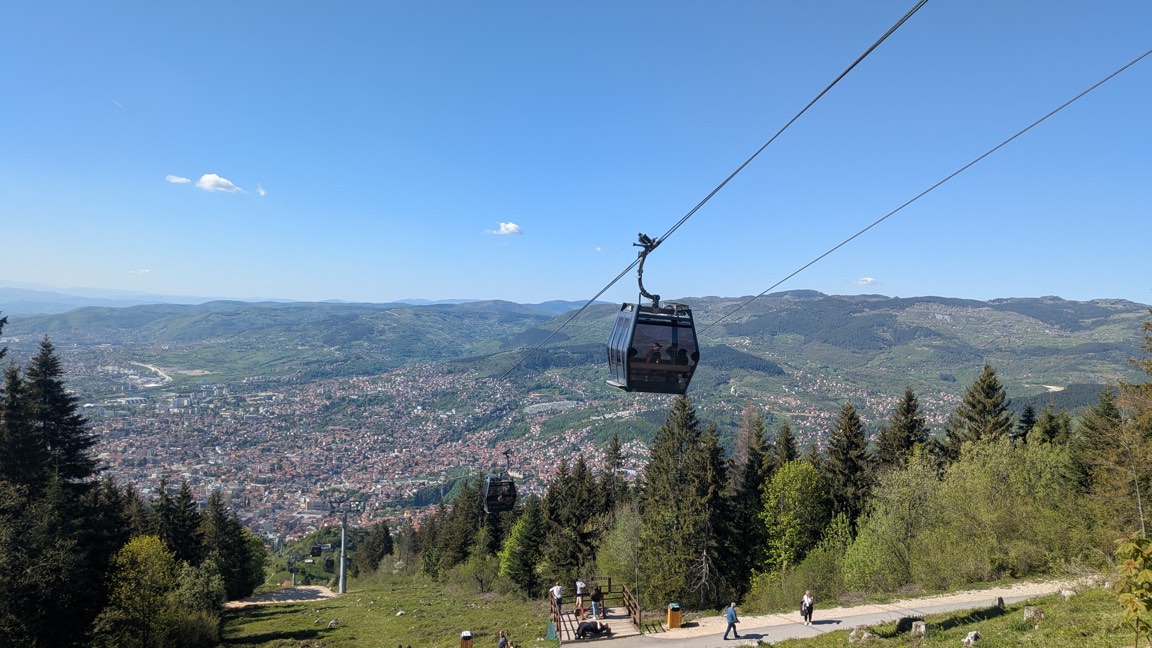
Sarajevo hosted the 1984 Winter Olympics, and the bobsled and luge events took place on Mount Trebevic, reachable today by a cable car climbing straight up out of the city. At the top, well-kept trails (1.7 and 1.9 kilometres) wind through picnic areas and biking routes, busy with day-trippers, including a group who'd ridden in from Austria, and photoshoots taking advantage of the mountain backdrop.
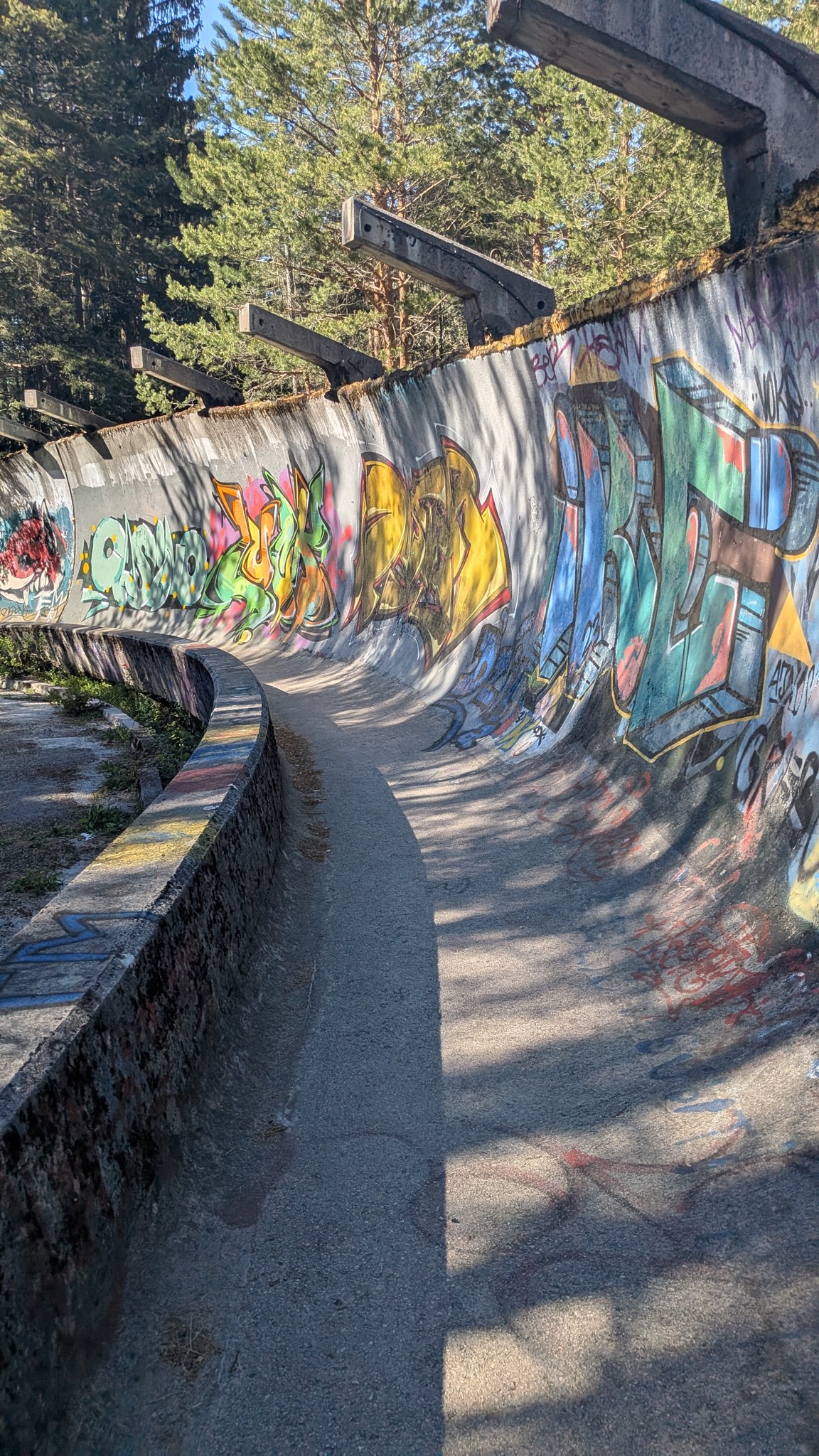
The old Olympic bobsled track itself is a different story entirely: abandoned, its concrete channel now completely covered in colourful graffiti, winding down through the forest with no trace of its original purpose beyond the shape of the track itself. The reason it was left to decay ties directly into the deeper history of this trip; during the Bosnian War, Serb forces occupying these same surrounding hills used the abandoned Olympic infrastructure as a military position, one small, strange detail of how a city's own celebrated past ended up turned against it a decade later.
What's next
This was one of three videos I made covering Sarajevo and Herzegovina. The natural side of the trip, Kravica Waterfalls, Pocitelj and Mostar's Old Bridge, is covered in its own post, and the deeper story of the war itself, Tito, the siege, and the Tunnel of Hope, gets a full video of its own too. Read the Herzegovina and Mostar post here, or go straight to the Siege of Sarajevo and Bosnian War post.
Practical tips for a first day in Sarajevo
- Start at the Latin Bridge: it anchors the whole old town and gives context for everything else nearby.
- The Meeting of Cultures line: an easy, free stop, but worth pausing at deliberately rather than walking straight over it.
- Trebevic: the cable car is quick and worth it purely for the city view; budget time to also walk part of the old bobsled track.
- Water: carry a refillable steel bottle, public fountains and tap water are safe throughout the city.
- Food: vegetarian burek (pumpkin seed or cheese) is widely available and a reliable local option.
A city I'd only ever associated with war footage turned out to hold a mosque, a church and a synagogue on the same street, a literal line where two civilisations meet, and a ruined Olympic track now covered in some of the best graffiti I've seen anywhere. Sarajevo earned its own surprise before I'd even left day one.