This was day three of my Bosnia and Herzegovina trip. Day one covered Sarajevo's streets and cafes, day two took me into the natural beauty of Herzegovina, and in both I kept mentioning the war without actually explaining it properly. This post is that explanation, told through the places that still carry it: a history museum, a siege museum, the road once known as Sniper Alley, and a tunnel that a besieged city dug by hand to survive.
Day 3: the History Museum, the Siege of Sarajevo Museum, Sniper Alley, the Hotel Holiday, and the Tunnel of Hope.
Understanding Yugoslavia first
None of the Bosnian War makes sense without understanding Yugoslavia first, and I started at the quiet, nearly empty History Museum of Bosnia and Herzegovina to piece it together. Bosnia and Herzegovina wasn't always its own country. It was one republic inside a much larger federation, Yugoslavia, formed after the Second World War under a leader named Josip Broz, universally known as Tito. He was a dictator, but an unusually liberal one by Communist-bloc standards: foreign media and television were allowed in, and people could travel abroad relatively freely. India has its own quiet connection to this era too, since India and Yugoslavia were both founding members of the Cold War-era Non-Aligned Movement, officially siding with neither the US nor the USSR, even if both leaned quietly toward the Soviet side in practice.
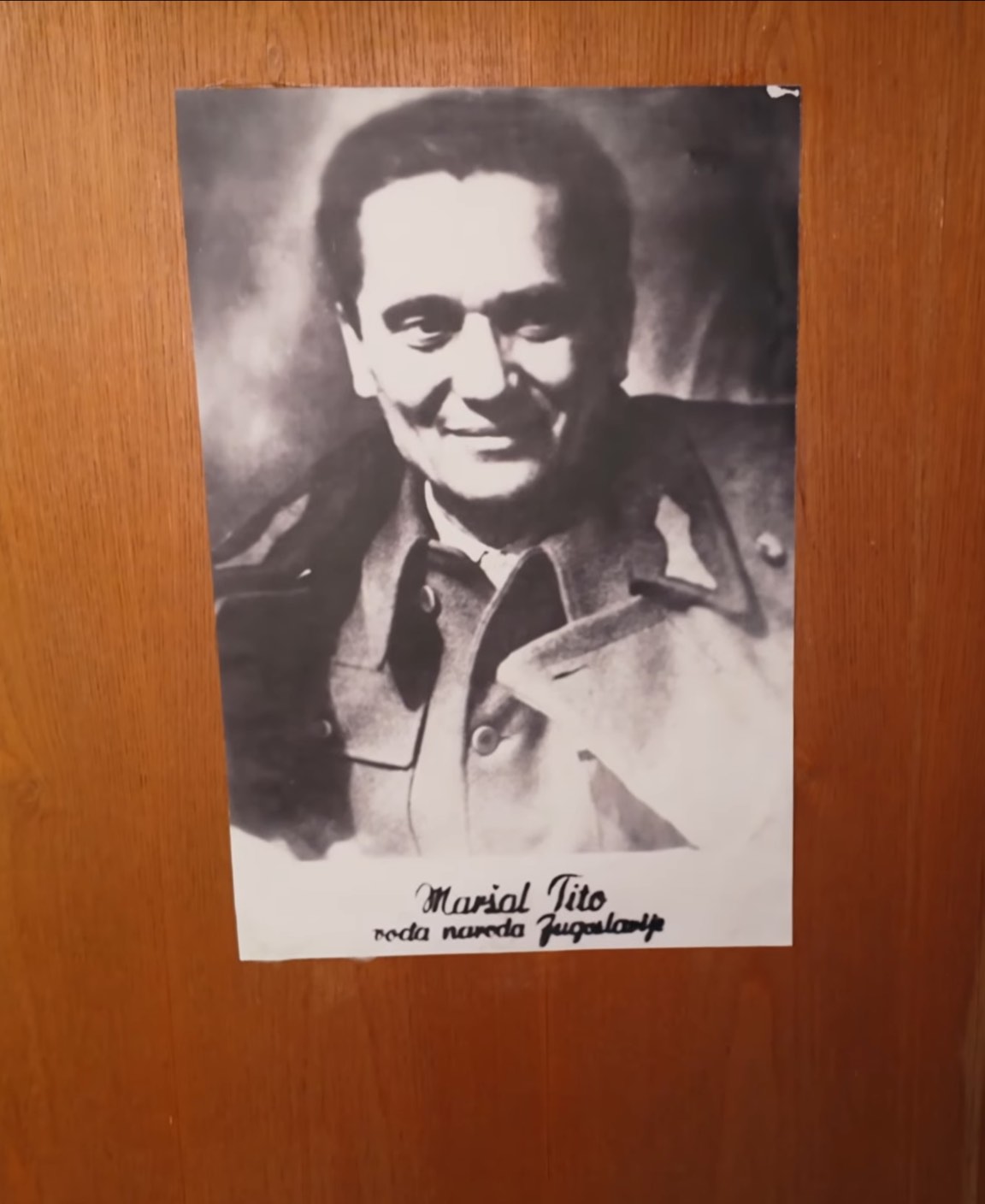
Yugoslavia held together Serbs, Croats, Bosniaks, Slovenians, Macedonians and Montenegrins under one shared identity, and Tito's death in 1980 is where that identity started to unravel. With no single strongman left to hold the federation together, each republic's national feeling resurfaced, and one by one they moved toward independence, Slovenia and Croatia first, Bosnia and Herzegovina soon after via referendum. The complication was that within Bosnia itself, Bosniaks, Serbs and Croats had all lived together for generations, and Bosnia's Serb population largely wanted to stay part of Serbia rather than become a minority in a new independent state. That disagreement, in short, is what turned political tension into open war. Tito's era is still remembered fondly enough that the history museum has a Tito Café right next door, named for him.
A quick aside: what travelling here actually looks like
A few practical details from the trip itself. My hotel room still had a genuine 1990s CRT television in it, small but with a proper city-view balcony, the same spot I'd flown a drone from in the first video of this series. The currency is the Convertible Mark (locally called KM or BAM), historically pegged to the German mark thanks to old ties with Germany, and roughly two marks to one euro; both euros and marks are widely accepted, though cash still wins over card in about half of places. The country's population is small, around 3.15 million, and roughly 51% Muslim, practised in a notably mild, liberal way, alcohol is freely available and plenty of people don't regularly attend mosque, alongside 31% Orthodox Christian and 15% Catholic. Of every country I've visited so far, this has had the fewest Indian faces of any of them, the odd tourist here and there, never a single local of Indian origin.
The Museum of the Siege of Sarajevo
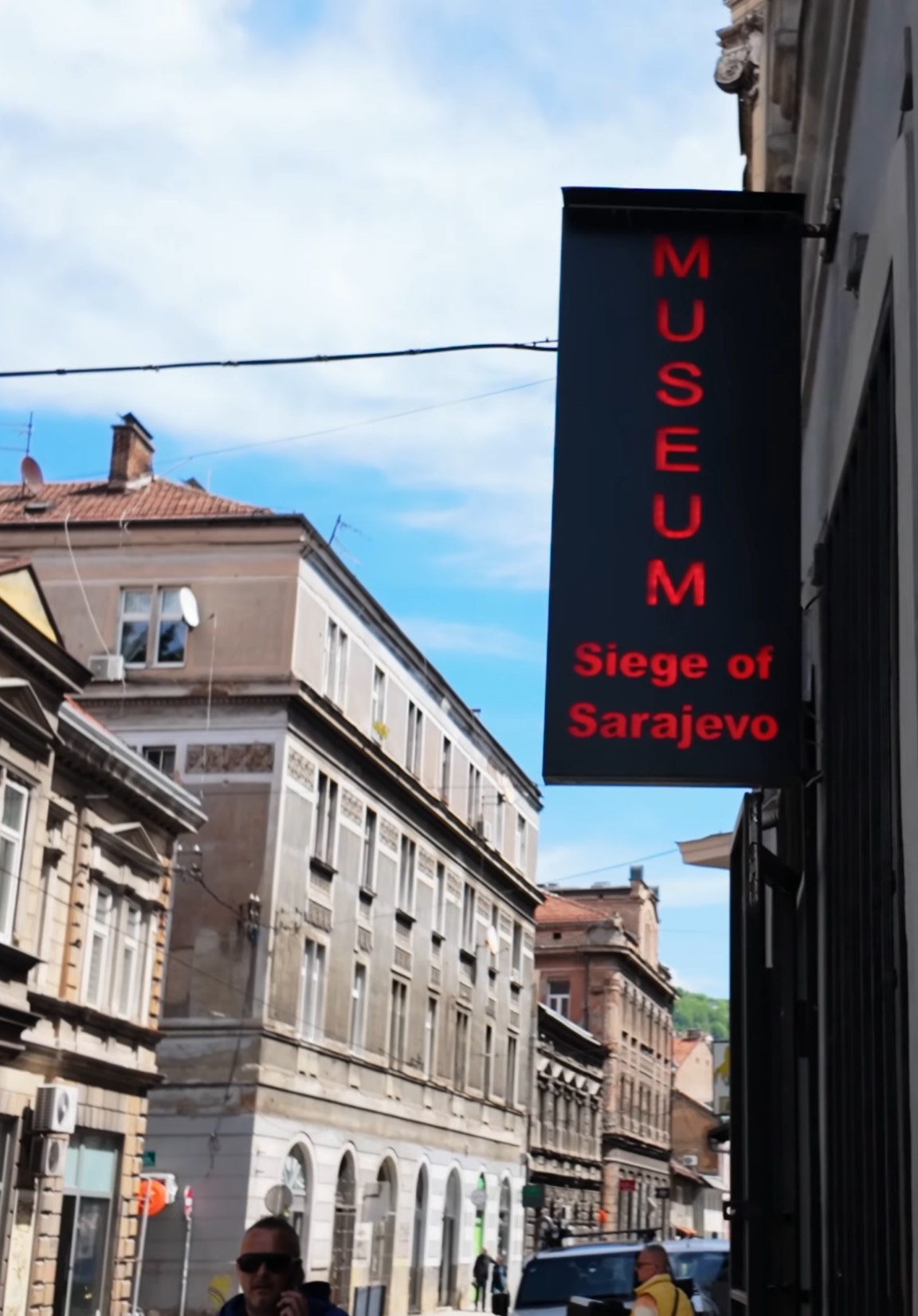
From there I walked to the Museum of the Siege of Sarajevo, right next to a Catholic church I'd already shown in the first video of this trip. This is where the actual siege gets explained. Sarajevo had hosted the 1984 Winter Olympics, and Bosnian Serb forces reasoned that capturing the capital would let them effectively control the whole of Bosnia and Herzegovina. The city sits in a valley ringed by hills, which made it straightforward to surround, but Sarajevo's defenders held those approaches and refused to let the attacking forces break through into the city itself. Neither side could dislodge the other, and that stalemate became the Siege of Sarajevo, the longest siege of a capital city in modern warfare.
Ordinary daily life became genuinely dangerous. People still needed to cross roads and reach markets for food and water, but doing so meant exposing yourself to snipers positioned in the hills and in tall buildings overlooking the main routes through the city, who would fire on anyone caught in the open. The museum preserves object after object and story after story from those years, including one about a woman who'd finally landed a job as a tram driver, only to be sent home the very first morning because the trams had stopped running entirely; she expected service to resume within a week. It took almost four years.
Srebrenica: the genocide behind the war
A separate museum in the city is dedicated specifically to Srebrenica, and it's the single darkest chapter of this whole story. During the war, the United Nations declared Srebrenica a safe area, meaning Bosniaks fleeing Serb forces elsewhere in the country could shelter there under an understanding that it wouldn't be attacked. A Bosnian Serb general, Ratko Mladić, disregarded that agreement entirely and seized the town. His forces separated the women, children and elderly from the men and older boys, bused the women and elderly away to Bosniak-held territory, and told everyone the men would be held safely elsewhere.
They were not. Nearly all of them were killed and buried in mass graves, and the truth was kept hidden for years. Roughly 8,000 men and boys went missing; around 7,000 have since been identified through DNA testing, exhumed from graves that were often deliberately mixed together across multiple sites specifically to make identification harder. Around 1,000 people are still unaccounted for today. International courts later formally ruled Srebrenica a genocide, and the museum displays photographs of the missing, a wall of faces that makes the scale of it impossible to look away from.
The Hotel Holiday and Sniper Alley
Back in central Sarajevo stands the unmistakable yellow tower now known as the Hotel Holiday, built as the Holiday Inn ahead of the 1984 Olympics. During the siege it became the base for the international press corps, mainly because of where it stood: directly along what became known as Sniper Alley, the main boulevard where gunmen in the surrounding high-rises would shoot at anyone crossing in the open. Reporting from a hotel on the single most dangerous street in the city was simply the price of getting the story out. Today the hotel has been fully redeveloped, and a large new commercial complex is going up right beside it, thirty years turning a front line into a construction site.
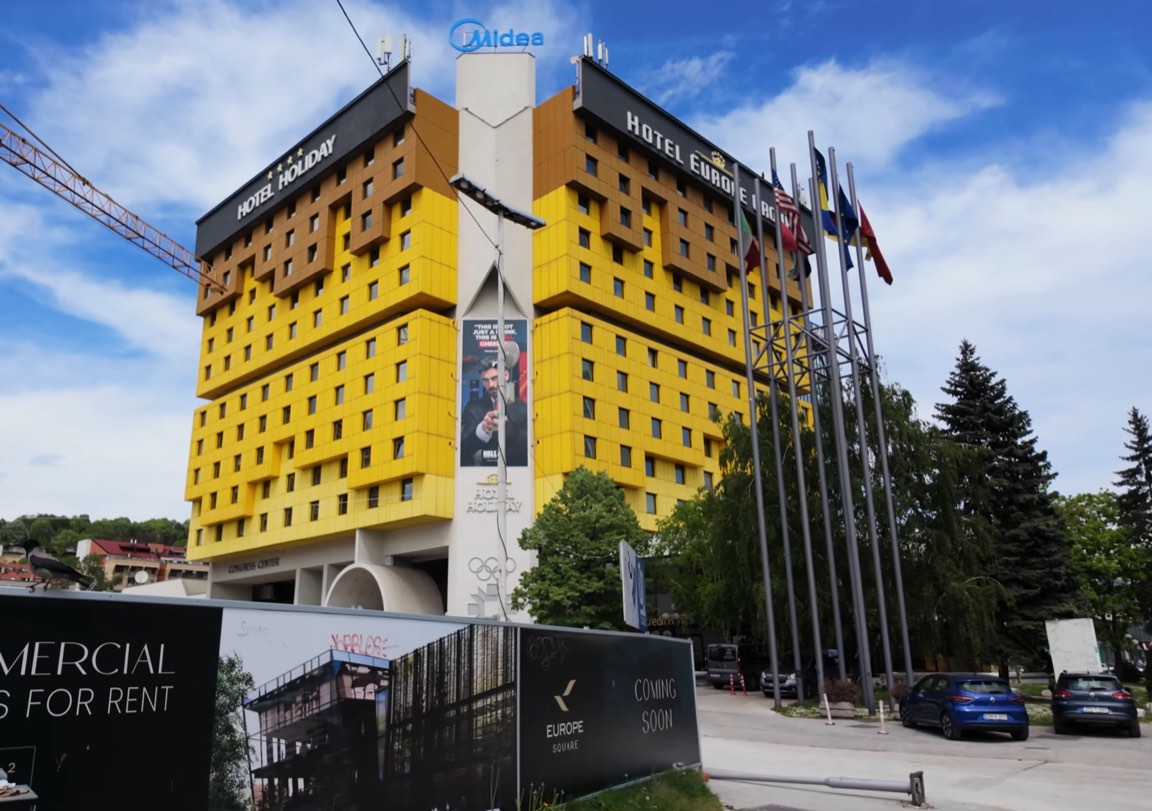
Along the same stretch, tall residential buildings that once held sniper positions still carry their bullet scars on the upper floors, left deliberately unrepaired even as the ground floors have been fully modernised into shops and cafes, a rule the city seems to apply everywhere: keep the memory visible as long as it's structurally safe to do so.
Markale Market: two mortar shells that changed the war
Markale Market, still a fully working produce market today, was the site of two of the siege's deadliest single attacks: a mortar shell on 5 February 1994, and a second on 28 August 1995. The second attack in particular drew such intense international outrage that it directly triggered a serious escalation of NATO military action against Bosnian Serb positions, a genuine turning point that helped push the war toward its end. The market itself, rebuilt entirely after being destroyed, along with its adjoining indoor hall, has since been given UNESCO recognition, not as a heritage site for its age, but specifically for the story of a community rebuilding on the exact same spot after total destruction.
The Tunnel of Hope
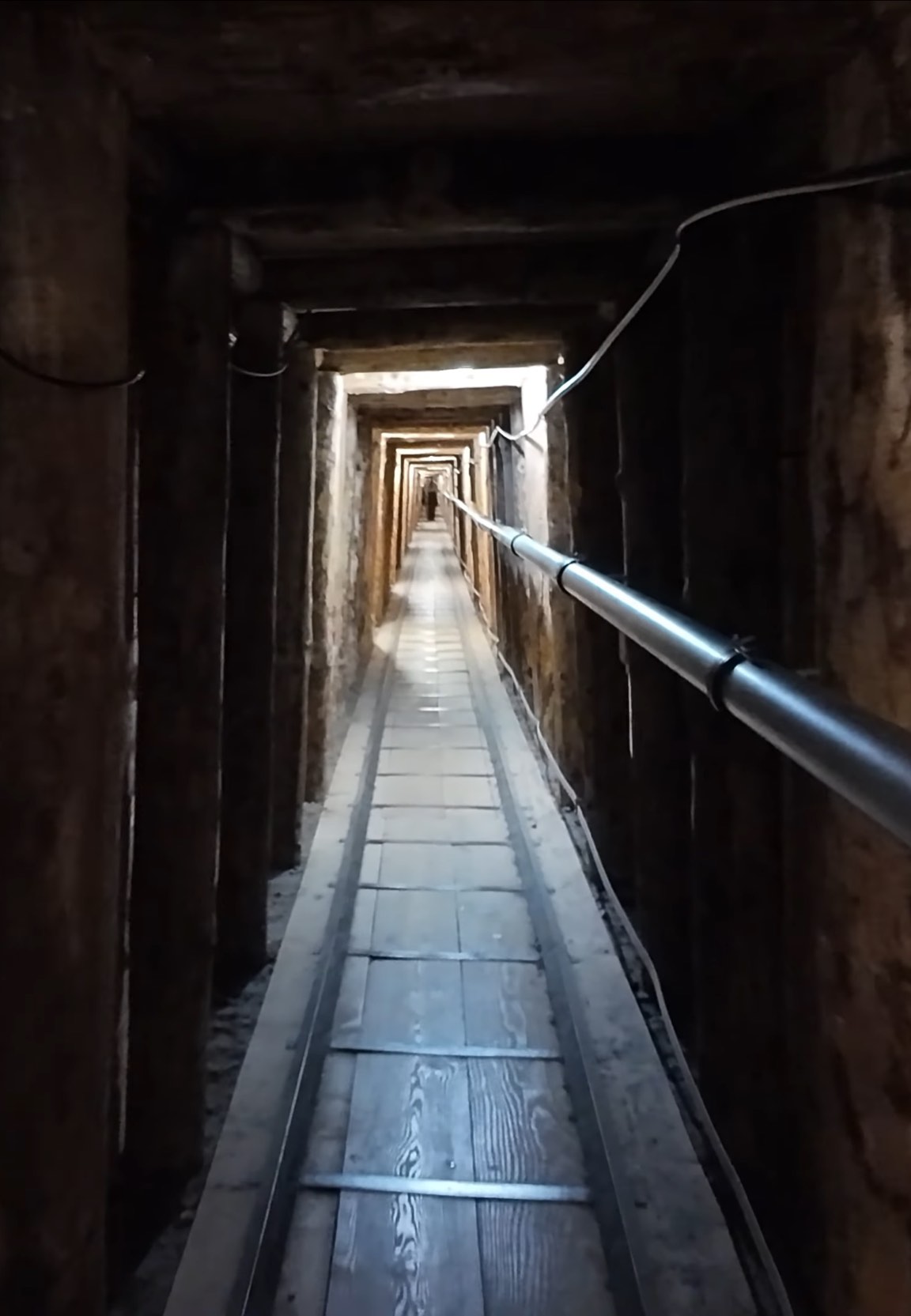
The last and most remarkable stop was the Tunnel of Hope (also called the Tunnel of Salvation), right behind the site of Sarajevo's old airport runway. During the siege, the runway itself marked the front line: Serb forces controlled the surrounding territory and the airport approach, while the city held the other side, and getting anything in or out of Sarajevo officially was effectively impossible. So residents dug their own way out, by hand, using shovels and basic manual tools, an 800-metre tunnel roughly a metre wide, running directly beneath the runway, completed in 1993. It started as a route for food and essential supplies and gradually became a route for people as well, the only real lifeline the city had for most of the siege. Today only about 25 metres of the original 800 remain open to walk through, narrow, wood-lined, and still lit only just enough to see the person ahead of you.
A very late lunch
I skipped both breakfast and lunch entirely that day, racing to fit every museum in before closing time, and only sat down to eat around 6 PM, a meal that could honestly have been called breakfast, lunch or dinner depending on how you looked at it. A vegetarian pizza near the airport, olives and tomatoes, nothing fancy, eaten fast with a 9 PM flight already closing in. Worth every skipped meal to fit it all in.
Practical tips for the Sarajevo war history trail
- Order matters: the History Museum for Yugoslavia and Tito's era first, then the Siege of Sarajevo Museum, gives the later stops much more context.
- Timing: museums here tend to close by 5 PM, plan an early start if you want to cover several in one day.
- The Tunnel of Hope: it's a short taxi ride from the centre, near the airport, worth booking as its own separate trip rather than squeezing in at the end.
- Currency: carry cash in Convertible Marks (KM/BAM); euros are widely accepted too, but cards are not universal.
- Pace yourself: this is an emotionally heavy day. Spread it across an afternoon rather than trying to rush all of it before a flight, unlike I did.
Three days in Bosnia and Herzegovina, and this last one recontextualised everything from the first two. A country this warm and this welcoming, barely three decades removed from a siege that starved its own capital and a genocide that took thousands of its people, deserves to be remembered for more than a war. But understanding that war is exactly what makes the rest of it mean something.