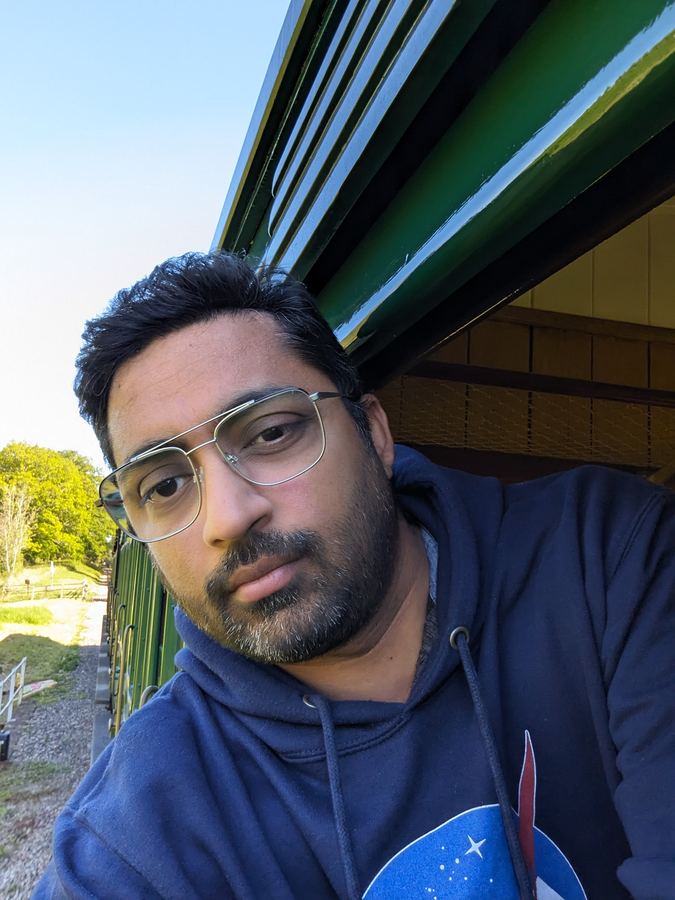
Almost everyone who has ever needed a European visa knows the word "Schengen." Almost nobody knows it's the name of an actual village — a small one, in northern Luxembourg, on the banks of the Moselle. Day 2 of my Luxembourg trip took me there, but first through a forest waterfall and a fairy-tale castle, because Luxembourg apparently fits an entire country's worth of scenery into a very small map.
The full day: Mullerthal's waterfall, Vianden Castle, and the story behind Schengen.
Mullerthal: Luxembourg's "Little Switzerland"
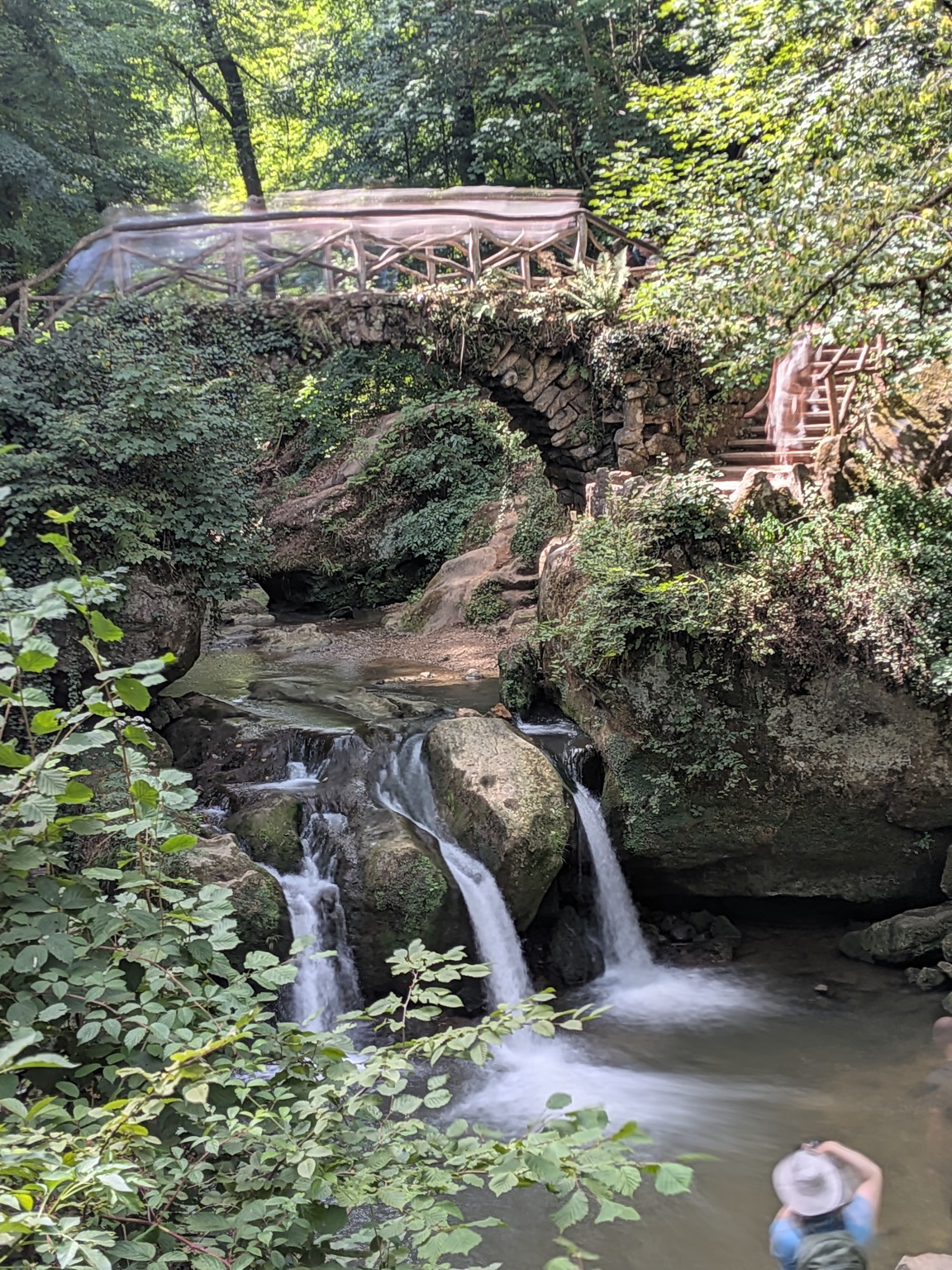
The day started with a charging stop — the car was down to 20%, so a quick top-up at a Luxembourg supercharger before heading into the countryside. First stop: Mullerthal, a region nicknamed "the Switzerland of Luxembourg." It's a fair nickname. Inside a country this small, you get a modern capital, an old town, and then, without much warning, genuine forest trail hiking — narrow paths cut into rock, a stream running alongside the road, wooden footbridges, and rock formations you can read whatever shapes you like into (one boulder looked distinctly like a face, if you squinted).
The trail eventually opens onto the region's best-known sight: a three-tiered waterfall, water splitting over a large boulder into separate streams before dropping into a shallow pool. Looked at one way, the streams line up almost like a Shaivite tripundra; turned the other way, more like a vertical Vaishnavite mark — a small, silly, very Indian way of looking at a very Luxembourgish waterfall. A wooden bridge sits just above it, and the whole scene is easily the best three minutes of a roughly 3-kilometre loop that also passes a scenic bridge connecting two small valleys, informational signage on the area's flora and fauna, and — once you're back down — a picnic and play area with toilets and an ice cream stand for anyone who's done enough climbing for one day.
Vianden Castle: a fairy tale that took 1,700 years to build
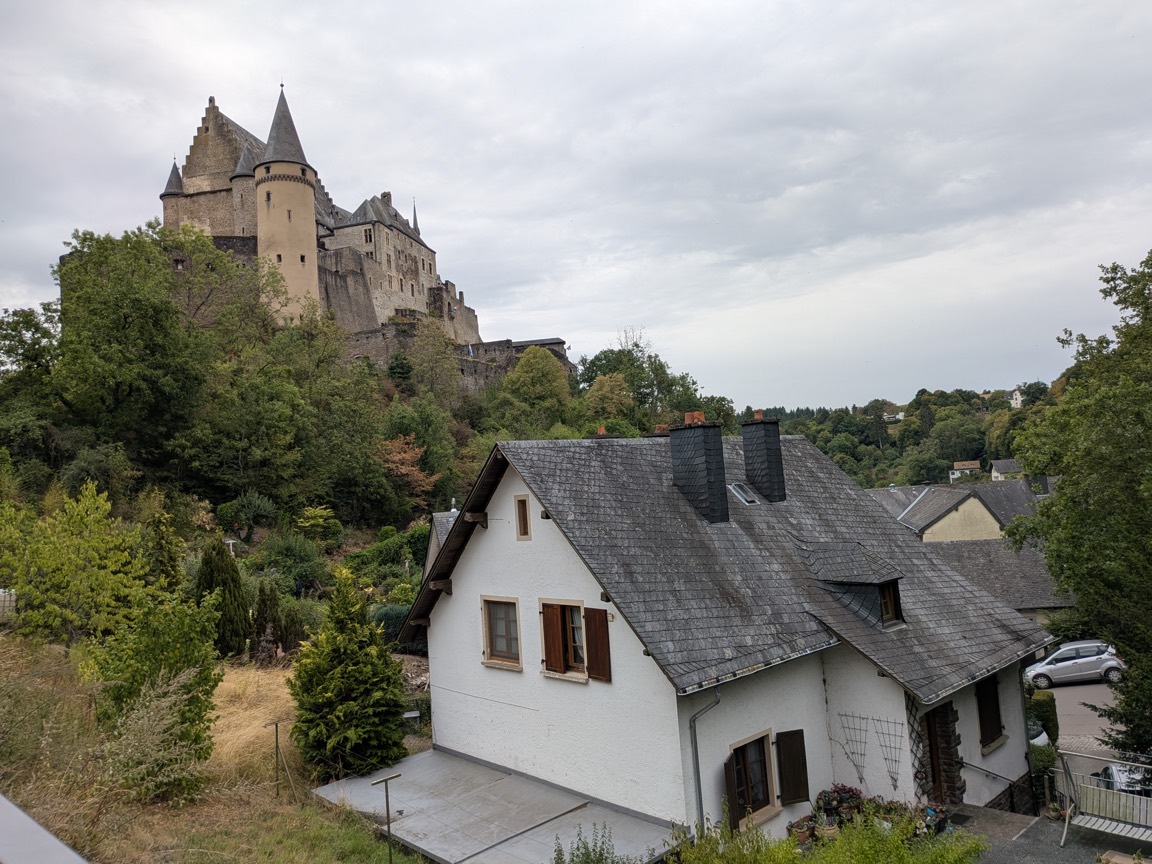
Vianden Castle sits in northern Luxembourg, close enough to the German border that you can drive up and effectively be looking into Germany from the ramparts. The village below is completely dominated by it — wherever you stand in Vianden, the castle is somewhere in your eyeline, perched on the hill above the rooftops.
What's on the hill today wasn't built in one go. Archaeological evidence points to Roman-era use of the site as far back as the 3rd century, but most of what stands now dates from the 11th to 14th centuries — Romanesque bones with later Gothic reconstruction layered on top. Through the 12th and 13th centuries it was home to the Counts of Vianden, powerful local lords whose halls, chapels and residential quarters are still recognisable inside. Once castles stopped being militarily useful, Vianden slid into disrepair for centuries, passed into private ownership, and became a genuine ruin — until the Luxembourg state bought it back in 1977 and restored it, piece by piece, to what you see today. One interior room, oddly, still had barrels stacked up — an old wine cellar, probably once used for tastings, tucked inside a medieval fortress.
South to Schengen: the village behind the visa
From Vianden it's about an hour and twenty minutes south to Schengen itself — a name that, until this trip, I'd only ever associated with a visa sticker in a passport, never an actual place. It turns out to be a genuinely small village on the Moselle river, and the reason it became a household word for "borderless Europe" is written into its monuments.
The Schengen Agreement was signed here in 1985 — not even fully on land, but symbolically aboard a boat called the Princesse Marie-Astrid, moored on the river exactly where France, Germany and Luxembourg meet. Behind the main monument stands a small piece of the Berlin Wall, placed here as a peace symbol — one of several such fragments I'd already come across elsewhere on this trip.
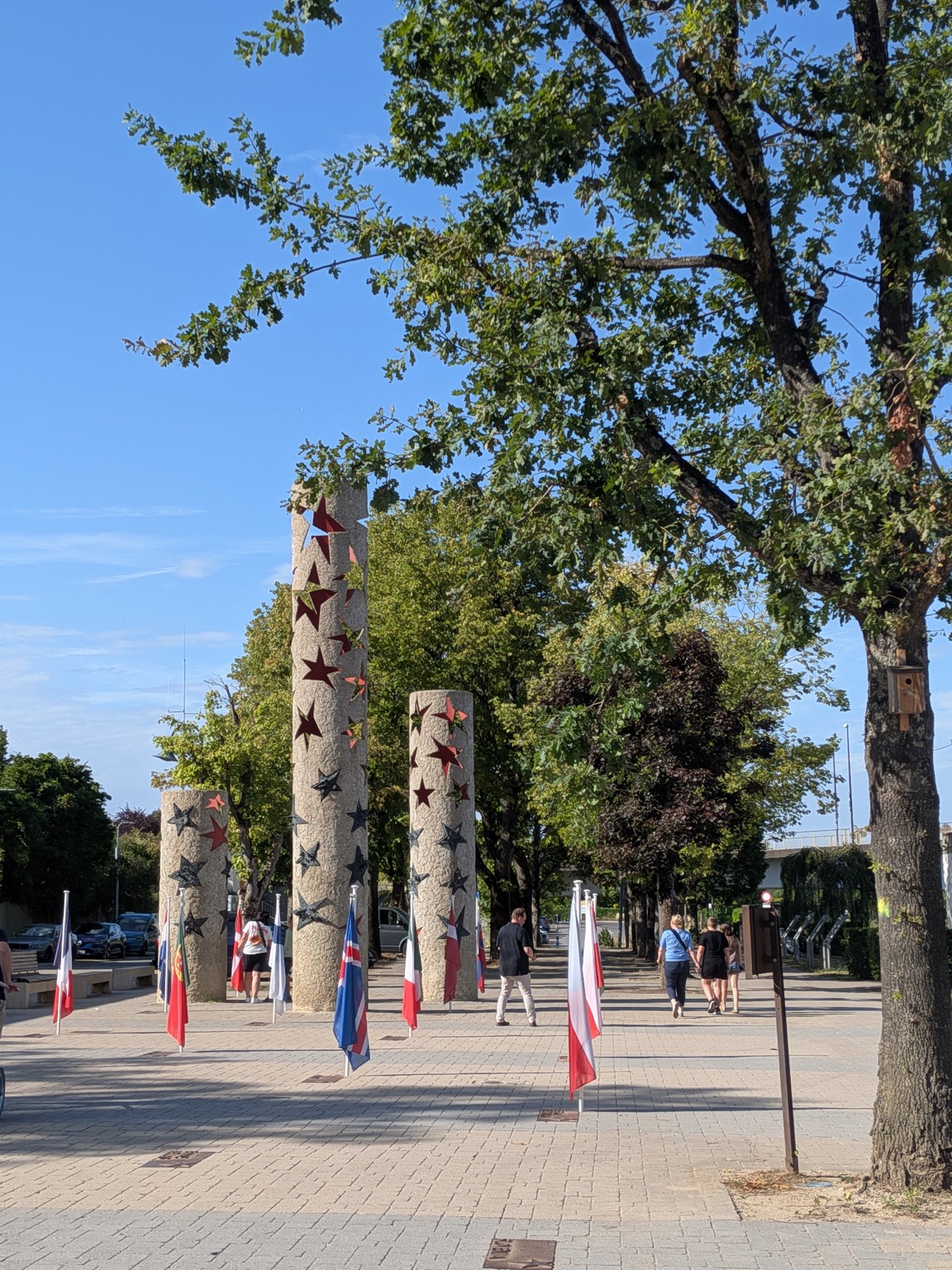
Facing the monument is a striking row of star-studded stone columns, the Pillars of Nations, each one dedicated to a Schengen member country: national flags planted at the base, and small symbolic objects worked into the design — Denmark's pillar decorated with LEGO bricks, since LEGO itself was invented there; Poland, Iceland, Norway and Germany each represented in turn. We arrived close to evening, so staff were already taking the flags down for the night as I filmed.
I'd hoped to get inside the small Schengen museum itself, but arrived just past the 5:30 PM last-entry cutoff — no ticket, no exceptions, "big YouTuber" claims included. Come back tomorrow, I was told. Fair enough.
One foot in Luxembourg, one foot in Germany
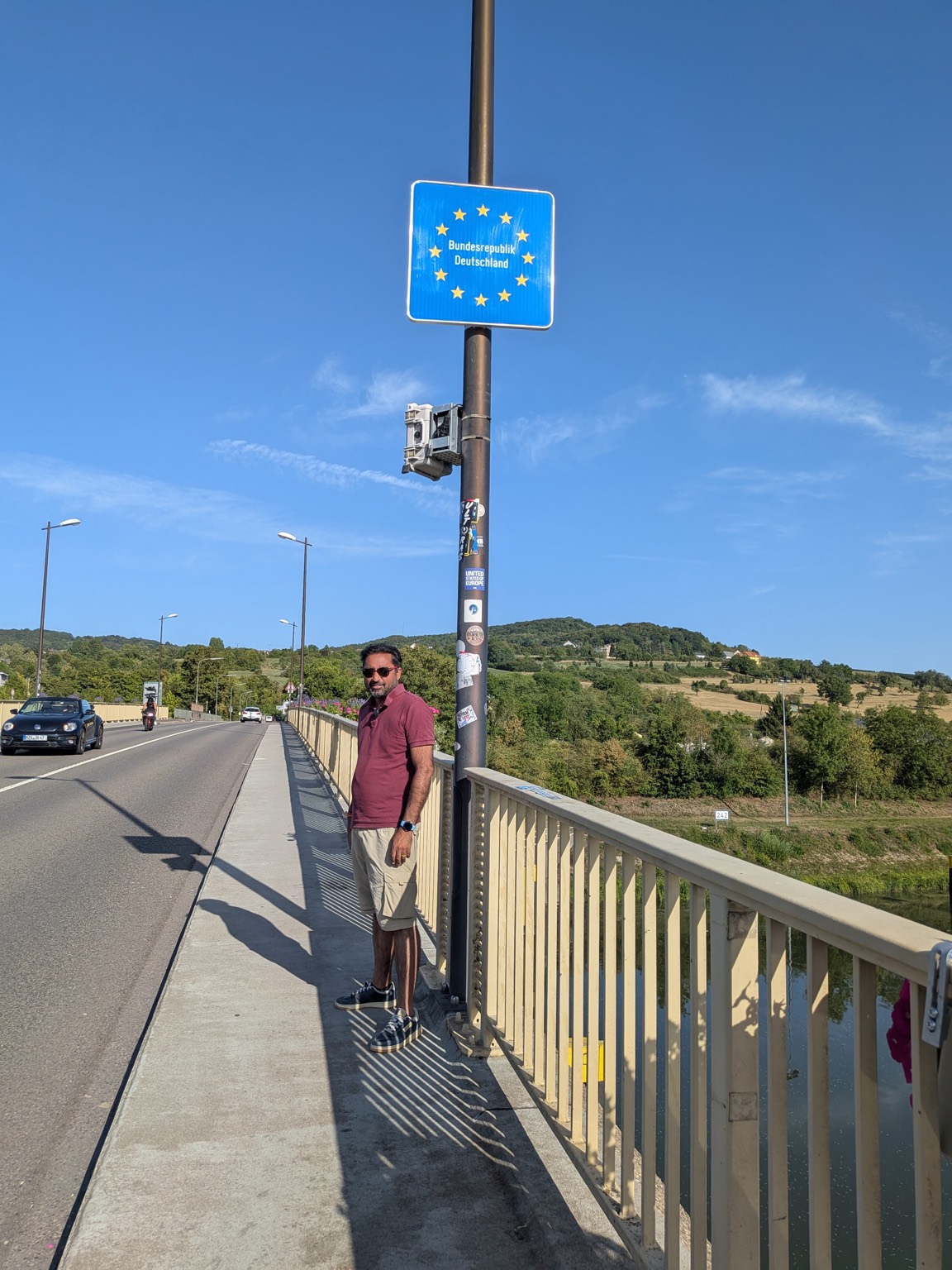
What the museum visit couldn't give me, a nearby bridge did. Right by the monument is the point where Luxembourg, Germany and France meet, and a footbridge over the river lets you cross into Germany on foot, marked clearly by an EU-style blue sign reading "Bundesrepublik Deutschland." Stand with one foot either side of the marked line on the bridge, and you're in Luxembourg and Germany at exactly the same time — the whole point of Schengen, made physical.
Even the drone got in on it: since there's no direct road link, I never actually set foot in France that day, but the drone crossed the river and briefly wandered into French airspace anyway, before looping back through a roundabout that happened to swing it through Germany again on the way home. Borders, it turns out, mean very little to a quadcopter.
Schengen vs. the EU vs. "Europe" — not the same thing
It's an easy mix-up. The Schengen Agreement was originally signed by just five countries in 1985 — Luxembourg, West Germany, France, Belgium and the Netherlands — with one goal: no border checks between them. Today the Schengen Area covers around 29 countries. The European Union is a separate club of 27 countries, and the two lists don't fully overlap — some EU members aren't in Schengen, and some Schengen countries aren't in the EU. Then there's Europe the continent, which runs to roughly 44 countries depending on how you count. Confusing, but the practical version is simple: a Schengen visa gets you passport-free travel across the Schengen Area, full stop.
Dinner, camp-style: night two
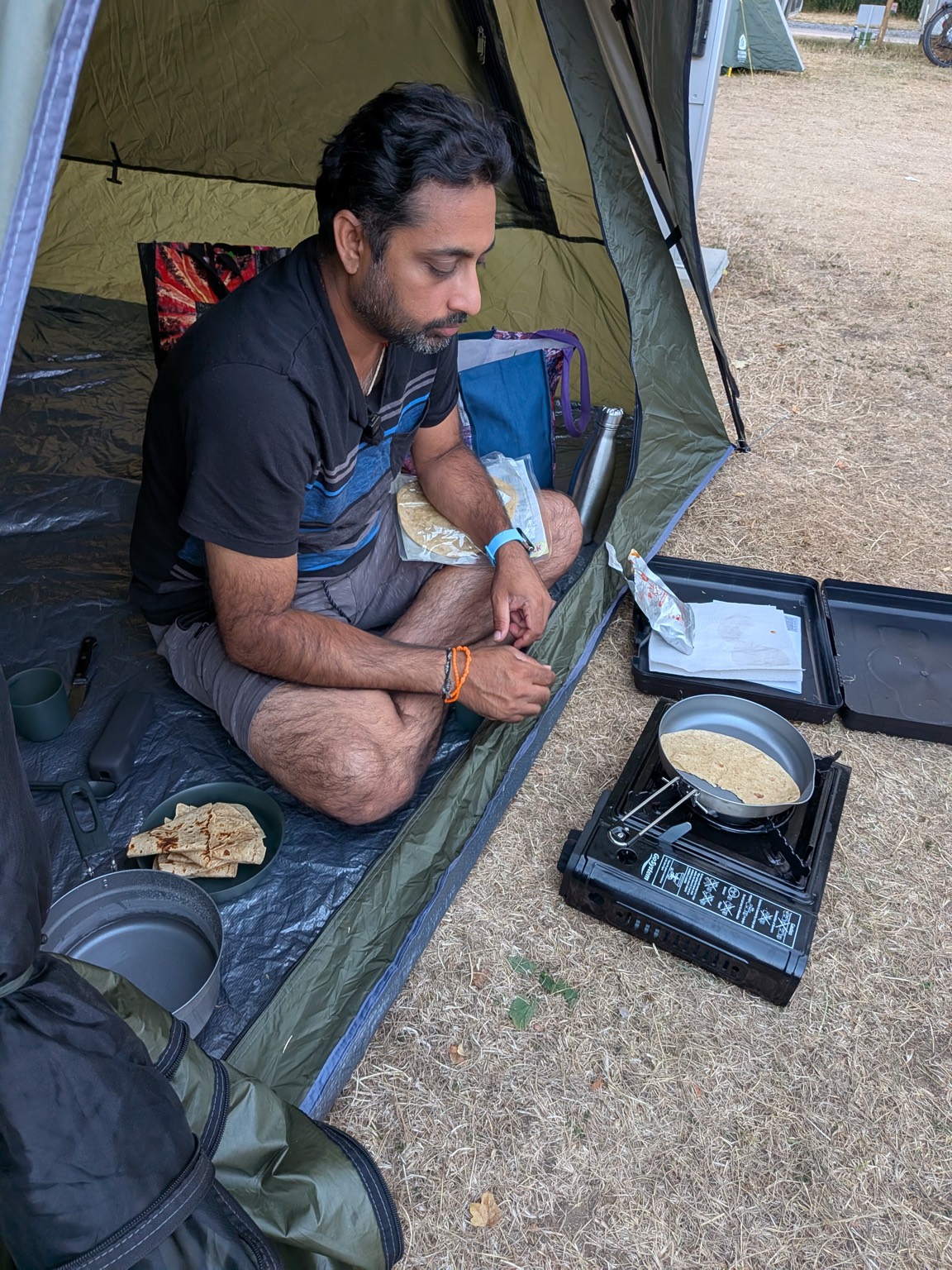
Back at the campsite, dinner was deliberately simple — no repeat of the vegetable pulao from the previous night's camping video. Tonight was ready-made Dal Makhani from Haldiram's (boil-in-bag, three to five minutes in hot water) alongside reheated parathas, fried on a small pan on the portable stove. Not fancy, but after a day of hiking and castle stairs, exactly right. A quick note on cost: Luxembourg is not a cheap country — restaurant prices at the campsite were steep, and even EV charging ran close to 57 cents per kWh, noticeably more than the roughly 40 cents I'd seen recently in Belgium and France. Public transport, on the other hand, is free here — one of the odd contradictions of a small, wealthy country.
What's next
The video ended with a teaser I can now fill in properly: the very next stop in this Luxembourg series was the day I crossed six countries before dinner — two tripoints, the split town of Baarle, and a ferry home across the Channel. Read that one here if you haven't already.
Practical tips for Mullerthal, Vianden and Schengen
- Mullerthal: Wear proper shoes — the trail includes wet rock crossings and uneven stone steps, not paved walkways.
- Vianden Castle: Check the last-entry time before you plan your afternoon around it; Luxembourg's attractions tend to close earlier than you'd expect.
- Schengen: The monument grounds and Pillars of Nations are free and open-air, but the museum has its own hours — arrive well before closing if you want to go inside.
- Currency: Euro, as with the rest of the Schengen countries covered here.
- Cost: Luxembourg is expensive for food and EV charging, but public transport nationwide is free — use it if you're not driving.
Most visa stickers don't come with a backstory. This one does — a small village, a boat on a river, and five countries deciding that a line on a map didn't need a checkpoint on it. Between that and a castle that took the better part of two millennia to become what it is now, this was a lot of history for one day of driving.