In 1989 around two million people joined hands in a line stretching 675 kilometres from here to Vilnius, and a few years later the Soviet Union let go of the Baltic states. The Estonian capital is where that chain began, so a day after the Vilnius end of it I flew in at dawn to see the start.
An early flight from Vilnius, the Old Town, Town Hall Square, Alexander Nevsky Cathedral, the parliament and the Pikk Hermann tower.
Getting to Tallinn
Estonia was my 47th country, though I'd say it only fully counts once I've also been to Latvia, which sits between it and Lithuania. I plan to come back and cover Latvia and the rest of Estonia together. I had only a few hours here, because I started the day in Vilnius, which was the subject of the previous post.
I was up at four to get ready for the airport. Google Maps said a bus was due, and it never turned up, so I took a Bolt, which is the local equivalent of Uber or Ola. It cost €4, where the bus would have been €1, but the airport was only 10 to 15 minutes away. At the airport I had a coffee and a small croissant for breakfast, which came to €6, and caught the 6 am flight.
In Tallinn I left my trolley bag in a locker at the airport. A locker costs €5.50 for the whole day, and I only needed a few hours, but it was far better than dragging it around the city. From the airport to the centre you can take a Bolt or a tram, and the city is close either way. I took the tram to try it, and it came to €2, whereas a Bolt would probably have been about €5 or €6.
It was around 7:40 when I arrived and the sun had not yet risen. Sunrise was at about 8 o'clock, which is late because Tallinn is so far north. Finland is just across the sea.
A country built on technology
Before heading into the city I should say something about Estonia. Around the airport you see office blocks with names like Hitachi and Ericsson, and the country is known for technology. Bolt started here. Skype began here too, built by Estonian developers, and Microsoft later bought it and folded it into Teams. The money transfer service Wise has Estonian roots as well. The country puts a lot of weight on digital services, and I came back to that when I reached Town Hall Square.
Viru Gate and the Old Town
The first sight in the Old Town is the Viru Gate, with its two round stone towers topped with red conical roofs. The walls and medieval streets and the colourful houses make it feel as if you have stepped into the past. Flower shops were opening their doors along the road, and I noticed plenty of them here, so people clearly love flowers. Next to the gate is a park on a small hill that they call Kissing Hill, and I don't know why. It has a pair of kissing statues, and a sign with the name.
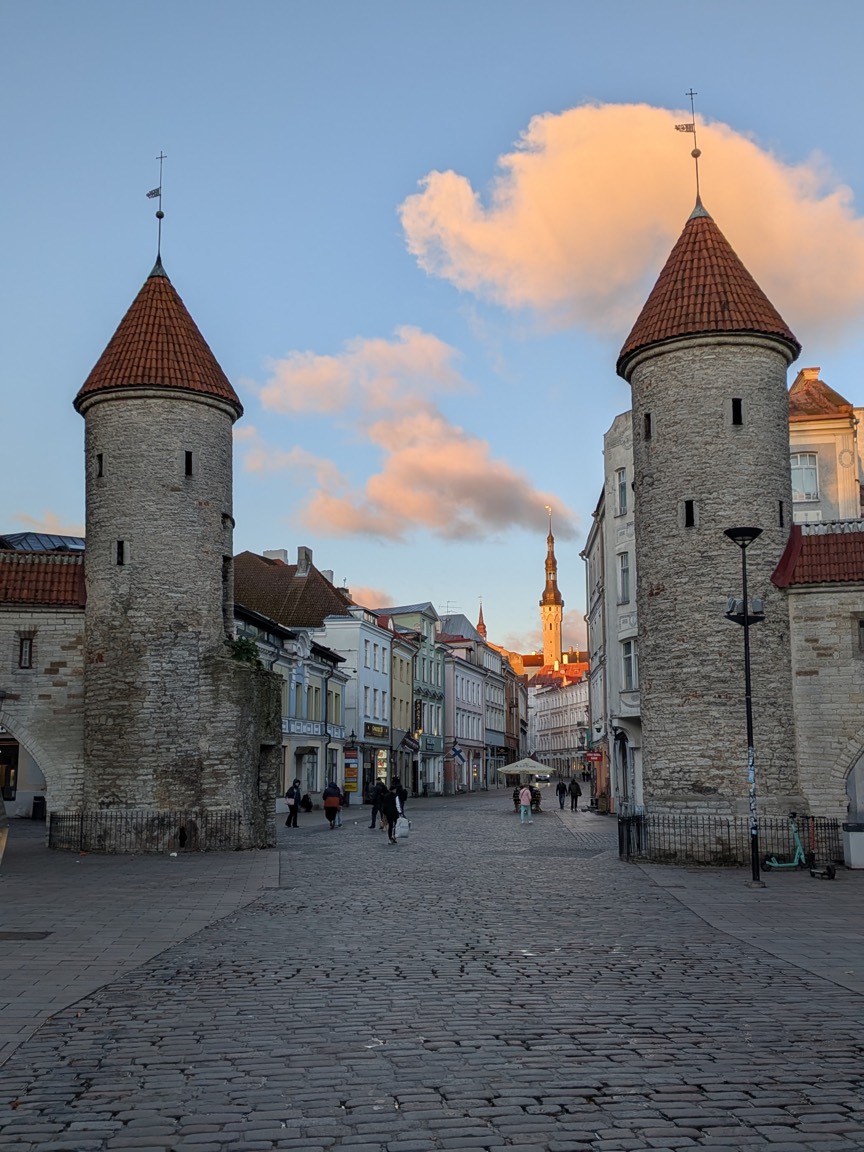
Once through the gate you are on Viru Street, which has a McDonald's, a Viru kebab shop and plenty of other businesses named after it. There is even a bar called Helsinki, since you can cross the sea to Helsinki. Estonia was part of the Soviet Union too, but I saw very little trace of that here, and a lot more of a Nordic feel than in Lithuania. It reminded me of the Nordic countries I saw on my Arctic trip.
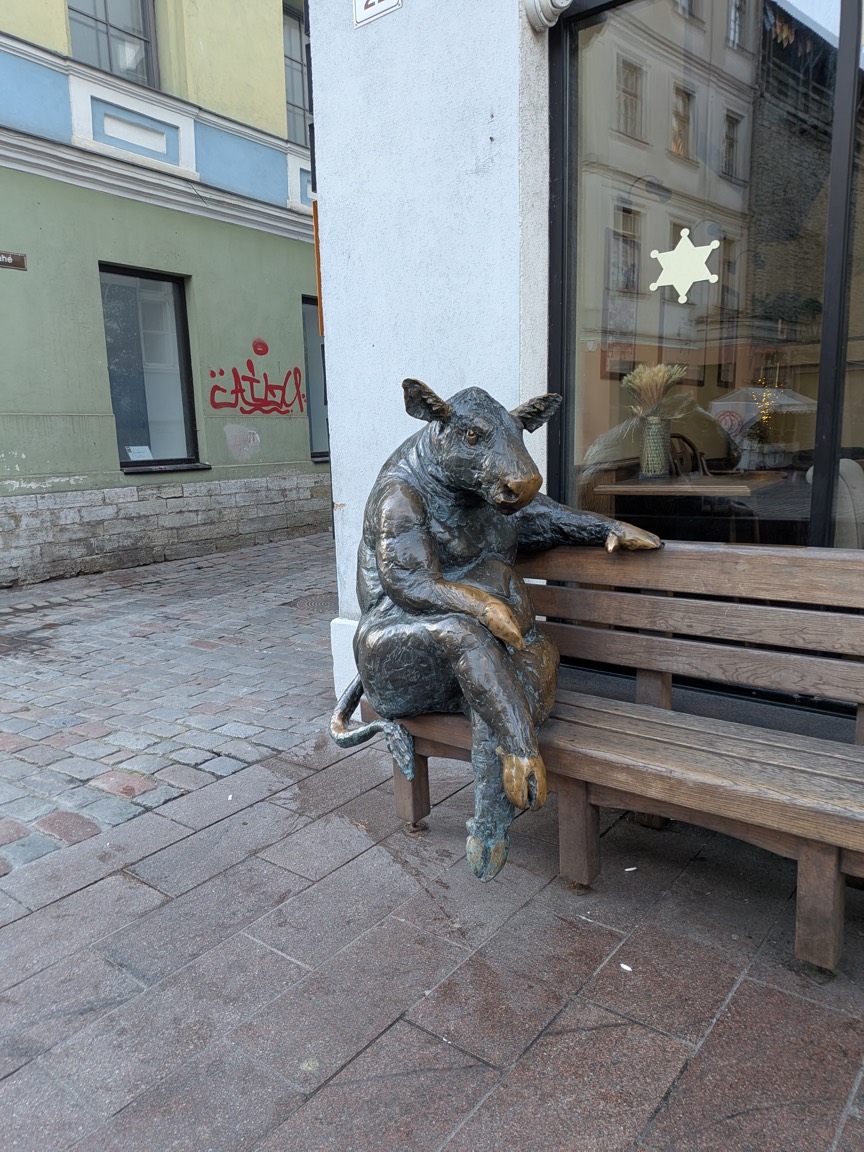
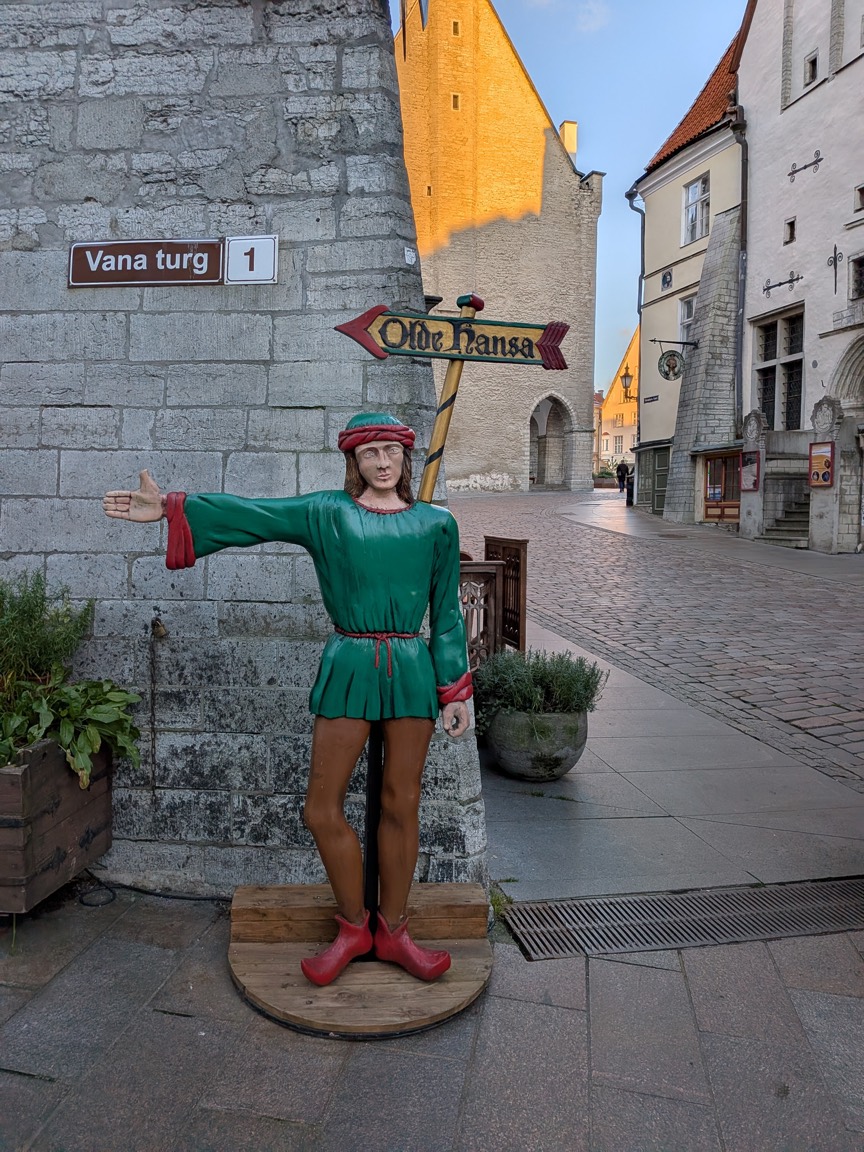
The colourful old buildings line the lanes, and at one corner a sign points the way to Olde Hansa, which I took to be a pub. Beside it a painted wooden figure in medieval costume holds out his arm to show the way. A bronze statue of an animal-headed figure sits on a bench nearby, and I have no idea what it represents.
The Old Town has a tourist information centre in a dark stone building that looks properly old. I could see the flag as well: Estonia's is blue, black and white, which is an unusual combination for Europe. It was already half past eight and the city was still asleep, and I would like to come back when everyone is awake.
Town Hall Square
Europe always has a square, and this is Town Hall Square, named for the town hall standing on it. It was a working town hall until about 1970, when it was used for administration, and today it is a museum.
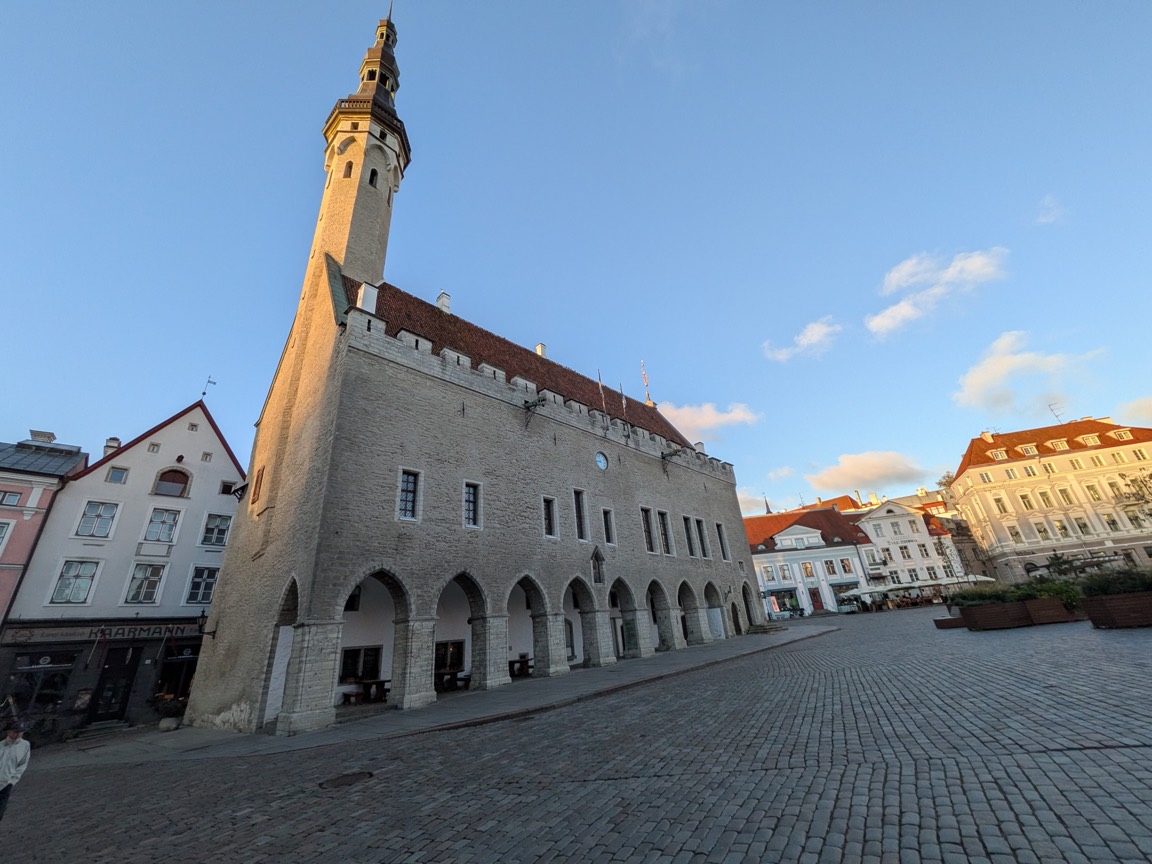
Since we are at the town hall, this is a good place to talk about the administration, because Estonia was early to put it all online. People here voted online in 2005, while we in India still argue about electronic voting machines. They also have a scheme called e-Residency, which anyone in the world can apply for. With it you can say you are an electronic resident of the country, and you can set up and run a company here without ever coming to Estonia.
The square also claims a first for Europe. It says it had the first public Christmas tree in Europe. There is also a monument to Eduard Vilde, a leading Estonian writer.
Alexander Nevsky Cathedral
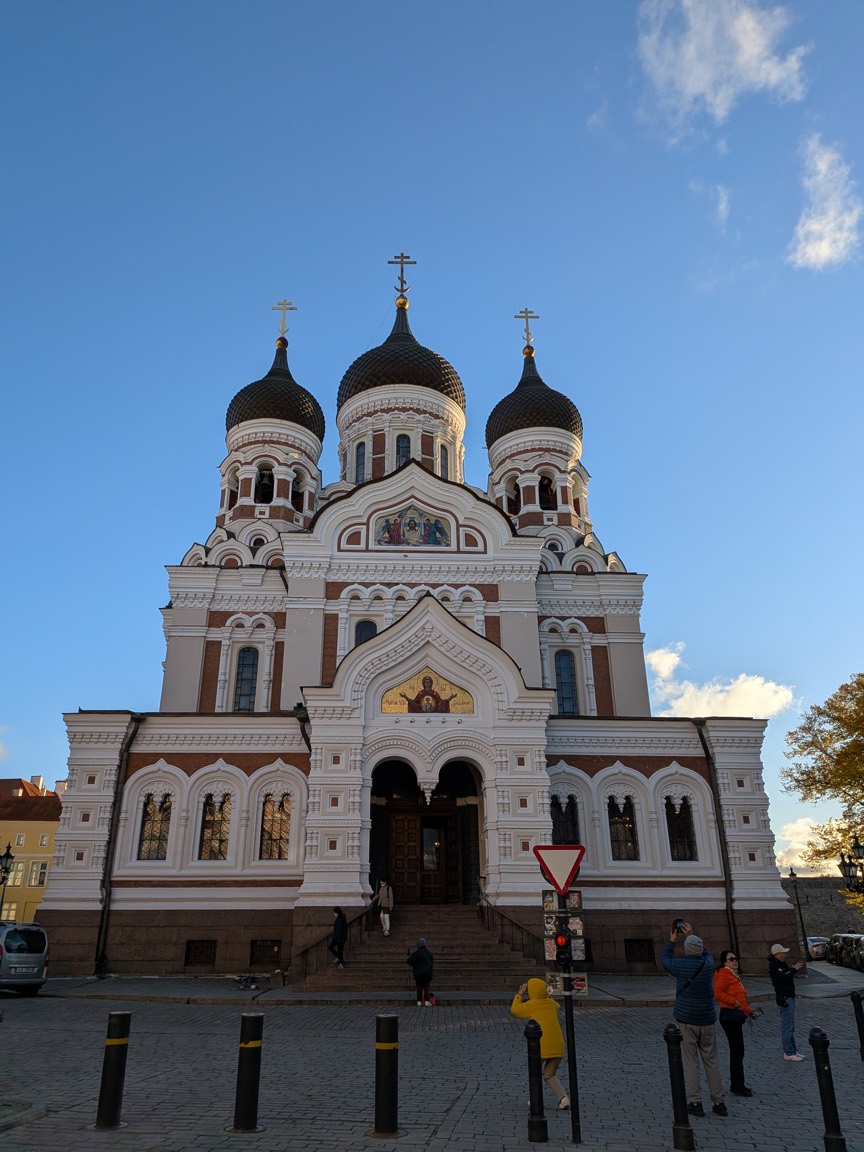
Further up is a very different building, the Alexander Nevsky Cathedral, built in the Russian Orthodox style with onion-shaped domes. It was put up around 1900, when Estonia was part of the Russian Empire, and it is a beautiful church.
The parliament on Toompea Hill
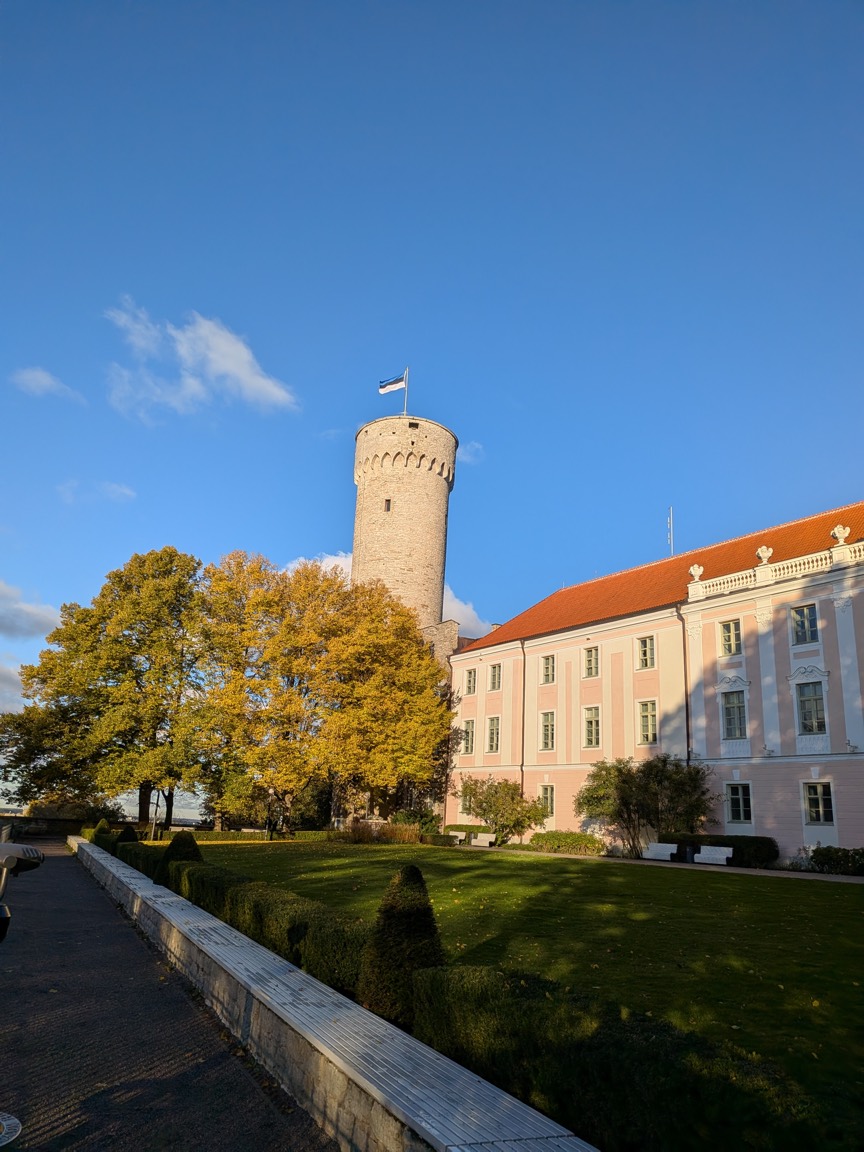
Right next to the cathedral is a large building flying the Estonian flag, which is the parliament. There was no security to speak of. The gate is open and you can walk up to it and look in from the outside, though you can't go inside. I was told not to fly a drone, and my signal dropped the moment I arrived, so I suspect there are jammers. The hill that the parliament stands on is called Toompea.
Pikk Hermann and the start of the Baltic Way
The tower beside the parliament is called Pikk Hermann, and the Estonian flag flies from the top. This is where the human chain started. The Baltic Way, as it is called, began at this spot and ran through Latvia to end in Vilnius, as I showed in the last video. About two million people held hands over 675 kilometres, across Estonia, Latvia and Lithuania, and by all accounts it was entirely peaceful.
There is a viewpoint beside the tower, and from it you can see how developed the city is. Estonia had to work hard to leave the Soviet Union, and people stood in a line all those kilometres to win their independence. Today it is one of the most digitally advanced countries in the world, and the modern buildings were visible in my drone footage. It impressed me a great deal. There is a pretty garden by the parliament too, where you could sit comfortably in summer, but in winter my hands froze as I held the camera.
Back to the airport
I went back to the airport by Bolt, since coming from the country where Bolt was born, I felt that I had to use it once. It cost more than I expected, €8.70. The airport itself is unusual. Alongside the regular shops and food places there are some more unusual stores, a display advertising four car brands, and sponsors on nearly every gate. They seem to earn a good amount from sponsorship.
I did not cover the whole of Tallinn, but I saw most of the main places, and I thought it was wonderful. I will need to come back for the rest. I don't yet know where the next video will be.
What it cost
- Bolt to Vilnius airport: €4, where the bus would have been €1.
- Breakfast at the airport: €6 for a coffee and a small croissant.
- Luggage locker at Tallinn airport: €5.50 for the whole day.
- Tram from the airport to the centre: €2.
- Bolt back to the airport: €8.70.
Practical tips for Tallinn
- Luggage: use a locker at the airport if you are only visiting for a few hours.
- Getting into town: the tram is the cheapest way from the airport, and the city centre is close.
- Sunrise: in mid-October the sun came up at around 8 am, so the Old Town was quiet before 9.
- Gloves: it was cold enough in the morning that my hands froze while filming.
- Drones: I was told not to fly them near the parliament, and my signal dropped when I got there.